Ouzi: The Spiced Lamb Rice Parcel
Spiced lamb and rice wrapped in thin pastry and baked into a golden dome
Contents
↓ Jump to recipeOuzi is what appears when a Levantine family has something to celebrate. A wedding, a homecoming, the first big gathering after a long absence: out comes a dome of thin, shattering pastry, and when you cut into it, steam and the smell of allspice and cinnamon rise off a mound of spiced lamb and rice studded with peas and toasted nuts. It looks like a great deal of work and it is, honestly, a project, but almost all of it is straightforward cooking, and the parcel can be assembled ahead and baked when your guests arrive. There are few dishes that reward the effort with as much drama for so little technical difficulty.
Ouzi: The Spiced Lamb Rice Parcel
Ingredients
- 500g lamb shoulder, cut into 1.5cm dice (or minced)
- 3 tbsp neutral oil or ghee
- 1 onion, finely diced
- 2 garlic cloves, crushed
- 300g basmati rice, rinsed and soaked 20 minutes
- 2 tsp ground allspice
- 1 tsp ground cinnamon
- 1/2 tsp ground cardamom
- 1/2 tsp ground black pepper
- 1/4 tsp ground nutmeg
- Salt
- 150g frozen peas
- 500ml lamb or chicken stock
- 50g flaked almonds
- 50g pine nuts (or extra almonds)
- 270g pack filo pastry (about 6-7 sheets per large parcel)
- 80g butter, melted, for brushing
- Extra toasted nuts and chopped parsley, to garnish
- Natural yoghurt, to serve
Method
- Brown the lamb: heat 2 tbsp oil in a heavy pan and brown the diced lamb well in batches. Remove. Add the onion to the pan and soften 5 minutes, then the garlic for 1 minute.
- Return the lamb, add all the spices and 1.5 tsp salt, and stir 1 minute until fragrant. Add 250ml of the stock, cover, and simmer 40 minutes (diced lamb) until tender. If using mince, simmer 15 minutes.
- Cook the rice: drain the soaked rice. Add it to the lamb with the peas and the remaining 250ml stock, adding a little water if needed so the liquid sits just above the rice. Cover and cook on the lowest heat 12 minutes, then rest off the heat 10 minutes. The rice should be just tender, it finishes cooking in the oven.
- Toast the almonds and pine nuts in a dry pan until golden, then stir most of them through the rice. Let the filling cool to warm, a hot filling tears the pastry.
- Line a bowl (about 20cm for a large parcel, or individual ramekins) with cling film, then layer in filo sheets brushed with melted butter, fanning them so they overhang the edges all round, 6-7 sheets for a large parcel.
- Pack the warm lamb rice firmly into the lined bowl. Fold the overhanging filo up and over the top to enclose, brushing each layer with butter and pressing to seal into a neat parcel.
- Invert the parcel onto a lined baking tray so the smooth folded side is down and the seams are underneath. Peel off the cling film. Brush all over with melted butter.
- Bake at 190C (170C fan) for 30-35 minutes until deep golden and crisp. Rest 5 minutes, invert onto a platter, scatter with toasted nuts and parsley, and serve with yoghurt.
A dish with a Bedouin backbone
Ouzi, also spelled quzi or qoozi, has its roots in the great feasting tradition of the Arabian Peninsula and the Levant, where a whole roasted or slow-cooked lamb served over spiced rice was the ultimate expression of hospitality. In its grandest form, particularly in Iraq and the Gulf, quzi is a whole lamb, roasted until it falls off the bone, laid over a mountain of rice for a wedding or a major feast. The pastry-wrapped ouzi common in Jordan, Syria and Palestine is the domesticated, individual-friendly descendant of that: the same spiced lamb and rice, but enclosed in filo and baked into neat golden parcels you can serve one per guest or as a single sharing dome.
That lineage tells you what the dish is for. It is celebration food, generosity made edible, the pot that says the household has spared no effort for you. The spicing, an aromatic warm blend of allspice, cinnamon, cardamom and nutmeg, is the classic seven-spice palette of the eastern Mediterranean, the same warmth that runs through maqluba and the Gulf rice dishes like machboos. What ouzi adds is the crisp pastry shell, which turns a plate of rice into a present.
The spice blend, and what makes it Levantine
The warmth of ouzi comes from a blend that Levantine cooks reach for by instinct: allspice leading, backed by cinnamon, cardamom, black pepper and a whisper of nutmeg, with cloves and coriander common additions. This is the family of spicing sometimes sold as baharat or, in its seven-spice form, sab’a baharat, and it is the same aromatic signature that perfumes so much of the region’s meat and rice cookery. The trick is restraint and balance: enough to make the lamb smell of celebration, never so much that any single spice shouts over the others. Grind whole cardamom seeds and toast the blend for a few seconds in the hot fat before the meat goes back in, and the difference in fragrance is immediate. A pinch of ground dried lime or a scrape of nutmeg is the sort of personal flourish that marks one family’s ouzi from another’s.
Building the filling
The filling is a spiced lamb pilaf, and you build it in stages. Brown the lamb hard first, because that colour is flavour, then soften onion and garlic in the same pan to pick up the fond. Diced shoulder gives the best texture and a proper celebratory feel, but minced lamb makes a quicker, easier-to-slice version and is entirely legitimate for a home ouzi. Bloom the whole spice blend in the fat for a minute so it perfumes the meat, then braise the lamb until tender.
Then the rice cooks right in with the lamb, absorbing all that spiced, meaty liquid, along with peas for colour and sweetness. Here is the key point: cook the rice only until it is just tender, slightly underdone even, because it will finish cooking inside the pastry in the oven. Overcook it now and the finished ouzi is stodgy. Rest it off the heat so it firms up and the grains separate, then fold through most of the toasted nuts. Almonds and pine nuts are traditional; pistachios are a lovely addition. Toast them first, always, because that gentle browning is where their flavour lives.
Crucially, let the filling cool to warm before you wrap it. A piping-hot filling melts the butter out of the filo and tears the sheets, and you get a soggy, split parcel. Cool it until it is warm to the hand, and the pastry will behave.
Wrapping without tears
The neatest way to shape ouzi at home is to line a bowl and build it upside down. Line a bowl with cling film (this is what lets you lift the parcel out cleanly), then lay in filo sheets one at a time, brushing each with melted butter, arranging them so they overlap in the base and hang generously over the rim all the way round. Six or seven buttered sheets give you a shell sturdy enough to hold together and crisp enough to shatter.
Pack the warm rice filling firmly into the lined shell, pressing it down so the finished parcel holds its shape. Then fold the overhanging filo up and over the top, buttering as you go, until the filling is fully enclosed and sealed. Turn the whole thing out onto a baking tray so the smooth, folded base becomes the top and the seams are hidden underneath, peel away the cling film, and brush the outside all over with more butter. That final butter is what gives you the deep golden, crackling crust.
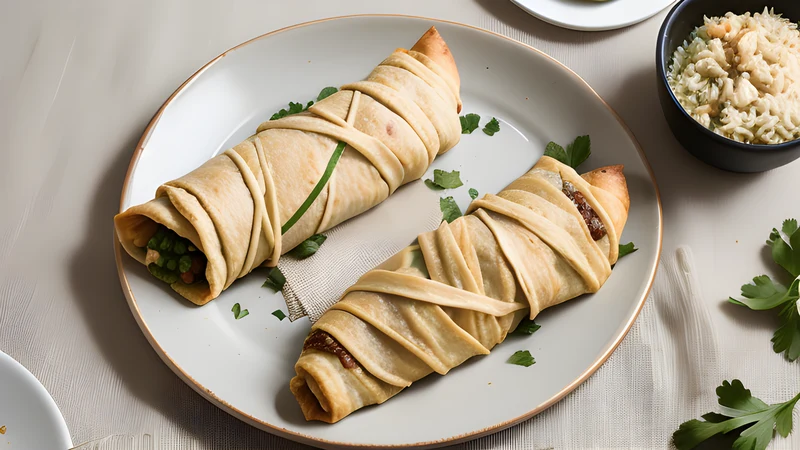
For individual ouzi, use ramekins or teacups and single squares of filo gathered into little money-bag purses, which look charming and mean everyone gets their own.
It is worth understanding what the two formats are for, because they suit different tables. A single large dome is the showpiece: you carry it out whole, cut it open at the table, and let the steam and the spice do the theatre. Individual parcels, gathered into little filo money-bags, are the party version, one per guest, easy to plate and impossible to argue over. For a buffet or a gathering where people help themselves, the individual purses win; for a family Sunday where the cutting-open is half the pleasure, make the dome.
Filo, homemade dough, and the freezer trick
Ready-rolled filo is the practical choice and makes a genuinely fine ouzi; keep the sheets you are not using under a barely damp cloth, because filo dries and cracks within minutes of meeting the air. Traditionalists in the Levant sometimes use a thicker home-rolled pastry closer to a shortcrust or a markook-style flatbread, which gives a sturdier, more bread-like shell that holds a large sharing dome without slumping. Both work; filo gives the crisp, shattering finish most people picture, while a thicker pastry gives a more substantial, sliceable parcel. Whichever you choose, the butter between the layers is what does the work, so be generous with the brush and reach right to the edges.
The freezer is ouzi’s secret ally, which is why it suits a busy household as much as a feast. You can freeze the parcels fully assembled and unbaked, laid on a tray until solid then bagged, and bake straight from frozen at a slightly lower temperature for a little longer so the middle heats through before the pastry over-browns. A batch of individual parcels tucked in the freezer turns a weeknight into an occasion with almost no work, and it is exactly how many cooks stay ready for unexpected guests, the arrival of whom is, after all, the whole reason ouzi exists.
Baking and serving
Bake at a moderately high heat, 190C, until the pastry is deep golden and crisp all over, thirty to thirty-five minutes for a large parcel. Because the filling is already cooked, the oven’s only job is to crisp the pastry and heat everything through, so do not undercook the pastry chasing a done filling, take it to a proper deep colour.
Rest it a few minutes, then bring it to the table whole and cut it open there so everyone sees the steam and the layers. Ouzi is served with plain yoghurt or a cucumber-yoghurt salad to cut the richness, and often a simple tomato salad alongside. A scatter of extra toasted nuts and parsley over the top makes it look like the celebration dish it is.
Do not stint on the resting once it comes out of the oven. Five minutes lets the filling settle so the parcel holds its shape when you cut it, and it lets the pastry firm from soft to properly crisp. Cut into it too soon and the rice tumbles out in a landslide; give it those few minutes and it slices like a cake, each portion a neat wedge of golden pastry over spiced, glistening lamb and fragrant rice studded with nuts.
Make-ahead, storage and troubleshooting
Ouzi is a wonderful make-ahead dish, which is half the reason it suits entertaining. Assemble the parcel completely, cover and refrigerate it for up to a day, then bake it straight from the fridge (add five minutes) just before serving. You can also freeze it assembled and unbaked, then bake from frozen at a slightly lower temperature for longer so the middle heats through.
Common problems: a soggy bottom usually means the filling was too hot or too wet when wrapped, so cool it and make sure the rice is not swimming in liquid. A pale, flabby crust means underbaking or too little butter between the layers. If the filo tears while you work, keep the sheets you are not using covered with a damp cloth, filo dries and cracks within minutes of being exposed.
It is a dish worth making for people you want to impress or simply look after, and once you have wrapped one you will see how forgiving the method really is. For the same spiced rice served as a dramatic flipped cake instead of a pastry parcel, maqluba is the obvious companion piece, and a bowl of mujadara rounds out a generous Levantine table.
Related Content