Osso Buco with Gremolata
Slow-braised shin, meltingly tender
Contents
↓ Jump to recipeOsso buco is the great Milanese braise, a slice of shin cooked so slowly that the meat slips from the bone and the marrow turns to silk. The dish can feel rich and wintry, so the finishing flourish is everything: a raw, fragrant gremolata of lemon zest, garlic and parsley scattered over at the last moment. That bright, citrussy hit cuts through the unctuous sauce and lifts the whole plate.
If you already keep gremolata in your repertoire, you are halfway there; and if this is your kind of long, forgiving braise, it sits alongside a beef bourguignon as a cold-weather standby. Its classic partner, saffron risotto, is a first cousin of the porcini mushroom risotto elsewhere on the site.
Osso Buco with Gremolata
Ingredients
- 4 thick slices of veal or beef shin on the bone (about 300g each)
- Plain flour, for dusting
- 3 tbsp olive oil
- 50g butter
- 1 onion, finely diced
- 1 carrot, finely diced
- 1 celery stick, finely diced
- 2 garlic cloves, finely chopped
- 250ml dry white wine
- 400g tin chopped tomatoes
- 400ml beef or veal stock
- 2 bay leaves
- Salt and black pepper
- For the gremolata: zest of 1 unwaxed lemon, 1 small garlic clove (finely chopped), 4 tbsp finely chopped flat-leaf parsley
Method
- Tie a length of kitchen string around the circumference of each shin slice to keep it together during cooking.
- Season the meat, dust lightly with flour, and shake off the excess.
- Heat the olive oil in a heavy casserole and brown the shin slices well on both sides, then set aside.
- Lower the heat, add the butter, and gently soften the onion, carrot, celery and garlic for 10 minutes until sweet and golden.
- Pour in the white wine, scraping the base, and let it bubble and reduce by half.
- Add the tomatoes, stock and bay leaves, and return the meat to the pan, nestling it into the liquid.
- Bring to a gentle simmer, cover, and cook in a low oven at 160C (fan 140C) for about 2 to 2.5 hours, until the meat is fork-tender.
- Make the gremolata by stirring together the lemon zest, chopped garlic and parsley.
- Lift out the meat, snip off the string, and reduce the sauce on the hob if it needs thickening. Check the seasoning.
- Spoon the sauce over the shin and scatter generously with gremolata just before serving.
The Story
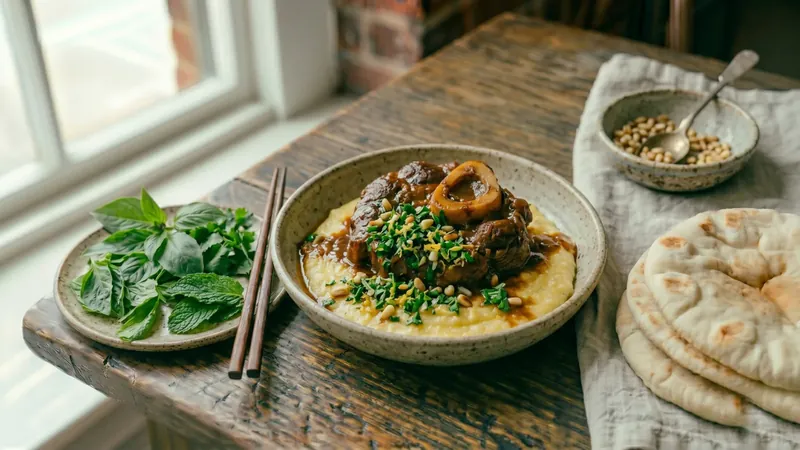
Osso buco belongs to Milan and to the wider region of Lombardy in northern Italy, where it is one of the most cherished dishes of the local table. The name translates literally as “bone with a hole”, a plain and accurate description of the cross-cut slice of shin, ringed with meat around a central plug of marrow. That marrow is the prize. As the shin braises, the connective tissue breaks down into gelatine and the marrow softens, so that a spoon dug into the bone yields something rich and almost buttery.
The cut comes from the lower leg, which works hard and is therefore full of the collagen-rich connective tissue that only long, slow, moist cooking can tame. Veal is the traditional choice and gives the most delicate result, though beef shin is widely used and stands up well to the same treatment. Either way, the method is the same: brown the meat for colour and flavour, build a base of softened vegetables, then let everything simmer gently for hours until the fork meets no resistance.
There are two broad schools of osso buco. The older, more traditional version is made without tomato, the meat braised simply in wine and stock. The more familiar modern style, sometimes distinguished by adding tomatoes, gives a redder, more robust sauce and is the one most cooks reach for today. Both finish the same way, with gremolata.
Gremolata is the masterstroke and the part that defines the dish for many people. It is nothing more than raw lemon zest, garlic and parsley chopped together, but stirred or scattered over the finished braise it transforms it. The point is contrast: against the deep, savoury, long-cooked sauce, the gremolata brings a fresh, sharp, almost perfumed lift that resets the palate with every mouthful. Because it is uncooked, it keeps its colour and its bite, and it should always go on at the very end.
In Milan, osso buco is classically served with risotto alla milanese, the saffron-yellow rice that turns the plate golden. Soft polenta or plain mash make equally fine partners for catching the sauce. Whatever you choose beneath it, the combination of meltingly tender shin, glossy sauce and that final green flourish is hard to better on a cold day.
The technique that makes or breaks it
The whole dish turns on one idea: connective tissue needs time and gentle heat to melt. Shin is packed with collagen, the tough protein that makes a hard-working muscle chewy when cooked quickly. Held at a low, steady temperature in liquid for a couple of hours, that collagen slowly converts to gelatine, which is what gives a proper braise its silky, lip-sticking sauce and its yielding meat. Rush it with high heat and you do the opposite: the muscle fibres seize and squeeze out their moisture, leaving the meat dry and stringy even as it sits in liquid. This is why the oven should sit at 160C, fan 140C, no hotter, and why “fork-tender” is the only reliable test of doneness. If it still resists after two hours, it simply needs longer; you cannot overcook it into toughness the way you can with a quick roast.
Two earlier steps set up that result. Tying the shin with kitchen string around its circumference keeps the ring of meat wrapped around the bone as it softens, so the slice arrives at the table whole rather than falling apart in the pot. And browning the meat properly before it goes in to braise is not optional colour: it is the Maillard reaction building the deep, roasted, savoury base notes that no amount of simmering can create on its own. Get a real crust on both cut faces, in batches if your pan is crowded, and dust the shin only lightly with flour so it browns rather than steams.
What can go wrong
A thin, watery sauce usually means the braise was covered too tightly or the liquid never reduced. Once the meat is tender, lift it out and boil the sauce hard on the hob for a few minutes to concentrate it; the gelatine from the shin will help it turn glossy.
Tough meat almost always means not enough time, not too much. Give it another half an hour and check again. If the marrow has fallen out of the centre of the bone during cooking, it has simply loosened and is still perfectly good to scoop and spread; that soft plug of marrow is the traditional prize, best eaten on toast or stirred back into the sauce.
A flat, heavy finish is what the gremolata exists to solve, so do not skip it and do not add it early. Because it is raw, its lemon oils and fresh garlic keep their sharpness and lift every mouthful; stir it in and it dulls within minutes, so scatter it over each plate at the last second.
Make-ahead, storage and substitutions
Like most braises, osso buco is better a day later, once the flavours have settled and the sauce has thickened in the fridge. Cook it fully, cool it, and keep it covered for up to three days; reheat gently on the hob or in a low oven until piping hot, adding a splash of stock if the sauce has set too firm. It also freezes well for up to three months. Make the gremolata fresh on the day of serving, never in advance, as it loses its point once the zest oxidises.
Veal shin is traditional and gives the most delicate texture, but beef shin is easier to find and stands up beautifully to the same treatment, needing perhaps an extra half hour. For the tomato-free, older Milanese style, leave out the tin of tomatoes and increase the wine and stock by 100ml each, for a paler, cleaner sauce that lets the meat and marrow speak. A bunch of extra parsley stalks and a strip of lemon peel tucked into the braise deepen the background flavour if you have them.
Serving it well
Because the sauce is the reward, serve osso buco on something that will catch it. Saffron risotto is the Milanese default and the pairing the dish was built for, its gentle sweetness and golden colour a foil to the dark, savoury braise. Soft polenta, loosened with a knob of butter and a little grated parmesan, is just as good and arguably easier for a crowd. Plain mash works too. Whatever you choose, give each person a small spoon so they can dig the marrow from the centre of the bone; in Milan that soft, rich plug is considered the best bite on the plate, and a marrow spoon at each setting is a nice touch if you own them. Finish with the gremolata at the table so the smell of fresh lemon and garlic hits everyone at once.
Related Content