Orange Tiramisu (Eggless)
Coffee-soaked, citrus-lifted and silky
Contents
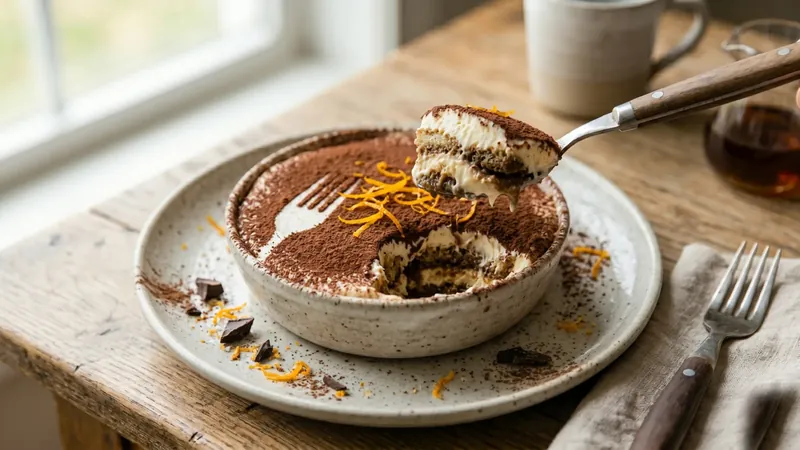
↓ Jump to recipeTiramisu is built on coffee and cream, and this version brightens both with orange. Zest stirred through the mascarpone and a splash of juice in the coffee soak lift the whole pudding, cutting the richness with a clean citrus note. It is also eggless, so the cream is whipped rather than built on raw yolks, making it safe for everyone and reliably silky. Make it the day before; it only improves overnight.
Orange and coffee is a pairing worth trusting, and if you like it here you will like it elsewhere on the site: it runs through the blood orange polenta cake and the citrus-soaked semolina and coconut cake, namoura. For a lighter, set version of the same rich-cream-plus-citrus idea, the olive oil panna cotta with blood orange and thyme is a close cousin worth having in your repertoire.
Orange Tiramisu (Eggless)
Ingredients
- 300ml strong espresso or very strong coffee, cooled
- 2 oranges (zest of both, plus 2 tbsp juice)
- 2 tbsp caster sugar (for the soak)
- 500g mascarpone, cold
- 300ml double cream
- 75g icing sugar
- 1 tsp vanilla extract
- 200g savoiardi (sponge fingers)
- 2 tbsp cocoa powder, for dusting
- 30g dark chocolate, to finish
Method
- Combine the cooled coffee, orange juice and caster sugar in a shallow dish and stir to dissolve.
- Whisk the cold mascarpone, icing sugar, vanilla and the zest of both oranges until just smooth.
- In a separate bowl, whip the double cream to soft peaks.
- Fold the whipped cream into the mascarpone mixture in two additions until light and silky.
- Dip each sponge finger briefly into the coffee soak, turning once, then lay them in a single layer in a dish.
- Spread over half the mascarpone cream and level it.
- Add a second layer of dipped sponge fingers, then the remaining cream.
- Dust thickly with cocoa, grate over the dark chocolate and chill for at least 6 hours, ideally overnight.
The Story
Tiramisu is a young classic by Italian standards, generally traced to the region of Veneto in the second half of the twentieth century. Its name translates roughly as pick-me-up, a nod to the jolt of coffee and sugar at its heart. Several restaurants in and around Treviso have claimed to have invented it, and the exact origin is still affectionately disputed, but there is little argument about its components: coffee-soaked sponge fingers layered with a sweet mascarpone cream and dusted with cocoa.
Mascarpone is the ingredient that defines it. A soft, exceptionally rich cream cheese from Lombardy, it is made by warming cream with a little acid until it thickens, giving a product closer to clotted cream than to ordinary cheese. Its mild, buttery flavour carries the coffee and sweetness without competing, and its loose texture folds easily into whipped cream for a mousse-like layer.
The classic recipe uses raw egg yolks beaten with sugar into a zabaglione, and sometimes whisked whites for lightness. That gives a wonderful texture but relies on raw egg, which is why an eggless approach has become so common in home kitchens. Whipping double cream into the mascarpone achieves a similar airiness and a stable set, with no food-safety worry and no risk of a curdled custard. It is, if anything, more forgiving for the occasional cook.
The orange is the gentle twist. Citrus has a natural affinity with coffee and chocolate, which is why orange so often appears alongside them in confectionery, from chocolate oranges to the classic mocha-and-peel combinations of Italian pastry. Here the zest perfumes the cream while a little juice in the soak keeps the coffee from tasting flat or one-note. The effect is subtle rather than showy, lifting the dessert and stopping the richness from feeling heavy by the second helping. It is a light enough touch that a guest may not immediately place it; they will simply notice that the pudding tastes fresher and less cloying than the usual version.
The one genuine skill in a tiramisu is the dipping. Sponge fingers, or savoiardi, are dry and porous, designed to drink up liquid fast, and the difference between a quick dunk and a long soak is the difference between a clean layer and a soggy slump. A brief turn in the coffee is enough; the cream and the resting time will do the rest. Left overnight, the layers meld and the texture turns from soft to sliceable, which is when a tiramisu is at its very best.
Getting the mascarpone right
Mascarpone is the ingredient most likely to catch you out, because it splits easily. Two things cause it: temperature and overworking. Keep it cold, straight from the fridge, and whisk it only until it is smooth and holds a soft shape, then stop. If you carry on beating, or if you fold in cream that is much warmer than the cheese, the fat can seize and the mixture turns grainy and buttery, and there is no rescuing it once it has gone. Whip the double cream separately to soft, floppy peaks rather than stiff ones; over-whipped cream makes the finished layer dense and slightly claggy instead of mousse-like. Fold the two together gently, in two additions, using a large spoon or spatula and a light hand to keep the air in.
The zest goes into the mascarpone rather than the soak because citrus oils, which carry most of the aroma, are fat-soluble; suspended in the rich cream they perfume every mouthful, whereas in the watery coffee they would largely wash away. Grate only the coloured part of the skin and stop at the white pith, which is bitter.
The soak, and the coffee
Use coffee that is genuinely strong, espresso or a very concentrated cafetière brew, and let it cool before you dip; hot coffee softens the fingers too fast and starts to loosen the cream. Two tablespoons of caster sugar dissolved into it takes the edge off the bitterness so the coffee reads as flavour rather than as harsh espresso. Classic recipes often add a splash of coffee liqueur, Marsala or dark rum to the soak, and any of them works well here; for an alcohol-free, child-friendly version simply leave it out, as the orange and coffee carry the flavour on their own.
Make-ahead, storage and serving
This is one of the great make-ahead puddings, which is half its appeal. It needs at least six hours in the fridge and is genuinely better after a full night, so it is the ideal thing to assemble the day before a dinner. Keep it covered, and it holds well in the fridge for up to three days, though the sponge continues to soften over time. Dust the cocoa on just before serving rather than at assembly, since cocoa left overnight on the surface absorbs moisture and goes patchy and damp; grate the dark chocolate over at the same moment for a fresh, glossy finish.
Variations
Swap the orange for the more traditional plain version by leaving out the zest and juice and adding two tablespoons of Marsala to the soak. For a boozier orange note, replace the orange juice in the soak with an orange liqueur such as Cointreau. You can also build it as individual puddings in glasses or ramekins, breaking the sponge fingers to fit, which makes serving neater and lets everyone have their own generous cocoa lid. Whichever route you take, resist the urge to skimp on the resting time: the transformation from soft assembly to sliceable pudding is the point.
A note on quantities and dishes
The recipe fills a dish of roughly 20cm by 25cm to a generous depth, giving eight good squares. If your dish is larger and shallower you will get thinner layers and may need a few more sponge fingers to cover the base twice; if it is smaller and deeper, build three layers instead of two. Buy real Italian savoiardi if you can, as they are firmer and drier than the softer sponge fingers sold for trifle and hold their shape far better after soaking. Mascarpone is worth buying full-fat and Italian; the cheaper, wetter tubs sold as substitutes are looser and more likely to split when you whisk them. Get those two ingredients right and the pudding is close to foolproof.
One practical tip on serving: a tiramisu never cuts into neat restaurant squares straight from the fridge, and that is fine. Dip a sharp knife in hot water and wipe it between cuts for the cleanest edges, or simply spoon it out generously and let the layers show. It is a homely, generous pudding, not a patisserie set piece, and it is at its best served in soft, cocoa-dusted mounds rather than fussed over. Made the day before, it asks nothing of you at the table but to be carried out and admired, which is exactly why it earns its place at the end of a long dinner.
Related Content