Orange Blossom Shortbread with Pistachios
Buttery, sandy biscuits perfumed with citrus blossom and green pistachio
Contents
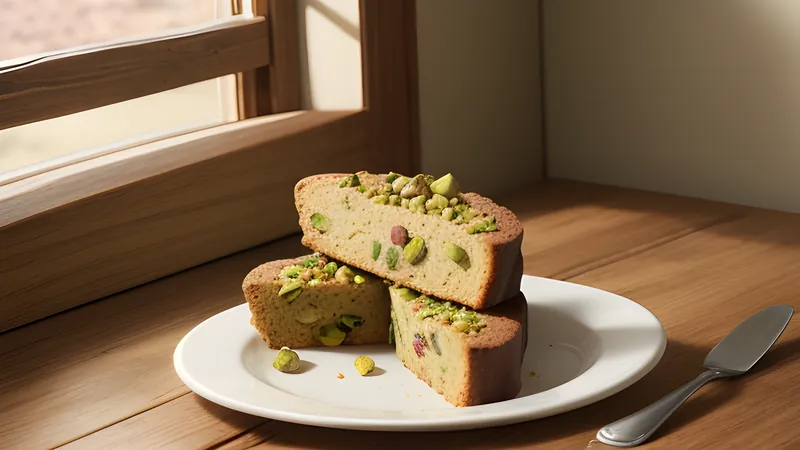
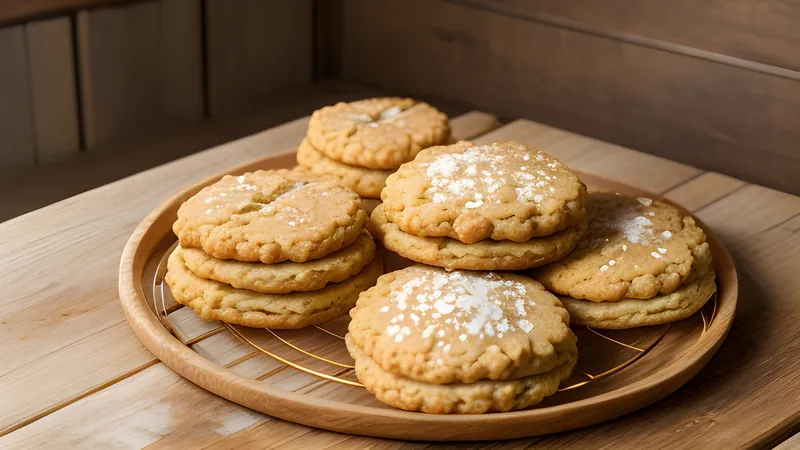
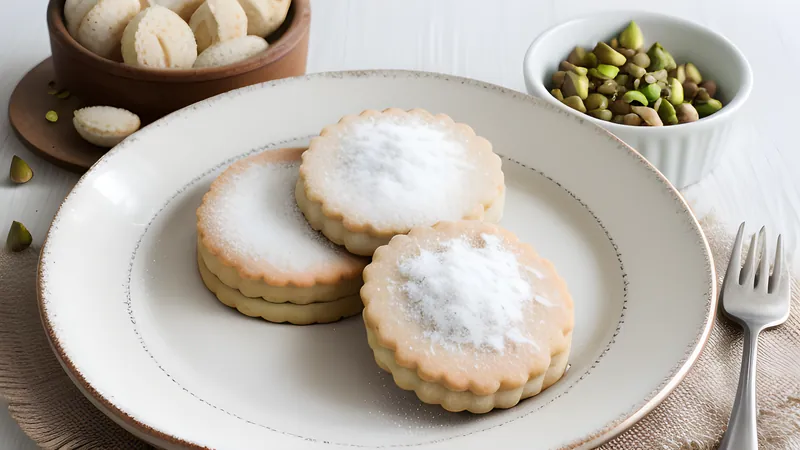
↓ Jump to recipeThere is a particular kind of biscuit that does not shout. It sits quietly on the plate, pale and sandy, and only gives itself away when you bite in and a soft cloud of orange blossom drifts up from somewhere unexpected. This shortbread is that biscuit. It takes the steady, buttery reliability of a classic British shortbread and gives it a Levantine accent, perfuming the dough with orange blossom water and studding it with green pistachio. The result is delicate, fragrant and dangerously easy to eat by the handful.
Orange Blossom Shortbread with Pistachios
Ingredients
- 200g unsalted butter, softened
- 80g icing sugar, plus extra for dusting
- 1 tsp orange blossom water
- Finely grated zest of 1 orange
- 0.5 tsp fine salt
- 240g plain flour
- 40g cornflour
- 60g shelled unsalted pistachios, finely chopped, plus extra to finish
Method
- Beat the softened butter and icing sugar together until pale and creamy but not aerated, about two minutes.
- Beat in the orange blossom water, orange zest and salt.
- Sift in the plain flour and cornflour, add most of the chopped pistachios and fold gently until the dough just comes together.
- Tip onto a sheet of baking paper, shape into a log about 5cm across, roll up tightly and chill for at least one hour until firm.
- Heat the oven to 160C fan and line two baking trays.
- Slice the chilled log into rounds about 1cm thick and space them out on the trays.
- Press a little extra chopped pistachio onto each biscuit.
- Bake for 16 to 18 minutes until set and only just colouring at the edges; they should stay pale.
- Cool on the tray for five minutes, then dust with icing sugar and transfer to a rack.
Where the perfume comes from
Orange blossom water, distilled from the flowers of the bitter orange tree, is one of the great quiet workhorses of the Eastern Mediterranean and North African kitchen. In Lebanon, Syria, Morocco and beyond it perfumes syrups for baklava and ma’amoul, scents rice puddings and milk drinks, and lends its heady floral note to countless sweets. There is even a tradition of white coffee, which is nothing but hot water and a few drops of orange blossom, drunk to settle the stomach after a heavy meal. The flavour is instantly recognisable yet hard to place if you have never met it, hovering somewhere between citrus, honey and jasmine.
Bringing it into shortbread is a small act of cultural borrowing that works because the base is so neutral. Shortbread itself is famously Scottish, refined from medieval biscuit bread into the buttery slab we know today; it is traditionally credited to Mary, Queen of Scots in the sixteenth century, and by the eighteenth had settled into the three-part ratio of flour, butter and sugar still used now. Marry that steady base with the floral traditions of the Levant and pistachios, prized from Iran to Turkey, and you get a biscuit that feels both familiar and a little exotic. It is the sort of thing you might be served, dusted with sugar, alongside a tiny cup of cardamom coffee.
Orange blossom is not the only place this trick works. If you like citrus in your baking, the same bright, perfumed note runs through the almond, olive oil and orange blossom cake and the syrup-soaked semolina and coconut cake, namoura, both of which lean on the same bottle you will open for this dough. And if it is the shortbread technique you are after rather than the flavour, the miso caramel shortbread is built on exactly the same short, sandy base, dressed up for a different mood.
The ingredients, and why each one is there
Butter is the whole point of shortbread, so use a good unsalted block and let it soften properly to a spreadable, cool-room-temperature state; if it is fridge-cold it will not cream, and if it is greasy and half-melted the biscuits will spread and lose their edges. Icing sugar rather than caster is deliberate: its fineness dissolves completely into the butter and gives a smoother, more even crumb than the slightly gritty result you get from granulated sugars. Plain flour provides the structure, and the cornflour is the sandiness trick explained below. The orange blossom water and the zest of a whole orange work as a pair, the water bringing the heady floral top note and the zest bringing the fresh, oily citrus behind it. The salt matters more than its small quantity suggests: half a teaspoon is enough to lift the butter and stop the biscuit tasting merely sweet. And the pistachios bring colour, a faint resinous flavour and just enough texture to interrupt the melt.
Making the dough
The method is the gentle, forgiving creamed shortbread approach. Beat softened butter with icing sugar until pale and creamy, but stop before it becomes fluffy; you want richness, not lift, so the biscuits stay dense and short rather than cakey. Beat in the orange blossom water, the grated zest of a whole orange and a proper pinch of salt, because shortbread without salt tastes flat and one-dimensional.
The cornflour is not a misprint. Replacing a portion of the plain flour with cornflour is the trick that gives shortbread its signature melt-in-the-mouth, slightly sandy crumb, lowering the gluten and softening the bite. Sift both flours in, add most of the chopped pistachios and fold just until the dough comes together, no more. Overworking develops gluten and turns tender shortbread tough.
Shape the dough into a log about 5cm across, wrap it tightly and chill for at least an hour until firm. This slice-and-bake approach is far tidier than rolling and cutting, and the chilling is essential: it firms the butter so the biscuits keep their shape and do not spread into puddles. It also gives the flour time to hydrate, which makes the dough easier to slice cleanly without crumbling. When you cut the log, use a sharp knife and a decisive downward press rather than a sawing motion, rotating the log a quarter-turn between slices so it does not flatten on one side. Aim for rounds about 1cm thick; any thinner and they colour before they set, any thicker and the centres stay pale and raw while the edges catch. Press a little extra chopped pistachio onto each round for colour, space them a couple of centimetres apart, and bake low and slow.
Keeping them pale
The single most important instruction is to bake gently and pull them out while they are still pale. Shortbread is meant to be the colour of pale sand, just barely golden at the very edge. A low oven, around 160C fan, lets the biscuits dry out and set without browning, which keeps that delicate floral flavour intact; too much colour brings caramel notes that fight the orange blossom. They will feel soft when they come out and firm up as they cool, so resist the urge to give them extra time. If your oven runs hot or bakes unevenly, turn the trays halfway through and check the first batch a minute or two early, because the gap between “just set” and “golden” is only a couple of minutes at this temperature.
There is a good scientific reason to keep the heat down. Browning is the Maillard reaction, the cascade of flavour compounds that develops when sugars and proteins meet high heat, and while it is exactly what you want on a roast, here it works against you: those toasty, caramel notes bury the fragile floral aromatics you added the orange blossom for in the first place. Baking low keeps the reaction in check, so the perfume survives.
Cooling and finishing
Let the biscuits sit on the hot tray for five minutes before you move them. Straight from the oven they are fragile and will break if you lift them; those few minutes let the structure set enough to handle. While they are still warm, dust them with icing sugar so it clings, then transfer to a wire rack to cool completely. A rack matters, because biscuits left on a solid surface trap steam underneath and go soft on the base.
Tips and variations
A word of caution on the orange blossom water: brands vary wildly in strength. Start with the single teaspoon here, and only add more next time if you want it bolder. Too much and the biscuits taste of soap rather than flowers, which is the most common way this goes wrong.
For make-ahead ease, the dough log freezes beautifully. Wrap it well and it keeps for up to three months; slice straight from frozen and add two or three minutes to the bake, which makes this an ideal thing to have waiting for unexpected guests. The dough will also happily sit wrapped in the fridge for a couple of days before baking.
You can roll the chilled log in granulated or demerara sugar before slicing for a sparkly, crunchy edge, which looks lovely and adds a little crackle against the soft crumb. To push the flavour further east, add a quarter-teaspoon of ground cardamom or a pinch of ground mahleb to the dough. Swap the pistachios for finely chopped blanched almonds if that is what you have, or fold in a tablespoon of dried rose petals with the nuts for a rose-and-orange-blossom version that leans fully into the Levantine palette. For a grown-up finish, half-dip the cooled biscuits in dark chocolate and press the flat side into more chopped pistachio.
Store the biscuits in an airtight tin, where they will keep, growing if anything more tender, for the better part of a week. Keep them away from anything strongly aromatic in the cupboard, as shortbread is fatty and will pick up other smells. If they ever soften past your liking in a humid kitchen, five minutes in a low oven crisps them straight back up.
A last note on the orange blossom water itself: buy it from a Middle Eastern grocer or a good deli rather than the tiny, expensive bottles sold for cocktails, where the quality is more reliable and the price far kinder. Once opened it keeps for months in a cool, dark cupboard, and a single bottle will see you through this recipe many times over, so it is worth having in for the next batch and the one after that.
Related Content