Olive Oil Panna Cotta with Blood Orange and Thyme
A grown-up wobble with fruity, herbal notes
Contents
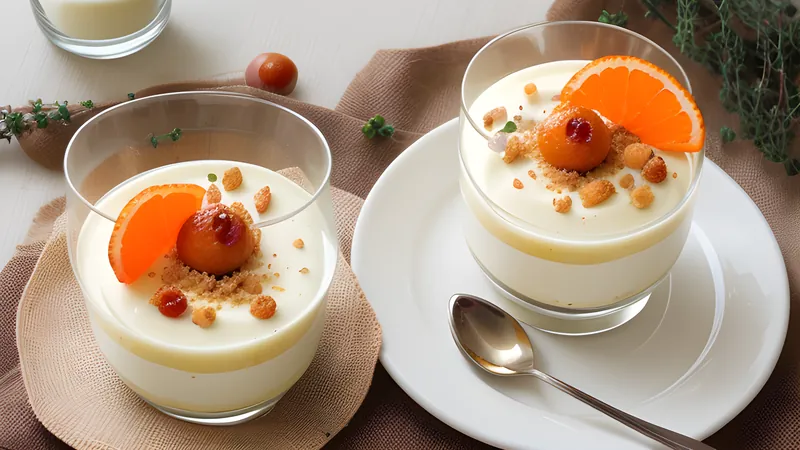
↓ Jump to recipePanna cotta is the dessert I make when I want maximum effect for minimum fuss, and this version has a quiet trick up its sleeve. Whisking a good fruity olive oil into the warm cream gives the set a subtle savoury roundness and a peppery, grassy note that lingers after the sweetness fades. Topped with jewel-bright blood orange segments and a thyme-scented syrup, it becomes something elegant and grown-up, the kind of pudding that makes a simple supper feel like an occasion. It quivers when you tap the glass, which is exactly how it should be.
Olive Oil Panna Cotta with Blood Orange and Thyme
Ingredients
- 3 sheets of leaf gelatine
- 400ml double cream
- 150ml whole milk
- 70g caster sugar
- 1 strip of orange zest
- 4 tbsp good fruity extra virgin olive oil
- 3 blood oranges
- 2 tbsp caster sugar, for the syrup
- A few sprigs of fresh thyme, plus extra to serve
- A pinch of flaky sea salt, to finish
Method
- Soak the gelatine sheets in a bowl of cold water for about 5 minutes until soft and floppy.
- Put the cream, milk, caster sugar and strip of orange zest into a saucepan and warm gently until steaming but not boiling.
- Remove from the heat, squeeze the water from the gelatine and stir it in until fully dissolved.
- Fish out the orange zest, then whisk in the olive oil a little at a time so it emulsifies into the warm cream.
- Pour through a fine sieve into a jug, then divide between six glasses or lightly oiled moulds.
- Cool to room temperature, then chill for at least 4 hours until just set.
- For the topping, segment two of the blood oranges over a bowl to catch the juice, squeezing the membranes for every drop.
- Juice the third orange into a small pan with the 2 tablespoons of sugar and the thyme sprigs.
- Simmer for a few minutes until lightly syrupy, then discard the thyme and leave to cool.
- To serve, spoon the blood orange segments and a little syrup over each panna cotta.
- Finish with a few fresh thyme leaves and the smallest pinch of flaky salt.
Cooked cream, reinvented
Panna cotta means “cooked cream” in Italian, and it belongs above all to Piedmont in the country’s north-west, a region famous for its dairy and its love of rich, restrained puddings. At its heart it is one of the simplest desserts imaginable: cream sweetened, gently warmed, and set with just enough gelatine to give it a tender, trembling hold. The genius lies in restraint. Use too much gelatine and you have a rubbery block; the ideal sits barely set, dissolving the moment it meets the tongue.
Adding olive oil is not traditional, but it is very much in the Italian spirit, where good olive oil finds its way into everything from cakes to ice cream. A fruity, peppery oil emulsified into the cream gives the pudding a silkier mouthfeel and a gentle savoury depth that stops it cloying, the same logic that makes a drizzle of oil and a pinch of salt so good on vanilla ice cream. It is a small idea that transforms a familiar dessert.
Blood oranges feel like the perfect partner. Grown around the slopes of Mount Etna in Sicily, where the volcanic soil and the sharp swing between warm days and cold nights flush the flesh a deep crimson, they carry the anthocyanin pigment that ordinary oranges lack. That is what gives them a flavour more complex than a common orange, with hints of raspberry and a keen acidity that cuts the cream beautifully. Thyme bridges the two, its woody, slightly floral note tying the fruit to the savoury oil. Together they make a dessert that tastes of the whole length of Italy. The same trio anchors my olive oil lemon drizzle cake with thyme, and if blood oranges are in season it is worth doubling up and using the rest in a blood orange polenta cake.
Why olive oil and gelatine behave as they do
Two bits of kitchen science make or break this pudding. The first is the emulsion. Olive oil and cream do not naturally want to stay together; whisk the oil in too fast and it separates, so you get an oily slick floating on a plain set cream rather than a unified, silky whole. Add the oil a spoonful at a time into the warm cream, whisking steadily, and the fat droplets disperse and stay suspended as the mixture cools and sets around them. This is the same principle behind mayonnaise or a vinaigrette, just held in place by the setting cream instead of an egg yolk.
The second is the gelatine. Leaf gelatine is roughly a protein scaffold that traps liquid; warmed gently it dissolves and, on cooling, sets into a soft, thermoreversible gel. Three sheets to this quantity of dairy gives a set that is barely there, wobbling when you tap the glass and collapsing on the tongue. Too much and you drift towards something bouncy and rubbery; too little and it will not hold at all. The two things that sabotage gelatine are heat and acid, which is exactly why the orange goes on top rather than into the cream: stir raw citrus juice into the warm base and its acidity can weaken the set. Keep the cream below a boil when you dissolve the sheets, because a hard boil damages gelatine’s setting power.
Putting it together
Soak the gelatine while you warm the cream, milk, sugar and a strip of orange zest just to steaming. Off the heat, dissolve in the softened gelatine, then whisk in the olive oil gradually so it emulsifies smoothly rather than splitting into a slick on top. Strain into a jug, divide between glasses or oiled moulds, and chill for at least four hours until just set.
For the topping, segment two of the blood oranges, working over a bowl to save every drop of juice, and squeeze the spent membranes. Simmer the juice from the third orange with a little sugar and a few thyme sprigs until lightly syrupy. To serve, spoon the segments and syrup over each set cream and finish with fresh thyme leaves and a barely-there pinch of flaky salt, which makes all the flavours sing.
Tips and variations
The set is everything. For glasses you can use the full amount of gelatine for a reliable wobble, but if you want to turn them out of moulds you may prefer them a touch firmer, so do not reduce the gelatine. To unmould cleanly, lightly oil the moulds first and dip them briefly in just-boiled water before inverting onto a plate with a gentle shake.
Choose your olive oil with care, as its flavour comes through clearly: a fresh, green, peppery oil is wonderful here, while a tired or rancid one will ruin the dish. Blood oranges have a short season in late winter and early spring, so out of season use ordinary oranges, or try mandarins or pink grapefruit for a similar tang. Rosemary can stand in for thyme if you prefer a more resinous note.
Best of all, this is a make-ahead dream. The panna cotta sets happily overnight, and the orange topping can be prepared a few hours in advance and kept chilled, leaving nothing to do at the table but spoon it over and scatter the thyme.
If you have never set anything with leaf gelatine before, do not be daunted. The sheets soften in cold water within minutes, and the only thing to watch is the temperature of the cream when you stir them in: warm and steaming dissolves them perfectly, but a fierce boil can weaken their setting power, so keep the heat gentle throughout. Squeeze the soaked sheets well before adding them, since the extra water they carry would otherwise dilute your mixture and slacken the set. If you can only find powdered gelatine, one standard 12g sachet sets roughly 500ml of liquid; bloom it in a few tablespoons of the cold milk for five minutes before warming it into the cream.
Serving and pairing
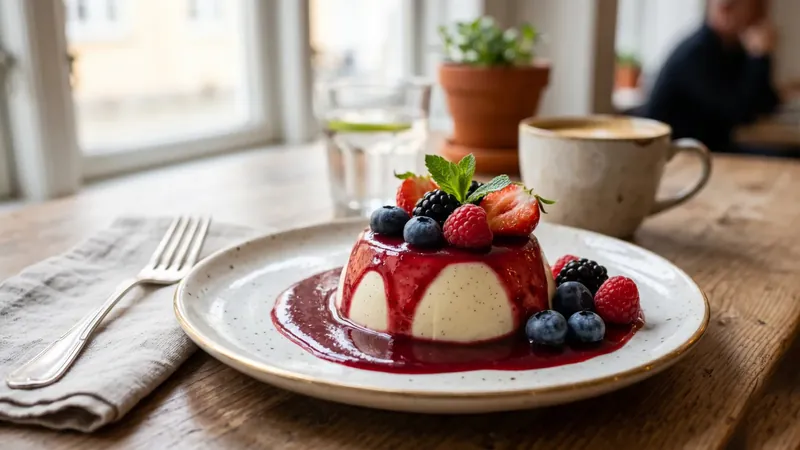
Set in clear glasses, this is a dessert that shows itself off: the pale, faintly golden cream against the deep crimson of the blood orange is half the pleasure. Turned out of oiled dariole moulds onto a plate, it becomes more formal and restaurant-like, quivering as you carry it to the table. Either way, spoon the syrup over only at the last minute so the cream stays clean-edged rather than bleeding pink.
It ends a rich meal well because it is light and sharp rather than heavy, and it flatters almost any Italian supper you put in front of it. For a run of make-ahead puddings that all sit happily in the fridge overnight, it keeps good company with a classic vanilla panna cotta for anyone at the table who wants something plainer, while the citrus-and-thyme theme carries straight over from my olive oil lemon drizzle cake with thyme. A few toasted flaked almonds or a shard of thin biscuit alongside gives a welcome bit of crunch against the wobble; a small glass of dessert wine or an espresso rounds it off. Made the night before, it asks nothing of you at the table but the spoonful of syrup and a scatter of thyme.
Getting the set right
If there is one thing to fuss over, it is the wobble. The mixture should coat the back of a spoon before it goes into the glasses, but it will still be liquid; the gelatine does its work in the cold, not the heat, so do not expect it to thicken on the stove. Chill for at least four hours, and preferably overnight, before you judge it. A properly set panna cotta holds its shape when you tilt the glass but trembles like a held breath, and it should give way the instant a spoon meets it.
If yours comes out too firm, you have used too much gelatine for your particular sheets, since brands vary in strength; drop to two and a half sheets next time. Too loose and it will not hold at all, so add a full three and make sure they have fully dissolved with no stray strands clinging to the whisk. The temperature of the cream when the sheets go in is the quiet culprit behind most failures: too cool and the gelatine seizes into threads before it disperses; too hot and its setting power drops. Steaming, just short of a simmer, is the sweet spot. Strain the finished mixture through a fine sieve into a jug, which catches any undissolved gelatine and the zest, and leave it to cool to room temperature before it goes in the fridge, so the fat does not separate as it chills.
Related Content