Okroshka: The Cold Russian Kvass Soup
Cold soup built on fermented rye, with a mustard-and-yolk paste doing the seasoning
Contents
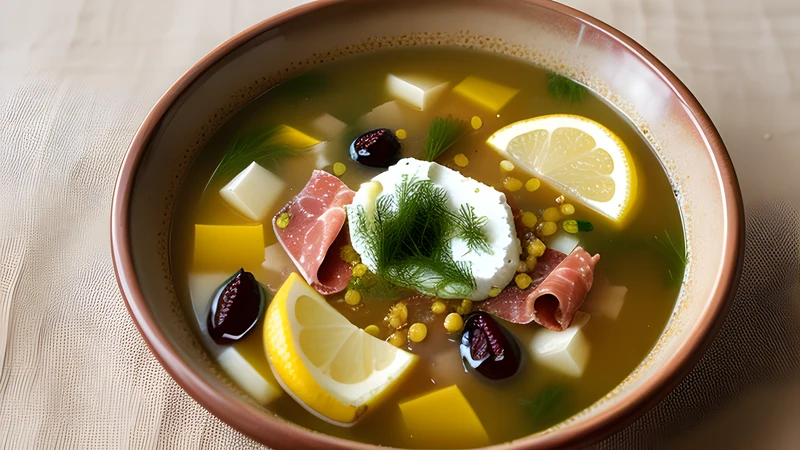
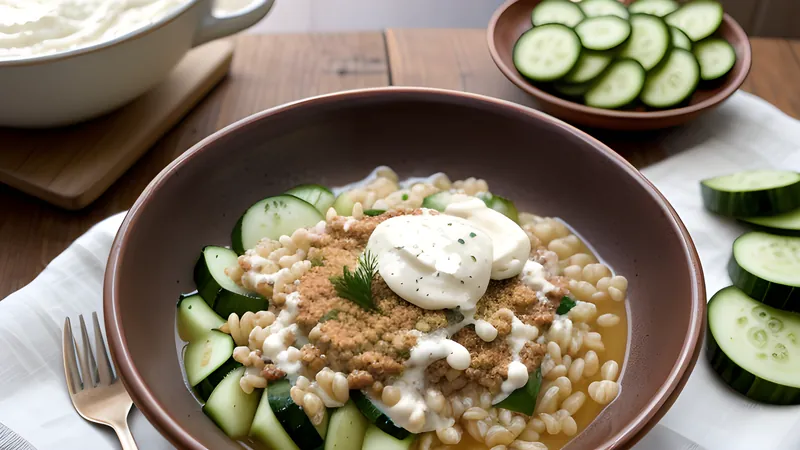
↓ Jump to recipeEvery English-language description of okroshka makes it sound like a mistake: cold soup, made with a fermented bread drink, containing diced ham, boiled potato, cucumber and egg. People read that and decide it is a Soviet joke. Then they taste a good one on a 32-degree Moscow afternoon and understand immediately. It is sour, salty, cold and hydrating, and it does something for you in heat that no salad does.
The gap between a good okroshka and a bad one is almost entirely one technique, and it is the technique nobody outside the region seems to mention: the seasoning happens in a paste at the bottom of the bowl before any liquid goes in. Get that right and the rest is chopping.
Okroshka: The Cold Russian Kvass Soup
Ingredients
- 400g waxy potatoes, such as Charlotte, unpeeled
- 4 large eggs
- 250g cooked ham or boiled beef brisket, cut into 8mm dice
- 2 medium cucumbers (about 300g), cut into 8mm dice
- 8 radishes, cut into 5mm dice
- 6 spring onions, green and white parts, finely sliced
- 20g dill, chopped
- 1 tbsp English or Russian mustard
- 1 tsp fine sea salt, plus more to taste
- 1 tsp caster sugar
- 1 litre rye kvass, well chilled
- 200g soured cream, at least 20% fat
- 1 tbsp cider vinegar, if needed
- Black pepper, freshly ground
- Ice cubes, to serve
Method
- Boil the potatoes whole in salted water for 18-20 minutes until a knife slides in with no resistance. Drain, cool completely, then peel and cut into 8mm dice. Chill.
- Boil the eggs for 9 minutes, then cool under cold running water for 3 minutes. Peel, halve, and separate the yolks from the whites. Dice the whites to 8mm and chill.
- Mash the 4 yolks in the base of a large bowl with the mustard, salt and sugar until you have a smooth paste.
- Add the sliced spring onions to the paste and crush them into it with the back of a spoon for 30 seconds, until they bruise and release their juice.
- Whisk in the soured cream until the paste is smooth and pale.
- Add the diced potato, egg white, ham, cucumber, radish and dill. Fold everything through the cream base so each piece is coated. Chill for at least 30 minutes.
- Just before serving, pour in the chilled kvass and stir. Taste: it should be sour, salty and faintly sweet. Add the vinegar if your kvass is on the sweet side, and more salt if it tastes flat.
- Ladle into cold bowls, add an ice cube to each, grind over black pepper and top with extra dill.
What kvass is
Kvass is fermented rye bread — stale sourdough rye, steeped in hot water, sweetened, and set going with yeast for a day or two. The result is dark brown, faintly fizzy, sour, malty, and typically under 1.2% alcohol, which is why it has always been sold to children from street tankers. It tastes like liquid brown bread, which sounds unappealing and is in fact extremely good.
It has been the everyday drink of the Russian, Ukrainian and Belarusian peasantry for a documented thousand years; the Primary Chronicle mentions it in connection with the baptism of Kyiv in 988. By the nineteenth century, per-capita consumption in Russia was measured in hundreds of litres a year, and there were professional kvassniks who made nothing else.
The critical thing for cooking is that shop kvass is now mostly a soft drink. Modern commercial kvass in a plastic bottle is often carbonated water with malt extract, sugar and acid, sweetened to compete with cola, and it will make your okroshka taste like a sweet mistake. Look for the unpasteurised sort in Eastern European shops, sold in bottles with the sediment still in, ideally labelled khlebny and with a short shelf life. If yours is sweet, the cider vinegar in the ingredients list is your correction — add it a teaspoon at a time. Better still, make your own, which takes two days of doing nothing and gives you a bracingly sour result you can control.
The name comes from kroshit — to crumble or to chop small — and it describes the method rather than any ingredient, which is why the ingredient list has drifted so freely over the centuries. Domostroy, the sixteenth-century Muscovite household manual, describes cold kvass dishes with chopped vegetables under other names. The word okroshka itself turns up in print in the eighteenth century, and by the time Elena Molokhovets published her enormous 1861 household bible she gives several versions, including one with sturgeon and one with crayfish tails that reads like a different social class entirely. That is the useful history lesson here: okroshka has never had a fixed recipe, only a fixed shape — small cold things, a sour cold liquid, dill, and a spoon.
The yolk-and-mustard paste
Here is the whole dish in one paragraph. Mash the hard-boiled yolks with mustard, salt and sugar into a paste. Crush the sliced spring onions into it. Whisk in the soured cream. Fold the diced everything through that. Only then add the kvass.
Why it works: the yolks are an emulsifier, and mashed with mustard — itself an emulsifier — they form a base that holds the soured cream in suspension rather than letting it drift about in the kvass as white streaks. That base then coats every dice of potato and cucumber, so each piece arrives seasoned. Pour kvass over undressed diced vegetables and the seasoning stays in the liquid while the solids stay bland; you get a bowl of cold, wet salad in flavoured water.
Crushing the spring onions into the paste matters too. Onion cells only release their sulphur compounds when ruptured, and thirty seconds of pressing with a spoon does what slicing alone does not. Traditional recipes say to grind them with salt in a wooden bowl. A spoon and some determination gets you there.
Sugar is the surprise. One teaspoon in four portions rounds the sourness of the kvass, the way a pinch of sugar rounds a tomato sauce, and you will not taste it as sweetness.
Every dice the same size
Okroshka is a soup you eat with a spoon and no knife, so everything must fit on the spoon. Eight millimetres is the working size: big enough to keep its texture and identity, small enough that a spoonful gathers five or six different things. Radishes go smaller at five millimetres because they are aggressive.
More importantly, uniform dice means uniform seasoning. A 2cm chunk of potato has an interior the dressing never reaches. This is knife work, and it is most of the labour in the recipe — about twenty minutes with a sharp knife and a bit of discipline.
Boil the potatoes whole and unpeeled, then cool them fully before dicing. Potatoes boiled in pieces waterlog, and hot potato dice fall apart under a knife and go mealy in a cold soup. Waxy varieties hold their edges; a floury Maris Piper disintegrates into cloudy starch and turns the kvass grey.
The nine-minute egg is deliberate. You want a fully set yolk that mashes to a dry paste — a jammy yolk will not do the emulsifying job and simply smears. Cool them properly under running water for three minutes to stop the grey-green ring, which is iron sulphide forming at the yolk surface and is a sign of overcooking.
The meat question
Traditional okroshka uses whatever cold meat the house had: boiled beef, roast veal, ham, sausage, or nothing at all on fast days. Soviet canteen versions standardised on doktorskaya sausage, which is the pale pink emulsified stuff, and it is what most Russians actually expect. I use good ham or leftover boiled brisket, both of which have more character.
The meat should be cold and firm before it is diced, straight from the fridge. Room-temperature ham shreds under the knife.
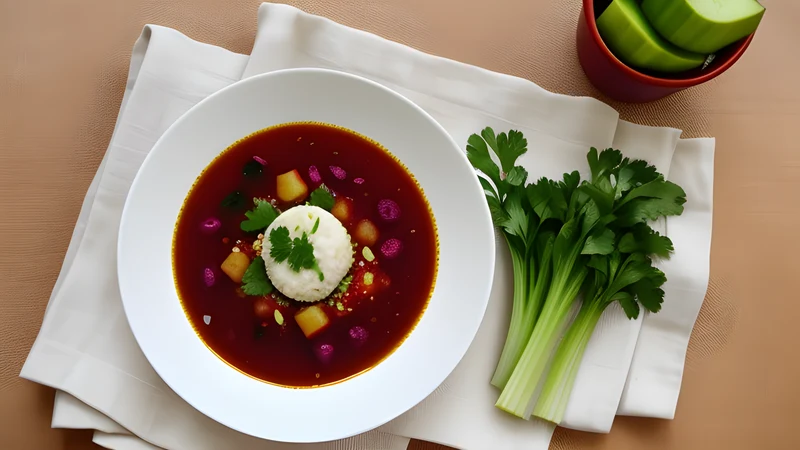
A vegetarian okroshka works well; double the radishes and add 150g of diced cooked beetroot, which turns the whole bowl a startling pink and adds earthy sweetness against the kvass. That is close to the Lithuanian šaltibarščiai in spirit, though that one is built on kefir and is a different animal.
The other liquids, and the wars they cause
Kvass is the original and it is the one worth chasing, and several other bases are in common Russian use, each with partisans who consider the rest heresy.
Kefir. Diluted with cold water or mineral water, roughly two parts kefir to one part water, and seasoned harder because dairy dulls salt. Creamier, gentler, and the most common home version in Russia today because kefir is in every fridge. It suits the vegetarian beetroot variant particularly well.
Whey. The clear liquid left from making curd cheese. Sour, thin, faintly sweet, and free if you make your own tvorog. This is arguably the most old-fashioned base of all and it is superb — cleaner than kefir, less assertive than kvass.
Mineral water with vinegar. The minimalist option: sparkling water, a good slug of cider vinegar, and the seasoning paste doing all the work. Bracing, and the fizz is genuinely pleasant against the cold.
Beer. Yes, really, in some northern accounts — light beer stood in for kvass where kvass was short. I have made it and it is fine and I would not do it again; the hops fight the dill.
The one liquid I would rule out is plain water. Okroshka’s structure depends on the base being sour, because the acid is what makes a bowl of diced potato and cucumber read as a soup rather than as leftovers.
A word on dill, and the herb ratio
Twenty grams of dill in four portions looks like a mistake on the scales and is the correct amount. Okroshka is one of the dishes where dill is a vegetable rather than a garnish, and a timid scatter leaves the bowl tasting incomplete.
Use the fronds and the fine upper stems; the thick lower stems are woody and should go in the stock pot. Chop it at the last moment — dill’s aromatic compounds are volatile and a bunch chopped an hour ahead has given most of them to your chopping board. If you can get the flowering heads in high summer, a couple of those crushed into the yolk paste adds an anise note that the fronds do not have.
Some cooks add tarragon, which I like, or a little chopped sorrel, which adds a second sour note and is very traditional in the northern provinces. Parsley is a poor substitute and mint belongs in a different bowl entirely.
Failure modes
It tastes flat. Almost always underseasoned, and almost always because the salt went into the liquid rather than the paste. A litre of kvass plus a kilo of diced solids needs more salt than instinct suggests. Taste after the kvass goes in and correct.
It tastes sweet. Your kvass. Add cider vinegar a teaspoon at a time; three teaspoons will rescue most commercial bottles.
It has gone watery and grey. The soup sat with the kvass in it. Salt draws water out of cucumber and radish by osmosis, and within an hour the dice have wept their liquid into the bowl and gone limp while the kvass has diluted. Assemble the solids and paste ahead, and add the kvass at the table.
The cream has curdled. Rare with a proper emulsified base, and usually the result of very acidic kvass hitting low-fat soured cream. Use 20% or above.
Serving, and the honest caveat
Serve it colder than you think. Cold bowls, an ice cube in each, kvass straight from the fridge. Okroshka served at room temperature is grim; the whole architecture depends on the cold.
The honest caveat is that this is a soup with a very specific occasion. It exists for still, humid heat, and it is genuinely wonderful in that context and merely strange outside it. Made in a British January it will confuse everybody at the table, which is not a reason to skip it — the ingredients are available year-round — but it is a reason to be honest about what you are serving.
The solids keep two days in the fridge, covered, undressed by kvass. Once the kvass is in, okroshka has a working life of about forty minutes. Make the base, chill it hard, and pour at the table.
Related Content