Ojja Merguez: Eggs Poached in Harissa and Tomato
Tunisia's fiery skillet of eggs, sausage and tomato

Contents
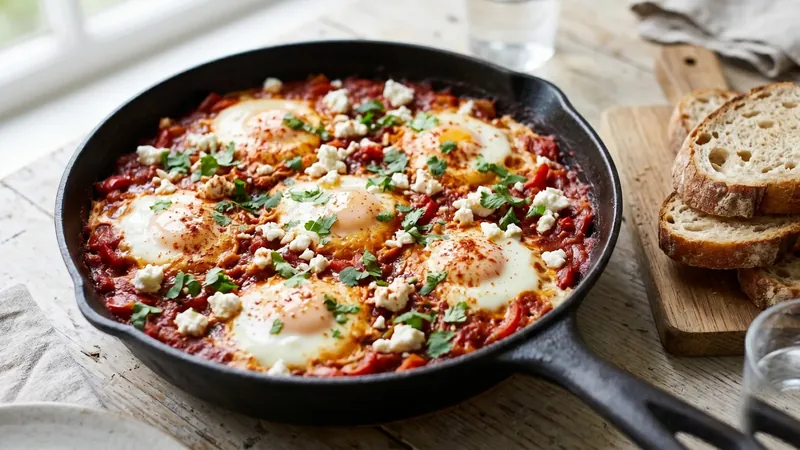
↓ Jump to recipeOjja merguez is a one-pan Tunisian dish built around a single, deliberate decision: crack whole eggs directly into a bubbling, well-reduced tomato and harissa sauce and let them poach right there, rather than cooking eggs separately and adding them at the end. The sauce needs to be thick and actively simmering when the eggs go in, hot enough to set the whites quickly around the edges while the yolks stay loose at the centre — closer in spirit to shakshuka than to any Western egg dish, though ojja’s flavour profile, built on harissa and merguez rather than shakshuka’s milder pepper base, sits distinctly further into chilli-forward territory.
Ojja Merguez: Eggs Poached in Harissa and Tomato
Ingredients
- 2 tbsp olive oil
- 4 merguez sausages, sliced into 2cm rounds
- 1 onion, finely chopped
- 1 red bell pepper, finely diced
- 3 garlic cloves, crushed
- 2 tbsp harissa, plus extra to serve
- 1 tbsp tomato puree
- 400g tin chopped tomatoes
- 1 tsp ground cumin
- 1/2 tsp sweet paprika
- 1/2 tsp caraway seeds, lightly crushed
- 100ml water
- 4 eggs
- Salt and black pepper, to taste
- Chopped parsley or coriander, to finish
- Crusty bread, to serve
Method
- Heat the olive oil in a wide frying pan over medium-high heat and brown the sliced merguez for 4-5 minutes, then remove and set aside.
- In the same pan, soften the onion and red pepper in the rendered fat for 6-7 minutes, then add the garlic and cook for 1 minute.
- Stir in the harissa and tomato puree and cook for 2 minutes until fragrant and slightly darkened.
- Add the chopped tomatoes, cumin, paprika, caraway and water. Bring to a simmer and cook uncovered for 10-12 minutes, stirring occasionally, until thick enough to hold a trail when a spoon is dragged through it.
- Season with salt and pepper, then return the browned merguez to the pan and warm through for 2 minutes.
- Make 4 shallow wells in the sauce with the back of a spoon and crack an egg into each.
- Cover the pan and cook over gentle simmering heat for 3-4 minutes, until the whites are set and the yolks are still soft.
- Scatter with chopped parsley or coriander and serve immediately, straight from the pan, with crusty bread and extra harissa.
Merguez: the sausage that defines the dish
Merguez is a spiced, thin lamb or lamb-and-beef sausage coloured deep red by harissa and paprika worked directly into the meat, a North African sausage tradition distinct from anything in European charcuterie. Its flavour is assertive enough to stand up to the equally bold harissa-tomato sauce it simmers in here, rather than getting lost the way a milder sausage would. Buy fresh merguez from a butcher or Middle Eastern grocer if possible; the pre-cooked, shelf-stable versions sold in some supermarkets tend to be milder and greasier, and while they’ll work in a pinch, fresh merguez gives noticeably better texture once browned and simmered.
Slicing the sausages into rounds rather than leaving them whole means more surface area browns in the pan, and more of that rendered lamb fat and spice ends up seasoning the sauce directly rather than staying locked inside an intact sausage skin.
Building the sauce properly
The sequence matters. Brown the sliced merguez first and set it aside, using the rendered fat left in the pan to soften the onion and pepper — this single step does more for the final flavour than almost anything else in the recipe, since merguez fat carries a huge amount of the sausage’s characteristic spice straight into the vegetables cooking in it. Garlic goes in only once the onion and pepper have properly softened, since garlic burns quickly and turns bitter if it hits the pan too early alongside raw onion.
Harissa and tomato puree cooked briefly before the tinned tomatoes go in — rather than all the tomato components added at once — lets the harissa’s oil-based chilli paste bloom in the hot pan, intensifying its flavour in a way that simply stirring it into a finished sauce wouldn’t achieve. The sauce then needs a real simmer, uncovered, to reduce down to a properly thick consistency before the eggs go anywhere near it; a thin, watery sauce won’t hold the eggs in place or set them properly, and the eggs will simply sink and spread rather than poaching where you cracked them.
Poaching the eggs directly in the sauce
Once the sauce is thick and at a steady simmer, return the merguez to the pan to warm through, then make four shallow wells in the sauce with the back of a spoon and crack an egg into each. Cover the pan for the final few minutes — this traps steam and helps set the egg whites evenly from the top as well as the bottom, without needing to flip or otherwise disturb the eggs, which would break the yolks. Three to four minutes covered on a gentle simmer usually gives whites that are fully set and yolks still soft and runny; check by gently nudging one yolk with a spoon rather than lifting it out to inspect, which risks breaking it prematurely.
Every stove runs slightly differently, so treat the timing as a starting guide and check a minute or so before you expect the eggs to be done, adjusting for future batches based on what you observe this time.
Heat level and how to adjust it
Two tablespoons of harissa gives a sauce with real, noticeable heat but not something punishing — Tunisian harissa varies significantly in strength between brands and homemade batches, so start with less if you’re using an unfamiliar or particularly potent harissa, and add more toward the end once you’ve tasted the developing sauce. Recipe for harissa if you want to make your own from scratch, which gives you full control over the final heat and lets you calibrate this dish exactly to your own tolerance rather than guessing at a shop-bought paste’s strength.
Serving extra harissa at the table, the way most Tunisian households do, lets individual diners push the heat further without committing the whole pan to a spice level not everyone at the table wants.
Substitutions and variations
No merguez available: any well-spiced lamb or beef sausage works as a substitute, though the flavour will lean less specifically North African. A vegetarian ojja skips the sausage entirely and adds chickpeas for bulk and protein, relying on the harissa and tomato sauce itself, well-seasoned, to carry the dish — this version is common during Ramadan in households avoiding meat-heavy dishes for the daytime fast-breaking meal, and it holds up well on its own merits rather than reading as an obvious substitution.
Some regional versions add a handful of sliced potato, par-cooked before the sauce goes in, which bulks the dish into more of a full meal and gives a textural contrast to the soft egg and tender sausage. A finishing scatter of crumbled feta, though not classically Tunisian, has become common in home versions for a cooling, salty contrast against the sauce’s heat.
Serving
Ojja merguez is eaten directly from the pan in most Tunisian households, with warm, crusty bread torn by hand and used to scoop up egg, sauce and sausage together rather than a knife and fork. It’s a breakfast and brunch dish as often as a dinner one — hearty enough to serve either meal, and quick enough (under 40 minutes start to finish) to make on a weekday morning if you’re feeding people who appreciate a properly spiced start to the day. It pairs naturally with brik à l’oeuf as part of a wider Tunisian egg-forward spread, though the two are rich enough that most tables serve one or the other rather than both at once.
Where ojja sits in Tunisian cooking
Ojja is a broader category in Tunisian cuisine than merguez alone suggests — the word refers to any dish of eggs poached into a spiced sauce, and versions exist with shrimp, with just vegetables, or with a mix of offal in some more traditional households. Ojja merguez is simply the most widely known and most commonly cooked version outside Tunisia, largely because merguez is now easy to find in European and North American markets in a way that some of the other ojja variations’ ingredients are not. Within Tunisia itself, ojja is understood as a flexible, forgiving format — whatever protein or vegetable is on hand goes into the same basic harissa-tomato base, which is part of why it remains such a common home-cooking dish rather than something reserved for restaurants or special occasions.
The dish’s close cousin, shakshuka, is often conflated with ojja outside North Africa, but Tunisian cooks generally draw a real distinction: shakshuka leans toward peppers and a milder spice base associated more with Israeli, Palestinian and broader Levantine cooking, while ojja’s identity is built specifically around harissa’s concentrated chilli heat and, in the merguez version, a specific North African sausage that has no real equivalent in the dishes shakshuka descends from. If you’ve made shakshuka before, ojja merguez will feel familiar in its basic mechanics — eggs poached into a simmering spiced tomato sauce — while landing as a distinctly hotter, more North African-specific dish once you taste the difference harissa and merguez make.
A note on pan choice
A wide, shallow pan with a lid — a proper frying pan or a shallow sauté pan rather than a deep pot — gives the sauce enough surface area to reduce properly and gives the eggs room to poach individually without crowding into each other. A cast-iron or heavy stainless pan holds heat evenly through the simmer and transfers straight to the table for serving, which suits ojja’s traditional eat-from-the-pan presentation better than a lighter pan that cools quickly once off the heat.
Troubleshooting
If the eggs spread too thin and merge together rather than staying in discrete pockets, the sauce wasn’t reduced enough before they went in — a properly thick ojja base should hold its shape when you drag a spoon through it, leaving a brief trail rather than flowing back together instantly. If that’s not happening, keep reducing uncovered for a few more minutes before adding the eggs.
Overcooked, fully hardened yolks are the other common complaint, usually from leaving the lid on too long out of caution. Start checking at the three-minute mark rather than waiting for a fixed time, since pan thickness, stove strength and even the size of your eggs all shift the exact timing slightly from one attempt to the next.
Related Content