Ogbono Soup: The Wild Mango Seed Draw
Ground bush mango seed cooked into a thick, elastic soup with goat, greens and red palm oil
Contents
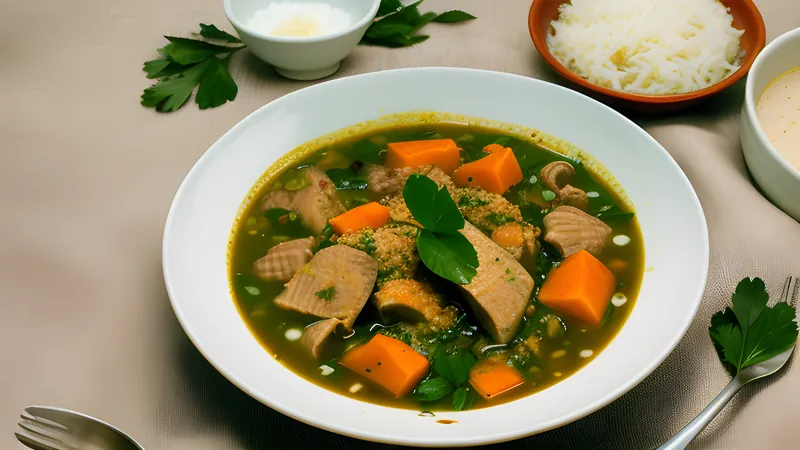
↓ Jump to recipeOgbono soup announces itself before it reaches the table. Lift a spoon out of a properly made pot and the soup stretches behind it in a slow, glossy thread — Nigerians call this quality “draw,” and it is the single most important texture in the entire dish, produced entirely by the ground seed of the African bush mango, Irvingia gabonensis, known locally as ogbono. Cooked correctly, that seed thickens the soup into something between a thick sauce and a stretchy paste, built to be scooped and eaten with a dense swallow like pounded yam or eba rather than spooned like an ordinary soup.
Ogbono Soup: The Wild Mango Seed Draw
Ingredients
- 1kg goat meat or beef, cut into chunks
- 500g assorted offal or smoked fish (optional, to taste)
- 1 onion, chopped
- 2 stock cubes
- 1.2 litres water, plus more as needed
- 150g ogbono seeds, ground to a coarse powder
- 150ml red palm oil
- 2 tbsp ground crayfish
- 2 tbsp fresh pepper (scotch bonnet and red pepper), blended
- 1 tbsp iru (fermented locust bean), optional
- 300g spinach or bitterleaf, washed and shredded
- 1 smoked fish fillet, flaked, bones removed
- Salt, to taste
Method
- Put the goat meat, onion, one stock cube and 1.2 litres water in a large pot. Bring to a boil, skim, then simmer covered for 45 minutes until the meat is tender. Reserve the stock.
- In a separate wide pot, heat the red palm oil over medium heat until it loses its raw smell, about 2 minutes; do not let it smoke or bleach.
- Add the ground ogbono to the warm oil in a steady stream, stirring constantly with a wooden spoon to form a smooth paste. This is the base of the draw.
- Gradually ladle in the hot meat stock, a little at a time, beating continuously to keep the mixture smooth and prevent lumps forming.
- Once all the stock is incorporated and the soup has a thick, stretchy consistency, add the crayfish, blended pepper, iru and remaining stock cube.
- Add the cooked meat and smoked fish, and simmer gently for 15 minutes, stirring occasionally to stop the base catching.
- Stir in the shredded spinach or bitterleaf and cook a further 5 minutes until wilted.
- Taste and adjust salt and pepper. The soup should be thick enough to stretch in a slow, elastic drop from a raised spoon.
- Serve hot with pounded yam, eba or fufu for scooping.
The seed behind the soup
Ogbono seeds come from the fruit of the bush mango tree, native across West and Central Africa, harvested, dried and either sold whole for grinding at home or already ground into the coarse, oily powder most cooks buy directly. The seeds are naturally high in fat and contain a mucilage similar in principle to okra’s, which is what produces the soup’s signature elasticity once the ground seed is cooked properly. Ground ogbono keeps for months in a sealed container away from light, and buying it already ground, from a West African grocer or online, is what most home cooks do rather than grinding whole seeds themselves, which requires equipment most kitchens do not have.
The draw itself takes some newcomers a little time to warm to; for anyone who grew up eating it, though, a properly stretchy pot of ogbono is a mark of a soup done right, in much the same way egusi soup is judged by how well its ground melon seed base has bound together, or the way efo riro is judged by the depth of its red palm oil and locust bean base.
Building the draw: oil first, then seed
The technique that produces a good draw starts with warming red palm oil gently in a wide pot until it loses its raw, slightly sharp smell, which takes only a couple of minutes and should never be pushed to the point of smoking — overheated palm oil turns bitter and loses the deep orange colour that ogbono soup depends on for its look. Once the oil is warm, the ground ogbono goes in gradually, stirred continuously into the oil to form a thick, smooth paste before any liquid is added at all. This order matters enormously: mixing the ground seed with hot oil first, rather than adding it straight to a pot of stock, coats each particle in fat and helps it disperse evenly rather than clumping into hard little balls that never fully break down.
Only once that oil-and-ogbono paste is smooth does the hot stock go in, and it needs to go in gradually, a ladle at a time, with steady stirring throughout. Adding all the liquid at once is the single most common way to end up with a lumpy, uneven pot — the ground seed seizes on contact with a sudden flood of hot liquid in much the same way flour seizes if added carelessly to a roux, and once lumps form, they are difficult to fully smooth back out. Patience at this stage, ladling and stirring, ladling and stirring, is what separates a silky, evenly thick soup from a grainy, inconsistent one.
Meat, fish and the savoury backbone
Goat meat is the classic choice for ogbono soup, simmered separately until properly tender before it joins the draw, its cooking stock reserved and used as the liquid that builds the soup itself rather than plain water. This means the stock carries real flavour into the pot from the very first ladle, rather than the ogbono paste being diluted with something bland. Assorted offal, or a mix of beef and goat, is common too, and dried or smoked fish is close to essential in most versions, flaked in once the meat is tender, contributing a deep, smoky, savoury note that ground crayfish and iru (fermented locust bean) then build on further. Crayfish in particular does a lot of quiet work here, adding a briny depth that rounds out the richness of the palm oil without announcing itself as a separate flavour.
Greens: when and which
Bitterleaf, washed thoroughly to remove its natural bitterness (or bought pre-washed, which most Nigerian grocers sell specifically for this purpose), is the traditional green for ogbono soup, giving it a faint, pleasant bitterness that plays against the richness of the palm oil and meat. Spinach is the easier substitute most home cooks outside West Africa reach for, milder and requiring no special preparation, and it works well enough that many households use it as their everyday choice regardless of availability of the traditional leaf. Whichever green you use, it goes in last, only once the draw itself has fully come together and the meat has had its time to simmer in the finished base — greens added too early lose their colour and texture, turning drab and overcooked by the time the rest of the soup is ready.
Judging the draw
A properly finished ogbono soup should stretch in a slow, unbroken thread when you lift a spoon a few inches above the pot, thick enough to genuinely cling rather than drip. If your pot looks thin and runny even after all the stock has gone in, it usually means either too little ground ogbono was used relative to the liquid, or the initial oil-and-seed paste was not given enough time to properly form before liquid was added. If it looks right but lumpy, the fix is more stirring and patience rather than more ogbono — lumps smooth out slowly with continued gentle heat and a wooden spoon worked steadily through the pot, though they are far easier to prevent than to correct.
Serving
Ogbono soup is built to be eaten with a dense swallow rather than rice, and pounded yam is the classic partner, its smooth, stretchy texture echoing the soup’s own draw in a way rice never quite matches. Eba (made from garri) and fufu are equally traditional and more common for a quick weeknight version, since both come together faster than pounding fresh yam by hand. However you serve it, the etiquette is the same: a small piece of the swallow is pinched off, dipped into the soup, and swallowed with minimal chewing, letting the ogbono’s draw and the meat’s flavour do the work.
A soup that crosses Nigeria’s regional lines
Ogbono is eaten across a wider stretch of Nigeria than many regional soups manage, showing up in Yoruba, Igbo and Edo kitchens alike, each with slightly different habits around what meat and greens go in and how thick the finished draw should be. Igbo households often favour bitterleaf as the green of choice, in a nod to the same bitter-leaf tradition that runs through onugbu soup, while Yoruba versions lean more readily on spinach or a mix of vegetables. The bush mango tree itself grows wild and cultivated across the forest belt stretching from Nigeria through Cameroon and into the wider Congo Basin, which is why versions of this soup, under different names, turn up well beyond Nigeria’s borders — the seed’s fat content and mucilage made it a valuable, tradeable commodity long before it became a supermarket staple, dried and shipped to diaspora communities everywhere from London to Houston.
Within Nigeria, ogbono has long occupied a slightly different social register than some of its soup cousins: it is filling, relatively quick to prepare once the meat stock is ready, and does not demand the extended simmer that a soup like efo riro benefits from, which has made it a reliable midweek choice as much as a special-occasion one. Paired with pounded yam rather than eba, though, it edges back toward the more considered end of the table, since fresh pounded yam takes real effort and is often saved for a weekend or a guest.
Tips and common mistakes
Beyond lumps, the other frequent mistake is over-thinning the soup by adding too much stock too fast, which is difficult to reverse — if this happens, a little more ground ogbono, mixed first with a spoon of warm oil exactly as at the start, stirred back through slowly, will rebuild the draw without leaving new lumps.
Overheating the palm oil is the other trap. It should be warmed just enough to lose its raw edge and turn a slightly deeper orange, never pushed to a hard shimmer or smoke point, or the whole pot takes on a bitter, acrid undertone that no amount of seasoning fixes afterward.
Substitutions and variations
Beef or a mix of beef and goat works in place of pure goat meat with only a small change in richness. For a lighter or pescatarian version, some cooks build the entire soup around smoked fish and prawns with no red meat at all, which is common along the coast and in the Niger Delta, where fish traditions run deep — see also banga soup, the Delta’s other great palm-based soup, built from the fruit rather than the kernel of the palm tree. Egusi is sometimes blended in alongside ogbono for a hybrid “efo egusi ogbono” version, common in some Yoruba households, which adds body and a nuttier flavour on top of the draw.
Storage
Ogbono soup keeps very well, arguably improving after a day or two in the fridge as the flavours settle, and it will keep for up to four days refrigerated or freeze for up to three months. Reheat it gently and stir well, adding a splash of hot water if it has thickened too much on standing; the draw does relax slightly with each reheat, so do not expect quite the same dramatic stretch on day three that you got fresh from the pot.
It is a soup with real technique behind it, patient rather than difficult, and the reward for getting the sequence right — oil, seed, stock, slowly — is a pot with a texture unlike almost anything else in the world’s soup repertoire.
The first time you get the draw right — a spoon lifted clean out of the pot, a thread of soup stretching down behind it instead of dripping in a broken line — is the moment the whole method finally clicks, and after that it never really goes wrong again.
Related Content