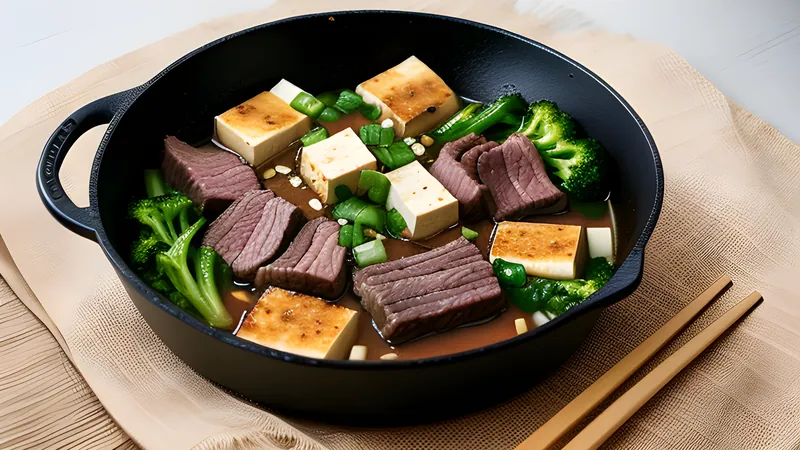
Oden: The Simmered Winter Hotpot
The convenience-store pot, made properly at home
Contents
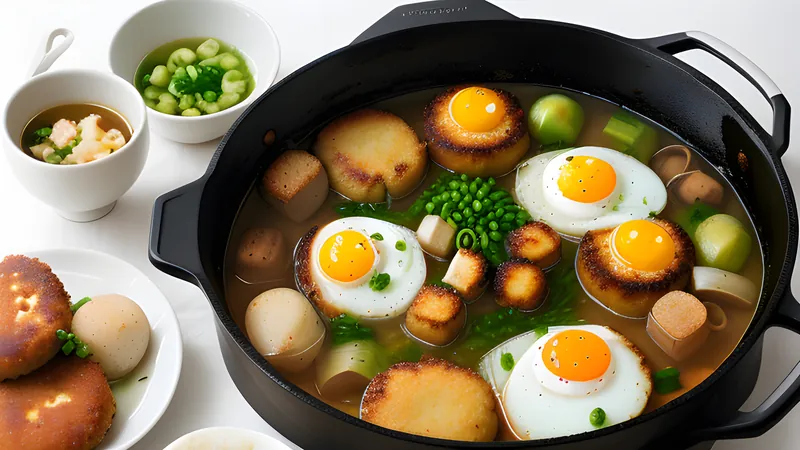
↓ Jump to recipeThe first time most people meet oden, it’s glowing under fluorescent light next to the till at a 7-Eleven or Lawson, a partitioned metal pot with daikon, eggs and fish cakes bobbing in amber broth, priced per item and scooped into a paper cup. That version is genuinely good — convenience stores have run all-day simmering pots since the 1970s and the staff top them up and skim them for hours, which is most of the trick. The other version, the one worth making at home, takes the same idea and gives it the time a shop pot gets by accident.
Oden: The Simmered Winter Hotpot
Ingredients
- 1.5 litres dashi (made from 15g kombu and 30g katsuobushi, or 2 tsp dashi powder)
- 80ml light soy sauce (usukuchi if you have it)
- 60ml mirin
- 30ml sake
- 1 tsp salt
- 1 large daikon, peeled and cut into 3cm rounds
- 4 eggs, hard-boiled and peeled
- 200g konnyaku, scored and cut into triangles
- 200g atsuage (thick fried tofu), cut into pieces
- 4 chikuwa (tube-shaped fish cake), halved diagonally
- 2 hanpen (soft fish cake squares), cut into triangles
- 4 tsumire (fish balls), shop-bought or homemade
- English or Japanese (karashi) mustard, to serve
Method
- Make the dashi: soak kombu in 1.5 litres cold water for 30 minutes, bring to just below a simmer, remove the kombu before it boils, add katsuobushi, turn off the heat and strain after 5 minutes.
- Season the dashi with soy sauce, mirin, sake and salt. Taste it — it should be a touch saltier than a soup you'd drink on its own, since the daikon and konnyaku will dilute it as they cook.
- Score the konnyaku on both sides in a shallow crosshatch, then boil it separately for 3 minutes to strip the raw smell before adding it to the pot.
- Add the daikon and konnyaku to the seasoned dashi. Bring to a bare simmer — small bubbles only, never a rolling boil — and cook for 40 minutes.
- Add the eggs, atsuage and chikuwa. Simmer gently for another 40 minutes.
- Add the hanpen and tsumire in the last 15 minutes; they fall apart if they simmer too long.
- Turn off the heat and let the pot sit, uncovered, for at least 30 minutes before serving — this resting time is when the flavour actually moves into the ingredients.
- Serve in deep bowls with a little broth and a smear of mustard on the side of the bowl, not stirred in.
From grilled tofu to a simmered pot
Oden didn’t start as a soup. The name comes from dengaku, skewered tofu or konnyaku grilled and coated in sweet miso, a dish old enough to appear in Edo-period food writing. At some point cooks started simmering ingredients in a seasoned dashi instead of grilling them, and the simmered version kept the shortened name — oden. Kansai cooks, confusingly, use “oden” for the older grilled dish and call the simmered pot kanto-daki, “Kanto-style simmering,” acknowledging it as an import from Tokyo. Regional versions still diverge sharply: Shizuoka’s oden runs on a black broth thickened with beef tendon, skewers everything, and finishes each portion with a dusting of aonori and dried fish powder from a shared shaker at street stalls. Nagoya leans on its dark, sweet hatcho miso as a dipping sauce alongside the clear broth. None of this is decoration — the broth is the dish, and what goes into it changes what kind of oden you’ve made.
The order matters more than the ingredients
Oden’s ingredient list looks long, but the technique is really about sequencing, because everything cooks at a different rate and everything is released into the same pot of liquid it will keep flavouring. Daikon and konnyaku go in first because they need the longest simmer to soften and take on seasoning — raw daikon stays chalky and mildly bitter until it’s had a proper hour in hot liquid, at which point it turns translucent at the edges and sweet all the way through. Eggs and the firmer fish cakes and tofu go in next, giving them enough time to absorb broth without turning rubbery. The delicate items — hanpen, which is closer to a savoury cloud than a fish cake, and tsumire fish balls — go in last, because more than fifteen or twenty minutes of simmering breaks them down.
The other non-negotiable is heat. Oden should never boil hard. A rolling boil clouds the dashi, toughens the fish cakes and can split the eggs. Keep it at the barest simmer, the surface trembling rather than bubbling, and be patient — this is not a dish that rewards turning the heat up to save time.
The pot that never fully empties
Ask around in Japan and you’ll find households that keep an oden pot going for the better part of a winter, never draining it completely — instead they eat down to a third of the broth, then top it back up with fresh dashi and seasoning and add a new round of daikon and eggs, so the base carries flavour forward from batch to batch rather than starting cold each time. Convenience stores run on the same principle at industrial scale: staff skim the pot through the day, top it up between rushes, and the broth by evening carries the memory of everything that simmered in it since morning, which is a large part of why a till-side paper cup of oden tastes better than it has any right to. You can do a version of this at home across a weekend — cook the pot on a Friday, refrigerate it whole, then reheat gently on Saturday with a couple of fresh eggs and a fresh piece of daikon added in. The broth genuinely deepens.
Choosing your own combination
The eight ingredients above are a solid, traditional core, but oden is really a framework rather than a fixed recipe, and most households build their own combination around what’s at the fishmonger that week. Satsuma-age, a flat deep-fried fish cake, is a common addition alongside or instead of chikuwa. Beef tendon, simmered separately for two hours until tender, is the backbone of Shizuoka’s dark-broth style and adds real body to the dashi if you include even a small piece. Boiled octopus legs, thick-cut cabbage rolls stuffed with minced pork (rolled cabbage oden), and even whole small potatoes all turn up in regional and family versions. The rule that holds regardless of what you choose: dense, absorbent things that benefit from a long simmer go in early, delicate things go in late, and nothing benefits from a hard boil.
What can go wrong
The most common failure is bitter, unseasoned daikon at the centre of an otherwise good pot. This happens when the daikon hasn’t simmered long enough, or when it was cut too thick to let the broth reach the middle in the time given. Cut rounds no thicker than 3cm, and if you’re short on time, score a shallow cross into the flat side of each piece before it goes in — this isn’t just decorative, it opens a channel for the broth to penetrate the dense core faster.
Cloudy, flat-tasting broth is usually a dashi problem rather than a seasoning problem. Kombu turns bitter and slimy if it boils, so pull it the moment tiny bubbles appear around the edges of the pan, well before a simmer. Katsuobushi should steep off the heat — boiling it makes the dashi taste fishy rather than savoury.
Rubbery fish cakes and split eggs both come from the same mistake: too much heat, too long. If your eggs have already gone in and you’re worried about the boil, pull the pot off direct heat for a few minutes rather than fishing them out.
A note on the dashi itself
Dashi quality decides more of this dish than any other single factor, because oden’s broth is thin by design — there’s no roux, no cream, no long-rendered fat to fall back on if the base tastes weak. Kombu should be wiped, never washed, since the white bloom on its surface carries much of its glutamate content; rinsing it away for the sake of looking tidy throws out flavour along with a bit of dust. Katsuobushi should be added to water that has been pulled just off a simmer, not boiling — boiling extracts bitterness and a fishier, less rounded flavour from the flakes. If you keep a jar of used kombu and katsuobushi from previous batches, a second, weaker dashi (niban dashi) can be made by simmering them again in fresh water for ten minutes; it’s not strong enough for oden on its own but makes a useful base for topping up a pot that’s reduced too far during a long simmer.
Tips, substitutions and keeping it
If you can’t get chikuwa or hanpen, most Asian supermarkets stock a wider range of frozen Japanese fish cakes than they display — ask, and substitute freely between shapes, adjusting simmering time to whichever is most delicate. Firm tofu works if atsuage isn’t available, though it won’t hold its shape quite as well; press it for 20 minutes first to stop it disintegrating.
Konnyaku deserves its own note, because most people who’ve never cooked it underestimate how much prep it needs to taste of anything beyond rubber. Straight from the packet it carries a faint mineral smell from the lime water used to set it, and it’s essentially flavourless on its own — the scoring and the pre-boil aren’t optional steps, they’re what let the dashi actually get into it. Score both faces in a shallow crosshatch no deeper than a couple of millimetres, boil for the full three minutes in plain water, then drain it well before it goes anywhere near the seasoned broth; skipping the pre-boil is the single most common reason a home oden pot tastes flat in the konnyaku specifically, even when everything else is seasoned properly.
Oden keeps improving for two or three days in the fridge, which is really the whole argument for making a full pot rather than a small one — the daikon in particular tastes better on day two than it does fresh off the stove. Reheat gently, never at a boil, and top up with a splash of dashi if the broth has reduced too far. It also freezes well minus the eggs and hanpen, which turn spongy after thawing; freeze the broth with the daikon and firmer items, and add fresh eggs and hanpen when you reheat. Eggs left sitting in the broth for more than a day turn the yolk fudgy and slightly seasoned all the way through, which some households consider the best part of the whole pot rather than a byproduct — if you like that texture, boil the eggs for 7 minutes rather than the full 10 to keep the centre soft before it firms further in the broth overnight.
Dashi powder is a legitimate shortcut if making dashi from scratch isn’t practical on a given evening, but read the label — many commercial dashi powders already contain salt and sometimes sugar, so hold back on the added soy sauce and salt in the recipe and season to taste once the powder dashi has been mixed. A poor-quality dashi is the one shortcut that oden can’t really hide, since the broth carries no other fat or richness to fall back on if the base itself tastes flat.
Serving it properly
Oden is eaten from deep, wide bowls rather than the shallow dishes used for most Japanese meals, because each portion needs enough room for a good ladle of broth alongside the solids — the broth is not a garnish here, it’s meant to be drunk. Karashi mustard goes on the side of the bowl rather than mixed through the broth, so each mouthful can be dipped to taste rather than uniformly hot. A small side of plain steamed rice or a few onigiri rounds out the meal without competing with the broth; oden is rarely served as a single course in a Japanese household, more often as the centrepiece of a casual, extended evening where the pot just stays on the table and everyone helps themselves as they get hungry again.
For a version closer to a Shizuoka stall, add a length of beef tendon (simmered separately for two hours until tender before it joins the pot) and finish bowls with aonori and a pinch of dried bonito powder instead of mustard. If you want something in the same register but built around meat rather than a hotpot, nikujaga uses a similar sweet soy-dashi base with a shorter cooking time. For another dish that lives or dies on gentle, unhurried heat, chawanmushi shares oden’s core lesson: patience is the technique.
Related Content