Nyama Choma: Goat Over Charcoal, Kenyan Style
The Swahili word for roast meat that became a whole Saturday ritual
Contents
↓ Jump to recipeDrive into almost any Kenyan town on a Friday or Saturday evening and you’ll smell nyama choma before you see it — charcoal smoke and roasting fat, drifting from open-air joints where whole legs and ribs of goat sit over glowing coals while a queue forms for a table. Nyama choma just means “roast meat” in Swahili, plainly and literally, but in Kenya it has become shorthand for a specific social ritual: meat cooked slowly over charcoal, chopped at the table, eaten with your hands, and shared among a group that’s settled in for the evening rather than passing through for a quick meal.
Nyama Choma: Goat Over Charcoal, Kenyan Style
Ingredients
- 2kg goat meat, bone-in, cut into large chunks (leg and shoulder work best)
- 2 tablespoons vegetable oil
- 2 tablespoons fine salt, divided
- 1 tablespoon ground black pepper
- 1 lemon, juiced
- 4 large ripe tomatoes, finely diced
- 1 large red onion, finely diced
- 2 fresh green chillies, finely chopped
- 1 small bunch coriander, chopped
- 1 tablespoon vegetable oil, for the kachumbari
- Charcoal, for grilling
Method
- Rub the goat chunks all over with the oil, 1 tablespoon of the salt, the black pepper and the lemon juice. Leave to sit at room temperature for 30 minutes.
- Light the charcoal and let it burn down until covered in grey ash with a steady, even heat — no visible flame.
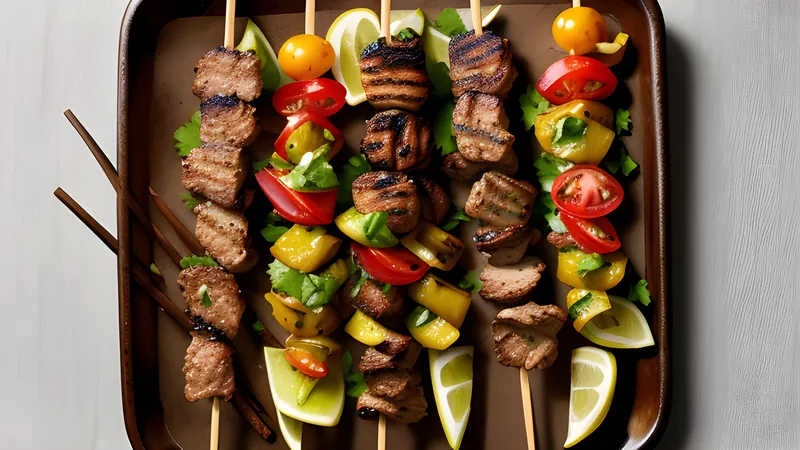
- Grill the goat over the coals, turning every 5-6 minutes, for 45-60 minutes total, until deeply charred outside and tender enough to pull easily from the bone.
- For the kachumbari, combine the tomatoes, onion, chillies and coriander in a bowl.
- Dress with the remaining teaspoon of salt and the tablespoon of oil, and toss well. Leave to sit for 10 minutes before serving so the flavours combine.
- Once the goat is cooked, rest for 5 minutes, then chop into bite-sized pieces on a board (traditionally with a cleaver, straight onto the serving board).
- Serve immediately with the kachumbari alongside, plus extra lemon wedges if you like.
Why goat, specifically
Beef and even chicken get grilled nyama-choma style too, but goat is the meat most associated with the tradition, and for practical reasons as much as taste ones. Goats are widely and affordably farmed across Kenya, require less land and water than cattle, and the meat itself — leaner than beef, with a distinct flavour that stands up well to long, slow grilling over coals — holds together through the extended cook time nyama choma demands without drying out the way a leaner cut of beef might.
Goat meat also has a texture that rewards the technique specifically used here: bone-in chunks, grilled low and slow rather than seared hard and fast, given enough time over the coals for the connective tissue to break down and the meat to turn genuinely tender rather than just cooked through. Rush it over high, direct flame and goat turns tough and chewy; the patience of a proper nyama choma grill is what makes the difference.
The simplicity of the seasoning is deliberate
Compare the ingredient list here to almost any other stew or braise in this collection and it’s strikingly short: oil, salt, pepper, lemon. That’s intentional. Nyama choma isn’t a marinated dish in the way jerk chicken or suya are — the seasoning exists to season the meat lightly and let the charcoal do the actual flavour work. A heavily spiced marinade would compete with, rather than complement, the smoky char that’s the entire point of grilling over real coals for over an hour.
This restraint also reflects how nyama choma is actually cooked in Kenya — often by a dedicated grill cook (a nyama choma man) working a large communal grill for many tables at once, where a simple, consistent seasoning that works across cuts and quantities makes far more practical sense than an elaborate individual marinade for every order.
Getting the charcoal right
The single most important technical element of nyama choma is the fire itself. Charcoal needs to burn down past its initial flaming stage to a steady bed of grey-ashed coals before the meat goes anywhere near it — cooking over active flame chars the outside black within minutes while leaving the inside raw, which is the opposite of what a long, low grill is meant to achieve.
Once the coals are properly ashed over, they hold consistent, moderate heat for well over an hour, which is exactly the window this recipe needs. Turning the meat regularly — every five to six minutes rather than leaving it to sit — prevents any one side from burning while the rest stays undercooked, and lets fat rendering out of the goat drip onto the coals periodically, which is where a genuine part of the characteristic smoky flavour comes from.
Kachumbari: the essential counterpoint
No nyama choma order arrives without kachumbari, a raw tomato-onion-chilli salad, dressed simply and left to sit briefly so the flavours meld. It functions the way a squeeze of lemon or a sharp pickle functions alongside any rich grilled meat: cutting through the fat and char with acidity and freshness, keeping a meal that’s otherwise entirely about smoke and protein from feeling one-note.
The salad needs no cooking and takes minutes to prepare, which is part of why it’s such a natural pairing for a dish that otherwise demands over an hour of unhurried grilling — kachumbari is the one element you make at the last minute, right before the meat comes off the coals, so it stays crisp and bright rather than sitting and softening.
Serving it properly
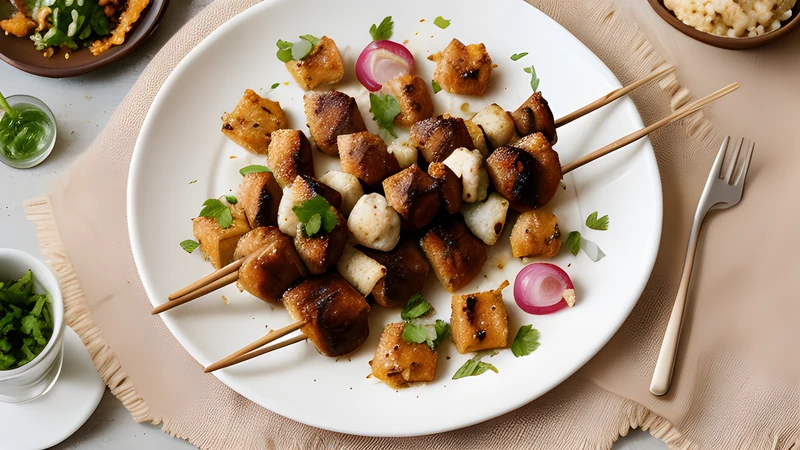
Traditional nyama choma is served on a board, not a plate, chopped into bite-sized pieces with a cleaver right in front of the table — part of the theatre of the meal is watching the meat get broken down before it’s shared. Ugali (stiff maize porridge) is the most common starch alongside it, there to be torn into small pieces by hand and used to scoop up meat and kachumbari together, though plain white rice is an increasingly common substitute, especially in urban nyama choma joints.
Beer is the standard drink pairing, and nyama choma spots across Kenya are as much social and drinking venues as restaurants — groups settle in for hours, ordering meat by the kilo as it’s needed rather than as fixed individual portions, which is part of why the dish reads as a social occasion first and a meal second.
Variations
Some grill cooks add a light rub of crushed garlic or a spoonful of curry powder to the basic salt-pepper-lemon seasoning, a variation more common in Nairobi’s newer nyama choma spots than in rural or traditional joints, where the plain seasoning is treated as closer to correct. Ribs and other bone-in cuts are grilled the same way as the leg and shoulder chunks here, though they typically need slightly less time given the higher surface-area-to-mass ratio and the extra fat that renders down and helps them along.
Fish nyama choma — whole tilapia grilled over the same coals — has become a common addition to the format at coastal and lakeside grill spots, particularly around Lake Victoria and Mombasa, seasoned just as simply as the goat and grilled until the skin blisters. It’s not traditionally what the term refers to, since “nyama” specifically means meat rather than fish, but the shared cooking method and social format have pulled it into the same category at many modern grill joints.
Substitutions
Beef short ribs or a well-marbled beef shoulder work as a substitute for goat and follow the same timing, though beef benefits from an extra ten to fifteen minutes over the coals given its slightly different fat structure. Lamb, while less traditional than goat in Kenya specifically, is common in nyama choma-style grilling across the wider East African region and needs slightly less time than goat, since it’s typically more tender to begin with.
If charcoal grilling isn’t practical, a very hot oven grill (broiler) set as low and slow as your oven allows, with the meat well away from the direct heat element, gets you a reasonable approximation of the texture, though you’ll lose the specific smoky character that only real charcoal provides — there’s no substitute for that particular flavour, only workarounds that get partway there.
Storage
Grilled goat keeps for up to three days refrigerated. Reheat gently, covered, in a low oven with a splash of water or stock to keep it from drying out further — nyama choma is lean enough that it can toughen noticeably on reheating if done too aggressively. The kachumbari doesn’t keep well beyond a few hours, since the tomato and onion release liquid and lose their crispness; make a fresh batch if serving leftover meat the next day.
The social ritual around it
Nyama choma joints occupy a specific place in Kenyan life that goes beyond the food itself. Weekends, especially, see extended families and groups of friends gather at a favourite spot, order meat by weight rather than by dish, and settle in for an evening that can stretch for hours — grilled goat arriving in waves as it’s ready rather than all at once. It’s a social format closer to a barbecue gathering than a restaurant meal in the conventional sense, and choosing which nyama choma joint is “the best” in a given town is the kind of low-stakes, endlessly argued debate that exists in some form in almost every food culture.
The tradition has roots that predate the commercial nyama choma joint by generations — goat roasted over an open fire has long marked celebrations, from weddings to the naming of a child, across many of Kenya’s ethnic communities, with the Maasai and Kikuyu traditions both carrying strong associations between roasted goat and significant occasions. What’s changed over the past several decades is the shift of that celebratory cooking into a commercial, everyday-available format: nyama choma joints that turned an occasion food into something you could order on an ordinary Friday night, no wedding or naming ceremony required.
Common mistakes
Grilling over active flame rather than waiting for the coals to ash over is the single most common mistake, covered above but worth restating because it’s the one that ruins the dish most completely — charred outside, raw inside, no amount of resting afterward fixes it. Patience with the fire is not optional.
Cutting the goat into pieces that are too small is the second issue. Small chunks cook through quickly but dry out before they’ve had time to develop real char and tenderness; the large chunks specified here — closer to fist-sized than bite-sized — give the meat enough mass to survive the full 45-60 minute grill without drying out, since the final chopping into bite-sized pieces happens after cooking.
Skipping the rest before chopping is the third: goat, like any roasted or grilled meat, needs a few minutes off the heat for the juices to redistribute through the meat rather than spilling out the moment it’s cut. Five minutes is enough — no need for the longer rests a whole roast might need — but skipping it entirely does lose you some juiciness.
Related on the site
Nyama choma is almost always eaten alongside sukuma wiki, the sautéed collard greens that stretch a Kenyan household’s week, which brings a cheap, vegetable counterpoint to a meal otherwise dominated by meat. For the rice-based alternative to ugali as a starch, pilau, Zanzibar’s spiced rice cooked with beef, shows a completely different East African approach to building a meal around beef. And for another fast, high-heat beef preparation from the same region, suqaar, cubed beef fried hard and fast, makes a good contrast to nyama choma’s slow, patient charcoal method.
Related Content