Nikujaga: Japanese Meat and Potato Stew
A navy admiral's beef stew, remembered wrong on purpose
Contents
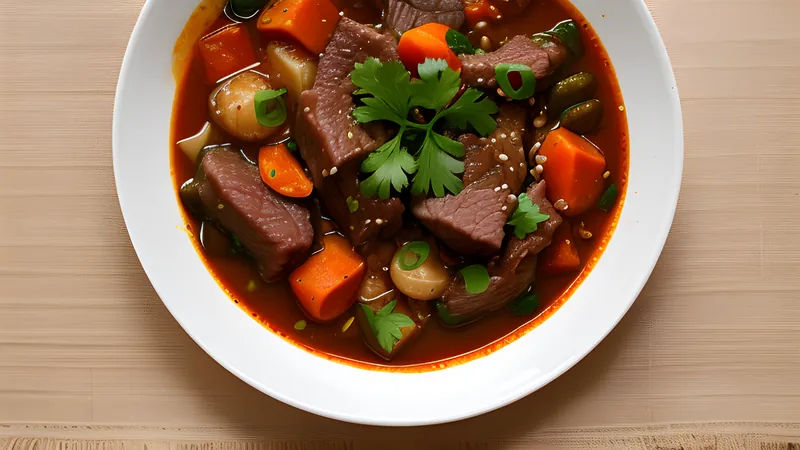
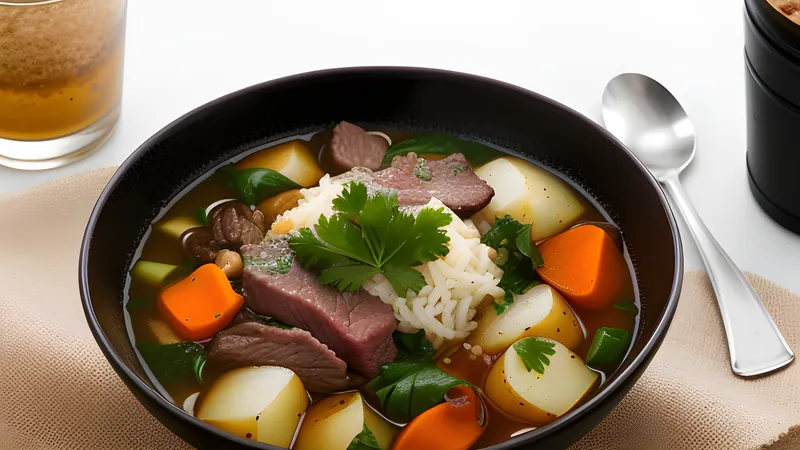
↓ Jump to recipeAsk a Japanese cook what their mother made most often growing up and there’s a fair chance the answer is nikujaga — meat and potatoes simmered in a sweet soy dashi until the potatoes go soft at the edges and starchy enough to slightly thicken the broth around them. It’s the dish most associated with the phrase ofukuro no aji, “mother’s taste,” the flavour a particular household is built around rather than the flavour any restaurant serves. There is no definitive version. Every family’s nikujaga is someone’s grandmother’s nikujaga, and that’s the entire point of the dish.
Nikujaga: Japanese Meat and Potato Stew
Ingredients
- 400g thinly sliced beef (chuck or rib, sukiyaki-cut) or pork belly
- 1 tbsp neutral oil
- 4 medium potatoes (maris piper or similar waxy-floury cross), cut into large chunks
- 1 large onion, cut into thick wedges
- 2 carrots, cut into rough chunks
- 100g shirataki noodles, drained and rinsed (optional)
- 500ml dashi
- 3 tbsp soy sauce
- 3 tbsp mirin
- 2 tbsp sake
- 1.5 tbsp sugar
- 100g frozen peas or green beans, cut into short lengths
Method
- Heat the oil in a heavy pot over medium-high heat and brown the beef briefly, just until the outside changes colour — it will finish cooking in the broth.
- Add the onion wedges and cook for 2 minutes until they start to soften and turn translucent at the edges.
- Add the potatoes and carrots and stir to coat everything in the rendered fat.
- Pour in the dashi, soy sauce, mirin, sake and sugar. Bring to a simmer, skimming off any scum that rises.
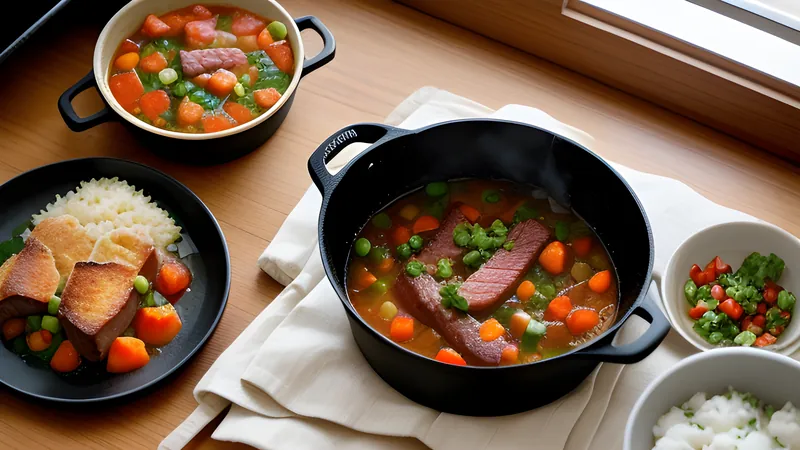
- Cut a circle of baking paper slightly smaller than the pot's diameter and lay it directly on the surface of the stew as a drop lid (otoshibuta). Simmer for 20-25 minutes, until the potatoes are tender enough to give under a knife but not falling apart.
- Add the shirataki, if using, in the last 5 minutes.
- Add the peas or green beans in the final 2 minutes, just to heat through.
- Turn off the heat and let the pot rest for 10 minutes before serving; nikujaga tastes better once it's had a few minutes off direct heat, and better again the next day.
An admiral, a British stew, and a story nobody can confirm
The origin story attached to nikujaga is one of the better-known culinary legends in Japan, and it’s worth telling with the right amount of scepticism. As the story goes, Admiral Tōgō Heihachirō, who studied naval strategy in Britain in the 1870s, developed a taste for British-style beef stew and asked his ship’s cook to recreate it once he returned to Japan and took command of the fleet. The cook, lacking the wine, butter and demi-glace of a proper Western stew, substituted soy sauce, sugar and sake for what he had on hand, and nikujaga was born. Both Maizuru and Kure, two Japanese naval port towns, claim this story as their own local history, complete with commemorative plaques, and the two accounts don’t quite agree on details — which is usually a sign a legend has been polished rather than preserved. What’s certain is that nikujaga’s ingredients and method line up closely with a much older, wider Japanese tradition of simmering meat and vegetables in soy-sweetened dashi, the same technique underneath dishes like oden and countless home stews with no naval backstory attached at all. The admiral story might explain why this particular combination caught on nationally rather than staying a regional dish, even if it didn’t invent the technique itself.
Why sweetness comes first in the seasoning order
Japanese simmered dishes generally follow a seasoning order remembered by the mnemonic sa-shi-su-se-so — sugar, salt, vinegar, soy sauce, miso — added roughly in that sequence because sugar molecules are larger and slower to penetrate ingredients than salt. Add salt or soy sauce too early and it tightens the surface of the meat and vegetables, making it harder for the sugar to work its way in afterward; add sugar first and it has a clearer path in before the other seasonings arrive. Nikujaga doesn’t follow this order as strictly as some other simmered dishes since most of the seasoning goes in together as a liquid, but the same logic explains why sugar and mirin are usually measured slightly ahead of the soy sauce in the ratio, and why a version made with soy sauce added too heavily at the start often tastes flatter and less rounded than one where the sweetness had a moment to work first.
The technique that actually matters: the drop lid
Nikujaga’s texture depends on a piece of equipment that looks almost too simple to matter: the otoshibuta, a lid — traditionally wood, easily improvised with a circle of baking paper — that sits directly on the surface of the stew rather than on the rim of the pot. It does two things a regular lid can’t. It keeps the liquid circulating downward and back up through the ingredients rather than just evaporating off the top, so everything gets basted continuously without you having to stir it (stirring nikujaga too much breaks the potatoes into mush). And it lets just enough steam escape around the edges that the broth reduces and concentrates as it cooks, rather than staying thin and separate from the solids. Skip it and you’ll still get a nikujaga, but the potatoes will taste less like they’ve absorbed the broth and more like they were just cooked alongside it.
Choosing and cutting the potatoes
The potato matters more than most nikujaga recipes admit. You want something that holds its shape through a 20-minute simmer but still breaks down slightly at the surface — a floury potato collapses entirely, a fully waxy one stays too firm to take on flavour. Maris Piper or a similar all-rounder splits the difference well. Cut chunks on the large side, roughly golf-ball sized, and round off the sharp corners with a light knife-paring technique called mentori — this stops the corners from crumbling into the broth and turning it cloudy while the rest of the piece holds together.
Not a fixed recipe, a household argument
Ask three Japanese families for their nikujaga and you’ll likely get three different meats, two different sweeteners and at least one argument about whether konnyaku belongs in it at all. Kansai households tend to favour beef and a slightly sweeter broth; Kanto versions lean toward pork more often and season a touch saltier. Some households add a beaten egg at the very end, off the heat, to loosely thicken the broth into something closer to a light custard around the vegetables — a technique borrowed from oyakodon. Others insist that shirataki noodles are essential and other households have never used them. None of these are wrong. Nikujaga is one of the few dishes where the “correct” version is explicitly whichever one you grew up eating, which is part of why it holds the emotional weight it does in Japanese food culture — every returning student or expatriate has a very specific, very personal idea of what a “proper” nikujaga tastes like, and it’s rarely anyone else’s.
Building flavour before the liquid goes in
The initial browning step does more work than its short two or three minutes suggests. Beef seared even briefly in a hot pan releases fat and forms small caramelised patches on the surface — the Maillard reaction — that dissolve back into the broth once the dashi is added, giving the finished stew a savoury depth that boiling raw meat directly in liquid never achieves. The same logic applies to the onion, which should be allowed a genuine minute or two of contact with the hot pan and rendered fat before any liquid arrives, rather than going straight into the dashi. Cooks in a hurry often skip both steps and wonder why their nikujaga tastes thinner than the version they remember; the fix is almost never more seasoning, it’s more time in the dry pan at the start.
What can go wrong
Mushy, disintegrated potatoes are the most common failure, and they’re almost always caused by either overcooking or too much stirring. Check potatoes from about the 18-minute mark by piercing one with a skewer — you want resistance that gives way smoothly, not something that’s already falling apart on the skewer. Once they’re there, pull the pot off the heat immediately rather than leaving it simmering while you finish something else.
Bland or watery-tasting nikujaga usually means the beef wasn’t browned properly at the start. That initial sear, even brief, renders fat into the pot and builds a layer of savoury depth that the broth alone can’t replicate — don’t skip it or rush it into the pot cold and unseared.
Overly sweet nikujaga, tipping toward dessert territory, usually comes from sugar and mirin without enough soy sauce and dashi to balance them. Taste the broth before the potatoes go in and adjust; it should taste a shade too salty on its own, since the starch from the potatoes will mellow it as they cook.
The dashi behind the dish
Nikujaga’s broth is simpler than oden’s or chawanmushi’s — it leans harder on soy, mirin and sugar and less on a long, delicately drawn dashi, which is part of why it’s considered an easy, forgiving dish for someone just learning Japanese home cooking. A basic kombu-and-katsuobushi dashi is still worth making properly if you have twenty minutes, but a good-quality instant dashi powder is a genuinely acceptable substitute here in a way it might not be for a more delicate dish like chawanmushi, since nikujaga’s other seasonings carry enough of their own weight to cover for a slightly flatter base. If you’re making dashi from scratch specifically for this dish, don’t bother pulling the kombu at the first sign of bubbles the way you would for a clear soup — a slightly stronger, less precious dashi suits nikujaga’s rustic character better than a refined one.
Getting the vegetables right
Carrots cut into rough, irregular chunks (rather than neat rounds) is traditional and not just rustic styling — irregular surfaces hold more broth in their crevices and give more textural contrast against the smoother potato pieces. Onion wedges should be left thick enough that the layers stay loosely intact through the simmer rather than dissolving into strands; cut too thin, onion disappears into the broth and you lose one of the dish’s more pleasant textures, the slightly slippery, sweet onion layer that’s gone soft but still holds together.
Substitutions, storage and variations
Pork belly, thinly sliced, is a common and entirely legitimate substitute for beef in many households, giving a slightly richer, fattier stew — this version is sometimes just called buta-jaga. Chicken thigh works too, though it needs less time to render fat into the broth at the start.
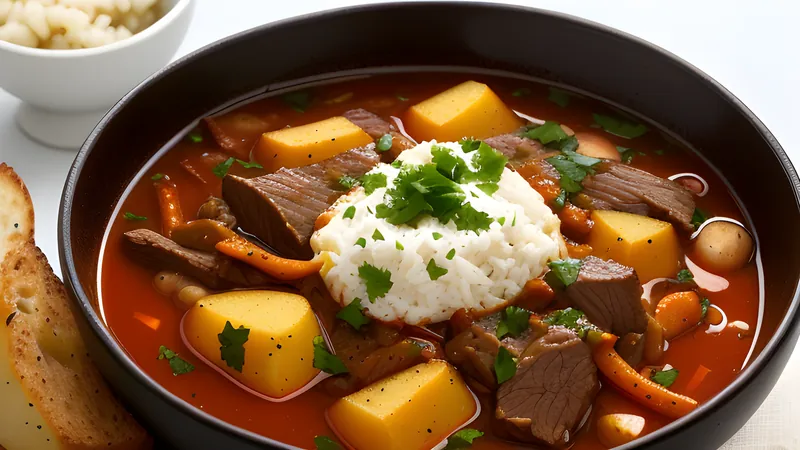
A shallow bowl rather than a plate is the traditional way to serve nikujaga, with enough broth ladled in alongside the solids to be sipped or spooned up once the meat and vegetables are gone — plain rice on the side is standard, and the two are rarely served in the same bowl, so the rice stays separate from the broth until you choose to pour a spoonful over it yourself.
Nikujaga keeps for four or five days refrigerated and, like most soy-based simmered dishes, actually improves overnight as the potatoes continue absorbing the broth — many households deliberately make a double batch to eat as leftovers rather than fresh. It freezes reasonably well, though the potatoes soften further on thawing, so slightly undercooking them if you plan to freeze the batch is worth doing.
Cut potatoes with the mentori technique described above — rounding off the sharp edges with light knife strokes — if you plan to reheat the stew more than once; unrounded corners are the pieces most likely to have broken down completely by the second or third serving.
For a version with more vegetables and less meat, snow peas, shiitake and konnyaku are all common additions that don’t disrupt the core seasoning. If you want to stay in the same sweet-soy register but move toward a tableside dish built around beef rather than potatoes, sukiyaki uses almost the same base seasoning with a completely different technique and occasion.
Related Content