Ndolé: Cameroon's Bitterleaf and Groundnut Stew
The Sawa dish that carries the whole country's name on menus abroad
Contents
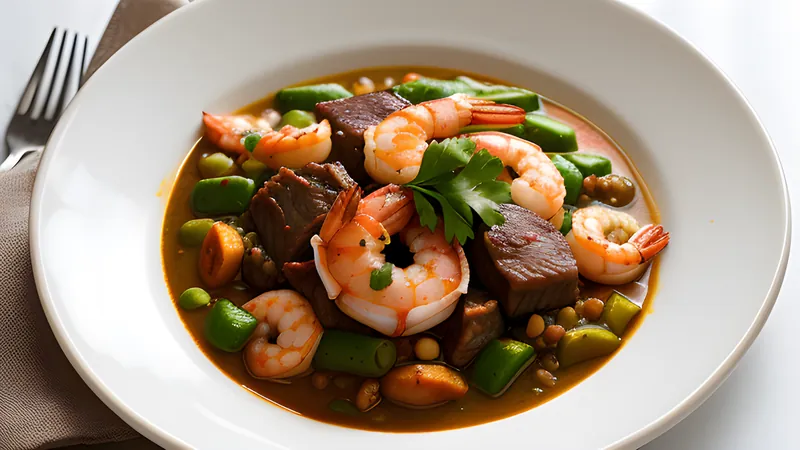
↓ Jump to recipeAsk a Cameroonian abroad to name one dish that means home, and ndolé wins more often than anything else. It’s the closest thing the country has to a single unifying national dish, despite Cameroon’s genuine internal diversity — more than 250 ethnic groups and languages — and it originated with one specific people: the Sawa, the coastal communities around Douala, for whom bitterleaf has been a staple green for generations before it became, over the twentieth century, something cooked and claimed across the whole country.
Ndolé: Cameroon's Bitterleaf and Groundnut Stew
Ingredients
- 300g dried bitterleaf (ndolé), or 500g fresh spinach plus 100g dried bitterleaf as a blend
- 600g beef chuck or shin, cut into 4cm chunks
- 200g smoked fish (mackerel or catfish), flaked, bones removed
- 300g raw prawns, peeled
- 400g raw shelled peanuts, or 300g smooth unsweetened peanut butter
- 2 tablespoons palm oil or vegetable oil
- 1 large onion, chopped
- 4 garlic cloves, minced
- 1 thumb ginger, minced
- 1 beef stock cube, crumbled
- 1-2 scotch bonnet chillies, whole (pierced) or minced for more heat
- 1 litre water or beef stock, plus more as needed
- 1 teaspoon fine salt, plus more to taste
Method
- If using dried bitterleaf, soak in warm water for 20 minutes, then squeeze and rinse in several changes of water until the water runs mostly clear and the bitterness has mellowed to a background note rather than a sharp edge.
- If using fresh spinach as a partial substitute, blanch briefly and roughly chop; combine with the rinsed dried bitterleaf.
- Roast the raw peanuts in a dry pan over medium heat for 8-10 minutes, stirring constantly, until fragrant and lightly golden, then blend to a smooth, thick paste with a little water (skip this step entirely if using peanut butter).
- Season the beef with salt and brown in the palm oil in a large heavy pot over medium-high heat, in batches, until deeply coloured on all sides; set aside.
- In the same pot, soften the onion for 4 minutes, then add the garlic and ginger and cook for 1 minute until fragrant.
- Return the beef to the pot with the stock cube, scotch bonnet and water or stock. Cover and simmer for 45 minutes, until the beef is starting to become tender.
- Stir in the peanut paste, loosening with a splash more water if very thick, and simmer uncovered for 15 minutes, stirring occasionally to stop it catching on the bottom.
- Add the prepared bitterleaf and smoked fish and simmer for a further 15 minutes.
- Add the prawns and cook for a final 5 minutes, until just pink and cooked through. Taste, adjust salt, and serve hot.
The leaf that gives the dish its name and its difficulty
Ndolé refers first to the plant — Vernonia amygdalina, known in English as bitterleaf — and only by extension to the finished stew. As the name suggests, the raw leaf is genuinely, aggressively bitter, bitter enough that eating it unprepared would be unpleasant rather than just an acquired taste. Traditional preparation involves repeated washing, squeezing and sometimes boiling-and-discarding the water, a process aimed at reducing the bitterness to a pleasant, rounded background note rather than eliminating it entirely — a completely bitterness-free bitterleaf stew would, to a Cameroonian palate, taste like it was made with the wrong plant.
Fresh bitterleaf is rarely available outside Cameroon and its immediate diaspora, so most recipes made abroad use dried bitterleaf, sold vacuum-packed at African grocers, rehydrated and rinsed the same way. It’s also common, and entirely legitimate, to cut dried bitterleaf with fresh spinach to bulk out the volume and soften the intensity for a first attempt — spinach carries none of the bitterness itself but takes on the sauce’s flavour well and stretches a smaller quantity of the harder-to-find bitterleaf further.
Building the base: peanuts done right
The groundnut base is what turns ndolé from a bitter green stew into something rich and rounded. Raw peanuts, dry-roasted until fragrant and just beginning to colour, then blended into a thick paste, give a deeper, more complex flavour than shop-bought peanut butter — the roasting step develops nutty, slightly caramelised notes that pre-made peanut butter, roasted and processed weeks or months earlier, has usually lost. That said, smooth unsweetened peanut butter is a completely workable shortcut when time is tight; just make sure it’s unsweetened and unsalted, since sweetened peanut butter (common in supermarkets outside West Africa) will throw the savoury balance of the whole dish off.
The peanut paste goes in after the meat has had a head start simmering, and needs regular stirring once it’s in the pot — ground peanuts thicken a stew considerably and can catch and scorch on the bottom if left unattended, which introduces a burnt, bitter note that layers badly on top of the bitterleaf’s own bitterness rather than complementing it.
The three-protein structure
Classic ndolé carries beef, smoked fish and prawns together, each added at a different point calibrated to how long it needs. Beef goes in first and gets the longest simmer, since it needs time to tenderise. Smoked fish, already cooked through during smoking, goes in with the greens partway through mainly to rehydrate and release its flavour into the broth rather than to cook from raw. Prawns go in last, for the shortest possible time, since they turn rubbery quickly once overcooked.
This isn’t excess for its own sake — it reflects Douala’s position as a port city where fresh seafood, smoked fish (a traditional Sawa preservation method predating refrigeration) and inland beef were all reasonably accessible, and combining them became the standard rather than the exception. Home cooks with a tighter budget or fewer ingredients on hand often make do with just one or two of the three proteins, most commonly dropping the prawns first since they’re the most expensive and the most delicate to get right.
What can go wrong
Under-washing the bitterleaf is the single most common mistake, and it ruins the dish more thoroughly than almost any other error in this list of West and Central African stews — a stew that’s too bitter isn’t a matter of taste preference so much as a sign the leaf wasn’t properly prepared. Taste a small pinch of the rinsed, squeezed bitterleaf before it goes into the pot; if it makes you wince, give it one more rinse and squeeze cycle.
Adding the peanut paste too early, before the beef has had its initial 45-minute simmer, is the second issue — the paste thickens the liquid substantially, which slows down how effectively the beef can tenderise in the remaining cooking time, since a thick, starchy liquid transfers heat less efficiently than a thin one. Following the order in the recipe (meat first, thicken later) avoids ending up with tender-enough beef and a burnt pot bottom from an hour of stirring a stew that was already too thick too early.
Dried bitterleaf varies noticeably in strength from one supplier to another — some packets are pre-boiled and only mildly bitter before you even start rinsing, while others are much closer to the raw leaf’s full intensity. It’s worth tasting a rehydrated pinch straight out of the packet before committing to a full rinse cycle, so you know roughly how much washing that particular batch actually needs rather than following a fixed number of rinses regardless of the leaf in front of you.
Substitutions
Kale or collard greens, chopped fine and blanched, are the next-closest substitute after spinach if bitterleaf genuinely isn’t available — they carry a little more bitterness naturally than spinach, which gets you slightly closer to the real dish’s character even without the actual leaf. Chicken can replace beef for a lighter version, added later in the cooking process since it needs less time to tenderise; goat is a traditional alternative in some households and behaves similarly to beef in terms of timing.
Dried crayfish, ground fine, is sometimes added alongside or instead of the fresh prawns for extra depth — a small handful stirred in with the smoked fish adds a savoury, slightly funky note that’s authentic to many home versions even though it doesn’t appear in every restaurant recipe.
Variations
Some households add a portion of ground egusi (melon seed) alongside the peanut paste for extra body and a slightly different, more mineral flavour — a hybrid that borrows from the wider West African tradition of thickening stews with ground seeds. Coastal versions closer to Douala itself sometimes lean harder on seafood, using crab or additional smoked fish varieties in place of or alongside the beef, reflecting easier access to the day’s catch. Inland and highland versions, by contrast, sometimes drop the seafood almost entirely and rely on beef or goat as the sole protein, a practical adaptation to what’s actually available and affordable away from the coast — proof that even a dish this closely tied to one specific origin still bends to match the kitchen it’s cooked in.
Storage
Ndolé keeps for up to four days refrigerated and, like most peanut-thickened stews, tends to improve after a day as the flavours settle and meld — many Cameroonian households consider next-day ndolé better than the day it was made. It freezes well for up to two months, though it’s worth adding the prawns fresh after reheating rather than freezing them in the stew, since they lose texture badly on refreezing and reheating.
From Douala speciality to national dish
The path ndolé took from a specifically Sawa dish to something claimed across the whole of Cameroon runs through the same forces that shaped a lot of national cuisines: urban migration, mixed marriages, and the simple fact that Douala, as the country’s economic capital and biggest port, has always drawn people in from every region. Cameroonians from the western highlands, the north, and the francophone and anglophone regions alike settled in Douala over the twentieth century, ate ndolé because it was what was cooked around them, and carried the recipe home or passed it on to their own households.
By the time Cameroon marked its independence and reunification in the early 1960s, ndolé had already become the dish visiting dignitaries were served and the one Cameroonians abroad cooked to explain their country to outsiders — a status that had less to do with any government campaign to name a national dish and more to do with the dish simply having spread furthest and fastest of any regional specialty. It remains, unusually for a “national dish,” one that most Cameroonians can trace to a specific place and people rather than treating as generic or placeless, which is part of why the Sawa origin is still commonly mentioned rather than forgotten.
Serving it
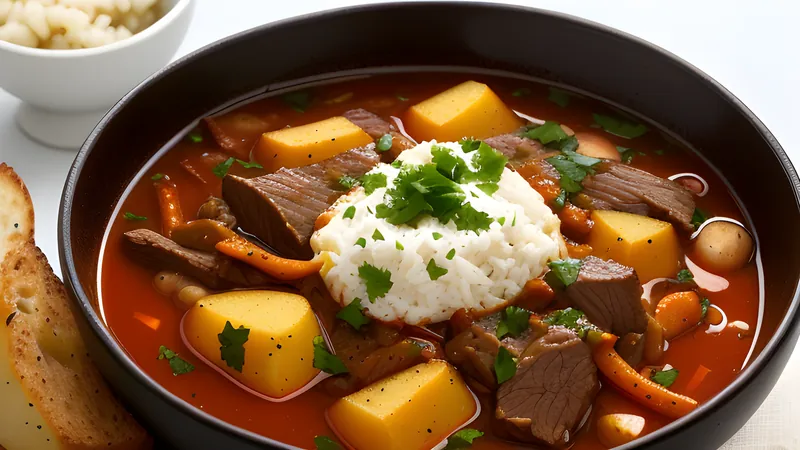
Ndolé is almost always served with a starch that can soak up its thick, dark sauce — plantain (fried or boiled), boiled cassava, or miondo and bobolo, cassava sticks steamed in leaves, are the most traditional accompaniments. Rice is a more recent and increasingly common pairing, especially in restaurants and among younger households, but older cooks tend to consider a cassava or plantain side more authentic to the dish’s roots. Whichever starch you choose, it’s there to be dipped and scooped with, not eaten as a separate component the way rice might sit alongside a lighter stew.
At celebrations, ndolé is frequently the single dish that anchors the whole table, with everything else — a salad, fried plantain on the side, maybe a lighter stew — arranged around it rather than competing with it. Guests who don’t already know the dish are usually warned about the bitterness before their first bite, less as an apology and more as a point of pride; the bitterness is the dish working correctly, not a flaw to be minimised.
Related on the site
Ndolé’s closest cousin in the peanut-and-greens family elsewhere in West Africa is egusi soup, built on ground melon seed rather than groundnut but sharing the same instinct for a thick, savoury green stew, worth comparing side by side if you’re building out a West and Central African repertoire. For the other half of a typical Cameroonian celebration table, poulet DG, the fried chicken and plantain dish named for the company directors who first ordered it, offers a completely different register — bright, tomato-based and mild next to ndolé’s dark, bitter richness. And for the Congolese neighbour’s take on a rich, oil-based stew, moambe, Congo’s palm butter chicken, shows a related but distinct approach to building a thick sauce around a fatty base.
Related Content