Navarin d'Agneau: The Spring Lamb Stew
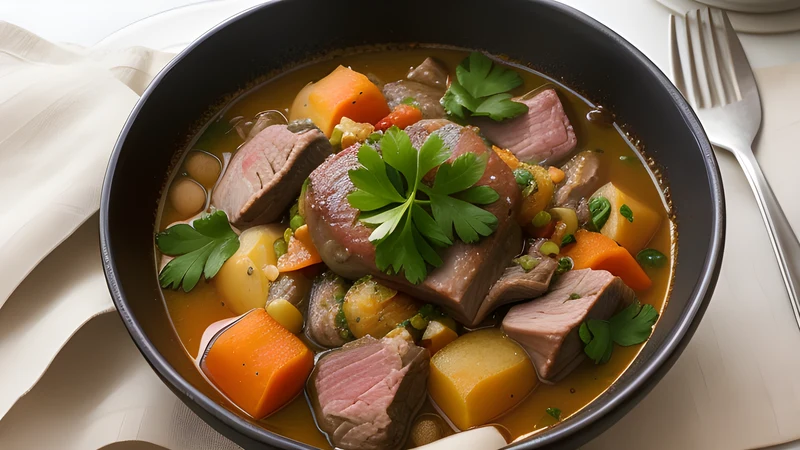
Lamb, glazed roots, and preserved lemon in the last ten minutes
Contents
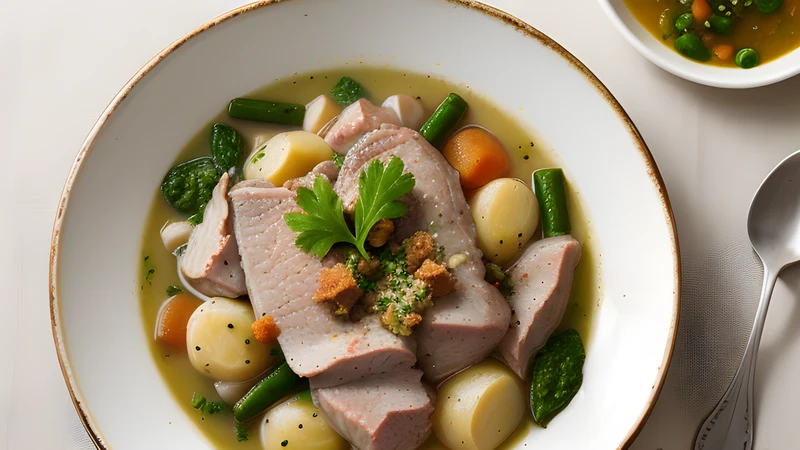
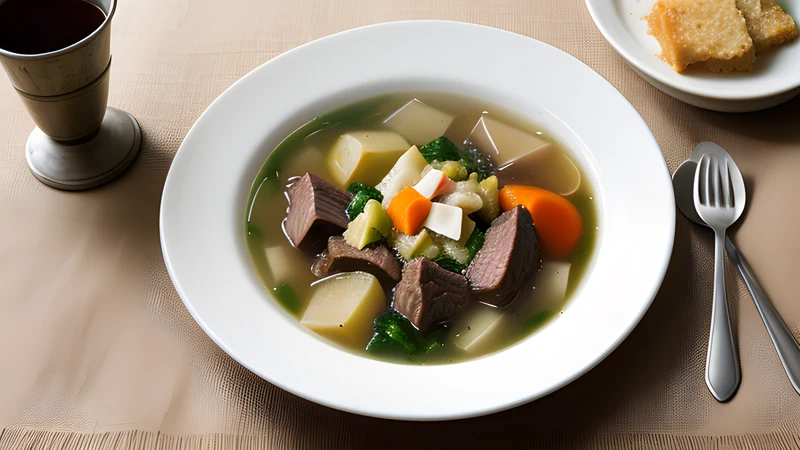
↓ Jump to recipeNavarin is the stew you make when the lamb is young and the vegetables are younger. It is spring cooking in the most literal sense: the dish exists because in April there is new lamb and there are new turnips, and someone worked out that they belonged in the same pot.
Navarin d'Agneau: The Spring Lamb Stew
Ingredients
- 1.4kg lamb shoulder, boned, in 5cm cubes
- 2 tsp fine salt
- 2 tbsp neutral oil
- 1 tsp caster sugar
- 2 tbsp plain flour
- 1 onion, finely chopped
- 4 garlic cloves, sliced
- 1 tbsp tomato purée
- 150ml dry white wine
- 1.2 litres lamb or chicken stock, hot
- 1 bouquet garni: 4 parsley stalks, 3 thyme sprigs, 2 bay leaves, tied
- For the glazed vegetables: 400g baby turnips, trimmed, halved if large
- 400g small new potatoes, halved
- 300g young carrots, scrubbed
- 200g pearl onions, peeled
- 40g unsalted butter
- 2 tsp caster sugar
- 200g podded peas, fresh or frozen
- 150g fine green beans, topped and halved
- To finish: rind of 1 preserved lemon, flesh discarded, finely diced
- 3 tbsp flat-leaf parsley, chopped
- Black pepper
Method
- Pat the lamb thoroughly dry with kitchen paper and season with the 2 tsp salt. Leave 20 minutes at room temperature, then pat dry again — the salt will have drawn moisture to the surface.
- Heat the oil in a wide casserole over high heat until it shimmers. Brown the lamb in three batches, 3 to 4 minutes per batch, turning once, until deeply coloured. Crowding the pan steams the meat, so give each batch room. Lift each batch to a plate.
- Return all the lamb and any juices to the pan, sprinkle over the 1 tsp sugar and toss for 1 minute over high heat until it catches and darkens slightly. Sprinkle over the flour and toss for 2 minutes more until the flour has disappeared and smells toasted.
- Lower the heat to medium, add the onion and garlic and cook 4 minutes until softened. Stir in the tomato purée and cook 1 minute.
- Pour in the wine, scraping the base hard with a wooden spoon to lift everything stuck to it, and let it bubble for 2 minutes. Add the hot stock and the bouquet garni, and bring to a bare simmer.
- Cover and cook at a bare simmer — on the lowest hob setting or in a 150C oven — for 75 minutes, until the lamb is tender but still holding together.
- Meanwhile, glaze the vegetables. Put the turnips in a wide frying pan with half the butter, 1 tsp sugar, a pinch of salt and enough water to come halfway up. Simmer uncovered until the water has evaporated and the turnips are tender and shiny, about 12 minutes, shaking to coat. Set aside. Repeat with the pearl onions and the remaining butter and sugar, about 15 minutes.
- Add the potatoes and carrots to the stew and simmer, covered, for 20 minutes until tender.
- Stir in the glazed turnips and onions, the peas and the beans and cook uncovered for 6 minutes, until the greens are just done and the sauce has reduced enough to coat a spoon.
- Off the heat, stir in the diced preserved lemon rind and the parsley. Grind over black pepper, taste, and add salt only if it needs it — the preserved lemon is salty. Rest 5 minutes and serve with bread.
The turnip, and a naval battle
The name is disputed and both explanations are worth knowing. The likelier one is boring and correct-sounding: navet is French for turnip, and the turnip is the defining vegetable of the dish. The more entertaining one credits the Battle of Navarino in 1827, where a combined British, French and Russian fleet destroyed the Ottoman and Egyptian navies in a bay in the Peloponnese, and the dish was supposedly named to mark the French part in it.
Food historians lean towards the turnip. The dish is older than the battle, and navet is sitting right there. But the naval story stuck because the timing was neat — the word “navarin” for the stew starts appearing in print in the decades after 1827 — and because French nineteenth-century cooking named a great many things after victories.
What is undisputed is the structure. Escoffier codified it as navarin printanier: browned lamb, a light flour-thickened sauce, and a garnish of spring vegetables cooked separately and added at the end. The printanier tag means the spring version with the young vegetables. A navarin made in November with big winter roots is a perfectly good stew and it is not really a navarin.
The preserved lemon
My addition goes in at the very end: the rind of one preserved lemon, flesh scraped away, diced small, stirred through off the heat.
Lamb shoulder braised for an hour and a half is fatty and deep, and by the time you have browned it and reduced the sauce there is a great deal of richness and nothing to answer it. The French answer is usually parsley and a grind of pepper, which helps a little. Preserved lemon does the job properly.
Its rind has been fermenting in salt for weeks, and that changes it: the bitter pith mellows, the peel softens, and the citrus oils in the skin sit alongside a lactic tang and a lot of salt. So it brings acid, aroma and seasoning in a single move, and — this is the part that matters — the acidity is soft and fermented rather than sharp, so it lifts the lamb without cutting across it the way a squeeze of raw lemon does.
It also has a natural affinity with lamb that is written across North African cooking, and given how much French cooking has absorbed from Morocco and Algeria over the last century, this is a shorter step than it looks.
Use the rind only. The flesh inside is mush and pure salt, and it will make the stew inedible. Scrape it out with a teaspoon and dice the rind as small as you can manage. Then taste before adding any more salt at all.
The cut
Shoulder, boned, cubed at 5cm. It is the cut for this and the reasons are the usual ones: enough intramuscular fat to stay moist over ninety minutes, and enough connective tissue that the sauce ends up with body rather than sitting watery around the meat.
Leg is the mistake people make, because it looks like the better cut and costs more. Cubed leg braised for an hour and a half goes dry and grainy — there is no collagen in it to convert, so there is nothing to compensate as the muscle fibres tighten and expel their water. Leg is for roasting.
Buy a whole shoulder and bone it yourself if you have the patience; it is cheaper, and you get the bone, which goes straight into the pot for the braise and comes out with the bouquet garni. Ask the butcher to do it and to keep the bone for you otherwise. Trim the worst of the surface fat, leaving a decent amount — this is a stew, and the fat renders into the sauce over the braise. You can lift the excess off at the end if you want to.
Browning, honestly
Everything in this dish rests on the first ten minutes, and the difference between a good navarin and a grey one is entirely mechanical.
Dry the meat. Wet meat cannot brown, because all the pan’s energy goes into evaporating surface water and the temperature stays pinned at 100C until it is gone. Salt the lamb, wait twenty minutes, then pat it dry a second time — the salt draws moisture out and the second wipe removes it.
Use a wide pan and three batches. Crowding drops the pan temperature and the lamb poaches in its own juices. Each batch wants 3 to 4 minutes over genuinely high heat, turned once, until it is properly dark.
The teaspoon of sugar tossed over the browned meat is a real navarin technique and worth doing. It caramelises in seconds against the hot pan and gives the finished sauce a colour and a faint bitterness that flour alone cannot produce.
Then the flour, tossed on and cooked for two minutes. This is singer, the French verb for exactly this move, and it toasts the raw starch and thickens the sauce without a separate roux. Two minutes is enough; the flour should vanish and start smelling like biscuit.
Glazing, and why it is a separate pan
The vegetables are cooked apart and folded in at the end, and this is the step that separates a navarin from a lamb hotpot.
Glazing is butter, sugar, salt and a shallow depth of water in a wide pan, simmered uncovered until the water goes. What is left is a syrup of butter and sugar that clings to the vegetable in a shining coat. Turnips in particular are transformed by it: their mustardy sharpness rounds off, they take on a little sweetness, and they hold their shape.
Cook them in the stew instead and you get pale, waterlogged turnips that have donated all their character to the sauce. The extra pan costs fifteen minutes and it is the whole reason the dish is worth making.
The peas and beans go in for six minutes at the end, in the stew, uncovered. Any longer and they go from bright green to army green, which is the other classic navarin failure.
One further note on the glazing pans. Use a wide frying pan rather than a saucepan, and do the turnips and the onions in separate goes. They cook at different rates — turnips are done in twelve minutes, pearl onions want fifteen and are more stubborn — and a wide pan means a shallow layer of water that evaporates fast enough to leave a glaze before the vegetable overcooks. In a deep pan you are boiling, and boiled turnip glazed at the last second is still boiled turnip.
Peel the pearl onions the easy way: drop them in boiling water for sixty seconds, drain, and the skins slip off between finger and thumb. Trim the root end flat but leave it attached, or they fall into rings in the pan.
Timing the meat
Lamb shoulder wants 75 to 90 minutes at a bare simmer. You are aiming for the point where a skewer slides in easily and the cube still holds together when you lift it — the moment after collagen has become gelatine and before the muscle fibres give up entirely.
Overshoot and it shreds. That makes a fine ragù and a poor navarin, where the whole visual idea is neat pieces of lamb among neat pieces of vegetable. If you are unsure, check at 70 minutes and every ten after.
Keep it at a bare simmer throughout, covered, or in a 150C oven, which holds the temperature without you. A rolling boil tightens the meat and clouds the sauce.
Reading the sauce
A navarin sauce is deliberately light. It should be glossy, the colour of weak tea with a reddish cast from the tomato purée and the caramelised sugar, and it should coat a spoon thinly and slide off. Anything approaching gravy has gone wrong.
The two tablespoons of flour are calibrated for 1.2 litres of stock reducing over an hour and a half with the lid on. If your lid is loose or your simmer is too enthusiastic you will lose more liquid than intended and end up thick; add a splash of hot stock. If it is thin at the end, the last six minutes uncovered with the greens in is your chance to reduce it, and that is why the recipe takes the lid off at exactly that point.
Stock quality shows. Homemade lamb stock from the shoulder bones is best, chicken stock is a perfectly respectable second, and a stock cube will make the dish taste of stock cube, because there is very little else here to hide behind. Water plus the bones is better than a bad cube.
Substitutions, and keeping
Lamb neck fillet works and is cheaper; it cooks faster, around 60 minutes. Hogget or mutton shoulder needs closer to two and a half hours and makes a deeper, less spring-like stew.
Out of season, swap the peas and beans for chard or spinach stirred in at the end, and use ordinary turnips cut into 3cm chunks. It stops being a navarin printanier and stays a good dinner.
If you have no preserved lemon, the closest honest substitute is the finely grated zest of half a lemon plus a teaspoon of its juice and a pinch of extra salt, added off the heat. It is brighter and shallower, and it works.
The stew keeps three days and improves on the second, though the green vegetables dull. If you know you are making it ahead, cook the base and the roots, cool, and add the glazed vegetables, peas, beans and lemon when you reheat. It freezes for three months without the greens.
Serve it in shallow bowls with bread and nothing else. The sauce is thin by design — it coats rather than clings — and it wants mopping.
For the neighbouring dishes: lamb tagine is where the preserved lemon comes from and shows what the same pairing does with spice behind it, while beef bourguignon is the identical French braising logic in a darker key, right down to the glazed onions. Scotch broth takes lamb and roots in the thriftier direction, and cassoulet is the south-west’s answer to the question of what else a French pot of meat can be.
Related Content