Nasi Kandar: Penang Rice Under Mixed Curries
steamed rice flooded with several curry gravies mixed together at the counter, Penang's answer to the question of choosing just one
Contents
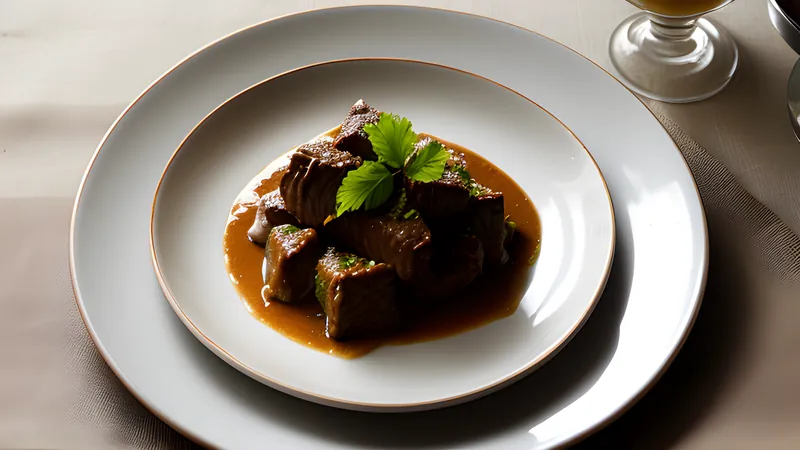
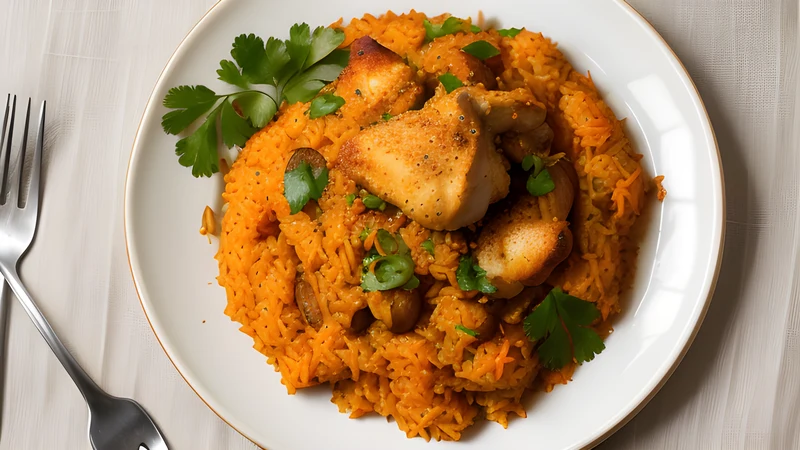
↓ Jump to recipeAsk for nasi kandar at a Penang stall and the question you’ll be asked back is which curries you want ladled over your rice, because the whole point of the dish is that several different gravies end up mixed together in one plate rather than kept politely separate. Chicken curry, beef curry, squid, fried chicken, a vegetable curry, maybe a fish curry too, all poured over the same mound of rice until the plate is genuinely flooded — the local term for this is “banjir,” meaning flood, and it’s used with real pride rather than as a criticism.
Nasi Kandar: Penang Rice Under Mixed Curries
Ingredients
- 4 chicken thighs, bone-in, skin-on
- 300g beef shin, cut into chunks
- 8 shallots, peeled, half sliced and half blended
- 6 cloves garlic, peeled, half sliced and half blended
- 3cm piece ginger, peeled
- 4 tbsp meat curry powder (Malaysian-style, containing fennel and star anise)
- 2 tbsp chilli powder
- 1 cinnamon stick
- 3 cardamom pods, bruised
- 3 cloves
- 1 star anise
- 400ml coconut milk
- 300ml water, plus more for the beef curry
- 2 tomatoes, quartered
- 150g okra, trimmed
- 5 tbsp vegetable oil
- 2 tsp salt, plus more to taste
- 1 tsp sugar
- 4 hard-boiled eggs (or quail eggs), to serve
- steamed rice, to serve
Method
- Make a spice paste by blending half the shallots, half the garlic and the ginger to a smooth paste.
- Heat 2 tbsp oil in one pot and fry the whole spices (cinnamon, cardamom, cloves, star anise) for 30 seconds until fragrant, then add the sliced remaining shallots and garlic and fry until golden.
- Stir in the blended paste and 2 tbsp curry powder plus 1 tbsp chilli powder, frying for 4-5 minutes until the oil separates and the paste smells cooked rather than raw.
- Add the chicken thighs, turning to coat, then pour in half the coconut milk and half the water. Simmer 25-30 minutes until the chicken is tender, adding the tomatoes and okra for the final 10 minutes.
- Season the chicken curry with half the salt and sugar, then set aside, keeping warm.
- In a second pot, heat the remaining 3 tbsp oil and fry the remaining curry powder and chilli powder for a minute until fragrant.
- Add the beef shin, turning to coat, then add enough water to just cover and simmer 1-1.5 hours, topping up water as needed, until the beef is completely tender.
- Stir in the remaining coconut milk in the final 15 minutes of the beef curry's cook and season with the remaining salt and sugar.
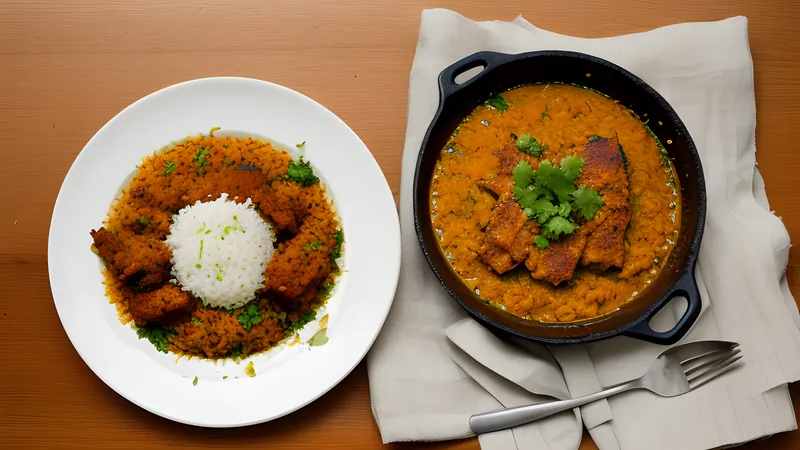
- To serve, mound steamed rice on each plate and ladle both curries over the rice so their gravies pool and mix together, exactly as a nasi kandar stall would.
- Top with a halved hard-boiled egg and serve immediately.
The word “kandar” and what it says about how this dish started
“Kandar” refers to the wooden yoke or shoulder pole that early vendors, many of them Indian Muslim traders and migrants working Penang’s docks and streets from the nineteenth century onward, used to carry two baskets of food balanced across their shoulders as they walked the streets selling meals to dock workers and passers-by. One basket typically held rice, the other a selection of curries in covered pots, and customers would be served straight from the baskets rather than at any fixed stall. That mobile origin explains the dish’s structure better than almost anything else about it: a vendor carrying curries on a pole through crowded streets had every incentive to offer variety and to serve it all together rather than managing separate portioned dishes, since speed and simplicity mattered more on a moving round than plating finesse would have. The pole itself has mostly disappeared from how nasi kandar is sold today, replaced by fixed stalls and restaurants, but the name and the mixed-curry format it produced have stuck.
Why the curries are made separately and combined only at the plate
Nasi kandar isn’t one curry recipe; it’s a serving style built around several curries, each cooked to its own timing and spicing, that only meet each other once they’re ladled over the same rice. Chicken curry and beef curry, the two most common anchors of a nasi kandar plate, need genuinely different cook times — chicken curry is ready in well under an hour, where beef shin needs closer to ninety minutes to break down properly — and cooking them in the same pot at the same pace would mean overcooking one to accommodate the other, or undercooking the tougher cut to protect the more delicate one. Keeping them in separate pots, seasoned independently, and combining them only at the point of serving is what lets a nasi kandar stall offer four or five curries at wildly different textures and spice levels without compromising any single one of them.
This is also why the dish translates reasonably well to a home kitchen even though a full stall spread might run to six or more curries: you don’t need to replicate the whole counter to get the essential experience. Two well-made curries, mixed together over rice, capture the format’s core idea — that the gravies are meant to intermingle rather than stay in their own neat portions — even at a fraction of a real stall’s scale.
The spice blend that ties Penang’s version to its Indian Muslim roots
Malaysian meat curry powder — a pre-mixed blend built around coriander, cumin, fennel, fenugreek and usually a little star anise and cinnamon — carries more of the flavour identity in nasi kandar’s curries than any single fresh ingredient does, and it’s worth buying a proper Malaysian or South Indian brand rather than substituting a generic curry powder, which tends to be flatter and less aromatic. The blend’s lineage traces directly to the South Indian Muslim communities who settled in Penang through trade across the Indian Ocean, bringing spice combinations that were gradually adapted with local ingredients like galangal, lemongrass and coconut milk, which don’t traditionally appear in South Indian curries at all. Nasi kandar’s curries sit at that specific junction — South Indian spicing married to Malay coconut-based technique — in a way few other dishes in the region demonstrate as clearly.
A dish that runs on volume and speed as much as flavour
Real nasi kandar counters are built for throughput — long steel trays of curry kept hot over gas burners, a queue moving fast, and portions ladled in seconds by staff who’ve done the same motion thousands of times. That commercial rhythm shapes the dish more than it might first appear: curries are cooked in large batches early in the day and held warm for hours rather than made to order, which is part of why the spicing tends to be robust and assertive rather than delicate, built to survive sitting in a steam tray through a long lunch service without losing character. Recreating that at home means erring towards a slightly bolder hand with chilli powder and curry powder than you might use for a curry eaten straight from the pot, since a home-cooked batch won’t get the extra hours of gentle heat that let a stall’s version deepen further before it reaches a plate.
Fried whole spices first, then the paste, then the powder
The technique behind both curries here follows the same order every time: whole spices — cinnamon, cardamom, cloves, star anise — go into hot oil first, briefly, just long enough to release their oils into the fat before anything else joins the pot. Sliced shallot and garlic follow, fried until genuinely golden rather than merely softened, then the blended fresh paste, and only after that the dry curry powder and chilli powder, given several minutes in the hot oil and paste to cook out their raw, dusty edge before any liquid is added. Adding curry powder too early, before the whole spices have had a chance to perfume the oil, or too late, straight into liquid without first frying it in fat, are both ways of ending up with a curry that tastes underdeveloped no matter how long it then simmers.
Beef shin, chicken thighs, and why the cuts matter
Beef shin, worked hard with connective tissue, needs the full ninety minutes this recipe gives it to break down into something genuinely tender rather than merely cooked through — a leaner, quicker-cooking cut of beef will be ready sooner but won’t have the same collagen-rich richness that shin contributes to its own gravy over a long simmer. Chicken thighs, kept on the bone, hold their texture and flavour through their shorter cook far better than breast would, and the bone itself adds body to the chicken curry’s gravy that boneless fillets can’t replicate. If you’re pressed for time and want to skip the beef curry, doubling the chicken curry recipe still gives an authentic taste of nasi kandar’s format, just with less of the textural contrast a stall plate usually offers between two very differently textured meats.
The rest of the counter: sides that turn up alongside the curries
A full nasi kandar counter typically extends well past chicken and beef curry — squid curry, fried chicken marinated separately and dropped whole onto the plate, fried egg, cabbage or long bean curry, and often a whole fried fish are common additions, each kept in its own tray behind the counter and ladled or placed to order. Okra and tomato, included in the chicken curry here, are among the most common vegetable additions to a mixed nasi kandar plate, chosen partly because they hold their shape and a little bite even after a long simmer, unlike leafier vegetables that would turn to mush in the same curry. Quail eggs, boiled and peeled, are a popular alternative to a single hard-boiled hen’s egg where a stall wants to offer a smaller, quicker garnish that a customer can eat in one or two bites without disrupting the rest of the plate.
Building the plate, banjir-style
Serve the rice first, mounded rather than flattened, then ladle both curries directly over it so their gravies run together and pool at the base of the plate rather than sitting in tidy separate portions — resist the instinct to keep the sauces apart for a neater presentation, since the mixing itself is the entire point of eating nasi kandar this way. A halved hard-boiled egg, added at the end, is one of the most common toppings at a real stall, chosen partly because it’s inexpensive to add to every plate and partly because its mild flavour and soft texture offer a break between mouthfuls of two intensely spiced gravies.
Getting the gravy consistency right for flooding rice
A nasi kandar curry needs to be looser than most home-cooked curries in order to do its job properly once poured over rice — a thick, clinging gravy sits on top of the rice mound rather than soaking down through it, and part of the appeal of a real banjir plate is that the sauce works its way into every grain rather than staying stranded on the surface. If your curry looks thick enough to serve alongside naan bread, thin it slightly with a splash of water or extra coconut milk before it goes over the rice, tasting again afterwards to check the seasoning hasn’t gone flat with the added liquid. This matters more for the beef curry, which reduces considerably over its long simmer, than for the chicken curry, which spends less time on the heat and rarely needs adjusting.
Storage and reheating
Both curries keep for up to three days refrigerated and freeze well for up to two months, stored separately rather than combined, since freezing them already mixed makes portioning out a single meal later far more awkward. Reheat gently on the stove rather than in the microwave if possible, adding a splash of water to loosen the gravy back to its original consistency, and only mix the two curries together once they’re back on the rice and ready to serve. For another Malaysian rice dish built around a single defining sauce rather than several combined, nasi lemak leans on one chilli sambal rather than a mix of curries, while sharing nasi kandar’s basic instinct that plain rice is really a vehicle for something considerably more assertive poured over the top. And for Penang’s other defining rice-adjacent street dish, built on the same coconut-milk fried-noodle logic that runs through much of the region’s hawker food, char kway teow is worth cooking alongside it on a longer Penang-themed evening.
Related Content