Nagoya Tebasaki: Peppery Glazed Chicken Wings
Double-fried wings lacquered in sweet soy and black pepper
Contents
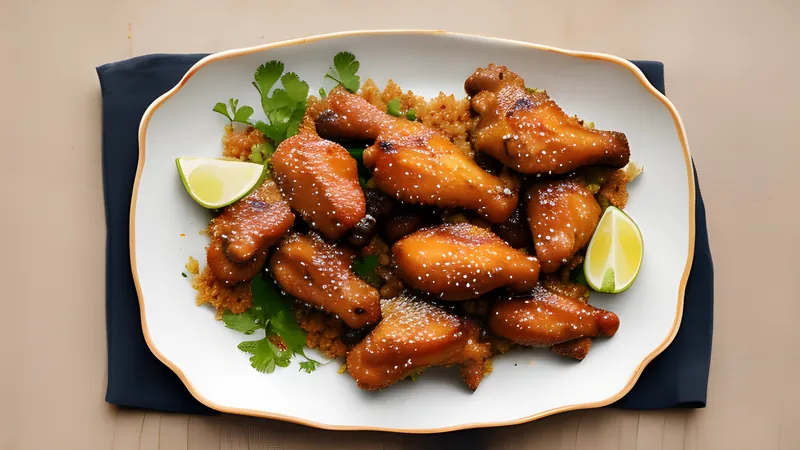
↓ Jump to recipeNagoya tebasaki is the city’s answer to a question most places don’t bother asking: what happens if you take a plain chicken wing, fry it twice for maximum crunch, and then commit fully to black pepper as a genuine flavour rather than an afterthought sprinkled on at the end? The result is sticky, sweet, sharply peppery and audibly crisp under the glaze, and it has very little in common with the milder, vinegar-forward Buffalo wing most Western diners default to when they hear “chicken wing.”
Nagoya Tebasaki: Peppery Glazed Chicken Wings
Ingredients
- 16 chicken wings, split into flats and drumettes, tips removed and reserved for stock
- 4 tbsp potato starch or cornflour
- Neutral oil, for deep-frying
- 4 tbsp soy sauce
- 3 tbsp sugar
- 2 tbsp mirin
- 1 tbsp rice vinegar
- 2 cloves garlic, grated
- 1 tsp fresh coarsely ground black pepper, plus extra to finish
- 1 tbsp white sesame seeds, toasted
- 1/2 tsp salt
Method
- Pat the wings very dry with paper towel and season lightly with salt. Dust each piece thoroughly in potato starch, tapping off the excess.
- Heat oil in a heavy pot or wok to 160C. Fry the wings in batches for 6-7 minutes, without crowding, until pale gold and cooked through. Drain and rest on a wire rack for 10 minutes.
- Raise the oil temperature to 190C. Fry the wings a second time, in batches, for 2-3 minutes, until deeply golden and audibly crisp. Drain on a rack, not paper towel.
- While the wings rest between fries, make the glaze: combine soy sauce, sugar, mirin, rice vinegar, garlic and 1 tsp black pepper in a small saucepan. Simmer for 5-6 minutes until thick enough to coat the back of a spoon.
- Toss the hot, twice-fried wings in the warm glaze immediately, working quickly so the glaze sets against the crisp skin rather than pooling.
- Transfer to a plate and finish with a generous, coarse grinding of extra black pepper and the toasted sesame seeds.
- Serve immediately, while the skin is still audibly crisp under the glaze.
Where tebasaki fits in a Nagoya meal
Nagoya has a small cluster of dishes distinctive enough that the city’s food scene is sometimes discussed as its own regional cuisine within Japan, alongside items like hitsumabushi (grilled eel served three ways over rice) and miso katsu. Tebasaki fits into this as very much a drinking food rather than a meal on its own, ordered by the plate alongside beer in the same casual, repeated-rounds way yakitori or edamame would be, rather than as a single main course. Restaurants specialising in it typically serve little else beyond a handful of similarly simple, punchy sides, treating the wings themselves as the entire draw rather than one item on a larger menu.
A dish with a founding date and a name attached
Unlike most of the dishes in this desk, tebasaki has a reasonably well-documented commercial origin: the style is generally credited to Furaibo, a Nagoya restaurant that opened in the early 1960s and built its reputation specifically on a double-fried, heavily peppered, soy-glazed wing distinct from anything being served elsewhere in Japan at the time. Yamachan, another Nagoya chain, popularised its own version not long after and the two are still often mentioned in the same breath as the dish’s originators, each with loyal regulars who consider theirs the definitive version. What both agree on, and what any home version should hold onto, is the double fry and the aggressive amount of black pepper — tebasaki without a genuinely peppery bite is a different, blander dish wearing the same name.
Why double-frying actually works
Frying chicken wings once gets you cooked, reasonably crisp skin. Frying them twice, with a rest between fries, gets you something closer to shatteringly crisp — a texture that survives being tossed in a wet glaze afterward without turning soggy within minutes, which is the single biggest technical challenge any glazed fried food has to solve. The first fry, at a moderate temperature, cooks the chicken through and renders a good portion of the fat out from under the skin. The rest afterward lets residual heat finish evening out the cooking and allows the surface moisture driven out during the first fry to evaporate properly. The second, hotter fry then crisps what’s left of the skin far more aggressively than a single fry ever could, building a shell sturdy enough to carry a genuinely wet, sticky glaze without collapsing into sogginess by the time it reaches the table.
Choosing your pepper
Freshly and coarsely ground black pepper is worth the small extra effort over pre-ground pepper from a shaker, since a large part of tebasaki’s appeal is the visible, slightly gritty texture of pepper clinging to the glazed skin as much as the flavour itself. Pre-ground pepper loses much of its aromatic oil within weeks of grinding and tends to taste flatter and more one-dimensionally hot, without the citrusy top notes fresh-cracked pepper carries. A pepper mill set to its coarsest grind, or pepper crushed roughly with the flat of a knife, gives both better flavour and the right texture for the finishing dust.
Building the glaze
The tebasaki glaze is a simple reduction — soy sauce, sugar, mirin, a little vinegar for a sharper edge, and garlic — cooked down until it coats a spoon thickly rather than running off it, then tossed with the fried wings while both the glaze and the wings are still hot, so it clings and sets rather than pooling in the bottom of the bowl. Black pepper goes in twice: some ground into the glaze itself while it reduces, and a second, generous dusting of freshly and coarsely ground pepper over the finished wings once they’re glazed, which is what gives tebasaki its distinctive visible pepper flecking and sharper, more immediate heat on the first bite, separate from the milder pepper that’s cooked into the sauce.
The Buffalo wing comparison, and why it misses the point
It’s tempting to describe tebasaki as “Japan’s Buffalo wing,” and the comparison isn’t wrong exactly, but it undersells how differently the two dishes are built. A Buffalo wing gets its character from a vinegar-forward, butter-enriched hot sauce tossed with wings that are usually fried once, unfloured, and the sauce itself carries most of the heat and tang. Tebasaki’s character comes from the fry itself — the double-fried, starch-dusted skin is doing as much work as the glaze — and the seasoning leans on soy, sugar and black pepper rather than vinegar and chilli, giving a savoury-sweet profile with a sharp, dry heat from the pepper rather than the wetter, more acidic heat of a classic Buffalo sauce. Serve the two side by side and the texture difference alone makes clear they’re solving a similar problem — a well-seasoned fried wing — with almost entirely different methods.
Splitting the wings properly
Splitting whole wings into flats and drumettes, rather than frying them whole, matters more for a home cook than it might seem, because the two sections cook at noticeably different rates and the wing tip contributes almost nothing but burnt, brittle skin if left attached. Cut through the joint between the drumette and the flat with a sharp knife rather than trying to snap it — you’ll feel the knife find the joint’s natural gap if you work slowly along the visible crease. Save the tips in the freezer for stock rather than throwing them away; a handful of wing tips added to a simmering dashi or chicken stock contributes real body over a couple of hours.
What can go wrong
Soggy wings almost always mean the second fry wasn’t hot enough or long enough to properly recrisp the skin, or that the glaze was added while the oil was still clinging to the wings rather than after a brief drain. Let wings rest on a rack for a minute after the second fry, not paper towel, which traps steam against the skin and undoes some of the crisping.
A glaze that’s thin and runs straight off the wings rather than clinging usually hasn’t reduced enough — it should visibly coat the back of a spoon and hold a line drawn through it with a finger before it’s ready. Reduce it a little further rather than tossing wings in an underdone glaze and hoping it thickens afterward off the heat; it won’t.
Bland tebasaki, missing the sharp pepper hit that defines the dish, comes from underseasoning either stage. Don’t be shy with the black pepper in either the glaze or the finishing dust — this is one dish where restraint actively works against the intended result.
Getting the starch coating right
Potato starch, rather than flour or breadcrumbs, is what gives tebasaki its particular thin, glassy crispness rather than a thick, bready crust — the same principle that runs through agedashi tofu and much of Japanese frying more broadly. Pat the wings genuinely dry before dusting; any surface moisture turns the starch gummy rather than letting it coat evenly and cling as a thin, even layer. Dust just before the first fry rather than well in advance, since starch left sitting on wet skin for any length of time starts to absorb moisture back out of the meat and clumps rather than staying loose and even.
Managing two frying temperatures
Running two separate fry temperatures in a home kitchen without a dedicated thermometer is easier than it sounds if you use visual and audible cues alongside a rough guide. At the first, lower fry (around 160C), the wings should bubble gently and steadily around the edges without violent, aggressive bubbling — that’s a sign the oil is too hot for this stage and will brown the outside before the inside cooks through. At the second, higher fry (around 190C), the oil should hiss sharply the moment the wings go in and the surface should colour visibly within the first 30 seconds; if it takes longer than that to see colour developing, the oil hasn’t recovered enough heat between batches and needs another minute or two before continuing.
Substitutions, storage and serving
Whole wings, unsplit, work if you don’t want to bother separating flats from drumettes, though they take a little longer to fry through in both stages and are messier to eat, though frying whole wings makes the double-fry timing slightly less predictable, since the joint area cooks more slowly than the thinner flat and drumette sections do once separated. A shortcut glaze using a good-quality bottled teriyaki sauce, thinned very slightly and finished with fresh garlic and pepper, gets close if you’re short on time, though the flavour is flatter than a glaze built from scratch.
Sesame seeds should go on toasted, not raw — a couple of minutes shaken in a dry pan until they smell nutty and just start to colour makes a real difference against the raw, slightly bitter flavour of untoasted seeds straight from a jar. Do this before starting the fry so it’s one less thing to manage while the wings are going through two hot oil baths in quick succession.
Tebasaki is best eaten hot, within minutes of glazing — the crisp shell is a limited-time offer, softening steadily as the wings cool and the glaze continues to sit against the skin. Leftovers reheat reasonably well in a hot oven or air fryer, which recrisps the skin far better than a microwave ever will, though they won’t quite match a fresh batch.
Toasted sesame seeds and a final scattering of coarse pepper are traditional finishing touches, and a wedge of lemon on the side, though not traditional to Nagoya specifically, cuts the richness well if you want it. For another dish that treats black pepper as a headline flavour rather than a background note, this pairs naturally with a cold beer, the same way yakitori does — both are built around small, shareable, intensely seasoned pieces of chicken meant to be worked through slowly over drinks. If you want a chicken dish built on a similarly reduced, glossy glaze but taken in a gentler, less peppery direction, buta no kakuni uses the same reduce-and-coat logic, applied low and slow to pork instead of a fast double fry.
Related Content