Mussels in White Wine, Garlic and Cream
A bistro classic in fifteen minutes flat
Contents
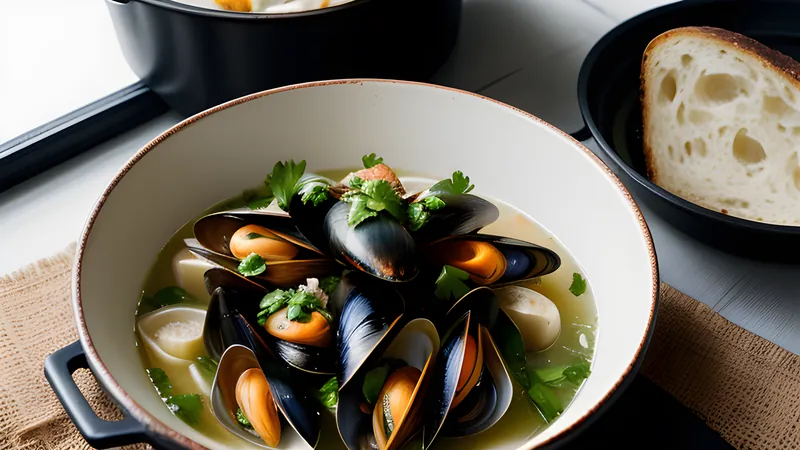
↓ Jump to recipeThere is no faster route to feeling like you’ve cooked something proper than a pot of mussels. Fifteen minutes, one pan, a glass of wine that doubles as both ingredient and reward, and you have a bistro dinner that costs a fraction of what you’d pay sitting outside one. The smell alone — garlic softening in butter, then that briny steam when the wine hits the shells — is enough to make the whole kitchen lean in. My one small twist here is a spoonful of Dijon stirred into the cream at the end. It sharpens everything, cuts the richness, and stops the sauce tasting flat.
Mussels in White Wine, Garlic and Cream
Ingredients
- 1kg fresh live mussels
- 2 tbsp unsalted butter
- 2 banana shallots, finely chopped
- 4 garlic cloves, finely sliced
- 200ml dry white wine
- 100ml double cream
- 1 tbsp Dijon mustard
- Large handful flat-leaf parsley, chopped
- Black pepper, to taste
- Crusty bread, to serve
Method
- Scrub and debeard the mussels in cold water, tapping any that are open; discard those that stay open or have cracked shells.
- Melt the butter in your largest pan over a medium heat and soften the shallots for 3 to 4 minutes without colouring.
- Add the garlic and cook for a further minute until fragrant but not browned.
- Pour in the white wine, turn the heat to high and let it bubble for a minute to cook off the raw edge.
- Tip in all the mussels at once, clamp on a lid and steam for 3 to 4 minutes, shaking halfway through, until the shells open.
- Stir the cream and Dijon together, pour into the pan with most of the parsley and a grind of pepper, and toss for 30 seconds to warm the sauce.
- Discard any mussels that refuse to open, scatter over the remaining parsley and serve straight from the pan with crusty bread.
A dish that belongs to the coast
Moules marinière is the French name everyone knows, but versions of wine-steamed mussels turn up all along the Atlantic seaboard, from Brittany down through the Basque country and across to Belgium, where moules-frites is a genuine national fixture. The principle is the same everywhere: mussels are cheap, plentiful and quick, so you cook them fast and let a few aromatics do the work. The cream version, moules à la crème, is the Norman cousin, leaning on the dairy country of northern France where cream and cider define the cooking. Belgian cafés serve them in enormous black enamel pots with a lid that becomes the bowl for empty shells. It is unpretentious food, sociable and a little messy, and that is exactly the point.
Mussels themselves have been a coastal staple for a very long time, and the modern rope-grown blue mussel (Mytilus edulis) that fills British fishmongers’ trays is farmed rather than dredged, which is why the shells arrive cleaner and the meat plumper than the wild ones of a generation ago. The technique of steaming shellfish open in a little wine is about as old as coastal cooking gets, and it survives because it is efficient: the mussels release their own briny liquor as they open, and that liquor, cut with wine and softened with cream, becomes the sauce. You are not so much making a sauce as catching one.
My one small twist here is the spoonful of Dijon stirred into the cream at the end. Mustard is a classic partner for cream in French kitchens, and its job is to sharpen and emulsify: it stops the double cream tasting merely rich and gives the broth a faint savoury edge that makes you keep reaching for the bread. It is the same logic that makes a bean-and-tomato stew like my chorizo and white bean stew so mopping-friendly, where the liquid is the whole reward.
Cleaning and cooking
Tip the mussels into a sink of cold water and give them a good rummage. Pull away any stringy beards, scrape off barnacles with a knife if you’re fussy, and tap any open ones firmly against the worktop. If they close, they’re alive and good to go; if they stay open, throw them out. Discard any with cracked shells too.
Melt the butter in your largest pan over a medium heat and soften the shallots gently for three or four minutes until translucent but not coloured. Add the garlic and let it cook for another minute — you want it fragrant, not browned. Pour in the white wine, turn the heat up high and let it bubble for a minute to cook off the raw edge.
Now tip in all the mussels at once and clamp on a lid. Steam for three to four minutes, giving the pan a good shake halfway through, until the shells have opened. Lift the lid: most should be gaping. Stir the cream and Dijon together, pour it in, scatter over most of the parsley and a generous grind of black pepper, then toss everything through for thirty seconds so the sauce loosens and warms. Discard any mussels that stubbornly refuse to open.
Choosing the wine
The wine is doing real work, not just deglazing, so it matters what goes in. You want something dry, crisp and unoaked: a Muscadet from the Loire is the classic Breton match and no accident, since it is grown at the mouth of the very estuaries these mussels come from. A Picpoul de Pinet, a dry Chenin, an Aligoté or a plain unoaked Sauvignon Blanc all do the job. Avoid anything sweet, heavily oaked or so cheap you would not drink it, because whatever raw or off flavours it carries will end up concentrated in the broth. The old rule holds: if it is not good enough to pour into a glass, it is not good enough to pour into the pot. Two hundred millilitres, a generous glass, is plenty for a kilo of mussels, and there is no harm in a second glass for the cook.
Buying and timing
Mussels are alive when you buy them and should stay that way until they hit the pan, so treat them like the perishable creatures they are. Buy them the day you cook them, or the day before at a push. Store them in the fridge in a bowl, covered with a damp cloth or a few sheets of wet kitchen paper, never sealed in a plastic bag and never sitting in fresh water, both of which suffocate them. Cook them within a day of buying and you will have plump, sweet meat; leave them a few days and the losses to dead, discarded shells mount up fast. A kilo, once you have thrown out the duds, feeds two generously as a main with bread, or four as a starter.
Serving
Serve straight from the pan, ideally the one you cooked them in so nothing cools on the way, with a second empty bowl on the table for the shells. Crusty bread is not optional; that briny, creamy broth pooled in the bottom of the pan is the best part of the dish and a genuine waste to leave behind. If you want the full Belgian experience, a bowl of hot, well-salted chips on the side turns this into moules-frites, and there is a reason it became a national habit. A cold glass of the same wine you cooked with completes it. It is sociable, hands-on food that suits a kitchen table far better than a formal one, and the mess is half the fun.
Tips and variations
Serve straight from the pan with the rest of the parsley scattered over and a pile of crusty bread for the broth — that briny, creamy liquor is the best part and a crime to leave behind. If you want the full Belgian experience, add chips on the side.
A few honest notes. Don’t be tempted to use cooking wine; whatever you’d happily drink is what should go in the pot. Buy your mussels the day you cook them and keep them in the fridge under a damp cloth, never sealed in a bag or sitting in water, which suffocates them. If a few are sandy, it just means they weren’t fully purged — a longer soak in cold water next time sorts that out.
For variations, a pinch of saffron bloomed in the wine turns this golden and faintly luxurious. A splash of Pernod or a fennel bulb softened with the shallots leans it towards Marseille. Swap the cream for a 400g tin of chopped tomatoes and a sliced red chilli and you are suddenly somewhere closer to Italy. And if you find yourself with leftover broth and a few stray mussels, stir them through cooked spaghetti the next day, or spoon them over toasted sourdough alongside a bowl of Tuscan white bean and cavolo nero soup for a coastal-meets-country supper. Nothing goes to waste.
What can go wrong
Two mistakes account for almost every disappointing pot of mussels. The first is overcooking: mussels are done the moment their shells gape, which is three to four minutes, and every extra minute over the heat turns the meat from plump to rubbery and shrunken. Pull the pan off as soon as most shells are open. The second is timidity with the initial cleaning. Any mussel that stays open when tapped before cooking is dead and must go; any that stays clamped shut after cooking never opened and should also be discarded rather than prised apart. Trust those two rules and you will not have a bad batch.
Grit is the other common complaint. Rope-grown mussels are usually clean, but if yours arrive sandy, soak them in cold water for twenty minutes before cooking so they spit out any grit; a scattering of flour or oatmeal in the water is an old trick that encourages them to purge. And do not salt the broth until the end, if at all: mussels are naturally briny, and their own liquor usually seasons the sauce for you.
The whole thing is forgiving, fast and far greater than the sum of its cheap parts. Keep a bag of mussels in mind for the nights you want something that feels special without the effort, and you will never be more than a quarter of an hour away from a properly good dinner.
Related Content