Mushroom and Spinach Lasagne
A rich vegetarian layer cake of comfort
Contents
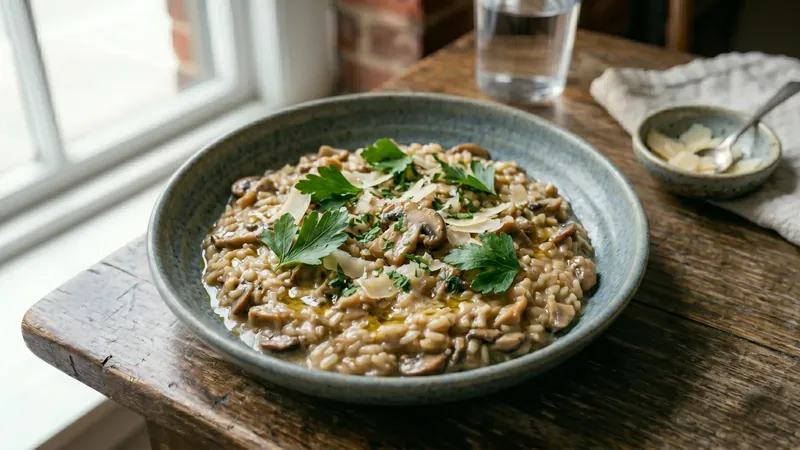
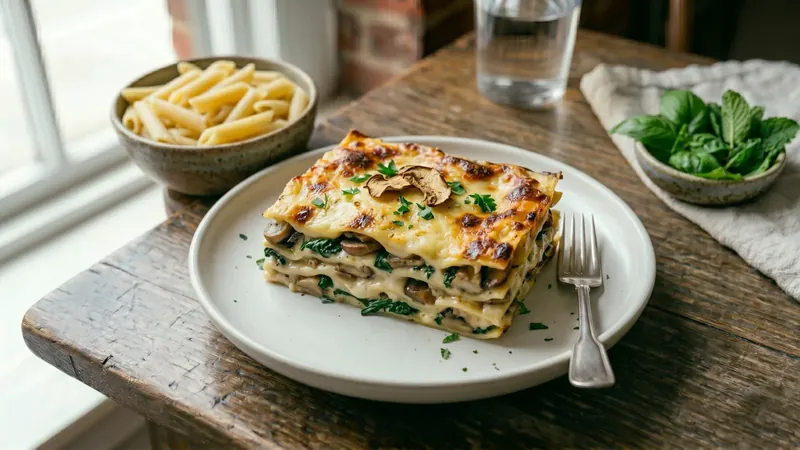
↓ Jump to recipeA meat-free lasagne lives or dies on depth, and this one finds it twice over: 25g of dried porcini, soaked and stirred through 600g of chestnut mushrooms, lends an earthy backbone that fresh fungi alone never quite reach. The other twist sits in the white sauce, where wilted spinach and a generous grating of fresh nutmeg turn ordinary bechamel into something fragrant and green. Layered and baked until the top blisters, it is proper Sunday cooking with no need for mince. If you already keep a batch of mushroom risotto in your repertoire, you will recognise the same lesson at work here: mushrooms need coaxing, not hurrying, before they give up their savour.
Mushroom and Spinach Lasagne
Ingredients
- 25g dried porcini mushrooms
- 2 tbsp olive oil
- 1 onion, finely chopped
- 3 garlic cloves, crushed
- 600g chestnut mushrooms, sliced
- 1 tbsp fresh thyme leaves
- 100ml dry white wine
- 2 tbsp tomato purée
- 400g tin chopped tomatoes
- 500g fresh spinach
- 70g unsalted butter
- 70g plain flour
- 900ml whole milk
- Whole nutmeg, for grating
- 150g Parmesan-style hard cheese, grated
- 250g dried lasagne sheets
- Salt and black pepper
Method
- Soak the porcini in 250ml just-boiled water for 20 minutes. Lift out, chop finely, and reserve the soaking liquid.
- Heat the olive oil and soften the onion for 8 minutes. Add the garlic, then the chestnut mushrooms and thyme, and fry over a high heat until any liquid has evaporated.
- Stir in the chopped porcini, pour in the wine and let it bubble away. Add the tomato purée, chopped tomatoes and the strained porcini liquid. Simmer for 15 minutes, then season.
- Wilt the spinach in a dry pan, cool, squeeze out the water and chop roughly.
- Melt the butter, stir in the flour and cook for 1 minute. Whisk in the milk gradually until smooth and thick, then grate in plenty of nutmeg and season.
- Fold the chopped spinach and half the grated cheese through the bechamel.
- Heat the oven to 190C fan. Spread a little mushroom sauce in a baking dish, then layer pasta, mushroom sauce and spinach bechamel, repeating to fill the dish.
- Finish with a layer of bechamel and the remaining cheese.
- Bake for 40-45 minutes until bubbling and golden. Rest for 10 minutes before slicing.
The Story
Lasagne as we know it, with its alternating ribbons of pasta and sauce, is most closely associated with Emilia-Romagna and the city of Bologna, where the classic lasagne alla bolognese is built on a slow-cooked ragù, green spinach pasta and a buttery bechamel. That version is the one I lean on when I want the full weekend project; you will find my take on it in the classic lasagne bolognese if you want the meat original alongside this one. The dish travelled far beyond Bologna, and cooks adapted it freely, swapping the meat for vegetables, mushrooms or pulses as tastes and household budgets shifted. A vegetarian lasagne is not a compromise so much as a different expression of the same idea: layers that meld in the oven into a single, sliceable whole.
The hero of this version is the mushroom, and specifically the partnership between fresh and dried. Drying concentrates a mushroom’s savoury character because it drives off water and leaves the glutamates behind, and porcini (Boletus edulis), gathered wild across the woods of northern and central Italy, carry an especially deep, almost meaty flavour. Soaking them releases that intensity into the water, which is why the soaking liquid is too valuable to throw away. Stirred back into the sauce, it does much of the work that a long-simmered stock would, giving the dish a roundness that belies its short cooking time. Strain it through a fine sieve or a piece of kitchen paper first, though: dried porcini often carry grit from the forest floor, and a single sandy bite will undo an hour’s work.
The spinach bechamel is the second small departure from tradition. A plain white sauce binds the layers, but folding in wilted, well-drained spinach turns it into something with colour and substance, while nutmeg supplies a warm, slightly sweet note that flatters both the greens and the milk. Nutmeg is the seed of Myristica fragrans, an evergreen tree native to the Banda Islands of Indonesia, and its affinity for spinach and dairy is why you find it in everything from creamed spinach to a proper Florentine sauce. A little goes a long way, so grate it fresh and stop before it dominates: pre-ground nutmeg loses its perfume within weeks, and the difference between fresh and stale is the difference between fragrant and faintly medicinal.
Why the method works
The method rewards patience at the stove, and the single most important step is the mushrooms. Raw mushrooms are roughly ninety per cent water, and if you crowd the pan or pull them off early, that water pools and steams them grey. Fry them hard, in a wide pan, over a genuinely high heat until they squeak and the liquid has gone: only then do they brown and concentrate. Season each component on its own, too, rather than hoping the layers will sort themselves out in the oven. An underseasoned mushroom ragù and a bland bechamel do not add up to a seasoned lasagne; they add up to a flat one.
The bechamel needs its own small discipline. Cook the flour and butter roux for a full minute before you add any milk, or the sauce will taste of raw flour, and add the milk gradually, whisking hard between additions, so it thickens into something glossy rather than lumpy. If it does go lumpy, a stick blender rescues it in seconds. You want it just pourable, thick enough to sit in a layer without running to the edges of the dish.
Assembling, resting and storing
Build the dish in even layers, starting with a smear of mushroom sauce on the base so the first sheet of pasta does not stick, and finish with bechamel and cheese so the top browns rather than the exposed pasta drying out. Dried lasagne sheets need enough moisture around them to cook through, so if your sauces look tight, loosen the mushroom ragù with a splash more of the reserved porcini liquid before layering.
Let the finished lasagne rest for a full ten minutes after it leaves the oven. This is not optional politeness: resting lets the bechamel firm up so the layers hold their shape under a knife instead of sliding into a delicious heap. It reheats beautifully, so it is a good make-ahead dish. Assemble it a day in advance, keep it covered in the fridge, and add ten minutes to the baking time from cold. It also freezes well, either whole or in portions, for up to three months; defrost overnight in the fridge before reheating.
Substitutions and variations
If you cannot find dried porcini, dried shiitake or a mixed forest blend will give you the same concentrated depth, though the flavour leans a touch smokier. For a vegan version, make the bechamel with a good unsweetened oat or soya milk and a fruity olive oil in place of the butter, and use a hard vegan cheese; the nutmeg does even more heavy lifting there. A layer of roasted squash or a scattering of toasted walnuts through the mushroom sauce both work well if you want more heft. Cavolo nero, blanched and chopped, can stand in for some of the spinach for a firmer, slightly bitter green.
For a lighter supper along the same earthy lines, the technique of cooking mushrooms down hard also underpins my mushroom bourguignon, where the same patience at the pan does the flavour work that meat usually would.
What to serve with it
This is rich, so keep the accompaniments sharp and simple. A green salad with a mustardy vinaigrette cuts through the cheese and cream far better than anything starchy; the only thing you might add is more bread to catch the sauce at the edges of the dish. A glass of a light Italian red, something like a Barbera or a young Sangiovese with enough acidity to stand up to the bechamel, suits it well. Bitter leaves such as radicchio or chicory, dressed simply, are a particularly good foil, because their edge is exactly what a soft, savoury bake asks for. Save any leftovers for lunch: like most baked pasta, it firms up in the fridge and slices even more cleanly the next day, and a slab reheated in a hot oven crisps at the edges in a way the fresh bake never quite manages. Covered with foil so the top does not scorch, it takes about twenty-five minutes from cold in a 180C fan oven, or six or seven minutes a portion in the microwave if you are less precious about it. Either way, let it stand for a couple of minutes before you eat, since it comes out of the oven hot enough to catch the roof of your mouth. The result is generous, satisfying and entirely free of meat, the kind of dish that quietly converts the sceptics at the table.
Related Content