Porcini Mushroom Risotto with White Truffle Oil
Earthy, creamy and indulgent
Contents
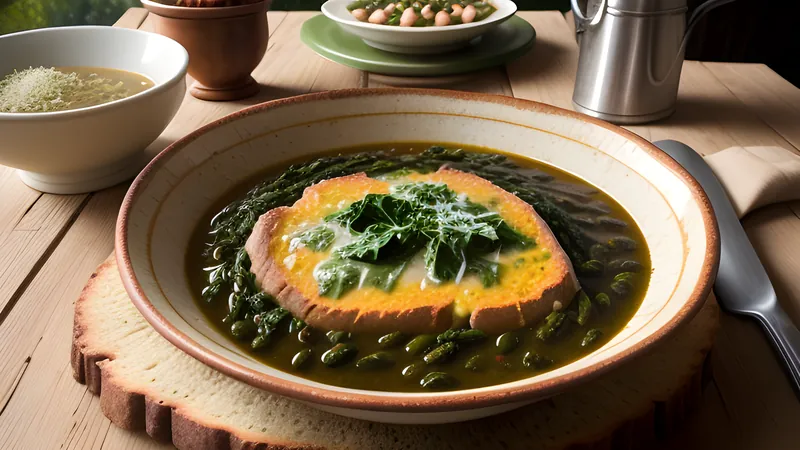
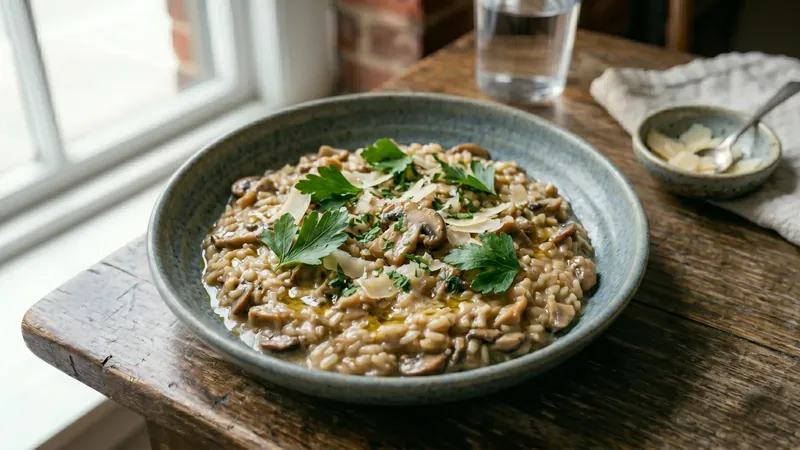
↓ Jump to recipeThis risotto wrings every bit of flavour from the humble mushroom. Dried porcini are soaked and their fragrant liquor folded straight into the stock, so earthiness runs through every grain of rice, while a few drops of white truffle oil added at the end lift it into something genuinely indulgent. The result is creamy, deeply savoury and luxurious, yet built almost entirely from store-cupboard staples. It is my favourite kind of Italian cooking, thrifty and generous at once, and it sits comfortably beside my Tuscan white bean and cavolo nero soup; serve it with a few olive oil and fennel seed grissini snapped over the top and you have a proper little supper.
Porcini Mushroom Risotto with White Truffle Oil
Ingredients
- 30g dried porcini mushrooms
- 1.2 litres hot vegetable stock
- 50g butter
- 1 tbsp olive oil
- 1 onion, finely chopped
- 250g chestnut mushrooms, sliced
- 2 garlic cloves, crushed
- 300g arborio or carnaroli risotto rice
- 150ml dry white wine
- 60g Parmesan, finely grated, plus extra to serve
- 1 tsp white truffle oil, plus a few drops to finish
- Small handful of parsley, chopped
- Salt and black pepper, to taste
Method
- Soak the dried porcini in 300ml of the hot stock for 15 minutes. Lift out, chop, and reserve. Strain the soaking liquid and stir it back into the rest of the stock. Keep the stock warm over a low heat.
- Heat half the butter and the oil in a wide pan and cook the onion gently for 6-7 minutes until soft.
- Add the chestnut mushrooms and chopped porcini, and fry for 5 minutes until golden. Stir in the garlic for 1 minute.
- Add the rice and stir for 1-2 minutes until the grains look glossy and translucent at the edges.
- Pour in the white wine and stir until it has almost fully absorbed.
- Add the warm stock a ladleful at a time, stirring often and letting each addition be absorbed before adding the next, for about 18-20 minutes until the rice is creamy but still has a little bite.
- Remove from the heat and beat in the remaining butter, the Parmesan and 1 tsp truffle oil. Season to taste.
- Cover and rest for 2 minutes to let it relax and turn loose and creamy.
- Serve in warm bowls with extra Parmesan, a scattering of parsley and a few final drops of truffle oil.
The Story
Risotto is northern Italy’s great rice dish, a speciality of the Po Valley and the regions around Milan, Piedmont and the Veneto, where the wet, flat plains are well suited to growing rice. Unlike most of Italy, where pasta reigns, here rice is the carbohydrate of choice, and the technique of slowly coaxing it into a creamy whole is a point of regional pride. The dish is thought to have taken its familiar form by the nineteenth century, though rice cultivation in the area is older still.
The magic of risotto lies in the rice. Short, starchy varieties such as arborio and carnaroli are essential, because their high starch content is what makes the dish creamy as it is gradually released by stirring and the steady addition of warm stock. Carnaroli is often prized for holding its shape while still turning velvety, but arborio is more widely available and works beautifully. Long-grain rice simply will not produce the same effect.
The hero ingredient here is the porcini. Known in Italian as funghi porcini, “little pigs”, and in France as cep, these prized wild mushrooms have an intense, savoury, almost meaty depth. Fresh ones are seasonal and costly, but dried porcini are a brilliant store-cupboard shortcut, and their real value lies as much in the soaking water as in the mushroom itself. That fragrant, dark liquor is pure mushroom essence, and folding it into the stock, once strained of any grit, infuses the entire dish.
Truffle is the natural luxury to pair with all this earthiness. True truffles are wildly expensive, but a good white truffle oil offers an accessible hint of that heady, aromatic perfume. It should be treated with restraint, added off the heat at the very end, since its aroma is volatile and fades with cooking, and a few drops are plenty.
Two final habits make or break a risotto. The stock must be kept hot, so each ladleful keeps the rice cooking steadily rather than shocking it cold, and the rice should be stirred attentively to work out its starch. Finish off the heat by beating in cold butter and Parmesan, a step Italians call the mantecatura, which gives the dish its glossy, loose, creamy texture. Aim for a risotto that spreads gently when spooned onto the plate, all’onda, “on the wave”, rather than standing stiff.
Where it goes wrong, and how to fix it
Most disappointing risotto fails in one of a few predictable ways. Gluey, stodgy rice usually means it was over-stirred and over-cooked, or that the heat was too low so it stewed rather than simmered; keep a lively, gentle bubble and stop adding stock once the grains are creamy but still have a faint chalky bite at the centre. Chalky, hard rice with a watery sauce is the opposite problem, added stock too fast without letting each ladleful absorb, so the outside softens while the middle stays raw. A stiff risotto that sets like a cake has been cooked too dry or rested too long; loosen it with a splash of hot stock right before serving, because it firms as it sits.
A common misstep is skimping on the toasting stage, the tostatura. Cooking the dry rice in the fat for a minute or two before any liquid goes in, until the grains look glossy and translucent at the edges, coats each grain and, more importantly, helps it release starch gradually and hold its shape rather than collapsing. Do not skip it. And do not rinse the rice, ever; you would wash away the very surface starch that makes the dish creamy. The wine that goes in next is not just for flavour; its acidity brightens the finished dish and stops all that richness turning cloying, so let it bubble away almost completely before you start adding stock.
Substitutions and make-ahead
If you have no dried porcini, use a mix of chestnut and any wild mushrooms you can get, and reach for a spoonful of miso or a splash of soy at the end to replace some of that deep savour, much as I do in my mushroom bourguignon. Truffle oil is optional and easy to overdo; if you dislike its synthetic edge, a knob of extra butter and a generous grating of Parmesan give richness without it. To keep the dish vegetarian, check your Parmesan is a vegetarian hard cheese, as traditional Parmigiano Reggiano is made with animal rennet, and use a good vegetable stock.
Risotto is best eaten the moment it is made, but restaurants do cheat: you can par-cook the rice about two-thirds of the way, spread it on a tray to cool quickly and stop it cooking, then finish it with hot stock to order in a few minutes. Leftover risotto has a second life as arancini, rolled into balls around a nugget of mozzarella, crumbed and fried until crisp, which is arguably reason enough to deliberately make too much of it. Store any leftovers in the fridge for up to two days and reheat gently with a splash of stock or water to bring back the loose, creamy texture.
Variations worth trying
Once you have the method, the mushroom risotto is a canvas. Stir a handful of thawed peas through for the last two minutes for colour and sweetness, or fold in wilted spinach at the end. A splash of double cream or mascarpone beaten in with the butter makes it more decadent still, though good risotto should not really need it. For a heartier plate, brown a few extra sliced mushrooms separately until crisp at the edges and pile them on top, so you get both the deep, cooked-in flavour and a fresh, meaty bite. A little chopped fresh parsley or a scattering of chives keeps everything looking bright against the beige, and a final drizzle of good olive oil never hurts.
Herbs and aromatics can shift the whole character. Thyme or a torn sage leaf fried in the butter leans woodland and autumnal; a squeeze of lemon at the end cuts the richness and wakes it up. If you want to gild it further, a poached or crisp-fried egg on top turns a side dish into a full meal, the soft yolk running into the rice like an extra sauce and binding everything together. Whatever route you take, keep the porcini and their soaking liquor at the heart of it, because that dark, savoury essence is what makes this taste of the forest rather than merely of rice and cheese.
Related Content