Individual Beef Wellingtons with Mushroom Duxelles
A showstopper, made manageable
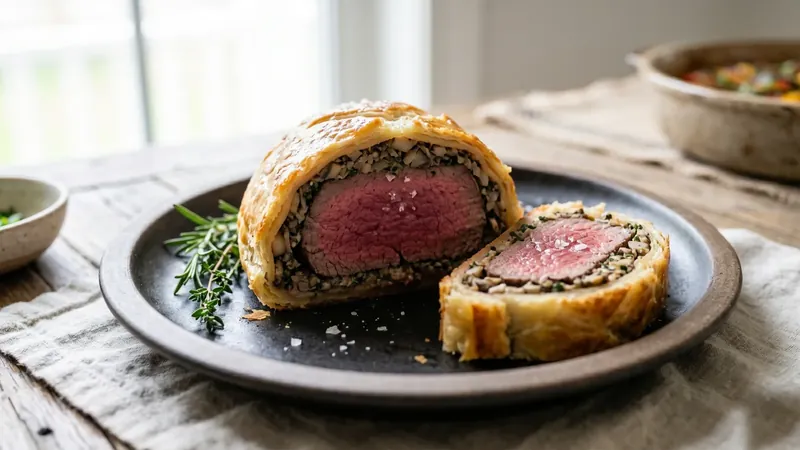
Contents
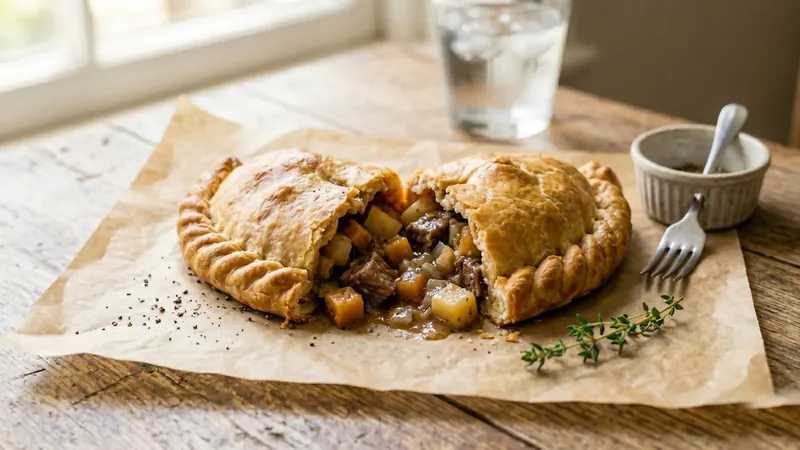
↓ Jump to recipeBeef Wellington has a fearsome reputation, but baking it as four individual parcels takes most of the terror out of it: each one cooks evenly, slices cleanly and gives everyone their own crisp golden crust. The heart of the dish is a deeply savoury mushroom duxelles, cooked right down until dark and intense, then wrapped with the beef in salty Parma ham and flaky all-butter puff pastry. It looks like a serious feat of cheffery, yet every fiddly stage can be done well ahead. If you enjoy the same woodland depth in a gentler form, the duxelles here is a first cousin of the concentrated mushrooms in my porcini mushroom risotto, and for a meat-free centrepiece with the same wine-dark ambition, my mushroom bourguignon is the dish to reach for.
Individual Beef Wellingtons with Mushroom Duxelles
Ingredients
- 4 beef fillet steaks, about 180g each and 4cm thick
- 400g chestnut mushrooms
- 2 shallots, finely chopped
- 2 garlic cloves, crushed
- 1 tbsp fresh thyme leaves
- 50g butter
- 2 tbsp olive oil
- 8 slices Parma ham or prosciutto
- 2 tbsp English mustard
- 500g all-butter puff pastry
- Plain flour, for dusting
- 2 egg yolks, beaten
- Salt and black pepper
Method
- Season the beef fillets all over, then sear in the olive oil over a fierce heat for 1 minute on each side until browned but raw inside.
- Lift the beef onto a plate, brush all over with the mustard while warm and leave to cool.
- Blitz the mushrooms to a fine rubble in a processor, or chop very finely by hand.
- Melt the butter in a wide pan and cook the shallots, garlic and thyme gently for 3 minutes.
- Add the mushrooms and cook over a medium-high heat for 12-15 minutes until all the moisture has evaporated and the mixture is dark and dry; season and cool.
- Lay out cling film and arrange two overlapping slices of Parma ham per portion, spread with a quarter of the duxelles, and sit a fillet on top.
- Use the cling film to roll each fillet into a tight ham-and-mushroom parcel, then chill for 20 minutes.
- Roll the pastry out on a floured surface and cut into four squares large enough to wrap each parcel.
- Unwrap the beef, sit on the pastry, brush the edges with egg yolk and fold over, trimming and sealing the seams.
- Brush all over with egg yolk, score lightly, chill for 15 minutes, then bake at 220C/200C fan/gas 7 for 20-25 minutes for medium-rare.
- Rest the Wellingtons for 8-10 minutes before serving.
The Story
Beef Wellington is the grand British roast in disguise: a whole fillet, or here individual fillets, encased in pastry and served with as much ceremony as a Christmas centrepiece. Its name is usually linked to the Duke of Wellington, though the connection is more legend than documented fact, and similar pastry-wrapped fillets appear in French cooking as filet de boeuf en croute. What is certain is that the dish became a fixture of mid-twentieth-century dinner parties and has enjoyed a strong revival on restaurant menus, where its drama and precision make it a natural showstopper.
The duxelles is the soul of the recipe and the real workhorse of flavour. It is a classic French preparation: mushrooms chopped to a fine paste, then cooked slowly with shallots and herbs until almost all their water has driven off, concentrating them into something dark, glossy and intensely earthy. The name is traditionally attributed to the kitchens of the seventeenth-century French nobleman the Marquis d’Uxelles. Cooking the mixture properly dry matters for two reasons: it deepens the savoury depth, and crucially it stops moisture leaking into the pastry, which is the usual cause of the dreaded soggy bottom.
The layers each have a job. The seared, mustard-brushed beef supplies the rich centre, the duxelles surrounds it with woodland savouriness, and the Parma ham forms a thin barrier that wraps everything snugly and seasons the meat as it cooks. The pastry, ideally all-butter for the flakiest result, crisps into a burnished shell.
Making the parcels in individual portions is the kind, practical twist. A full Wellington is notoriously hard to time, since the pastry and the beef cook at different rates and a single overcooked or raw centre ruins the whole thing. Smaller parcels cook quickly and predictably, so each guest gets a neat, pink slice. Chilling the assembled parcels before baking firms the pastry and helps it puff cleanly in a hot oven.
Why the layers work, and where it goes wrong
Almost everything about a Wellington comes down to managing moisture and heat. The beef is seared hard for one minute a side to build a browned, savoury crust through the Maillard reaction, but pulled off the heat while still raw inside; it will finish cooking in the oven, and if you cook it through now it will be gone by the time the pastry is golden. Brushing the warm fillet with English mustard does two things: it seasons, and its slight tack helps the ham cling. Then the beef is cooled completely before wrapping, because a warm fillet steams the pastry from within.
The duxelles must be cooked genuinely dry, and this is the step people rush. Blitzed mushrooms release a startling amount of water; keep them over a medium-high heat, stirring, for a full twelve to fifteen minutes until the pan is dry and the mixture looks dark and glossy rather than wet. Any residual moisture will steam into the pastry and give you the soggy bottom the whole technique is designed to avoid. The Parma ham is the second line of defence, a thin salty barrier that both seasons the meat and shields the pastry from the beef’s juices.
Temperature, resting and the pink centre
The margin for error on doneness is small, so a probe thermometer earns its place here and takes the guesswork out of an expensive cut. For medium-rare, pull the parcels when the centre of the beef reads 50 to 52C; carry-over heat during resting will continue to climb and take it to a rosy 54 to 55C. Aim a little higher, around 55 to 57C out of the oven, if you prefer medium. Because the fillets are individual and roughly equal in size, they cook at the same rate, which is exactly why this format is so much more forgiving than a single large log.
Resting is not optional. Give the baked Wellingtons eight to ten minutes before cutting so the juices, driven to the centre by the heat, can redistribute through the meat. Cut too soon and those juices run out onto the board, taking your careful pinkness with them and leaving the pastry base to soak in the puddle. A serrated knife and a gentle sawing motion keeps the pastry from crushing, and a quick wipe of the blade between cuts keeps each slice clean.
Getting ahead, and what to serve
This is genuinely a make-ahead dish, which is its great gift to a host. Sear and mustard the beef, cook the duxelles, and roll the ham-and-mushroom parcels in cling film all the day before, keeping them chilled. You can even wrap the parcels in pastry and chill them, egg-washed and scored, for several hours before baking; the resting only helps the pastry hold its shape. What you cannot do is reheat a cooked Wellington well, as the beef greys and the pastry loses its crisp, so bake to order and time it around your guests sitting down.
For sauce, a simple red wine jus or a peppercorn sauce made from the searing pan is traditional and worth the effort. Serve with something that soaks up the sauce and something green: buttery mash or dauphinoise, and greens with a little bite such as tenderstem broccoli or wilted spinach. A bold red wine, such as a Burgundy or a good claret, stands up to the richness of the beef and pastry. It is a special-occasion plate rather than a weeknight one, and if you want that celebratory, wine-braised feeling with far less last-minute pressure, my beef stroganoff delivers it from a single pan.
Substitutions and variations
If Parma ham is hard to find, prosciutto or any thinly sliced air-dried ham does the same job; a layer of crêpes, the classic Escoffier touch, is even better at waterproofing but adds a step. A thin smear of smooth chicken liver pâté beneath the duxelles is traditional in grand versions and adds real richness, though it is easily left out. For the mushrooms, chestnuts give plenty of flavour, but a handful of dried porcini, soaked and finely chopped, pushes the earthiness towards the profound; save and reduce the soaking liquid for your sauce. Use ready-rolled all-butter puff if you like, but avoid the block sort made with vegetable fat, which never crisps as well and lacks the buttery flavour that makes the crust worth eating.
Related Content