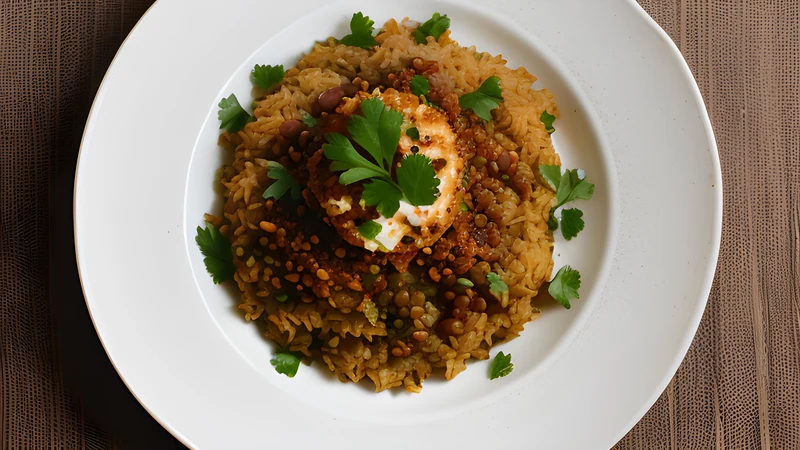
Mujadara With Crispy Onions
Lentils and rice under a heap of deeply caramelised onions
Contents
↓ Jump to recipeMujadara is proof that the cheapest ingredients in the kitchen can make one of the most satisfying meals you will ever cook. Lentils, rice, onions, oil, a few warm spices: that is the entire list, and it costs almost nothing, and yet a good bowl of mujadara has a depth and a moreishness that shames far grander dishes. The secret is entirely in the onions, and specifically in taking them much further than instinct tells you to, past golden, past brown, right to the edge of dark, so that they turn sweet and crisp and taste almost of caramel. Get the onions right and everything else is just simmering.
Mujadara With Crispy Onions
Ingredients
- 250g brown or green lentils, rinsed
- 200g basmati or long-grain rice
- 4 large onions
- 150ml olive oil (or a mix of olive and neutral oil), for the onions
- 2 tbsp olive oil (for the lentils and rice)
- 1 tsp ground cumin
- 1 tsp ground coriander
- 1/2 tsp ground cinnamon
- 1/4 tsp ground allspice
- Salt and black pepper
- About 700ml water or vegetable stock
- To serve: natural yoghurt or a cucumber-and-tomato salad
Method
- Rinse the lentils, then simmer them in plenty of unsalted water for 15 minutes until about three-quarters cooked, still with a bite. Drain and set aside. Salting now would keep them tough, so leave it.
- Rinse the rice until the water runs clear and drain.
- Fry the onions: halve and thinly slice all 4 onions. Heat the 150ml oil in a wide frying pan over medium heat, add the onions with a pinch of salt, and fry, stirring often, for 20-25 minutes. They will wilt, then colour, then deepen to a rich mahogany brown.
- When the onions are deep brown and the edges are crisping, lift out half of them with a slotted spoon onto kitchen paper, they will crisp further as they cool. These are your garnish. Leave the rest in the pan with the flavoured oil.
- Build the base: to the pan with the remaining onions and oil, add the cumin, coriander, cinnamon and allspice and stir for 30 seconds. Add the drained lentils and rinsed rice and stir to coat in the spiced oil.
- Pour in 700ml water or stock, add 1.5 tsp salt and plenty of black pepper, and bring to a boil. Stir once, then cover and cook on the lowest heat for 15-18 minutes, until the liquid is absorbed and the rice is tender.
- Rest the covered pot off the heat for 10 minutes, then fluff gently with a fork.
- Pile into a bowl, top with the reserved crispy onions, and serve warm or at room temperature with yoghurt or a sharp salad.
The poor man’s dish that everyone loves
Mujadara, from the Arabic mujaddara meaning something like pockmarked or pimpled (a reference to the lentils speckling the rice), is one of the oldest and most widespread dishes of the Levant. It appears in that same thirteenth-century Baghdadi cookbook, the Kitab al-Tabikh, described there as a dish of the poor eaten with a squeeze of lemon and served to travellers. Nine hundred years on it is cooked from Lebanon and Syria to Palestine, Jordan and Egypt, in Christian households during Lenten fasts and in Muslim ones through Ramadan, precisely because it is nourishing, filling and free of meat.
There is an Arabic saying that a hungry person would sell their soul for a plate of mujadara, and the affection people hold for it is real. It is childhood food, fasting food, everyday food. It is also, not incidentally, a nutritionally complete meal: lentils and rice together provide all the essential amino acids, which is why so many traditional cuisines pair a pulse with a grain. The dish is humble, ancient and quietly brilliant.
Its close relatives cover the table. The crispy onions here are exactly the ones that crown mafe and countless other dishes, and the lentil-and-yoghurt comfort of mujadara sits right beside fattet hummus.
The onions: the whole point
I am going to spend more words on the onions than on anything else, because they are the difference between a dull bowl of lentils and a dish people ask you to make again.
Slice the onions thinly and evenly so they cook at the same rate. Use a generous amount of oil and a wide pan so they are not crowded, and cook them over a medium heat, stirring regularly, for a good twenty to twenty-five minutes. They go through stages: first they release water and go limp, then they turn pale gold, then a proper brown, and finally, right at the end, a deep mahogany with crisping edges. That last stage is where the magic is, the sugars have caramelised and the onions taste rich and almost sweet.
The critical thing is to stop before they burn. Caramelised onions are sweet; burnt onions are bitter, and there is only a minute or two between the two. Watch them closely near the end, keep them moving, and pull them the moment they are deep brown and smell toasty rather than acrid. If a few of the thinnest shreds go very dark, that is fine, but do not let the whole pan tip into black.
You use the onions in two ways. Half go back into the dish, softened into the base with their flavoured oil, where they melt into the rice and lentils and give the whole thing its savoury backbone. The other half you lift out to drain and crisp up, and they become the crowning garnish, shattering and sweet on top of the soft grains. That oil, incidentally, is now full of onion flavour, so it does double duty cooking the spices and the base.
A word on the oil and the fat. Mujadara is generous with oil by design, because the onions need a proper shallow pool to fry evenly and the leftover oil, now amber and sweet with onion, becomes the cooking fat for the whole dish. Olive oil is traditional and gives a fruity backbone, though many cooks cut it with a neutral oil so it can take the higher heat the onions demand without turning acrid. Never drain and discard that oil after frying; it is half the flavour, and spooning it away is throwing out the best part. If the quantity worries you, remember it stretches across four hungry servings and replaces any need for meat or butter.
One dish, a dozen names
Travel across the Levant and mujadara answers to a whole family of names. In Lebanon and Syria the soupier, wetter version made with more liquid and sometimes puréed is mudardara or m’dardara; the drier, pilaf-style one closer to this recipe is the everyday mujadara. In Egypt the cousin dish koshari takes the same lentils-and-rice base and piles on macaroni, chickpeas, a spiced tomato sauce and a slick of garlicky vinegar to become a full street-food institution. Palestinian cooks sometimes call the bulgur version mujaddara hamra, “red mujadara”, for the deeper colour the toasted wheat and darker onions give it. The through-line in every version is the same trinity of pulse, grain and long-cooked onion, dressed up or pared down according to region and purse.
That spread is no accident. A dish this cheap, this filling and this forgiving was bound to take root wherever poverty and religious fasting met, and the eastern Mediterranean gave it both. Lenten and Ramadan tables leaned on it for centuries because it delivered a complete, satisfying meal with no meat and almost no cost, and habit turned necessity into a food people genuinely crave.
Cooking the lentils and rice together
The one technical point is timing, because lentils and rice cook at different rates. If you throw them in together from raw, the rice turns to mush before the lentils are done. So you give the lentils a fifteen-minute head start, simmering them until they are about three-quarters cooked with a definite bite, then drain them and add them to the rice for the final cook. This way both finish tender at the same time.
Do not salt the lentils while they boil. Salt in the cooking water toughens the skins and keeps them from softening properly; season the whole dish later, once the lentils are cooked. Brown or green lentils are traditional because they hold their shape; red lentils would collapse and are wrong here.
Coat the drained lentils and rinsed rice in the spiced onion oil before you add the water, which toasts the grains slightly and blooms the spices. Then cook it like a pilaf: bring to a boil, cover, drop to the lowest heat, and leave it undisturbed until the liquid is absorbed. The rest at the end, off the heat with the lid on, lets the grains firm up and steam finish, so they fluff apart instead of clumping.
Keep the pot on the smallest ring of the hob, and if your hob runs fierce use a heat diffuser, because the base of the pot is where lentils-and-rice most readily catches and a scorched bottom taints the lot. When you lift the lid after resting, the grains should stand separate and the lentils keep a whole, tender shape, each speckling the rice the way the dish’s name promises.
Spicing and serving
The spicing is gentle and warm: cumin and coriander for earthiness, cinnamon and allspice for that unmistakable Levantine warmth, with heat kept to a background hum. Some cooks keep it to just cumin, and a plainer mujadara is lovely too. Black pepper brings a little heat; add chilli only if you want to stray from tradition.
Mujadara is almost always served with something cool and sharp to cut its richness. Plain yoghurt is the classic, spooned over or alongside. A simple salad of chopped tomato and cucumber with lemon and mint does the same job and adds freshness. A squeeze of lemon straight over the bowl, the way the medieval version was eaten, is never wrong. It is delicious hot, but genuinely at its best warm or at room temperature, which makes it excellent picnic and lunchbox food.
Variations, storage and getting ahead
The rice-and-lentil template flexes easily. Swap the rice for bulgur wheat and you have mujaddara burghul, the coarser, nuttier version popular in some regions and, to some palates, even better. Use whole green lentils and no rice at all and you drift towards m’judra soup. A handful of cooked chickpeas stirred in adds texture.
Mujadara keeps beautifully, three or four days in the fridge, and the flavours deepen overnight, so it is a superb make-ahead or batch-cook dish. Fry the crispy onion garnish fresh, or make a big batch of crispy onions and keep them in a jar, they are useful on everything from soups to maqluba. Reheat the lentils and rice gently with a splash of water to loosen them, and add the crisp onions only at the moment of serving so they stay crunchy.
It is one of those dishes that costs pennies, feeds four generously, keeps for days, and makes everyone who eats it feel looked after. Once you have made it a few times you will stop needing the recipe and start making it on autopilot on the nights when the fridge is bare, which is exactly the role it has played in Levantine kitchens for nearly a thousand years.
A last thought on getting it right, because two faults account for nearly every disappointing mujadara. The first is timid onions: pulled from the pan while still merely golden, they leave the dish sweet and one-dimensional, missing the deep, almost bittersweet edge that makes it moreish. The second is over-salted or over-boiled lentils that have turned to paste, which robs the finished dish of the gentle contrast between soft grain and yielding pulse. Fix both and even the plainest bowl, cooked from a bare cupboard on a Tuesday night, tastes like something someone made with care.
Related Content