Muamba de Galinha: Angola's Palm-Oil Chicken
The national dish built on red palm oil, okra and a whisper of chilli
Contents
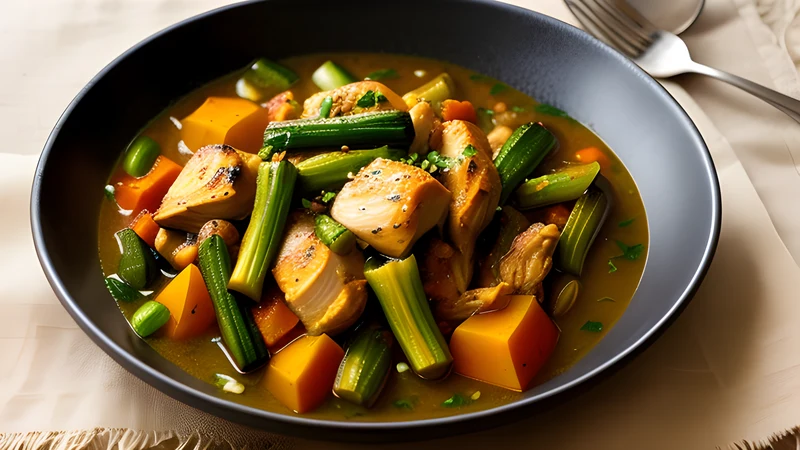
↓ Jump to recipeMuamba de galinha is the dish Angola claims above all others, the one that appears at every celebration and family gathering and stands, by common agreement, as the country’s national dish. At its heart is red palm oil, dendê, the deep orange-red oil pressed from the fruit of the oil palm, which gives the stew its extraordinary colour, its slightly funky richness and its unmistakable West and Central African identity. Around it are chicken, okra, pumpkin, garlic and lemon, and a low warmth of chilli, all simmered into a glossy, comforting pot that tastes of a whole region’s larder.
Muamba de Galinha: Angola's Palm-Oil Chicken
Ingredients
- 1 whole chicken (about 1.5kg), jointed into 8–10 pieces
- 4 tbsp red palm oil (dendê)
- 2 onions, finely chopped
- 6 garlic cloves, crushed
- 3 tomatoes, grated, or 200g tinned chopped tomatoes
- 2 tbsp tomato purée
- 1 red chilli, finely chopped (or 1 whole Scotch bonnet for milder heat)
- Juice of 1 lemon, plus 1 tbsp for the marinade
- 300g pumpkin or butternut squash, in 3cm chunks
- 250g okra, trimmed
- 1 tsp smoked paprika
- 1 bay leaf
- 2 tsp salt, plus more to taste
- 400ml hot water or chicken stock
- Rice or funge (cassava porridge), to serve
Method
- Season the chicken pieces with 1 tbsp lemon juice, 1 tsp salt and half the garlic, and leave 20 minutes.
- Heat the red palm oil gently in a heavy pot until melted and just shimmering (do not overheat it); brown the chicken in batches for 4 minutes a side, then set aside.
- In the same oil, cook the onions for 6 minutes until soft, then add the rest of the garlic and the chilli for 1 minute.
- Stir in the grated tomato, tomato purée and paprika and cook 5 minutes until thickened and the oil turns deep red.
- Return the chicken with the bay leaf, pour in the hot water, add salt, cover, and simmer 25 minutes.
- Add the pumpkin and cook 10 minutes, then lay the okra on top and cook a further 8–10 minutes until the chicken is tender, the pumpkin soft and the okra just cooked but still green.
- Stir in the lemon juice, adjust the salt, and rest 5 minutes; the sauce should be rich and orange-red with the palm oil risen to the top.
- Serve with rice or funge.
Palm oil and the Lusophone Atlantic
To understand muamba you have to understand red palm oil, because it is the soul of the dish and the ingredient that ties Angola to a much wider food world. The oil palm is native to West and Central Africa, and its unrefined red oil, thick and orange from the carotenoids that also colour carrots, has been a cornerstone of cooking across the region for thousands of years. It is completely different from the refined, colourless palm oil used industrially; the red oil has a savoury, earthy, almost violet-tinged flavour that defines the dishes built on it.
That oil is also the thread connecting Angola across the ocean. The transatlantic slave trade, in which Portuguese-controlled Angola was tragically central, carried both people and their foodways to Brazil, and dendê travelled with them. This is why the palm-oil-and-seafood stews of Bahia in northeastern Brazil taste so closely related to the stews of Angola; they share an ancestor. Anyone who has eaten the palm-oil-and-coconut moqueca of Bahia will recognise the same deep red oil and the same warmth here, and muamba is, in a real sense, the African parent of that Brazilian classic. The same Portuguese-colonial history that carried dendê across the Atlantic also links it to Mozambique’s fiery grill tradition, so it sits naturally beside piri-piri chicken the Mozambican way, a cousin from the other Lusophone corner of Africa. The word muamba itself refers to the palm-oil stew technique, and there are versions across Angola and neighbouring Congo, some using ground palm nut pulp rather than the pressed oil for an even richer, thicker sauce.
Getting palm oil right
Red palm oil rewards a light hand. Heat it gently, only until it melts and just begins to shimmer, and never let it smoke; overheated palm oil loses its fresh flavour and its lovely colour, turning dull and slightly acrid. It is solid or semi-solid at room temperature, so it needs a moment to melt before you cook in it. Four tablespoons for a whole chicken gives a properly rich, red-orange sauce; use good unrefined red palm oil from an African or Caribbean grocer, where it is a staple. If the flavour is new to you, it can seem strong at first, earthy and a little funky, but it settles into the background of the finished stew and is exactly what makes muamba taste like muamba. There is no true substitute; a stew made with plain oil is a nice chicken stew, but it is not muamba.
A note worth making: buy sustainably sourced red palm oil where you can. The unrefined West African red oil sold in African groceries is generally a traditional, small-scale product distinct from the industrial plantation palm oil associated with deforestation, but it is a fair thing to check.
Okra, pumpkin and the texture of the pot
The vegetables do real work here. Okra thickens the sauce slightly and adds its particular green flavour; add it near the end and cook it only until just tender so it stays bright and keeps a little bite rather than turning to slime. Whole small okra, or okra cut into thick pieces, releases less of its mucilage than finely sliced okra, so keep the pieces large if you prefer a cleaner sauce. Pumpkin or butternut squash melts into the stew, lending sweetness and body that balance the richness of the palm oil and the acidity of the tomato and lemon. Some versions also add pumpkin leaves or another leafy green, stirred in at the end.
The lemon is important too. A good squeeze at the end lifts the whole rich, oily pot and keeps it from feeling heavy, in the same way acid brightens any deeply savoury stew. Angolan cooks often marinate the chicken briefly in lemon and garlic first as well, which seasons it from the start.
The colour tells you it is working
Red palm oil is a wonderful visual guide while you cook, because its colour reports on your progress. When you first melt it, it is a bright, almost translucent orange; as you cook the onions and tomato base in it, it deepens and the fat starts to carry the red pigment into the sauce; and by the time the base is properly cooked, you will see droplets of vivid red-orange oil pooling and separating at the edge of the pot. That separation is the classic sign across many cuisines that a stew base is done and the raw rawness has cooked out. Keep watching it through the simmer, and when the finished muamba rests, that same red oil should rise and float in a glossy slick on top, which is the mark of an authentic pot and should be left exactly where it is rather than skimmed off. If the colour ever goes dull brown rather than glowing red, the oil got too hot somewhere along the way.
Building the stew, step by step
Season the jointed chicken with lemon, salt and a little of the garlic and let it sit while you get organised. Melt the red palm oil gently in a heavy pot, then brown the chicken in batches until deep golden; this browning builds flavour and gives the finished stew depth, so do not crowd the pan or rush it. Set the chicken aside.
In the same red oil, soften the onions, then add the remaining garlic and the chilli for a fragrant minute. Stir in the grated tomato, tomato purée and paprika and cook it down for five minutes until thick and the oil rises red around the edges, the sign your base is properly cooked. Return the chicken with a bay leaf, pour in the hot water or stock, season, cover, and simmer for twenty-five minutes.
Now the vegetables, in order of hardness: pumpkin first for ten minutes, then the okra laid on top for a final eight to ten, until the chicken is tender, the pumpkin soft and the okra just cooked. Stir in the lemon juice, check the salt, and let it rest for five minutes so the palm oil rises to the surface in a glossy red slick, exactly as it should. This staged, patient building of a spiced base and a long simmer is the same logic behind the great meat stews across the continent; it is the same care that muamba’s neighbours to the north and east demand, and it always pays off.
Funge, rice, and how it is eaten
The classic Angolan accompaniment is funge (or funje), a smooth, stiff porridge made from cassava flour, pale and slightly elastic, which is torn off and used to scoop up the rich stew. It is Angola’s daily staple, the equivalent of pap or fufu elsewhere on the continent, and its bland, springy neutrality is the perfect foil for the intense palm-oil sauce. If you cannot get cassava flour for funge, plain steamed white rice is entirely acceptable and very common, and it soaks up the red sauce beautifully. Either way, the point is a starchy, neutral base to carry the muamba.
Making funge, and why the base matters
If you want the full Angolan experience, make funge, and it is easier than its reputation suggests. Bring water to a simmer, whisk cassava flour into a little cold water to a smooth slurry first, then stir that into the simmering water and cook, beating hard with a wooden spoon, until it thickens into a smooth, glossy, slightly elastic paste that pulls away from the pot, usually five to ten minutes. It should be stiff enough to shape but soft enough to tear. The reason the base matters so much is that muamba is a rich, intense, oily stew, and it is designed to be eaten in small amounts with a large amount of neutral starch, which carries the sauce and tempers its richness. Eaten on its own by the bowlful, the palm oil can feel heavy; eaten as it is meant to be, torn scoops of bland funge dragged through the vivid red sauce, it is perfectly balanced, and you understand why the two evolved together. This pairing of an intense sauce with a neutral starch base is the fundamental grammar of eating across much of Africa, from funge to fufu to pap to injera, and muamba is a textbook example of it. If funge feels a step too far on a weeknight, plain rice does the same job honourably, but try funge at least once to taste the dish the way Angola intends it, and you will see why the humble cassava porridge is as essential to the meal as the chicken itself.
Tips, heat and storage
Heat. Angolan muamba is warmly spiced rather than fiery. A single chopped red chilli gives a gentle background heat; for the fruity aroma without the full burn, use a whole Scotch bonnet left intact and removed before serving, in the West African manner. Gindungo, the Angolan chilli condiment, is served on the side for those who want more.
Chicken. A whole jointed chicken, on the bone and with skin, gives the best flavour, the bones enriching the sauce. Thighs and drumsticks alone make an excellent, more forgiving version, since they stay moist through the long simmer where breast can dry out.
Make-ahead and storage. Like most stews, muamba is better the next day once the flavours settle, so it is a fine dish to cook ahead. It keeps four days in the fridge and freezes for three months; the palm oil may set solid when cold and simply melts back on reheating. Warm it gently and add a fresh squeeze of lemon to brighten it back up.
The mistakes to avoid are overheating the palm oil, which dulls its flavour, and overcooking the okra, which turns it slippery. Treat the red oil gently, add the vegetables in the right order, finish with lemon, and serve it over funge or rice, and you will have made the pot that Angolans gather around when they want to taste home, and understand why the dendê in it carries a story that reaches all the way across the Atlantic.
Related Content