Mrouzia: Lamb, Raisins and Ras el Hanout for the Long Keep
the sweet, spiced lamb Morocco cooks to outlast the fridge
Contents
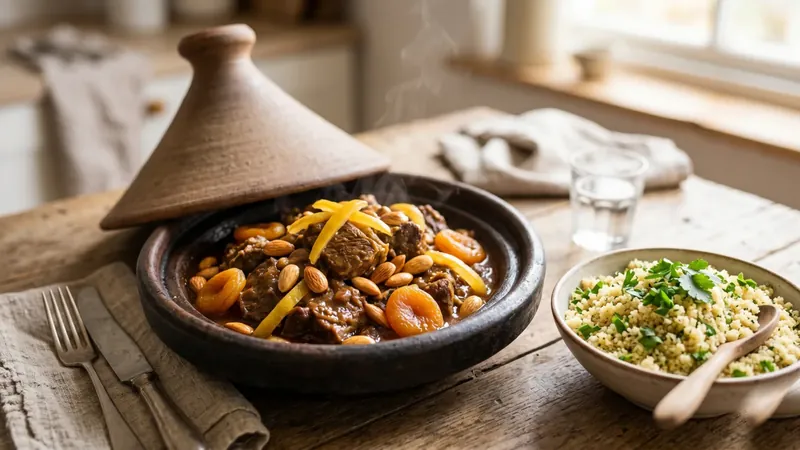
↓ Jump to recipeMrouzia is the dish Moroccan households make when there is more lamb in the house than anyone can eat in a day, and it is built to solve that problem rather than just to taste good. Traditionally cooked in the days after Eid al-Adha, when a household sacrifice leaves far more meat than a family can get through fresh, mrouzia is cooked, cooled, and often cooked a second time in its own fat and honey to seal it — a preservation method that lets it keep at cool room temperature for weeks in a way almost no other lamb dish can manage. The name comes from the Arabic root for “reduced” or “concentrated,” and that is exactly what happens to the sauce: onion, spice, honey and raisins cooked down until they cling to the meat like a lacquer.
Mrouzia: Lamb, Raisins and Ras el Hanout for the Long Keep
Ingredients
- 1.5kg lamb shoulder, bone-in, cut into 6-8 large pieces
- 3 tbsp smen or 3 tbsp butter plus 2 tbsp olive oil
- 2 large onions, grated
- 3 garlic cloves, crushed
- 3 tbsp ras el hanout
- 1 tsp ground cinnamon, plus extra for dusting
- 1/2 tsp ground ginger
- 1/2 tsp saffron threads, crumbled
- 300ml water
- 300g raisins
- 4 tbsp clear honey
- 1 tbsp orange blossom water
- 100g blanched almonds
- 2 tbsp vegetable oil, for frying the almonds
- 2 tsp salt, plus more to taste
- 2 tbsp sesame seeds, toasted, to finish
Method
- Melt the smen or butter and olive oil in a heavy, wide pot over medium heat, then add the grated onion, garlic, ras el hanout, cinnamon, ginger, saffron and salt, and stir for 2 minutes until fragrant.
- Add the lamb pieces and turn them in the spiced onion mixture until well coated, then pour in the water.
- Bring to a simmer, cover, and cook over low heat for 1 hour 30 minutes, turning the lamb occasionally, until tender but not falling apart.
- Lift the lamb out onto a plate and set aside; raise the heat under the sauce and simmer uncovered for 10 minutes to reduce and thicken slightly.
- Stir the raisins into the sauce and simmer for 10 minutes until plumped, then stir in the honey and orange blossom water.
- Return the lamb to the pot, spoon the raisin sauce generously over each piece, and simmer uncovered for a further 20 minutes, basting every few minutes, until the sauce is dark, glossy and thickly coats the meat.
- Meanwhile, fry the almonds in the vegetable oil over medium heat for 2-3 minutes, stirring constantly, until golden, then drain on kitchen paper.
- Taste the sauce and adjust the salt or honey to balance sweet against savoury.
- Serve the lamb with the raisin sauce spooned over, scattered with the fried almonds, toasted sesame seeds and a light dusting of cinnamon.
A dish built to last, not just to eat
Before refrigeration was common in Moroccan homes, mrouzia solved a real logistical problem. A sheep slaughtered for Eid al-Adha produces enough meat to feed a family for well over a week, and without reliable cold storage, most of it needed a cooking method that acted as its own preservative. The combination of a low simmer in fat, a high concentration of honey and dried fruit, and a generous dose of warming spice creates an environment hostile to spoilage — sugar and fat both work against bacterial growth, and the dish was traditionally packed into its own rendered fat afterwards the way confit or potted meat is preserved in Europe. Even in kitchens with a fridge in every corner now, families still cook it this way because the flavour genuinely improves with age; a mrouzia that has sat for two or three days, its spices settling into the fat, tastes rounder and deeper than one eaten the same night.
It shares that logic of festive abundance with rfissa, another dish that appears in the days following Eid al-Kebir, though rfissa is built to comfort a tired household while mrouzia is built to use up the feast.
Ras el hanout is not one spice mix
Ras el hanout translates loosely as “head of the shop,” meaning the best a spice merchant has to offer, and historically it was a bespoke blend assembled by each vendor from whatever they considered their finest stock — sometimes running to twenty or thirty different spices, including cardamom, nigella, grains of paradise, rosebuds and, in some old recipes, genuinely unusual inclusions like ground beetle for colour, which modern blends have long since dropped. What you buy today, whether from a Moroccan grocer or a supermarket spice aisle, is a simplified version, but a good one should still taste layered and warm rather than flat — cinnamon, cumin, coriander, ginger, allspice and pepper form the backbone, with smaller amounts of things like nutmeg, cardamom and turmeric rounding it out. Buy it from a shop with reasonable turnover if you can; a tired, stale ras el hanout will taste mostly of cumin and nothing else, and this dish depends on that complexity to balance against all the honey and raisins.
The technique: braise, then glaze
Mrouzia works in two distinct stages, and rushing the transition between them is the most common way to ruin it. The first stage is a straightforward braise: lamb shoulder, bone-in for flavour, cooked low and slow in a spiced onion base until tender. Bone-in shoulder matters here — the bone and connective tissue give the sauce body as they break down, something boneless leg or diced lamb simply can’t replicate as well.
The second stage is where mrouzia earns its name. Once the lamb is tender, it comes out of the pot, and the sauce reduces hard, uncovered, before the raisins, honey and orange blossom water go in. This is not the moment to walk away — a honey-and-raisin sauce left unattended over direct heat will catch and turn bitter within minutes once the water content drops low enough. Stir it, watch it, and once the lamb goes back in, baste constantly rather than leaving it to simmer passively. What you’re after is a sauce that has gone from liquid to something closer to a glaze — thick enough to coat the back of a spoon and cling to the meat rather than pool around it.
Choosing the lamb
Shoulder is the right cut for a reason beyond tradition: it has enough fat and connective tissue running through it to survive nearly three hours of cooking without drying out, and the collagen that breaks down over that time is what gives the finished sauce its slightly unctuous body. Leg is leaner and will cook tender in less time, but it lacks that same richness and can turn stringy if you push it as long as this recipe asks. Ask your butcher to cut the shoulder into large bone-in chunks rather than boning it out — the bone adds flavour to the braising liquid as it cooks, and you can always work around it at the table, Moroccan-style, eating with bread rather than a knife and fork.
A word on orange blossom water
Orange blossom water is easy to overdo, and it is one of the few ingredients here where more is emphatically not better. It should read as a background perfume, not a distinct flavour you can name in the finished dish — a tablespoon is usually enough for this quantity of sauce, and I’d urge caution rather than generosity, especially with bottles bought from a supermarket rather than a specialist grocer, which tend to be more concentrated and can turn soapy in large quantities. Add it at the same time as the honey, off any high heat, since its aromatic compounds are delicate and cook off quickly if boiled hard.
Fried almonds are not a garnish
It’s tempting to treat the almonds scattered over the top as decoration, the way you might treat a sprig of parsley, but they do real textural work. Mrouzia’s sauce is soft, sticky and uniformly dark; without something crisp on top, every bite has the same texture. Fry the almonds separately in a little vegetable oil until they’re properly golden — not just warmed through — and drain them well before scattering. The contrast between the crunch of the almond and the yielding lamb underneath is, for me, the single detail that separates a mrouzia that tastes like a special occasion from one that just tastes like sweet stewed lamb.
Balancing sweet against savoury
The biggest mistake home cooks make with mrouzia outside Morocco is treating it like a dessert-adjacent dish and going soft on the salt, worried that savoury and sweet will clash. They don’t, provided the salt is present in the first place — mrouzia should taste distinctly savoury underneath the honey and raisins, not simply sweet. Taste the sauce before serving and be willing to add more salt even at the very end; the raisins and honey mute salt’s presence more than you’d expect, and an underseasoned mrouzia tastes cloying rather than balanced.
The honey itself matters more than you’d think. A mild, floral honey lets the ras el hanout and cinnamon lead; a dark, strongly flavoured honey like chestnut or heather will compete with the spice rather than support it. I use a plain clear blossom honey for this reason — it sweetens without adding its own competing perfume on top of everything else already happening in the pot. If all you have is a strongly flavoured honey, cut the quantity slightly and taste as you go rather than following the measurement blind.
Storage and the traditional seal
Cooled leftovers keep in the fridge for up to 5 days, and the flavour is genuinely better on day two than on day one. For the traditional long-keep version, some families ladle a thin layer of the rendered fat from the cooking liquid over the top of the stored dish once it has cooled, creating a seal that lets it keep at cool room temperature for a week or more — the same principle behind a French confit or a potted meat. If you’d rather not bother with that step, the fridge and freezer both work perfectly well; it freezes for up to 3 months and reheats gently on the hob with a splash of water to loosen the sauce back to its glossy consistency.
Serving mrouzia
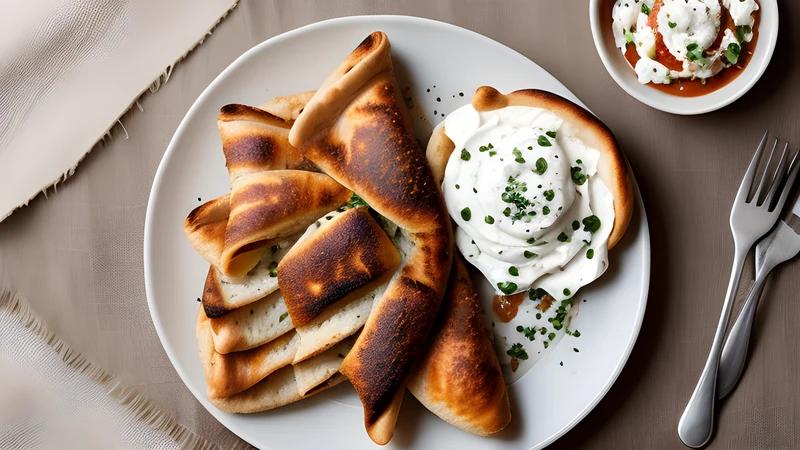
Mrouzia is rich enough that it wants very little alongside it — a plain steamed couscous or warm flatbread to mop up the sauce is really all it needs, plus something green and sharp to cut through the sweetness. A simple salad of grated carrot with orange and a squeeze of lemon works well, as does a plate of taktouka if you’re building out a wider spread. Avoid serving it with anything else heavily spiced or sweet; mrouzia is meant to be the richest thing on the table, and it loses its impact if it has to compete.
Variations
Some versions swap raisins for a mix of raisins and dried prunes, which adds a deeper, slightly tart note against the honey — worth trying if you find the standard version a touch one-note sweet. Others use whole shoulder joints rather than cut pieces and carve at the table, which makes for a more dramatic presentation if you’re serving it as the showpiece of an Eid spread. If you want to serve it in the wider spread of a festive Moroccan table, preserved lemons on the side offer a sharp, salty counterpoint that cuts nicely through all that honey and fat.
Mrouzia rewards the same patience as most slow-cooked festival food: it asks you to braise, then reduce, then glaze, each stage with its own timing, and it punishes shortcuts at exactly the stage — the glaze — where most cooks are tempted to rush because dinner is running late. Give it the full two stages properly and it earns its place as one of Morocco’s great celebration dishes, the kind of thing worth cooking even without a sheep’s worth of leftover lamb to justify it.
Related Content