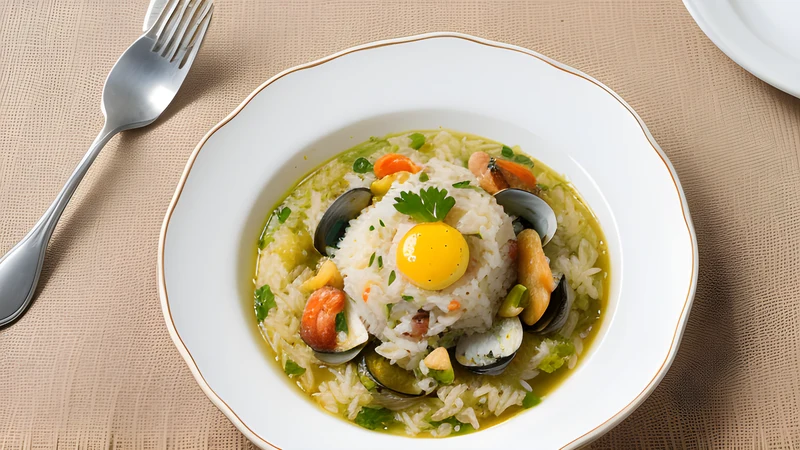
Moules-Frites With White Wine and Celery
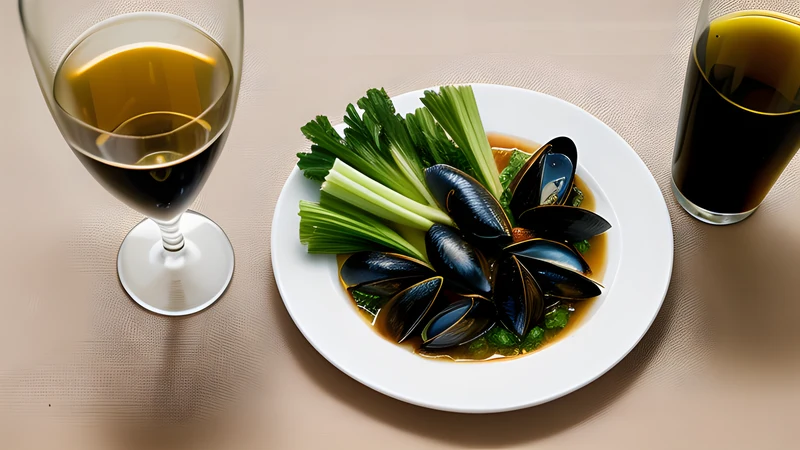
Mussels steamed four minutes in wine and celery, with twice-fried chips and mayonnaise
Contents
↓ Jump to recipeMoules-frites is two dishes that have nothing in common pretending to be one. A pot of mussels steamed in wine takes four minutes and almost no skill. A plate of proper Belgian frites takes forty minutes, two separate fryings and a degree of commitment that most people are unwilling to give a potato. They arrive together, the chips get dunked in the broth against all advice, and the whole thing is eaten with your fingers and a shell.
The Belgians consider this the national dish and will fight the French about it. On the frites, at least, they have the better argument.
Moules-Frites With White Wine and Celery
Ingredients
- 2 kg live mussels, preferably rope-grown
- 800 g floury potatoes (Bintje or Maris Piper), peeled
- 1.5 litres beef dripping or groundnut oil, for frying
- 50 g unsalted butter
- 1 large onion (about 200 g), finely chopped
- 4 celery sticks, strings peeled off, sliced 5 mm thick, leaves reserved and chopped
- 3 garlic cloves, thinly sliced
- 2 bay leaves
- 6 sprigs thyme
- 250 ml dry white wine (Muscadet, Picpoul or a dry Riesling)
- 1/2 tsp freshly ground black pepper
- 4 tbsp chopped flat-leaf parsley
- Flaky sea salt, for the chips
- 150 g good mayonnaise, to serve
Method
- Cut the potatoes into batons 1 cm square and as long as the potato allows. Rinse them in cold water until it runs clear, then soak in fresh cold water for 30 minutes.
- Drain the potatoes and dry them completely on a tea towel. Any water left on them will spit violently in the fat.
- Heat the dripping to 140°C. Fry the chips in two batches for 7 minutes each, until they are soft, pale and floppy but not coloured. Lift them out onto a rack and leave for at least 20 minutes. They can wait 3 hours at this stage.
- Scrub the mussels under cold running water and pull away the beards by tugging them towards the hinge. Discard any with cracked shells. Tap any open ones firmly on the worktop: if they close within 30 seconds, keep them; if they stay open, throw them away.
- Melt the butter in a very large pan with a tight lid over medium heat. Add the onion, sliced celery, garlic, bay and thyme with a pinch of salt and sweat for 8 minutes until soft and translucent, without colouring.
- Raise the heat to high, pour in the wine and let it boil hard for 1 minute.
- Tip in the mussels all at once, clamp on the lid and cook for 4 minutes, shaking the pan hard twice to redistribute them. They are done the moment the shells have opened.
- While the mussels cook, raise the fat to 190°C and fry the chips a second time, in two batches, for 3 minutes each, until deep golden and crisp. Drain on a rack and salt immediately with flaky salt.
- Take the mussels off the heat. Discard any that stayed firmly shut. Stir in the black pepper, parsley and the chopped celery leaves.
- Serve the mussels in the pot with the broth, the chips in a separate bowl so they stay crisp, and the mayonnaise alongside. Use an empty shell as tongs to eat the rest.
The frite is Belgian and the mussel is a bargain
The origin story you have heard involves the Meuse valley in the 1680s, villagers who fried fish from the river, and a hard winter when the river froze so they cut potatoes into fish shapes and fried those instead. It is a lovely story and it is almost certainly false — the potato was not a staple crop in the Meuse valley in 1680, and the tale first appears in print in the 1980s in a Belgian family manuscript of contested provenance.
What is documented is that by the mid-nineteenth century Belgium had friteries — dedicated chip stands — as an institution, and that no other country did. The fritkot or friture is a Belgian invention, there are still around five thousand of them, and in 2017 the country formally applied to have the culture of the fritkot recognised by UNESCO. The “French” in French fries is generally reckoned to be American soldiers in the First World War, who ate them in French-speaking Wallonia and drew the obvious wrong conclusion.
The mussel half is pure economics. Belgium has 67 km of coastline and almost no mussel production; the mussels are Dutch, from Zeeland, and they have been coming down the road for a century and a half. Mussels were cheap protein, chips were cheap starch, and the combination fed industrial Belgium. It is now a restaurant dish with a restaurant price, which is one of the more irritating things that has happened to European food, and it remains extremely cheap to make at home.
The season is the old rule of months with an R in them, and it still holds for a real reason: mussels spawn in warm water, and a spawning mussel has emptied its energy reserves into gametes, leaving a thin, watery animal in a big shell. September to April gives you fat mussels. Rope-grown mussels, suspended in the water column rather than dredged off the seabed, are cleaner, have thinner shells and almost never contain grit.
The shell rule, and how to not poison anyone
Mussels are alive when you buy them and they should be alive when they go in the pot. This is the only genuinely serious thing on this page.
Before cooking: discard any with a cracked or broken shell. For any that are gaping open, tap them firmly on the worktop and wait thirty seconds. A live mussel will pull itself shut, slowly and grudgingly, because the adductor muscle still works. One that stays open is dead and goes in the bin.
After cooking: the folk rule says discard any that stayed shut, and it is worth following even though the science is muddier than the rule suggests. A mussel opens when the heat denatures its adductor muscle and the hinge ligament springs it apart; some perfectly good mussels have unusually strong adductors and stay shut. But you cannot tell those from the ones that died on the way home, so the rule stays. Two or three refusals in 2 kg is normal. Twenty means the bag was old.
Store them in the fridge in a bowl covered with a damp cloth, never in water and never sealed in the plastic bag, which suffocates them. Use them the day you buy them.
Debeard by pulling the wiry tuft towards the hinge rather than away from it. The byssal threads are anchored deep in the animal, and pulling the wrong way tears out flesh and kills it. Do this immediately before cooking, since debearding wounds the mussel.
Four minutes, and the celery
The cooking is trivially quick and easily ruined. Mussel flesh is mostly a smooth adductor muscle plus mantle tissue, and its proteins denature fast. Four minutes over high heat with the lid on gives you plump mussels; seven minutes gives you rubber bullets. Take them off the heat the moment the last shells have opened. They will hold in the pot for a couple of minutes with the lid off.
You need a genuinely large pan — 2 kg of mussels is a huge volume before they open — with a tight lid, because they are steaming rather than boiling. Only about 250 ml of wine goes in, and by the end you will have close to a litre of broth, because each mussel dumps its own liquor into the pot. That liquor is seawater, which is why there is no added salt in the mussel half of this recipe at all.
Celery is the Belgian signature and the thing that separates moules marinière as served in Brussels from the French version. It goes in as sliced sticks and chopped leaves, and both matter. The sticks soften into the base and give a savoury, faintly bitter green note under the wine; the leaves, stirred in raw at the end, carry the volatile phthalides that read as fresh and slightly anise-like against the iodine of the shellfish. It is the same instinct that puts celery leaf into erwtensoep and celeriac into waterzooi — the Low Countries reach for the celery family the way Italy reaches for garlic.
Peel the strings off. Celery strings are indigestible fibre and they end up wound around a mussel like dental floss.
Use a dry, high-acid, unoaked white. Muscadet is the classic and it is cheap. Oak in the wine reads as wrong against shellfish, and anything sweet is a disaster.
The frites: 140°C, then 190°C, and why
Two fryings, and there is no shortcut.
The first fry at 140°C is a cooking step. The potato’s internal temperature climbs to around 100°C, the starch granules gelatinise, and the cells cook through to a fluffy interior. Nothing browns, because 140°C oil with a wet potato in it drops well below the Maillard threshold at the surface. The chip comes out pale and floppy and looks like a failure.
The rest is not optional. During those twenty minutes on the rack, surface moisture evaporates and the outermost layer of gelatinised starch dries into a thin, brittle film. That film is what becomes the crust.
The second fry at 190°C is a crusting step. The dried surface hits high heat, the remaining water flashes off, and Maillard browning happens fast — three minutes, no more. A single fry at one temperature gives you either a raw middle with a burnt outside or a pale, greasy, limp chip. Neither is a frite.
The soak matters too. Rinsing and soaking washes off free surface starch that would otherwise burn and cause the chips to weld together. Dry them absolutely: water in hot fat boils instantly to steam and throws fat across your kitchen.
Bintje is the Belgian variety and it is what the fritkots use — high dry matter, low sugar, so it browns evenly rather than going dark. Maris Piper is the best UK substitute. Waxy potatoes make wet, dense chips.
Beef dripping is the authentic fat. Blanc de boeuf, refined beef fat, is what a real friture uses, and it gives a savoury depth that no vegetable oil matches. Groundnut oil is the good neutral alternative.
Where it goes wrong
The mussels are rubbery. Overcooked. Four minutes.
The broth is gritty. Dredged mussels rather than rope-grown, or you did not rinse. Pour the broth off through a fine sieve.
The chips are limp. Not enough rest between fries, or the second fry was too cool. A thermometer is worth more than any other kit here.
The chips are dark and bitter. High-sugar potatoes, or ones stored in the fridge — cold storage converts potato starch to sugars, which caramelise and burn. Store potatoes in a dark cupboard.
Everything is greasy. The fat was below temperature, so oil soaked in during the seconds before the surface sealed.
Serving it the Belgian way
The pot comes to the table. This is fixed. A Belgian brasserie serves moules in the black enamelled casserole they were cooked in, lid propped against the side, with a second empty pot for the shells and a soup plate for each person. Decanting mussels onto a platter loses the broth and drops the temperature, and both are unforgivable.
The chips arrive in a separate bowl or a paper cone, and they stay there. Put chips into mussel broth and within ninety seconds the dried starch crust that took you forty minutes to build has rehydrated and gone soft. Dunk them one at a time, immediately before eating, which is what everyone actually does regardless of what they were told.
Cutlery is a fork for the first mussel and nothing after that. You empty one shell, then use the hinged pair as tongs to pinch the meat out of every subsequent one. It is faster than a fork, it is what the shell is shaped for, and it is the small piece of table technique that marks out people who grew up eating these from people who did not.
Bread at the end, for the broth. Two kilos of mussels leave the better part of a litre of wine, celery, garlic and seawater in the bottom of the pot, and abandoning it is the real crime at this table.
Variations and what to do with the broth
Moules à la crème stirs 100 ml of double cream into the broth at the end. Moules à la bière swaps the wine for a Belgian witbier and takes the dish somewhere maltier — the same logic that drives carbonade flamande. Moules au roquefort melts 80 g of blue cheese into the pot, which sounds ridiculous and is a fixture on Brussels menus. A spoonful of Dijon is common and works.
The mayonnaise is compulsory and Belgians will not discuss ketchup. Make it with a neutral oil and a teaspoon of Dijon, or buy a good jar and beat a crushed garlic clove into it.
Keep the broth. Strain it, and it makes the base of a fish soup, or a stock for a shellfish risotto, or the poaching liquid for a piece of cod the following night. Any mussels left over come out of their shells and get folded into that. Nothing about this dish reheats — mussels reheated are rubber, chips reheated are cardboard — so cook what you will eat, and eat it standing over the pot if necessary.
Related Content