Moqueca Baiana With Dendê and Coconut
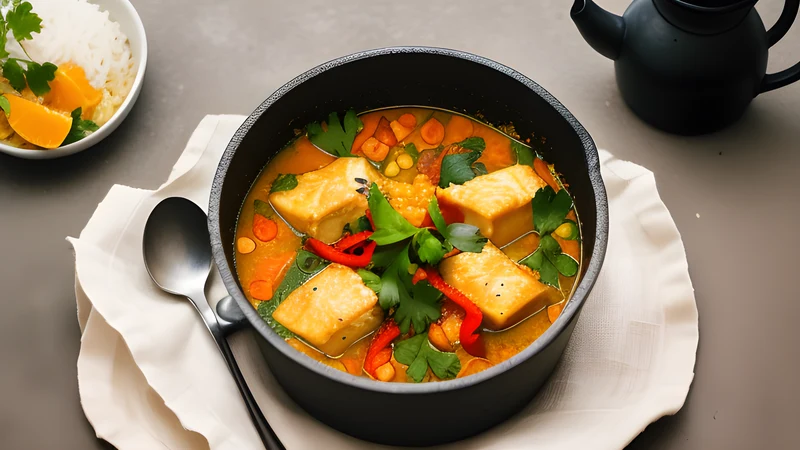
A clay pot of fish stewed in orange palm oil, coconut milk and peppers
Contents
↓ Jump to recipeMoqueca baiana is a stew you build in layers and then leave almost entirely alone, and the reward for that restraint is fish that stays in tender flakes rather than dissolving into the broth. It comes to the table glowing orange, smelling of coconut and toasted palm oil and coriander, and it is one of those dishes that tastes far more elaborate than the calm half hour it takes to make. The trick is holding your nerve and not stirring.
I make it in a wide pot with a lid, layering vegetables and marinated fish so the fish poaches gently in coconut milk without being knocked about. If you own a Brazilian clay panela, this is its moment; if not, any heavy pot does the job. What you cannot fake is the palm oil, and I will come to why in a moment.
Moqueca Baiana With Dendê and Coconut
Ingredients
- 800 g firm white fish fillets (cod, haddock, hake or monkfish), skinned, in large chunks
- 3 tbsp fresh lime juice
- 4 garlic cloves, minced
- 1.5 tsp fine salt
- 1 tsp sweet paprika
- 1 large onion, sliced into rings
- 1 red pepper, sliced into rings
- 1 yellow pepper, sliced into rings
- 3 ripe tomatoes, sliced into rounds
- 3 tbsp dendê (red palm oil)
- 400 ml tin coconut milk
- 1 large bunch coriander, chopped
- 3 spring onions, sliced
- 1 fresh red chilli, sliced (optional)
- Black pepper to taste
Method
- Cut the fish into large chunks and toss with the lime juice, minced garlic, 1 tsp of the salt and the paprika. Leave to marinate 20 minutes while you prepare the vegetables.
- Choose a wide, heavy pot or a clay pot with a lid. Warm 1 tbsp of the dendê over medium heat and lay down a base of half the onion rings, half the peppers and half the tomatoes.
- Arrange the marinated fish over the vegetable base in a single layer. Season with the remaining 0.5 tsp salt and some black pepper.
- Cover the fish with the remaining onion, peppers and tomato, so it is sandwiched between two layers of vegetables. Scatter over half the coriander and the spring onions.
- Pour the coconut milk evenly over the top and drizzle the remaining 2 tbsp dendê over everything. Add the sliced chilli if using. Do not stir.
- Bring to a gentle simmer, then cover and cook over medium-low heat for 15 to 18 minutes, until the fish is just opaque and flakes at the centre. Shake the pot gently rather than stirring, to keep the fish intact.
- Taste the broth and adjust salt and lime. Scatter over the remaining coriander.
- Serve straight from the pot with plain white rice and, if you like, farofa. Spoon plenty of the orange broth over each portion.
Bahia on a plate
Moqueca comes from Brazil’s northeast, and Bahia is its spiritual home. The state was the centre of the transatlantic slave trade in Brazil, and Bahian cooking — comida baiana — is the most visibly African of Brazil’s regional cuisines, built on ingredients that crossed the ocean and took root. Two of them define this dish: dendê, the red palm oil pressed from the fruit of the African oil palm, and coconut milk, both central to West African cooking and both carried into Bahian kitchens by enslaved Africans and their descendants.
There is a quieter cousin, moqueca capixaba, from the neighbouring state of Espírito Santo, made without dendê or coconut and coloured instead with annatto — lighter, tomatoey, and delicious in its own right. But the Bahian version, rich and orange and unmistakable, is the one most people mean when they say moqueca. The word itself is thought to derive from an Indigenous Tupi term for a method of cooking wrapped and steamed, so the dish braids together Indigenous technique, African ingredients and Portuguese-introduced elements into something wholly Brazilian.
It shares a table and a spirit with Brazil’s other great communal pots, from feijoada completa, the weekend project to the cheesy little breads you might serve alongside, pão de queijo from tapioca flour.
Dendê: the ingredient you cannot skip
Dendê is non-negotiable in a Bahian moqueca. Red palm oil has a distinctive earthy, almost grassy flavour and a deep orange colour from its high carotenoid content, and it is the flavour that makes moqueca taste like moqueca rather than a generic coconut fish curry. You will find it in African and Brazilian shops and online, usually in a jar or bottle, solid or semi-solid at room temperature and melting to a vivid orange liquid when warm.
Use it with a light hand — three tablespoons for this quantity. Too much and it becomes heavy and can taste soapy; the right amount perfumes and colours the whole pot. A note worth knowing: unsustainable palm oil is a genuine environmental concern, so it is worth seeking out a brand with responsible sourcing where you can. If you truly cannot get dendê, you can approximate the colour by warming annatto (achiote) seeds in a neutral oil and straining, but understand you are then making something closer to the capixaba style — honest and good, though not the real Bahian article.
Protecting the fish
The single most common way to ruin a moqueca is to overcook the fish, so everything about the method is designed to prevent it. Choose a firm white fish that holds together — cod, haddock, hake and monkfish all work; avoid thin, delicate fillets that fall apart. Cut generous chunks, because small pieces overcook in seconds.
The lime marinade does double duty: it seasons the fish and, thanks to the acid, firms the flesh slightly so it holds its shape. Twenty minutes is plenty; much longer and the lime begins to “cook” the surface like a ceviche, which you do not want here.
Then you layer rather than stir. A bed of vegetables underneath lifts the fish off the direct heat and stops it catching; a blanket of vegetables on top helps it steam evenly. When it cooks, you shake the pot gently to move things around instead of dragging a spoon through it. Fifteen to eighteen minutes at a gentle simmer is usually enough — the fish should turn opaque and flake at the centre, and no more. Pull it off the heat the moment it is done. It will carry on cooking a little in the hot broth.
Building the layers
Work in a wide pot so everything sits in a shallow, even bed. Warm a little of the dendê, lay down half the onion, peppers and tomato, then the marinated fish in a single layer, then the rest of the vegetables over the top. Scatter coriander and spring onion through, pour the coconut milk evenly over everything, and drizzle the remaining dendê last so it streaks the surface orange. From this point, no stirring. Cover, bring to a gentle simmer, and let it go.
The coconut milk and the juices from the tomatoes and fish combine into a loose, fragrant broth that is the best part of the dish. Do not be tempted to thicken it — moqueca is meant to be brothy, spooned generously over rice so the grains drink it up. Taste the broth near the end and adjust with salt and a final squeeze of lime to keep it lively.
Why layering beats stirring
It is worth understanding the logic of the no-stir method, because once you do, you will trust it. In a conventional stew you build flavour by stirring — encouraging everything to break down and merge. Moqueca works the opposite way. The vegetables release their moisture downward and the coconut milk seeps through from the top, so the fish sits in a slowly forming broth and poaches rather than boils. Dragging a spoon through the pot would shear the fish into rags and cloud the clean, bright layers of flavour. Shaking the pot gently, gripping both handles and giving it a small swirl, moves the liquid without touching the fish. If a piece looks like it needs turning, nudge it with the back of a spoon rather than flipping it.
There is a textural reward too. The onion rings and pepper strips soften but keep a little bite, the tomato slices slump into the broth and thicken it slightly, and the fish stays in clean flakes. Stir it all together and you get a homogeneous mush; layer it and every spoonful has distinct things in it.
Getting the broth right
The broth is where moqueca is won or lost, and it should taste of three things in balance: the sweetness and richness of coconut, the earthy depth of dendê, and a bright lift of lime and coriander to keep it from becoming cloying. Taste it near the end, before the final scatter of herbs, and adjust in that order. If it tastes flat, it usually needs salt. If it tastes heavy or one-note, it needs acid — another squeeze of lime wakes the whole pot up. If it tastes thin, you may have used a light coconut milk or too much liquid crept in from watery tomatoes; let it simmer uncovered for a few minutes to concentrate.
Coriander goes in twice, and this is deliberate. Half is layered in during cooking, where it melts into the broth and gives a deep herbal base note. The other half is scattered raw at the end, for a fresh, green top note and the smell that hits you when the lid comes off. Spring onion works the same way, cooked for mellow sweetness and raw for a clean bite. Together they keep a rich, oily stew tasting fresh rather than fatty.
Serving and what goes alongside
Serve moqueca straight from the pot, ladling fish and vegetables into bowls with plenty of the orange broth, over a mound of plain white rice. Farofa — toasted cassava flour — scattered on top adds a nutty crunch and soaks up the sauce, exactly as it does with feijoada. A few extra coriander leaves and a wedge of lime finish it.
- Prawn moqueca. Swap half or all of the fish for large raw prawns, added in the last six to eight minutes so they just turn pink. A mixed seafood version with fish, prawns and squid is gorgeous for a celebration.
- Heat level. Bahian food is not necessarily fiery; the classic table condiment is a fierce pimenta sauce served on the side so each person adds their own. Keep the pot mild and offer chilli separately, or slip one sliced red chilli in for a gentle background warmth.
- Coconut. Use full-fat tinned coconut milk, not a carton drink or a light version — the richness is the point, and thin coconut milk gives a watery broth.
- Make-ahead. Moqueca is best eaten fresh, as reheated fish toughens. If you must prepare ahead, make the vegetable and coconut base in advance and add the fish only when you reheat to a simmer, cooking it from raw at that point.
Layer it, drizzle the dendê, cover the pot and step back. Twenty minutes later you lift the lid on a glowing, coconut-scented stew that tastes of the Bahian coast, and the only skill it really asked of you was patience.
Related Content