Mole Negro: The Oaxacan Marathon
The darkest of the seven moles, charred chillies and all
Contents
↓ Jump to recipeThere is a moment, about ninety minutes into making mole negro, when you stand over a smoking pan of charred chilli seeds and wonder whether you have made a terrible mistake. The kitchen smells like a bonfire. Your eyes water. The seeds have gone from brown to black to a grey ash at the edges, and every instinct built up over years of being told not to burn things is screaming at you to stop. Keep going. That deliberate burning is the whole point, and it is the difference between mole negro and every paler mole that came before it.
Mole Negro: The Oaxacan Marathon
Ingredients
- 6 chilhuacle negro or ancho chillies, stemmed and seeded (seeds reserved)
- 4 mulato chillies, stemmed and seeded (seeds reserved)
- 4 pasilla chillies, stemmed and seeded (seeds reserved)
- 2 chipotle chillies, stemmed and seeded
- 120g sesame seeds, plus extra to garnish
- 80g whole almonds
- 60g raw peanuts
- 50g raisins
- 1 corn tortilla, torn
- 2 slices stale bread
- 1 ripe plantain, sliced
- 6 tomatillos, husked
- 3 plum tomatoes
- 1 large onion, halved
- 6 garlic cloves, unpeeled
- 1 tsp black peppercorns
- 1 tsp cumin seeds
- 4 cloves
- 1 stick cinnamon (Mexican canela)
- 3 allspice berries
- 40g Mexican drinking chocolate, chopped
- 1.8kg chicken pieces, on the bone
- 2 litres chicken stock
- 3 tbsp lard or vegetable oil
- 2 tsp fine sea salt, plus more to taste
- 1 tbsp brown sugar
Method
- Simmer the chicken pieces in the stock with half an onion for 30 minutes until just cooked; lift out the chicken and keep the stock hot.
- Toast the reserved chilli seeds in a dry heavy pan over medium heat until they blacken and smoke hard, about 5 minutes; this char is the source of the black colour. Tip into a bowl.
- Toast the sesame seeds until golden, then the almonds and peanuts until fragrant; set each aside. Fry the plantain, tortilla and bread in a little lard until deep brown.
- Char the tomatillos, tomatoes, remaining onion and unpeeled garlic in a dry pan or under the grill until blackened in patches and soft. Peel the garlic.
- Fry the seeded chillies in lard for a few seconds each side until they puff and darken, then soak them with the burnt seeds in hot stock for 20 minutes.
- Grind the toasted spices to a powder. Blend the chillies, then the nuts, seeds, fried starches, charred vegetables and spice, adding stock until each batch is smooth. Pass through a sieve.
- Heat 3 tbsp lard in a heavy pot until shimmering; add the paste and fry, stirring constantly, for 20 minutes until it darkens and smells roasted.
- Loosen with hot stock to a coating consistency, add the chocolate, salt and sugar, and simmer gently for 45 minutes, stirring often, until glossy.
- Slip in the chicken to warm through for 15 minutes. Serve over rice, scattered with sesame seeds.
Seven moles and the blackest one
Oaxaca calls itself the land of seven moles, and the count is more folk poetry than strict inventory, but the family is real: negro, rojo, coloradito, amarillo, verde, chichilo and manchamanteles. They share a grammar of toasted chillies, seeds, nuts, fruit and spice, thickened and fried down into a sauce that behaves more like a paste than a gravy. Mole negro sits at the top of that hierarchy, the one brought out for weddings, funerals and the Day of the Dead, because it takes the longest and asks the most.
The word mole comes from the Nahuatl molli, simply meaning sauce or concoction, and the dish predates the Spanish by centuries in its indigenous bones: chillies, tomatillos, seeds, all Mesoamerican. What arrived on ships were the almonds, the cinnamon, the cloves, the sesame, and above all the confidence to layer a dozen imported spices onto a native base. The mole we eat now is a genuine collision of two pantries, worked out over generations in convent and village kitchens, and mole negro is its most ambitious expression.
The black colour is often blamed on chocolate. That is a misunderstanding. The chocolate is there, but a modest 40 grams of it against nearly three kilos of other ingredients contributes only background bitterness and a faint fruitiness. The darkness comes from elsewhere. The real black comes from the chilhuacle negro chilli, a rare Oaxacan variety, and from burning the chilli seeds and stems until they are carbon. That controlled cremation is what gives mole negro its ink-dark colour and its smoky, almost coffee-like edge.
Sourcing the chillies
The honest difficulty here is the chilhuacle negro. It is grown in a small pocket of the Cañada region, it is expensive even in Oaxaca, and outside Mexico it is very hard to find. If you can get it, wonderful. If you cannot, a mix of ancho, mulato and pasilla will get you a deeply respectable mole negro, which is exactly what the ingredient list above assumes. Mulato brings the chocolate-raisin depth, pasilla the dried-fruit and mild heat, ancho the sweetness and body. What you must not skip is the burnt seeds, because that is where the colour and the signature bitterness live.
Buy your dried chillies whole and pliable, still supple enough to bend. A good dried chilli bends like leather; a snapping one has lost its oils and its flavour. Wipe them, tear off the stems, shake and scrape out the seeds, and keep those seeds because you are going to torch them on purpose.
Building the mole
Mole is really an exercise in toasting a dozen things to the correct point and blending them into one. Work in stations. Toast the chilli seeds in a dry pan until they genuinely blacken and smoke; open a window. Toast the sesame seeds to gold, the almonds and peanuts to fragrant, keeping each separate so nothing tips into acridness. Fry the plantain, the torn tortilla and the stale bread in a little lard until they are deep brown, because those starches thicken the sauce and add a bass note of caramel.
Char the tomatillos, tomatoes, onion and unpeeled garlic in a dry pan or under a hot grill until they collapse and blister. Blackened patches are welcome. This charring gives the sauce its tang and its roasted backbone. Fry the seeded chillies for just a few seconds a side, watching like a hawk, because a chilli that goes from toasted to burnt turns the whole batch bitter in the worst way. Then soak the fried chillies with the burnt seeds in hot stock to soften.
Now you blend, and you blend in stages, because a domestic liquidiser cannot handle everything at once. Grind the toasted spices first. Blend the soaked chillies smooth, then the nuts and seeds with stock, then the fried starches, then the charred vegetables. Push every batch through a sieve, pressing hard, and discard the grit. A properly sieved mole is satiny; a lazy one is gritty, and you will taste the difference on the tongue.
The step people rush, and should not, is frying the paste. Heat lard in a heavy pot until it shimmers, add the thick paste, and fry it, stirring without pause, for a full twenty minutes. It will spit; keep the heat moderate and your sleeves down. The paste darkens, the raw edges cook off, and it begins to smell roasted rather than sharp. Only then do you loosen it with hot stock, drop in the chopped chocolate, season with salt and a spoon of brown sugar, and let it burble gently for the best part of an hour, stirring often so it does not catch. When it coats a spoon and shines like wet slate, it is done. If it fights you, thin with stock; if it is thin, cook it down.
A sauce that belongs to the whole village
In Oaxaca, mole negro is rarely a solitary project. For a saint’s day, a wedding or a wake, the making is a communal event: the mayordomo who hosts the feast buys the ingredients in bulk from the great markets of Oaxaca city, and the women of the family and their neighbours gather to toast, grind and stir in relay, a task that can run from before dawn until the afternoon. The grinding was traditionally done at the molino, the neighbourhood mill, where you queue with your buckets of soaked chillies and roasted nuts and pay by weight to have them milled fine, because no home metate can take a batch meant to feed two hundred. Even now, many Oaxacan cooks who own a good blender still carry their chillies to the molino, insisting the stone grind gives a smoother, more melded paste.
That communal scale is why the paste, rather than the finished sauce, is the true unit of Oaxacan mole. Markets such as the Central de Abastos sell tubs of ready-made mole negro paste in a dozen grades, and a household will buy a kilo, freeze it in portions, and thin a lump with turkey stock whenever mole is wanted. Making it from scratch, as here, is the ambitious home cook’s homage to that tradition. You are compressing a village afternoon into your own kitchen, and the smell that fills the house is the smell of a Oaxacan feast day.
The spices and starches, and what each one does
Nothing in the long ingredient list is decorative. The almonds and peanuts give the sauce its body and a soft nuttiness; the sesame both thickens and perfumes. The fried plantain brings a mellow sweetness and helps carry the fat, while the tortilla and stale bread are pure thickeners, lending the paste its clinging weight without a spoon of flour. Raisins add a dark fruit note that echoes the mulato chilli, and the tomatillos and tomatoes bring the acidity that keeps the whole rich mass from turning cloying. The warm spices, cinnamon, clove, allspice, cumin and black pepper, are the imported half of the dish, the Old World layered over the New. Toast and grind them fresh; pre-ground supermarket spice loses the volatile oils that make the difference between a mole that smells alive and one that smells only of chilli.
Serving, and the leftovers question
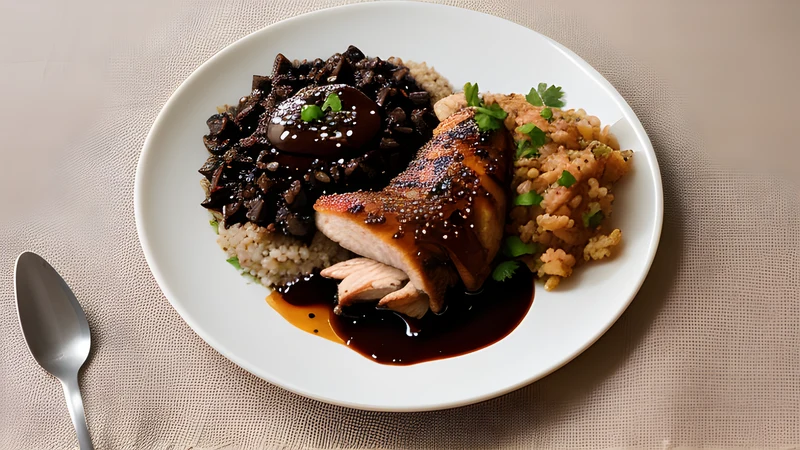
Traditionally mole negro goes over turkey, the great festive bird of Mexico, but chicken on the bone is the everyday choice and the one here. Poach the chicken first in the stock you will later use to build the sauce, so nothing is wasted, then bathe the pieces in the finished mole to warm through. Serve over plain white rice with warm tortillas, a scatter of toasted sesame, and thin rings of raw onion if you like the bite. The sauce is rich, dark and long on the palate, savoury before it is sweet, with the burnt-seed bitterness sitting underneath everything like the bass line of a song.
Mole freezes beautifully, and it arguably improves after a day in the fridge as the flavours settle. Many Oaxacan cooks make a huge batch of the paste, freeze it in blocks, and simply thin a piece with stock when they want mole for supper. If you have gone to the trouble of a full afternoon, make double and bank the surplus. Reheat gently with a splash of stock, because the sauce thickens as it cools and will seize if you blast it.
Tips, faults and variations
If your mole tastes flat, it usually needs salt and a touch more sugar to lift the fruit; add both cautiously and taste between each addition. If it tastes harshly bitter, you burnt the chillies rather than the seeds, and there is no full rescue, though extra chocolate and a longer simmer soften the blow. If it is grainy, you did not sieve hard enough. If it splits or looks oily on top, you cooked it too hot; whisk in a little cold stock off the heat to bring it back.
For a vegetarian version, poach the mole with hearty mushrooms and roasted squash instead of chicken and use a good vegetable stock; the sauce carries them well. Some cooks add a spoon of toasted avocado leaves for an aniseed note, which is worth seeking out. Others finish with a knob of extra chocolate for a sweeter, more festive sauce.
If this has given you a taste for the long-cooked Mexican weekend, the birria de res with consomé for dipping is the beef equivalent, all chilli and slow braise, and the pozole verde with chicken and pepitas is the greener, brighter soup at the same festive table. For a quicker Oaxacan hit on a weeknight, the tlayudas put many of the same flavours on a crisp tortilla in a fraction of the time.
Mole negro is a marathon, and I will not pretend otherwise. It eats an afternoon, dirties every pan you own, and demands a shopping list you may have to chase across three shops. It also gives you something no jar can: a sauce with the smell of charred chilli and toasted almond and old chocolate, dark as ink and quietly, endlessly savoury. Make it once for the pride, and make it again because you will want to.
Related Content