Mohinga: Burma's Catfish and Lemongrass Noodles
The fish and rice noodle soup that opens the day in Myanmar
Contents
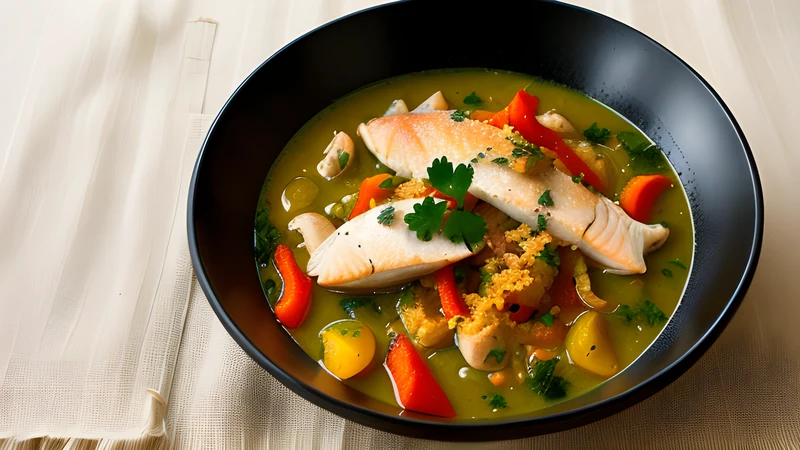
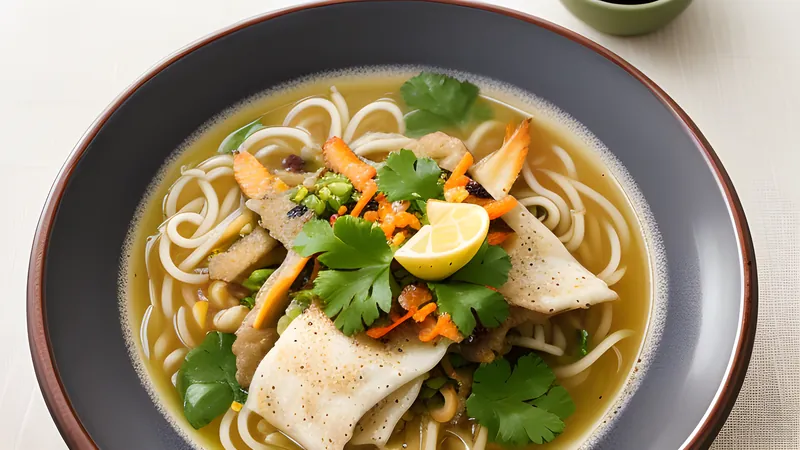
↓ Jump to recipeBefore the tea shops open properly, before the monks finish their morning rounds, the mohinga sellers in Yangon are already three hours into their shift, stirring a vat of catfish broth the colour of turmeric and building the day’s supply of crispy fritters to crumble over it. Mohinga is breakfast in Myanmar in the way that a full fry-up used to be breakfast in Britain - not universal in the sense that everyone eats it every day, but so deeply embedded in the culture that describing Burmese food without it would be an obvious omission. It’s sold from street carts, market stalls and dedicated mohinga shops that open at dawn and often sell out by mid-morning.
The dish is a fish and rice noodle soup, but that description undersells what actually happens in the pot. The broth gets its body from toasted rice powder or chickpea flour rather than cream or coconut milk, landing somewhere between a soup and a thin curry, carrying the flavour of catfish, lemongrass, ginger and shallot without ever tasting fishy in an unpleasant way - the poaching and the aromatics see to that.
Mohinga: Burma's Catfish and Lemongrass Noodles
Ingredients
- 600g catfish fillets (or other firm white fish such as basa or pangasius)
- 2 lemongrass stalks, bruised, plus 2 more, white part only, finely chopped
- 4cm ginger, sliced, plus 3cm more, grated
- 1 onion, quartered, plus 1 more, roughly chopped
- 1.5 litres water
- 1 tsp salt, plus more to season
- 4 shallots, roughly chopped
- 6 garlic cloves
- 2 tbsp paprika
- 1 tsp ground turmeric
- 2 tbsp dried shrimp, soaked in warm water 10 minutes
- 1 tbsp shrimp paste (ngapi) or fish sauce
- 60ml peanut oil or vegetable oil
- 4 tbsp chickpea flour (besan), mixed with 150ml water
- 2 tbsp fish sauce, plus more to taste
- 400g dried rice vermicelli noodles
- 4 eggs, hard-boiled and halved
- handful coriander leaves, roughly chopped
- 2 spring onions, thinly sliced
- crispy split-pea or lentil fritters, to serve
- lime wedges and dried chilli flakes, to serve
Method
- Place the catfish in a large pot with the bruised lemongrass, sliced ginger, quartered onion, water and 1 tsp salt. Bring to a gentle simmer and poach for 15 minutes, until the fish flakes easily.
- Lift the fish out with a slotted spoon, flake it into large pieces and set aside. Strain the poaching liquid, discard the aromatics, and reserve the stock.
- Blend the chopped shallots, garlic, grated ginger, chopped lemongrass, chopped onion, paprika, turmeric and drained dried shrimp to a smooth, thick paste.
- Heat the oil in a large pot over medium heat and fry the paste for 8-10 minutes, stirring often, until fragrant and the oil starts to separate at the edges.
- Stir in the shrimp paste and cook for 1 minute more, then pour in the reserved stock and bring to a simmer.
- Whisk the chickpea flour and water mixture until smooth, then stir it into the simmering broth in a steady stream, whisking constantly to prevent lumps.
- Simmer for 20 minutes, stirring every few minutes, until the broth has thickened to the consistency of a light gravy and no longer tastes of raw flour.
- Return the flaked fish to the pot, season with the 2 tbsp fish sauce, and simmer for a further 5 minutes. Taste and adjust salt and fish sauce.
- Soak the rice vermicelli in a bowl of just-boiled water for 5 minutes, until soft, then drain well and divide among four bowls.
- Ladle the hot broth generously over the noodles. Top each bowl with half a boiled egg, coriander, spring onion and a crumbled crispy fritter.
- Serve immediately with lime wedges and dried chilli flakes on the side.
Breakfast as an Institution
Mohinga’s centrality to Burmese food culture is hard to overstate. It’s often called the national dish, though Myanmar has no formal designation, and you’ll find regional variations from Yangon to Mandalay to the Irrawaddy Delta, where catfish is caught locally and the broth tends to be thicker and more heavily spiced. Rakhine State has its own hot, chilli-forward version. What stays consistent across the country is the basic architecture: a lemongrass and shallot-scented fish broth, thickened, poured over rice vermicelli, and finished with a scatter of garnishes that each diner adjusts to taste - more chilli, more lime, an extra fritter crumbled in, a hard-boiled egg on the side rather than in the bowl.
The dish’s ubiquity is partly practical. Catfish is cheap and plentiful in the rivers and irrigation channels that cross the Irrawaddy basin, rice vermicelli is a pantry staple, and the aromatics - lemongrass, ginger, shallot, turmeric - grow easily in Myanmar’s climate. Mohinga was, and largely remains, a dish built from what’s locally abundant, which is a big part of why it settled into the role of everyday breakfast rather than special-occasion food. It sits in a similar culinary register to other Southeast Asian noodle soups built around a spiced, aromatic paste fried until fragrant before liquid goes in - the technique is close cousin to laksa, the rich, spicy coconut-scented noodle soup worth making the paste for from scratch, though laksa leans on coconut milk for its body where mohinga relies on the chickpea flour thickener and skips coconut almost entirely.
Mohinga also travels well beyond breakfast. Street vendors sell it into the afternoon, and it turns up at wakes and religious donation ceremonies, where feeding a large crowd cheaply and quickly matters more than formality. A big pot of mohinga, kept at a low simmer for hours, is a practical way to feed dozens of people through a long day of visitors, and its ability to hold and reheat without losing character is part of why it suits that role.
The Stock That Carries Everything
Good mohinga starts with a properly made poaching stock, and it’s the step most home cooks are tempted to rush. Poach the catfish gently - a hard boil toughens the flesh and makes it harder to flake cleanly - with bruised lemongrass, sliced ginger and quartered onion in the water. Fifteen minutes at a bare simmer is usually enough for fillets; the fish should flake apart with light pressure from a fork, not require force.
Strain the poaching liquid before building the broth further. The aromatics have already given up their flavour to the water and serve no further purpose; leaving them in muddies the finished broth’s clarity and can turn bitter with extended cooking. This stock becomes the base the spice paste is loosened into later, so its quality directly determines the finished soup’s depth - a thin, under-seasoned poaching liquid produces a thin, under-seasoned mohinga no matter how well the paste is handled afterward.
Catfish is traditional because it’s what’s caught locally in Myanmar’s rivers, and its slightly fatty, soft flesh holds up well to the long simmer without drying out. Outside Myanmar it can be harder to find in fillet form; basa and pangasius, both farmed catfish relatives widely sold in UK supermarkets under those names, are close enough in texture and flavour to substitute without noticeably changing the dish. Avoid firmer, leaner fish like cod, which flakes too readily and loses moisture during the poach, leaving the broth without the slight richness catfish contributes.
Building the Paste
The paste - shallot, garlic, ginger, lemongrass, dried shrimp, paprika, turmeric - is fried in oil until the raw edge disappears and the oil visibly separates at the pan’s edges, the same visual cue used across the region’s curry pastes, from Thai curries to Malaysian rendang. This separation matters: it signals the paste’s moisture has cooked off and the aromatics are properly toasted rather than merely warmed through, which is the difference between a broth that tastes vivid and one that tastes muddy and raw.
Dried shrimp, soaked briefly to soften before blending, adds a savoury depth that plain shallot and garlic can’t replicate on their own - it’s doing the same job dried shrimp does in countless Southeast Asian pastes, building umami without adding another liquid to balance. Shrimp paste, stirred in near the end of the fry rather than blended into the raw paste, adds a final layer of fermented depth; if you can’t find ngapi, a good fish sauce stirred in at the same stage gets you most of the way there, though the flavour will be slightly cleaner and less funky than the genuine article.
Patience during this fry stage pays off later. A paste fried for only two or three minutes still tastes raw and sharp, and that rawness carries straight through into the finished broth no matter how long it simmers afterward - unlike a stew, where extended cooking eventually mellows underdone aromatics, a broth this thin doesn’t have the same forgiveness. Give the paste the full eight to ten minutes over a steady medium heat, stirring regularly so it colours evenly rather than catching in one spot.
Thickening Without Lumps
The chickpea flour thickener is what gives mohinga its distinctive body, somewhere between a broth and a light gravy, and it’s also the step most likely to go wrong. Whisk the chickpea flour into cold or room-temperature water first, completely smooth, before it goes anywhere near the hot broth - adding dry flour directly to simmering liquid guarantees lumps that no amount of stirring afterward will fully dissolve.
Pour the slurry into the simmering broth in a thin, steady stream while whisking continuously, then keep the broth at a gentle simmer, stirring every few minutes, for a full 20 minutes. This isn’t a formality - chickpea flour needs sustained heat to lose its raw, slightly chalky taste and thicken properly. Taste the broth at the 15-minute mark; if it still tastes of raw flour, give it another five minutes rather than serving it early. Traditional versions sometimes use toasted rice powder instead of chickpea flour, ground from rice toasted dry in a pan until golden - it gives a slightly nuttier thickening and is worth trying if you want to get closer to the Delta style, though chickpea flour is more forgiving for a first attempt.
If the broth thickens beyond the consistency you want, loosen it with a splash of the reserved poaching stock or hot water rather than plain water alone, which would dilute the seasoning along with the texture. If it’s thinner than you’d like after the full 20 minutes, mix a further tablespoon of chickpea flour with cold water and repeat the process rather than adding dry flour straight into the pot.
Assembly and Garnish
Mohinga’s garnishes aren’t optional extras; they’re where a lot of the dish’s textural interest lives, since the broth and noodles alone are relatively soft in texture throughout. A crumbled crispy fritter - traditionally split pea or lentil, similar in spirit to the fritters found alongside other South and Southeast Asian broths, in the way fish head curry in Singapore leans on a full spread of textures and heat levels rather than relying on the base broth alone - adds crunch that softens gradually as it sits in the hot broth, which is part of the appeal rather than a flaw to avoid.
A hard-boiled egg, halved and set on top rather than stirred through, coriander and sliced spring onion for freshness, and lime wedges and chilli flakes on the side so each diner can adjust heat and acidity to their own taste - this is how mohinga is served at Yangon’s market stalls, with the components largely separate until the moment of eating so the noodles don’t turn to mush sitting in broth before serving.
Rice vermicelli only needs a soak in just-boiled water, not active boiling on the hob, which overcooks it into a sticky mass within a minute or two. Five minutes in a bowl of water off the heat softens the noodles to the right pliable bite; drain them well and divide between bowls just before the broth goes in, since noodles left sitting wet will continue to soften and clump.
Variations and Storage
Regional versions vary more than most single-dish descriptions suggest. Delta mohinga tends toward a thicker, more heavily spiced broth given the abundance of fresh catfish there; Mandalay versions can be milder and slightly sweeter. Some cooks add a boiled egg directly into the simmering broth for the final few minutes rather than serving it separately, which lightly seasons the egg white. If catfish isn’t available, any firm white fish that holds together under gentle poaching works, and basa or pangasius both take well to the lemongrass and ginger poach described above.
The broth keeps well in the fridge for up to three days, and in fact improves slightly on the second day as the flavours settle, though it will thicken further on standing - loosen it with a splash of hot water or stock when reheating. Keep the noodles, fritters and garnishes separate from the broth until serving; noodles left sitting in hot broth overnight turn starchy and bloated, losing the light bite that makes freshly assembled mohinga worth queuing for at a Yangon market stall before the sun’s properly up.
Related Content