Mofongo With Garlic and Chicharrón
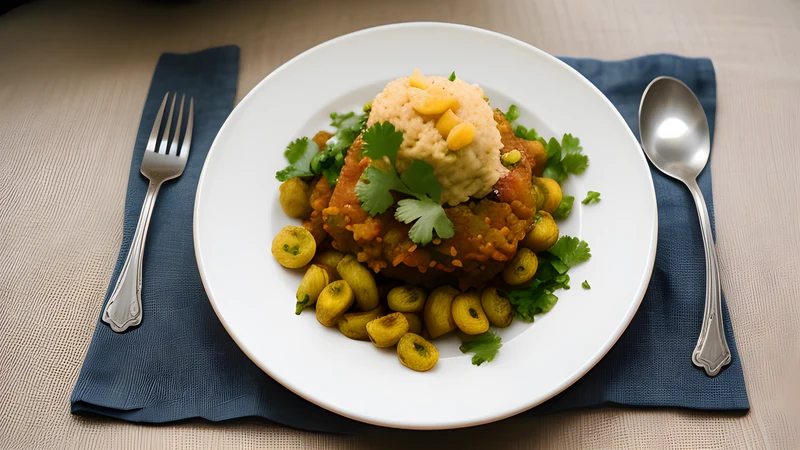
Fried green plantain pounded with garlic and pork crackling into a savoury mound
Contents
↓ Jump to recipeMofongo is one of those dishes where the whole personality comes from a single technique done with conviction: green plantains fried until tender, then pounded in a heavy wooden mortar with garlic and crisp pork until they turn into a dense, savoury, garlicky mound. It is a stubbornly good thing to eat — starchy and satisfying, loud with garlic, with shards of crackling running through it — and it is inseparable from the sound of the pilón, the wooden pestle and mortar that pounds it together and gives the dish its rhythm.
It comes together quickly once the plantains are fried, and the pounding is genuinely satisfying to do. The main thing to get right is the frying: green plantains must be cooked through gently to soft, not blasted to crisp, or your mofongo will be gritty rather than smooth and cohesive.
Mofongo With Garlic and Chicharrón
Ingredients
- 4 large green (unripe) plantains
- Neutral oil, for deep-frying
- 6 garlic cloves
- 1 tsp fine salt, plus more to taste
- 3 tbsp olive oil
- 150 g chicharrón (fried pork crackling/pork scratchings), plus extra to garnish
- 1 tbsp warm chicken stock, if needed to loosen
- To serve: a bowl of hot garlicky chicken or seafood broth (caldo)
Method
- Peel the green plantains: top and tail, score the skin lengthwise in three or four places, and prise it off. Cut into 2.5 cm thick rounds.
- Soak the plantain rounds in cold salted water for 10 minutes, then drain and pat completely dry.
- Heat oil to 165°C in a deep pan. Fry the plantain in batches for 6 to 7 minutes until tender and pale gold but not browned — they should cook through without crisping hard. Drain.
- Make the garlic mojo: crush the garlic cloves with 1 tsp salt to a paste, then stir in the 3 tbsp olive oil.
- In a large pestle and mortar (pilón), or a sturdy bowl, pound a portion of the hot fried plantain with some of the garlic mojo and a handful of broken chicharrón. Mash and pound until you have a coarse, cohesive mixture that still has a little texture.
- Taste and adjust salt. If the mash is dry or crumbly, work in a splash of warm stock to bring it together. Keep the mixture warm as you work in batches.
- Pack the warm mofongo firmly into a small bowl or a cup to shape it, then turn it out onto a plate as a domed mound.
- Top with extra crumbled chicharrón. Serve immediately with a bowl of hot garlicky broth alongside to spoon over or dip into.
An African technique on a Caribbean island
Mofongo’s ancestry runs straight back to West and Central Africa, and specifically to fufu — the family of dishes made by pounding a starchy staple, such as plantain, cassava or yam, into a smooth, dense mass in a mortar. Enslaved Africans brought that technique across the Atlantic, and in Puerto Rico it met the plantain and the local love of garlic and pork to become mofongo. The very tool, the pilón, and the pounding action echo the mortar-and-pestle work of West African kitchens. It is one of the clearest, most delicious lines you can draw between African foodways and the Caribbean table.
The dish is a point of pride across Puerto Rico and is eaten far beyond it, wherever the Puerto Rican diaspora has settled. It shares the plantain-and-pork logic of so much Caribbean cooking, and sits happily on a table with pernil with crackling skin — indeed the crisp skin from a pernil is a superb chicharrón for mofongo — and the great one-pot Caribbean stew, sancocho, the Sunday stew of the Caribbean, which makes an ideal broth to serve alongside.
Green plantains, and why they behave
Everything starts with getting the right fruit and treating it right. Green plantains — hard, unripe, with tight green skin — are what mofongo needs. At this stage the plantain is almost entirely starch, with no sweetness, so it fries up like a starchy vegetable rather than caramelising the way a ripe black-skinned plantain does. If you use ripe plantain you will make something sweet and quite different (delicious in its own right, but not mofongo).
Peeling a green plantain is a small knack. Unlike a banana, the skin clings tightly, so top and tail it, run a knife down through the skin in three or four lengthwise scores, and prise the peel off in sections with your thumb. A brief soak of the cut rounds in salted water seasons them and helps them fry cleanly; dry them thoroughly afterwards, because wet plantain and hot oil spit dangerously.
The frying temperature that matters
This is the step that decides whether your mofongo is good. Green plantains for mofongo are fried at a moderate temperature, around 165°C, not screaming hot, and only until tender and pale gold. You are cooking them through, softening the starch so it can be mashed smooth, rather than crisping the outside. Fry them too hot and the outside hardens and browns before the inside cooks, and you end up pounding tough, gritty bits that never come together.
Test one: a fried piece should give easily when pressed and be cooked all the way through with no chalky centre. Six to seven minutes at the right temperature usually does it. Drain them and get them into the mortar while still hot — hot plantain mashes far more readily and binds better than cold, which turns stiff and refuses to cohere.
Garlic, pork and the pounding
The two flavours that define mofongo are garlic and pork fat, and both go in generously.
The garlic comes as a rough mojo: cloves crushed with salt to a paste and slackened with olive oil. Raw or barely-cooked garlic gives mofongo its characteristic pungent punch; some cooks lightly warm it in the oil first for a mellower, sweeter note. Either works — decide how loud you want it.
The pork is chicharrón — crisp fried pork crackling or skin. Broken into the mash, it melts partly into the plantain and leaves little savoury, chewy-crisp fragments throughout. Good pork scratchings from a shop are a fine stand-in if you are not frying your own. Its fat and salt season the whole mound.
Now the pounding. Work in batches your mortar can handle. Add hot plantain, a spoon of garlic mojo and a handful of broken chicharrón, and pound and mash together. You want a cohesive mixture that holds when pressed but still carries a little coarse texture — not a smooth purée and not loose crumbs. If it seems dry and won’t come together, work in a splash of warm broth. Taste as you go and adjust the salt; between the plantain, the garlic and the pork there is a lot to balance.
The pilón, and mashing by hand
The tool matters more than you might expect. A pilón — the large wooden mortar and pestle found in Puerto Rican kitchens — is heavy, deep and forgiving, and its weight does much of the work. Pounding is a rocking, twisting motion as much as a straight thump: you press and grind the plantain against the sides so it breaks down evenly, then fold in the garlic and chicharrón and pound again to distribute them. If you do not own a wooden pilón, a large granite mortar works, or at a pinch a sturdy bowl and the end of a rolling pin. What you should not do is reach for a food processor. A machine over-works the plantain into a smooth, gluey paste, and mofongo wants a hand-pounded, slightly coarse texture with a bit of chew — the mechanical version tastes and feels wrong.
Work while everything is hot and move quickly, because the plantain firms up as it cools and becomes hard to bring together once it drops below warm. If you are making a big batch, keep the fried plantain covered in a warm oven and pound in small loads rather than trying to crush a cold mountain of it at once.
Reading and fixing the mash
A good mofongo mixture, just before you shape it, should clump when you press it in your hand and hold the impression of your fingers, while still showing distinct little pieces of plantain and crackling rather than a uniform putty. Two faults come up. If it is dry and crumbly and falls apart when shaped, it needs moisture and fat — work in a spoonful of warm broth or an extra drizzle of the garlicky oil until it coheres. If it is heavy, dense and pasty, the plantain was probably fried too hot or mashed too aggressively; there is little to do but serve it with extra broth, and fry more gently next time. Season in stages as you pound, tasting each batch, because it is easy to under-salt a starch this bland and just as easy to overshoot if you dump it all in at once.
Shaping, serving and the broth
Mofongo is traditionally served as a shaped dome. Pack the warm mixture firmly into a small bowl or cup, press it down, and turn it out onto the plate so it holds a neat mounded shape. Crumble a little more chicharrón over the top.
The one thing I would urge you not to skip is a bowl of hot broth served alongside. Mofongo is dense and can be dry on its own, and a garlicky chicken or seafood caldo — spooned over the mound or offered as a dipping cup — transforms it, keeping every mouthful moist and savoury. This is how it is very often eaten in Puerto Rico, and it is the detail that turns a good mofongo into a proper meal.
- Mofongo relleno. Shape the mofongo into a bowl or well and fill the centre with a saucy stew — garlic prawns (mofongo con camarones), stewed chicken, or braised beef. This is the restaurant showpiece version and it is spectacular.
- Trifongo. Pound in some fried cassava and ripe plantain along with the green plantain for a three-starch version with a hint of sweetness.
- Vegetarian. Skip the chicharrón and lean hard on garlic, good olive oil and a splash of vegetable broth; fried garlic chips on top add the savoury crunch you’d otherwise get from pork.
- Make-ahead. Mofongo is best eaten the moment it is made, while warm and freshly pounded. It stiffens as it cools and does not reheat gracefully, so fry and pound just before you want to eat.
Fry the plantain gently, pound it hot with plenty of garlic and pork, shape it into a dome and get a bowl of broth beside it. That is the whole dish, and the reason a mound of mashed plantain has kept the pilón thudding in Puerto Rican kitchens for generations.
Related Content