Modur Pulav: Kashmiri Sweet Saffron Rice
The dish that closes a Kashmiri feast
Contents
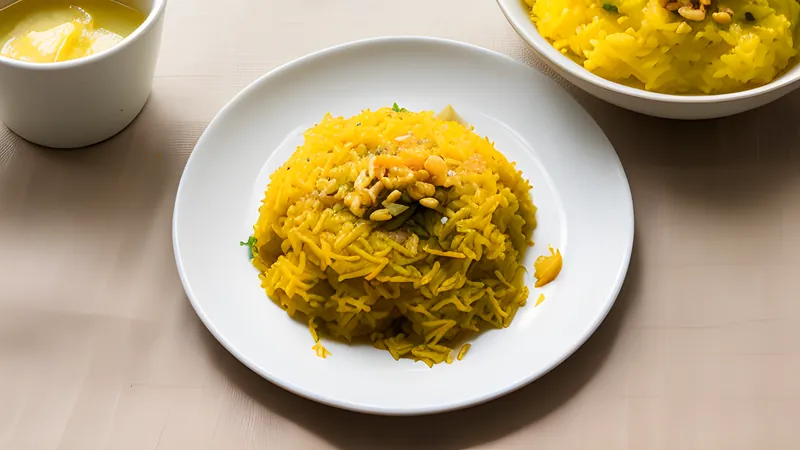
↓ Jump to recipeModur pulav is the sweet close to a Kashmiri feast: saffron rice cooked in a sugar syrup rather than savoury stock, finished with ghee-fried raisins, almonds and cashews. The name says exactly what it is — modur means sweet in Kashmiri — and it’s built to end a meal rather than start or centre one, the dish that arrives after the meat courses of a wazwan have run their course.
It’s also, unusually for a rice dish, closer to a dessert than a side, cooked with genuinely sweetened liquid rather than a pinch of sugar added to a savoury base, and finished with fried dried fruit that turns each spoonful into something closer to a warm, fragrant rice pudding than a pilaf.
Modur Pulav: Kashmiri Sweet Saffron Rice
Ingredients
- 300g basmati rice, washed and soaked for 30 minutes
- 4 tbsp ghee, divided
- 150g caster sugar
- 200ml water, for the syrup
- 0.5 tsp saffron strands
- 3 tbsp warm milk
- 4 green cardamom pods, bruised
- 1 cinnamon stick
- 4 cloves
- 40g raisins
- 40g blanched almonds, halved
- 40g cashews, halved
- 2 drops kewra (screwpine) water or rosewater, optional
- Pinch of salt
Method
- Soak the saffron strands in the warm milk and set aside to steep for at least 15 minutes.
- Drain the soaked rice and set aside.
- Make a sugar syrup by dissolving the sugar in the 200ml water over a medium heat, stirring until clear, then simmer for 3 minutes and set aside.
- Heat 2 tbsp of the ghee in a heavy pot, add the raisins, almonds and cashews, and fry for 2 minutes until the nuts are lightly golden, then remove with a slotted spoon and set aside.
- In the same pot, add the remaining ghee, the cardamom, cinnamon and cloves, and fry for 30 seconds until fragrant.
- Add the drained rice and stir gently for 2 minutes to coat every grain in ghee without breaking it.
- Pour in the sugar syrup, the saffron milk and a pinch of salt, stir once, and bring to a simmer.
- Cover tightly and cook on the lowest possible heat for 15-18 minutes, without lifting the lid, until the rice is tender and the liquid fully absorbed.
- Remove from the heat, sprinkle over the kewra water if using, and let it rest, covered, for 5 minutes.
- Fluff gently with a fork, fold through the fried dried fruit and nuts, and serve warm.
The story: the sweet course of the wazwan
The wazwan, the elaborate multi-course Kashmiri feast served at weddings and major celebrations, moves through dish after dish of meat — rogan josh, rista, gushtaba — cooked and served by a hereditary team of chefs called the wazas, with individual dishes numbering into the dozens at a full wedding feast. Modur pulav’s role in that sequence is specific: it’s one of the last dishes to arrive, a sweet, saffron-scented rice meant to signal the meal winding down, alongside a milk pudding called phirni that often closes things entirely.
Its sweetness sets it apart from the pulaos eaten across most of the Indian subcontinent, which are almost always savoury, built around meat or vegetables and whole spice rather than sugar syrup. That sweetness also means the dish is genuinely more forgiving of overcooking than a savoury pilaf, since a slightly softer grain still reads as pleasant in a syrup-soaked rice in a way it wouldn’t in a plain, dry pulao meant to have each grain distinct and separate. Kashmir’s version, cooked with dissolved sugar in place of stock, sits closer in spirit to a rice-based sweet like an Iranian shirin polo, a reminder of how much Kashmiri court cooking absorbed from Persian and Central Asian traditions carried over the mountain passes during the Mughal and earlier periods. Saffron itself is the clearest thread of that connection: Kashmir, and specifically the town of Pampore near Srinagar, is one of the very few places in the world where saffron is grown at scale, and its use here isn’t a decorative flourish borrowed from elsewhere but a genuinely local ingredient at the centre of a genuinely local dish.
Dried fruit and nuts fried briefly in ghee before the rice, rather than added raw, is a technique worth noticing and stealing for other rice dishes. It plumps the raisins and gives the nuts a toasted depth that raw versions, folded in at the end, never develop; the small extra step at the start of cooking pays off in every subsequent mouthful. Almonds specifically benefit from being blanched and peeled before frying rather than left with their brown skins on, since the skin turns slightly bitter and papery in hot ghee, a small detail that separates a home-style version from the smoother, more refined texture served at a proper feast.
Technique: the lid stays on
Cooking rice in a sugar syrup rather than water behaves slightly differently to a normal pilaf, and the biggest risk is a scorched base from the sugar catching before the rice has fully absorbed the liquid. Keeping the heat at the lowest possible setting once the pot is covered is the single most important habit here; the sugar syrup means this rice is considerably more prone to sticking and burning at the bottom than a plain pulao would be, and a heavy-based pot makes a genuine difference in preventing that.
Resist lifting the lid to check on it during the 15 to 18 minutes it cooks. Every time steam escapes, the cooking slows and becomes uneven, and with a sweet syrup base the risk of the rice cooking unevenly, with a dry top layer and a wetter, stickier bottom, is higher than with plain water. If you’re nervous about the timing, use a glass lid so you can watch the steam and the surface of the rice without breaking the seal.
Soaking the rice for a full thirty minutes before cooking matters more here than in most pilafs, because the grains need to be able to absorb the sweetened liquid quickly enough to cook through evenly in the relatively short covered simmer; unsoaked rice takes noticeably longer and risks a gluey texture in a dish that should stay light and separate, each grain distinct rather than clumped.
Saffron is worth buying properly rather than settling for the cheapest jar on the shelf, because a dish built around it will show every shortcut. Good saffron is deep red-orange with only a trace of yellow at the very tip of each strand; anything uniformly orange or heavily yellow is usually adulterated with safflower or turmeric. A genuine test, worth doing once with a new batch, is to drop a strand or two into a cup of warm water: real saffron releases its colour slowly over several minutes, while a cheap substitute or an adulterated blend tends to bleed colour almost instantly, a sign the dye is doing more of the work than the actual saffron. Steeping it in warm milk rather than water for a full fifteen minutes draws out considerably more colour and aroma than a quick rinse in cold liquid, and that patience shows in the finished rice as a genuinely deep gold rather than a pale, uneven yellow.
What to serve it with
Modur pulav is built to end a meal, so serve it last, after the savoury courses rather than alongside them. In a full Kashmiri spread it follows yakhni, dum aloo and haak, arriving warm once the plates from the main courses have been cleared. If you’d rather serve something else at the sweet end of a meal, gulab jamun in cardamom rose syrup shares the same saffron-and-rosewater register and makes a reasonable alternative or addition.
Storage, make-ahead and variations
Modur pulav keeps for two days in the fridge, though it’s genuinely best eaten warm the day it’s made, since the texture of the rice firms up considerably once chilled. Reheat gently in a covered pan with a spoonful of milk or water to loosen it, rather than in a microwave, which tends to dry the grains out unevenly.
Rice choice makes a real difference here. Aged basmati, rested for at least a year after harvest, cooks up drier and separates more readily than a fresh-crop rice, which tends to be stickier and more prone to clumping in a syrup-based liquid where the grains are already working harder to stay separate than they would in plain water. Most basmati sold in UK supermarkets is aged to some degree, but if the bag doesn’t say so, a rinse under cold water until it runs clear, on top of the thirty-minute soak, helps rinse away surface starch that would otherwise thicken the syrup unevenly.
For a version closer to some Kashmiri households’ everyday sweet rice rather than the full feast dish, halve the sugar and skip the saffron milk in favour of a pinch of turmeric for colour; it’s plainer, but still recognisably the same dish. Some households finish the dish with a spoonful of khoya, milk solids reduced down until thick and fudgy, stirred through at the very end for extra richness; it’s a genuine addition in more elaborate versions served at weddings, though it’s rich enough that most home cooks reasonably leave it out for a Sunday lunch. A few strands of dried rose petals scattered over at the end, alongside or instead of the kewra water, is a common finishing touch worth trying if you can find them. Cardamom pods left whole in the finished rice, as this recipe has them, are traditional, but if you’re serving guests unfamiliar with Kashmiri cooking, it’s worth warning them at the table, or crushing the pods and tying them in a small piece of muslin before adding them to the pot, so the flavour still infuses through without anyone biting down on a whole one unexpectedly. Skip fresh fruit like apple or pineapple, which some modern adaptations add for extra sweetness; the syrup and dried fruit already provide plenty, and fresh fruit adds unwanted moisture that works against the light, separate grain this dish depends on.
Related Content