Mloukhia: Tunisia's Long-Simmered Jute Leaf Stew
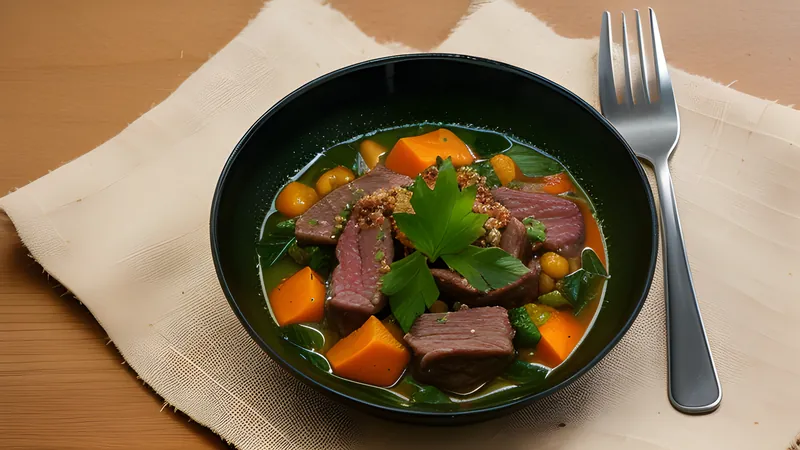
Dried jute leaf cooked down for hours into a dark, glossy stew around slow beef
Contents
↓ Jump to recipeMloukhia asks for patience most stews do not. Jute leaf, the vegetable at its centre, has a reputation across the countries that cook it — Tunisia, Egypt, parts of the Levant — for turning slimy if handled the way you would treat spinach, which is precisely why the Tunisian version cooks it for two or three hours rather than five minutes. That long, unhurried simmer is the entire method, deliberate rather than accidental, and it turns the leaf’s natural mucilage from a texture problem into something closer to a rich, velvety gravy that clings to rice and holds its heat for a long time.
Mloukhia: Tunisia's Long-Simmered Jute Leaf Stew
Ingredients
- 200g dried mloukhia (powdered jute leaf), or 400g frozen chopped jute leaf
- 250ml olive oil
- 1kg beef shin or stewing beef, cut into large chunks
- 2 onions, roughly chopped
- 8 garlic cloves, crushed
- 2 tbsp tomato purée
- 1 tbsp ground coriander
- 2 tsp caraway seeds, ground
- 1 dried red chilli, crumbled, or 1 tsp chilli flakes
- 1.5 litres beef stock or water, plus more as needed
- 2 tsp salt, plus more to taste
- 2 tbsp red wine vinegar
- Cooked rice or bread, to serve
Method
- If using dried mloukhia powder, whisk it into 500ml warm water to form a smooth, lump-free paste and set aside.
- Heat half the olive oil in a heavy pot over high heat. Brown the beef chunks in batches until deeply coloured on all sides, then remove.
- Add the onions to the same pot and cook 8 minutes until soft. Add the garlic and cook 1 minute more.
- Return the beef to the pot with the tomato purée, ground coriander, caraway and chilli. Cook 2 minutes, stirring.
- Add the stock and salt, bring to a simmer, cover and cook 90 minutes until the beef is tender.
- Stir in the mloukhia paste (or frozen jute leaf) and the remaining olive oil. Bring back to a low simmer.
- Cook uncovered, stirring often to prevent catching, for a further 60-90 minutes, until the stew has darkened to a deep bottle green-black and turned glossy and thick.
- Stir in the vinegar in the final 10 minutes; it cuts the richness and brightens the colour.
- Taste and adjust salt. The finished stew should coat a spoon thickly and taste deep, savoury and faintly earthy.
- Serve hot, ladled over rice or with crusty bread for dipping.
The leaf that frightens new cooks
Jute leaf — mloukhia in Arabic, corchorus in botanical terms — contains a mucilage similar to okra’s, and when it is cooked briefly, as in some Egyptian preparations, it produces a noticeably slippery, almost stringy stew that some diners love and others cannot get past. Tunisia takes the opposite approach entirely. Rather than working around the sliminess, the long Tunisian cook breaks the mucilage down over hours of gentle simmering until the texture transforms into something dense, glossy and almost lacquered, closer to a thick brown gravy than to anything resembling raw greens. The colour deepens from a bright green paste at the start to a near-black, bottle-green stew by the end, and that darkening is one of the clearest visual cues that the dish is nearly done.
Most home cooks in Tunisia work from dried, powdered jute leaf rather than fresh, which keeps for months in a sealed jar and whisks into a smooth paste with warm water in seconds — fresh jute leaf spoils fast and is genuinely hard to find outside regions where it grows, so the dried powder, sold in North African and Middle Eastern grocers, is the practical choice almost everywhere, including in Tunisia itself outside the growing season.
Building the base: beef, onion and spice
Mloukhia starts like most substantial Tunisian stews, with beef browned hard in a hot pot before anything else goes in. Shin or another well-worked cut is the right choice here; the collagen in the connective tissue breaks down over the long simmer into gelatine, giving the finished stew body it would otherwise lack, and the meat itself turns properly fall-apart tender rather than merely cooked through. Brown it in batches rather than crowding the pot — a crowded pot steams the meat instead of searing it, and you lose the deep savoury crust that gives the whole dish its backbone.
Onion, garlic, tomato purée, ground coriander and ground caraway follow, along with a crumbled dried chilli for background warmth rather than outright heat. This spice mix is quieter than the cumin-forward profile of lablabi — coriander and caraway sit underneath the jute leaf’s earthiness rather than fighting it for attention, which is the right instinct, since the leaf itself is the star and everything else in the pot exists to support it.
The long cook, and why it cannot be shortcut
Once the beef has simmered until tender, the mloukhia paste goes in along with the remaining olive oil, and this is where the dish genuinely takes its time. A full hour to ninety minutes of gentle, uncovered simmering, stirred often, is what carries the stew from a bright, slightly acrid green sludge to the deep, glossy black-green it is known for. The oil is not incidental at this stage either — a generous quantity of olive oil worked into the leaf during this long simmer is traditional, and it does real work, helping the mucilage break down evenly and giving the finished stew a rounded, almost silky mouthfeel rather than a merely thick one.
Stirring matters more here than in most stews. Because the jute leaf sits at the bottom of the pot and thickens as it cooks, it is prone to catching and scorching on a direct flame, and a scorched pot of mloukhia tastes bitter and ruins the whole batch. Stir every few minutes, scraping the base of the pot, and keep the heat gentle rather than fierce. A heat diffuser is a reasonable insurance policy if your hob runs hot.
The vinegar goes in only at the very end, in the last ten minutes. Added earlier, its acidity would fight the long, slow breakdown of the mucilage; added late, it does exactly what it is meant to, cutting through the richness of all that olive oil and lifting the deep, almost bitter-green flavour of the leaf with a clean sourness that keeps the stew from tasting heavy.
What “done” looks and tastes like
The single best way to judge a finished mloukhia is by how it coats a spoon. Early in the cook, the paste is thin and separates easily; by the time it is properly done, it should cling in a thick, even layer, closer to a reduced gravy than a soup, and the colour should have moved well past bright green into something closer to near-black. Taste it too: raw or under-cooked jute leaf carries a slightly grassy, almost bitter edge that the long simmer smooths away into something deep and savoury, closer in character to a well-reduced brown stock than to a vegetable dish.
Serving and what goes with it
Mloukhia is traditionally ladled generously over plain white rice, which soaks up the thick sauce far better than couscous does, though bread for dipping is just as common a way to eat it. A wedge of preserved lemon stirred through at the table adds a bright, salty top note that plays well against the stew’s richness, and a small dish of harissa on the side lets anyone who wants more heat add it themselves rather than building it into the pot, where it would compete with the caraway and coriander already doing that job.
Tips and common mistakes
The mistake that ruins most first attempts is impatience: pulling the pot off the heat after twenty or thirty minutes because the colour looks “green enough.” It is not. The transformation from bright green to deep bottle-black is the whole point, and a stew stopped too early tastes raw and grassy rather than rich and savoury. Give it the full time and trust the process even when it looks unpromising halfway through.
The second common failure is scorching, almost always from leaving the pot unattended on too high a heat. Because the thickened leaf sits heavy at the bottom, it needs more attention than a thin broth would, so stir it properly and often, and turn the heat down at the first sign of the base catching.
Substitutions and variations
Frozen chopped jute leaf, sold in Middle Eastern and some African grocers, is a reasonable substitute for the dried powder and needs no reconstituting — add it straight to the pot in place of the paste. Lamb shoulder or shin works in place of beef with only a slight change in character, leaning a touch richer and gamier. Some households add a whole small chicken or chicken thighs instead of, or alongside, the beef, particularly for celebratory versions of the dish served at weddings, where mloukhia traditionally appears as one of several substantial stews on a shared table.
A dish older than the modern border
Jute leaf stew is not unique to Tunisia — Egypt has its own quick-cooked molokhia, and versions turn up across the eastern Mediterranean and into the Levant, each shaped by local habits around meat, spice and how long the cook is willing to stand over the pot. The word itself is thought to trace back to an Arabic root meaning “royal” or “fit for a king,” a nod to a persistent legend that an Egyptian caliph once banned the leaf from being eaten, either for its supposed effect on temperament or simply out of royal caprice, and that its later return to the table was treated as an event worth naming. Whatever the truth of the story, the plant has been cultivated and eaten around the eastern Mediterranean for long enough that its cooking traditions have had centuries to diverge.
Tunisia’s version stands apart from its Egyptian cousin specifically because of the cook time. Where Egyptian molokhia is typically simmered for a matter of minutes to preserve a brighter green and a looser, more soup-like consistency, Tunisian mloukhia goes the other direction entirely, treating the long simmer as the technique that defines the dish rather than something to avoid. It says something about Tunisian cooking more broadly, which tends toward patience and depth over speed — the same instinct that produces the hours-long simmer behind chorba frik next door in Algeria, another dish built on the idea that a long, unhurried pot rewards the cook who trusts it.
Family pots and how they differ
Ask three Tunisian households how their mloukhia is made and the broad strokes will match, but the details will not. Some families insist on beef exclusively; others swear by lamb, or by a whole chicken added late so it stays succulent rather than falling apart into the sauce. The ratio of olive oil to jute leaf varies by household too, with some cooks using what looks to an outsider like an alarming quantity — half a litre or more for a family-sized pot — on the grounds that the oil is essential to how the leaf’s texture develops over the long simmer, not a flourish added at the end. What stays constant across every version is the colour and the cook time: it must darken all the way to near-black, and it must not be rushed.
Storage
Mloukhia keeps exceptionally well, arguably improving over a day or two in the fridge as the flavours settle and deepen further — store it in an airtight container for up to four days, or freeze it for up to three months, since the texture holds up to freezing far better than most vegetable dishes do thanks to how thoroughly it has already broken down. Reheat gently on the hob with a splash of water or stock to loosen it back to its proper glossy consistency, and taste again for salt, since the flavour concentrates further on standing.
It is not a fast Tuesday-night dinner, and it should not be treated as one. Mloukhia rewards the cook who gives it the better part of an afternoon, and repays that patience with a stew unlike almost anything else in the region’s repertoire: dark, dense, glossy, and entirely its own thing.
Related Content