Miso Caramel Shortbread (Millionaire's Shortbread with a Twist)
Buttery shortbread, salty miso caramel, dark chocolate
Contents
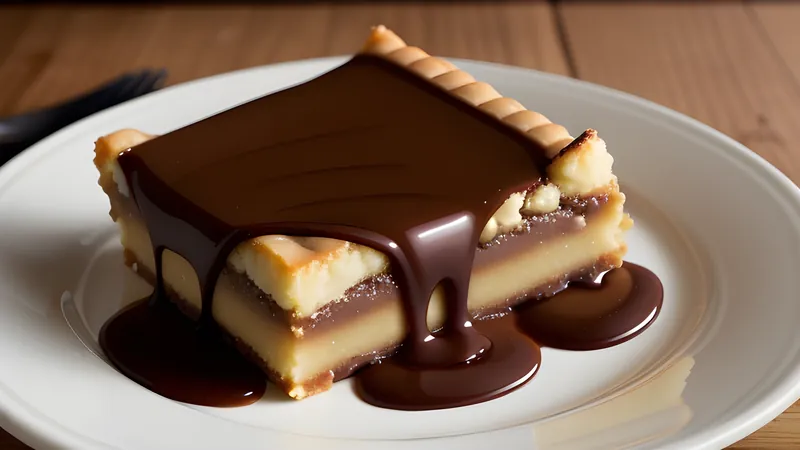
↓ Jump to recipeMillionaire’s shortbread is one of those bakes that is almost impossible to dislike: a crumbly butter base, a thick layer of chewy caramel, a snap of dark chocolate on top. The only fair criticism is that it can be relentlessly, one-note sweet, the sort of thing you can manage one square of before your teeth ache. My fix is a couple of tablespoons of white miso whisked into the caramel. It sounds strange and it is the best thing I have done to this recipe in years. The miso brings a deep, savoury, almost butterscotch saltiness that turns the caramel from merely sweet into something complex and grown-up, the same way salted caramel improved on plain caramel, but pushed further. People cannot place it, but they always want another piece.
Miso Caramel Shortbread (Millionaire's Shortbread with a Twist)
Ingredients
- 200g plain flour
- 60g caster sugar
- 140g cold unsalted butter, cubed
- 1/4 tsp fine sea salt
- 1 x 397g tin condensed milk
- 100g unsalted butter (for the caramel)
- 100g soft light brown sugar
- 2 tbsp golden syrup
- 2 tbsp white miso paste
- 200g dark chocolate (about 55 percent)
- Flaky sea salt, to finish
Method
- Preheat the oven to 160C fan and line a 20cm square tin with parchment, leaving an overhang.
- Rub the flour, caster sugar, salt and cold butter together until it clumps into a dough, then press firmly and evenly into the tin.
- Prick all over with a fork and bake for 20 to 25 minutes until pale gold. Leave to cool.
- For the caramel, melt the butter, brown sugar, golden syrup and condensed milk together in a heavy pan, stirring constantly.
- Bring to a gentle boil and cook, stirring without stopping, for 8 to 10 minutes until thick, smooth and a deep golden caramel colour.
- Take off the heat and whisk in the white miso paste until fully smooth, then pour over the cooled shortbread and level. Chill until set, about 1 hour.
- Melt the dark chocolate gently, pour over the set caramel and spread evenly, then scatter with flaky sea salt.
- Let the chocolate just begin to set, then mark into 16 squares so it cuts cleanly. Chill until firm, then slice.
A very British indulgence
Millionaire’s shortbread is Scottish in origin, an evolution of caramel shortcake that appeared in Scottish and Australian cookbooks through the twentieth century, the grand name presumably earned by its richness. The structure is simple and brilliant: shortbread for crumble, a confectioner’s caramel made from condensed milk for chew, and tempered or simply set chocolate for snap. The genius is the contrast of textures in a single bite, and any version worth making has to nail all three layers. Get the shortbread right and the rest follows.
The condensed-milk caramel that defines the bake owes a good deal to the tin. Sweetened condensed milk, patented in the mid-nineteenth century, changed home baking by making a stable, foolproof caramel possible without the precision of boiled sugar work. Boil or slowly cook it with butter and sugar and the milk solids brown, giving that dense, chewy toffee layer that is really a kind of dulce de leche. It is a world away from the brittle, amber caramel of hard sweets, and far more forgiving to make. The shortbread base, meanwhile, is pure Scottish tradition: flour, butter and sugar in the classic 3-2-1 ratio, no more, and it should taste richly of butter and shatter cleanly.
The caramel here is the easy, foolproof kind, made by cooking condensed milk with butter, brown sugar and golden syrup until it thickens and darkens. There is no sugar thermometer and no dangerous molten-sugar stage, just patient stirring. That accessibility is exactly why the bake has such a following, and why it is a fine canvas for an experiment like miso. If you want the pure, unadulterated version of the caramel to compare, my salted caramel sauce is the same family of flavours in pourable form.
The twist: why miso works in caramel
Miso is fermented soybean paste, a cornerstone of Japanese cooking, and it is loaded with glutamates, the compounds responsible for savoury, mouth-filling umami. In a sweet context that translates into extraordinary depth. Whisked into hot caramel, white miso, the mildest and sweetest of the misos, dissolves completely and disappears as an identifiable ingredient, leaving behind a salty, malty, butterscotch richness that makes the caramel taste more caramel. It is the same principle as adding salt, but miso brings savoury complexity that plain salt cannot, plus a faint funk that keeps things interesting.
Use white or yellow miso, sometimes labelled shiro miso, not red or brown miso, which are too strong and assertive and would taste of soup. Two tablespoons in a tin of condensed milk’s worth of caramel is the sweet spot: enough to register as a savoury, salty depth, not so much that it announces itself. Whisk it in off the heat once the caramel is cooked, so it stays smooth and you do not risk catching the bottom of the pan.
Building the three layers
The shortbread base wants to be firm and well baked so it can stand up to the weight of the caramel without going soggy. Press it down firmly and evenly, prick it to stop it doming, and bake it to a proper pale gold; an underbaked base will be pale and floury. Let it cool before the caramel goes on.
Rubbing the butter into the flour by hand, rather than creaming it, is what gives shortbread its characteristic sandy, crumbly short texture; the fat coats the flour and limits gluten development, so the base is tender rather than tough or bready. Use the butter cold and straight from the fridge, work quickly so the warmth of your hands does not melt it, and stop as soon as the mixture clumps into a rough dough when pressed. Pressing it into the tin with the back of a spoon or a flat-bottomed glass gives an even, compact layer that bakes uniformly, which matters because a thin patch will overbake and a thick one will stay pale.
For the caramel, the only real rule is constant stirring and patience. Keep the heat moderate and the spoon moving across the bottom of the pan the whole time, because condensed milk catches and burns in a heartbeat. You are looking for it to thicken noticeably and turn a deep golden brown, which usually takes the full eight to ten minutes of gentle boiling. Pour it onto the cooled base and chill until properly set before the chocolate.
For the top, melt good dark chocolate around fifty-five percent so it is rich but not bitter, pour it over the set caramel, and scatter flaky salt while it is still wet. The salt on top reinforces the savoury note from the miso and looks the part. Here is the one tip that saves frustration: mark the squares while the chocolate is just beginning to set, not fully hard, so it does not shatter and crack when you finally cut.
What can go wrong
Two problems account for most disappointing millionaire’s shortbread, and both are avoidable. The first is a caramel that refuses to set, staying soft and runny even after chilling. This is almost always because it was undercooked: the mixture needs to reach a proper thick, deep-golden state, which takes the full eight to ten minutes of gentle boiling. If it looks pale and pourable when you take it off the heat, it will not firm up in the fridge. Cook it until a spoon dragged across the base of the pan leaves a clear trail for a moment before the caramel flows back.
The second is catching or graininess. Condensed milk scorches easily, so keep the heat moderate and the spoon moving constantly across the bottom and into the corners of the pan; a burnt patch there will streak the whole caramel with bitterness and dark flecks. Whisking the miso in off the heat, once the caramel is cooked, also protects the smoothness, since you are not asking a paste to dissolve over direct heat where it could catch.
A separated chocolate top, dull and streaky, comes from overheating the chocolate when melting it. Melt it slowly, in short bursts in the microwave or over a pan of barely simmering water, and stir until just fluid; take it off the heat while a few unmelted pieces remain and let residual warmth finish the job.
Cutting and storing
A fully chilled traybake cuts cleanly with a sharp knife warmed under hot water and wiped dry between cuts; this gives you neat squares with crisp chocolate edges rather than a cracked, splintered mess. Keep them in the fridge if your kitchen is warm, since the caramel softens at room temperature, but let them sit out for ten minutes before eating so the chocolate loses its fridge-hard chill and the caramel turns silky.
Storage and getting ahead
These squares are made for making in advance, which is part of their appeal for a gathering. Once cut, they keep in an airtight tin in the fridge for up to a week; the caramel firms in the cold and the layers stay distinct. If your kitchen runs warm the fridge is essential, because condensed-milk caramel softens and can slump at room temperature, but bring the squares out ten minutes before serving so the chocolate loses its brittle chill and the caramel turns silky again. They freeze well too, for up to three months: freeze them cut, layered between sheets of parchment in a tub, and defrost in the fridge. You can make the whole traybake up to two days ahead of an occasion and simply cut on the day.
Make it yours
The miso caramel is the star, but the format is endlessly adaptable. Brown the butter for the shortbread to add a nutty note, or work a little espresso powder into the chocolate topping for a mocha edge. A thin scatter of toasted sesame seeds over the chocolate doubles down on the Japanese accent and looks beautiful. If you would rather keep the twist purely British, my orange blossom shortbread with pistachios plays with the base itself instead of the caramel. Whatever you do, do not skip the miso. It is the difference between a perfectly nice traybake and one that quietly disappears off the plate before you have had your share.
Related Content