Miso and Dark Chocolate Banana Bread
Moist, savoury-sweet and irresistible
Contents
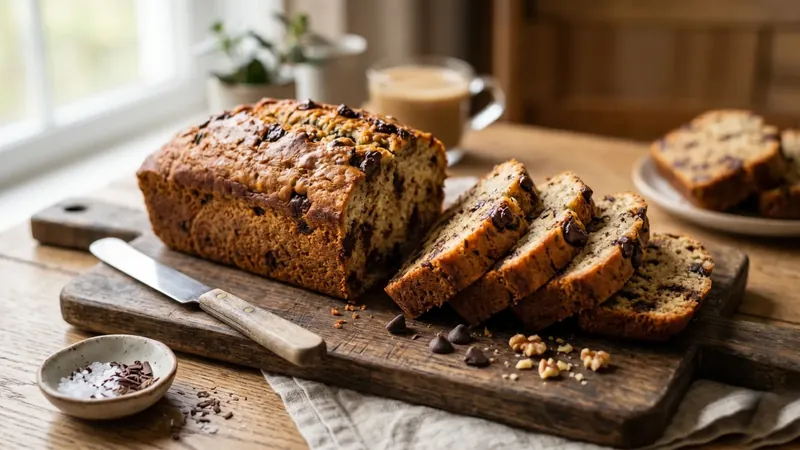
↓ Jump to recipeBanana bread is the loaf everyone reaches for when the fruit bowl turns spotty, but this one has a secret in the crumb. A couple of spoonfuls of white miso melt into the batter, deepening the sweetness with a gentle, savoury, almost caramel saltiness that makes people ask what is in it. Add dark chocolate chunks that turn molten in the oven and you have a loaf that is moist, rich and quietly sophisticated. It keeps brilliantly, and is arguably even better on the second day.
Miso and Dark Chocolate Banana Bread
Ingredients
- 3 very ripe bananas (about 300g peeled)
- 115g unsalted butter, melted
- 2 tbsp white miso paste
- 150g soft light brown sugar
- 2 large eggs
- 1 tsp vanilla extract
- 225g plain flour
- 1 tsp bicarbonate of soda
- 1/2 tsp ground cinnamon
- 150g dark chocolate, chopped into chunks
Method
- Preheat the oven to 160C fan and line a 900g (2lb) loaf tin with baking parchment.
- In a large bowl, mash the bananas to a rough purée.
- Whisk the white miso paste into the melted butter until smooth, then stir into the mashed banana with the brown sugar.
- Beat in the eggs and vanilla until well combined.
- Add the flour, bicarbonate of soda and cinnamon, and fold gently until just combined.
- Fold through most of the chocolate chunks, reserving a handful.
- Scrape the batter into the prepared tin and level the top.
- Scatter the reserved chocolate over the surface.
- Bake for 50 to 60 minutes until risen, deep golden and a skewer inserted in the centre comes out with only a few moist crumbs.
- Cool in the tin for 15 minutes, then lift out onto a wire rack to cool further before slicing.
The Story
Banana bread is a thrift recipe at heart, a way of rescuing fruit that has gone too soft to eat. It became popular in American home baking in the early twentieth century, helped along by the spread of bicarbonate of soda and baking powder, which made it possible to bake a moist, cake-like loaf quickly without yeast. The riper the bananas, the better the result, because as they overripen their starch converts to sugar and their flavour intensifies, which is exactly what you want in a sweet loaf.
The texture depends on a few simple choices. Melted rather than creamed butter gives a denser, fudgier crumb, and brown sugar keeps the loaf moist while adding a faint caramel note. Bicarbonate of soda does the lifting, reacting with the natural acidity of the bananas. Folding the batter gently and stopping as soon as the flour disappears keeps the crumb tender, since overworking develops gluten and toughens the loaf.
The twist is miso. Miso is a fermented paste made from soya beans and a grain, usually rice, inoculated with a mould called koji and left to mature for months. The fermentation breaks down proteins into savoury, glutamate-rich compounds, the source of its deep umami. White miso, the youngest and mildest type, is fermented for less time and tastes sweeter and gentler than darker varieties, which makes it well suited to baking. In this loaf it does two things at once: it seasons the batter with salt, which sharpens every other flavour, and it adds a rounded, almost butterscotch savouriness that ordinary salt cannot.
Pairing miso with sweet things is not as unusual as it sounds. Japanese cooking has long used it in dressings and glazes for vegetables and fish, and it appears in traditional sweets too, where its saltiness balances sugar much as salted caramel does. The dark chocolate completes the picture. Its bitterness and the miso’s saltiness both push against the sweetness of the banana and sugar, creating a loaf with real depth. Chopped chunks rather than chips give generous pockets of melted chocolate, and scattering a few over the top means each slice has a glossy, slightly crisp finish where the surface has caught in the oven.
Pairing miso with sweet things sits in a long tradition. This same salty-sweet logic runs through my miso caramel shortbread, where white miso whisked into the caramel does exactly what it does here, and in the savoury direction through the classic miso-glazed aubergine. Once you have used miso in one sweet bake you start seeing where else it belongs.
Getting the crumb right
The single most important variable is the bananas, and riper is emphatically better. Look for skins that are heavily freckled to almost black; at that stage the fruit is soft, intensely sweet and easy to mash, and it carries far more banana flavour than firm yellow fruit. If yours are stubbornly under-ripe, roast them in their skins at 180C for about 20 minutes until the skins blacken and the flesh turns jammy, then cool and use as normal.
Mixing method decides the texture. Melted butter, rather than the creaming of a cake batter, is what gives banana bread its dense, moist crumb, so there is no need for a mixer. Once the flour goes in, stop folding the moment you no longer see dry streaks. Flour contains gluten-forming proteins, and every extra stir develops them, which is what turns a tender loaf tough and gives you those tunnels and a domed, cracked top. A slightly lumpy batter bakes into a better loaf than a smooth, over-beaten one.
What can go wrong
A gummy, sunken middle is the usual disappointment, and it comes down to underbaking. Banana bread is deceptively dense and the surface browns well before the centre is cooked, so trust the skewer over the clock: it should come out with a few moist crumbs but no wet batter. If the top is darkening too fast while the middle is still raw, lay a loose sheet of foil over it and keep baking. Ovens vary, so start checking at 50 minutes but be prepared to go past 60.
The other common miss is not tasting the miso at all, or tasting it too much. White miso brands vary in salt and strength; two tablespoons of a mild shiro miso is the sweet spot for this quantity of batter. Whisk it thoroughly into the melted butter first so it disperses evenly rather than leaving salty pockets. If you can only find a darker, stronger miso, drop to a scant tablespoon and a half, as red and brown misos are far more assertive and can tip the loaf towards savoury.
A sunken, greasy loaf is occasionally down to the tin rather than the bake. A standard 900g (2lb) loaf tin gives the batter enough support to rise and set; a tin that is too wide spreads the batter thin and it can bake unevenly, while one too narrow leaves the centre underdone by the time the edges are dark. Line it with a strip of parchment running up the long sides so you can lift the whole loaf out cleanly once it has had its 15 minutes to firm up in the tin.
Substitutions and variations
For a nut version, fold in 75g of toasted, chopped walnuts or pecans with the chocolate; they suit the caramel notes of the brown sugar. Milk chocolate works if you prefer a sweeter loaf, though dark is better at balancing the sugar. To make it dairy-free, use a neutral oil (around 100ml) in place of the butter and check your miso and chocolate are vegan; you can also swap the eggs for two mashed extra bananas or a flax replacement, accepting a slightly denser result. A teaspoon of instant espresso powder added with the flour deepens the chocolate, and a scattering of flaky salt on the top before baking plays up the miso.
You can also lean into the loaf’s savoury edge in how you serve it. A warm slice spread with salted butter treats it almost like a teacake, the butter echoing the miso’s saltiness, while a smear of cream cheese turns it into something closer to a snacking cake. For pudding, a thick slice warmed through with a scoop of vanilla ice cream and the chocolate turning soft makes a very good, very quick dessert. However you eat it, cut the loaf with a serrated knife and a gentle sawing motion so the chocolate chunks slice rather than drag and tear the tender crumb.
Storage and make-ahead
Wrapped in foil or an airtight tin at room temperature, the loaf keeps for up to four days and, like most banana breads, improves overnight as the crumb settles and the miso reads as a rounded savouriness rather than a distinct note. It toasts beautifully too, a thick slice under the grill turning the cut edges crisp and the chocolate molten again. It freezes well, whole or in slices, for up to three months; wrap tightly and defrost at room temperature, or toast slices straight from frozen. Should your bananas ripen faster than you can bake, they freeze well in their skins and thaw to exactly the soft, sweet state this loaf wants.
Related Content