Milanesa a la Napolitana
The breaded cutlet that got a pizza on its back
Contents
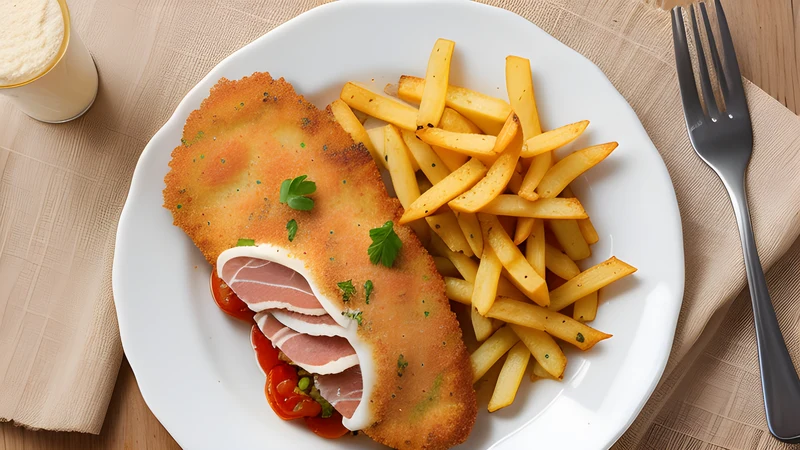
↓ Jump to recipeThere is a dish in Buenos Aires that arrives at the table looking like an argument between two countries, and tasting like the happiest resolution imaginable. A beef cutlet, pounded thin and breaded until it shatters, is buried under ham, tomato and grilled cheese. The Italians who poured into Argentina in the late nineteenth century brought the breaded cutlet with them; the Argentines gave it a second act. This is milanesa a la napolitana, and it is one of the great immigrant inventions of the Southern Cone.
Milanesa a la Napolitana
Ingredients
- 4 thin beef cutlets (nalga or topside), about 120 g each, pounded to 5 mm
- 2 large eggs
- 2 cloves garlic, finely grated
- 2 tbsp finely chopped parsley
- 200 g fine dried breadcrumbs
- 1 tsp fine salt, plus more for seasoning
- Sunflower or vegetable oil, for shallow frying (about 400 ml)
- 8 thin slices cooked ham
- 200 g mozzarella, sliced or grated
- 4 tbsp thick tomato passata or good marinara
- 1 tsp dried oregano
- Chips or a green salad, to serve
Method
- Pound each cutlet between two sheets of clingfilm to an even 5 mm. Season lightly with salt.
- Beat the eggs with the grated garlic, parsley and 1 tsp salt in a wide dish. Spread the breadcrumbs in a second dish.
- Dip each cutlet in the egg, letting the excess drip off, then press firmly into the breadcrumbs on both sides. Rest the coated cutlets on a rack for 15 minutes.
- Heat 1 cm of oil in a wide frying pan to 180C. Fry each milanesa for about 2 minutes a side until deep gold. Drain on a rack, not paper.
- Lay the fried cutlets on an oven tray. Spread 1 tbsp passata on each, lay 2 slices of ham over, then the mozzarella. Scatter with oregano.
- Grill on the top shelf for 4 to 5 minutes until the cheese blisters and bubbles. Serve at once with chips or salad.
Where the name lies to you
The most charming thing about this dish is that its name is geographically wrong twice over. The base, the milanesa, is a descendant of the cotoletta alla milanese from Milan — that part holds up. But the “napolitana” has nothing to do with Naples. The story most often told in Buenos Aires credits a restaurant near the Luna Park stadium in the 1940s, run by a man called José Nápoli. A cutlet got left too long under the salamander, the edges caught, and rather than bin it he covered the scorch with ham, tomato and cheese to hide the damage. The dish took the owner’s name, not the city’s. Whether every detail is true hardly matters: the shape of the story, a mistake rescued by garnish, is exactly how good food usually happens.
What is certain is that Argentina takes its milanesas seriously. The plain version, milanesa napolitana’s unadorned parent, is a national comfort food eaten at kitchen tables, in worker canteens and at three in the morning after a night out. Adding the napolitana topping turns a weekday cutlet into something you order to celebrate. It sits alongside the empanadas from Mendoza and the ever-present chimichurri in the small, fierce canon of dishes that Argentines will argue about with strangers.
The twist: garlic and parsley in the egg wash
My one clever move here is in the coating. Most recipes have you season the meat and leave it at that. I put the flavour where it will actually stick: in the egg. Grating two cloves of garlic and a good handful of parsley straight into the beaten eggs seasons the crumb from the inside, so every bite of that crackling shell tastes of something rather than just fried bread. It is the way my Argentine neighbour taught me, and once you have done it you cannot go back to plain egg.
The cutlet, and why thin matters
Use a tender, lean cut. In Argentina the butcher’s word is nalga, which maps roughly to topside or the thick flank; in the UK, ask for milanesa-cut topside or buy a piece and slice it across the grain into 1 cm slabs yourself. Then pound. This is the step people skip and then wonder why their milanesa is tough. Lay each slice between two sheets of clingfilm and beat it with the flat of a meat mallet or the base of a heavy pan until it is an even 5 mm thick. You are doing two things: tenderising the muscle by breaking the fibres, and creating a wide, thin surface that cooks in the time it takes the crumb to go gold. A thick cutlet gives you a burnt coating and a raw middle.
Season the pounded meat lightly, because the egg and crumb carry salt too. Then set up your two dishes: the garlicky egg in one, fine dried breadcrumbs in the other. Use the finest crumbs you can find. Coarse panko gives a knobbly, English-schnitzel look; the Argentine milanesa wants a smooth, even, almost sandy crust. If your crumbs are too coarse, blitz them in a processor for a few seconds.
Dip, drip, press. The pressing is not optional — you want the crumb welded to the meat so it does not slide off in the pan. Then, and this is the tip that separates a good milanesa from a soggy one, let the breaded cutlets rest on a rack for a quarter of an hour. The coating hydrates and sets, and it will fry into a shell that stays crisp rather than sloughing away.
Frying: shallow, hot, brief
Heat about a centimetre of neutral oil in a wide pan to 180C. If you have no thermometer, drop in a pinch of breadcrumbs; they should sizzle briskly and colour in fifteen seconds. Too cool and the milanesa drinks oil and turns greasy; too hot and the crumb scorches before the beef cooks. Two minutes a side is usually enough for a 5 mm cutlet. Fry in batches so you do not crowd and cool the oil, and drain the cooked cutlets on a rack rather than kitchen paper, which traps steam and softens the underside.
At this point you have a plain milanesa, and it is already a fine thing. But we are going napolitana.
Building the napolitana
Transfer the fried cutlets to an oven tray. Spread each with a tablespoon of thick tomato — passata reduced for a few minutes, or a proper marinara, but not a watery sauce that will sog the crumb. Then two thin slices of cooked ham per cutlet, laid flat. Then the cheese. In Argentina this is usually muzzarella, a soft cow’s-milk cheese that melts to a stretchy blanket; ordinary block mozzarella works well, sliced or coarsely grated. A scatter of dried oregano over the top is the finishing signature.
Grill on the top shelf, close to the element, for four or five minutes. You want the cheese to melt, spread and blister with a few brown freckles. Because everything underneath is already cooked, you are only melting and browning; watch it, because the line between blistered and burnt is about ninety seconds. Some cooks in Buenos Aires slide a fried egg on top at this stage and call it a caballo, on horseback. I would not stop you.
What to serve with it
The classic partner is a pile of chips — hand-cut, twice-fried, salted the moment they leave the oil. A milanesa napolitana with fries, milanesa napo con papas, is the plate you see on every parrilla menu in the country. If the ham, tomato and cheese feel rich enough, a sharp green salad with a bracing vinaigrette cuts through beautifully. A puddle of chimichurri on the side is untraditional with the napolitana, but nobody at my table has ever complained.
Getting ahead, and rescuing leftovers
You can bread the cutlets in the morning and keep them covered in the fridge; they fry better for the rest, in fact. The napolitana topping is a last-minute job, so fry and grill just before eating. Leftovers do exist, and a cold milanesa napolitana between two slices of soft bread is a legitimate Argentine sandwich, the sándwich de milanesa, eaten at football grounds across the country. Reheat a whole one in a hot oven, never the microwave, which turns the crumb to cardboard.
The mistakes I made so you don’t have to
The first time I cooked this I made three errors on one plate. I bought thick cutlets and could not be bothered to pound them, so the beef was chewy and the crumb was pale. I used old oil that had not come up to temperature, so the coating drank fat and the whole thing sat heavy in the stomach. And I grilled the cheese from cold, straight out of the fridge, so the milanesa underneath went soggy while I waited for the mozzarella to melt. Every one of those is fixable. Pound thin, fry hot, and have the topping ready and near room temperature so the grill stage is quick.
The other lesson is about the crumb itself. Argentine cooks are particular about it going on evenly, and there is a real reason beyond looks. A patchy coating fries unevenly, with the thin spots scorching and the thick clumps staying pale and greasy. When you press the cutlet into the crumbs, press the edges too, and pinch any bare patches shut. Some cooks double-coat for an extra-thick shell, dipping back into egg and crumb a second time; do this if you like a heftier crust, but it is not traditional for the napolitana, where the topping is already doing a lot of the work.
A word on the tomato. It has to be thick. If your passata is thin and pours like juice, reduce it in a small pan with a pinch of salt and a drop of olive oil for five minutes until it holds its shape on a spoon. A watery sauce will seep down into the crumb the moment it meets the heat, and no amount of grilling brings a soggy milanesa back.
Variations worth knowing
Swap the beef for pounded chicken breast and you have milanesa de pollo, lighter and just as good under the napolitana blanket. A vegetarian version using thick planks of aubergine, salted and pressed first to drive off water, then breaded and fried, is genuinely excellent and common in Argentine homes. And if you want to gild it further, a few slices of tomato under the cheese, or a slick of fresh basil oregano, nudge it back towards its imaginary Neapolitan roots. The dish has always been a happy accident; treat it like one, and improvise.
One more thought on the cheese, because it matters more than people expect. Fresh mozzarella in brine is delicious but weeps water as it melts, and that water lands on your crumb. Pat it very dry, or better, use a firmer low-moisture block mozzarella, the kind sold for pizza, which melts to the right stretchy texture without flooding the plate. If you want a little more character, grate a small amount of provolone or a hard Italian cheese into the mozzarella; it browns beautifully under the grill and adds a savoury edge that the mild mozzarella lacks on its own. Just keep the total quantity sensible, because the point of the napolitana is balance between crisp cutlet and molten top, and a mountain of cheese tips it into stodge.
Serve it hot, cut it with the side of your fork so the cheese pulls, and understand why a whole country decided a fried cutlet deserved a pizza on its back.
Related Content