Migas Extremeñas: Stale Bread, Paprika and a Shepherd's Breakfast
Yesterday's loaf, tomorrow's breakfast
Contents
↓ Jump to recipeMigas is a dish built on the refusal to throw bread away. In the dehesa country of Extremadura — the wide oak pasture where the black pigs range and the shepherds moved sheep between winter and summer grazing — bread came out to the fields once a week and was expected to last. By day five it was a weapon. The migas method takes that week-old brick, softens it back to something edible, and fries it in pork fat and paprika until it becomes breakfast.
The clever twist here is a tablespoon of sherry vinegar in the wetting water. Extremadura wets its crumbs with salted water and nothing else, and the result is very good and slightly relentless — bread, fat, paprika, more fat. The vinegar disappears entirely as a flavour and leaves behind a lift underneath the pork that stops the eighth mouthful tasting the same as the first. It also very slightly firms the crumb, which helps them stay separate in the pan.
Migas Extremeñas: Stale Bread, Paprika and a Shepherd's Breakfast
Ingredients
- 500 g stale country bread, at least 2 days old, crusts left on
- 150 ml cold water
- 1 tbsp sherry vinegar
- 1.5 tsp fine salt
- 150 g pork belly or streaky bacon, cut into 1 cm lardons
- 150 g cooking chorizo, cut into 1 cm coins
- 8 garlic cloves, unpeeled, lightly crushed
- 5 tbsp olive oil
- 2 tsp sweet smoked paprika (pimentón de la Vera)
- 0.5 tsp hot smoked paprika
- 200 g green grapes, halved, to serve
- 4 eggs, to serve
Method
- The night before: cut the stale bread into rough 1 cm cubes, or grate it coarsely on a box grater. Both are traditional. Spread the crumbs in a wide bowl or on a tray.
- Mix the 150 ml cold water with 1 tbsp sherry vinegar and 1.5 tsp fine salt until the salt dissolves. Dip your fingers in and flick the liquid over the crumbs in sweeps, tossing between each pass, so it is distributed rather than poured onto one spot.
- Cover the bowl with a damp tea towel and leave at room temperature for 8 to 12 hours. In the morning the crumbs should be uniformly leathery and springy, damp to the touch with no wet patches and no dry crunch.
- Heat 2 tbsp of the olive oil in a large heavy frying pan or cast iron pan over medium heat. Fry the pork belly lardons for 8 to 10 minutes, until the fat has rendered out and the meat is crisp and brown. Lift out with a slotted spoon onto a plate, leaving the fat behind.
- Fry the chorizo coins in the same fat for 3 to 4 minutes, until the edges crisp and the fat runs bright orange. Lift out onto the plate with the pork.
- Add the crushed unpeeled garlic cloves to the pan and fry for 2 to 3 minutes until the skins are golden and the kitchen smells of garlic. Lift them out and reserve.
- Add the remaining 3 tbsp olive oil to the pan and turn the heat to medium-low. Stir in both paprikas and swirl for 20 seconds, until the oil turns deep red. Work quickly.
- Tip in all the soaked crumbs at once and stir immediately to coat them in the red oil. Turn the heat to medium.
- Now fry the crumbs for 25 to 35 minutes, turning and scraping with a wooden spoon or spatula every 2 minutes. They will go from soft and clumped to separate, golden and crisp-edged. Scrape the base each time so nothing catches.
- When the crumbs are golden, dry to the touch and rattling loosely in the pan, return the pork, chorizo and garlic cloves and toss for 2 minutes to heat through. Taste and add salt if needed.
- Fry the eggs in a separate pan in olive oil, spooning hot oil over the whites until the edges are lacy and brown and the yolks are still liquid.
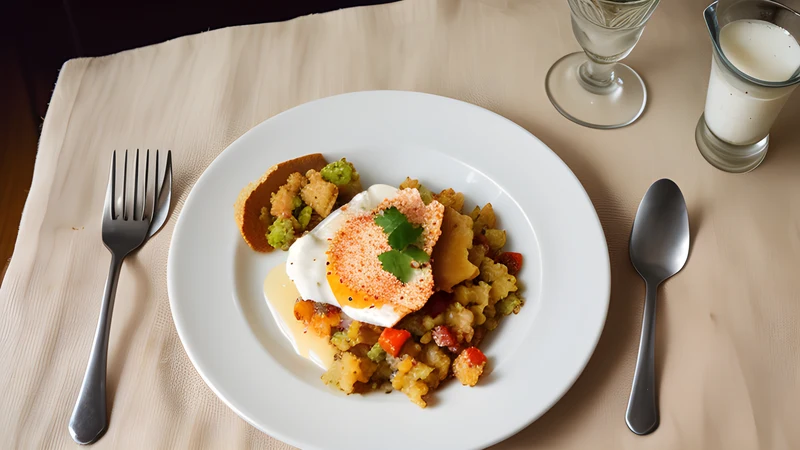
- Pile the migas into bowls, scatter over the halved grapes, and lay a fried egg on each. Serve at once, while the crumbs still have their crunch.
The shepherds, the dehesa and a week-old loaf
Migas exist wherever there was hard bread and rendered fat, which means most of rural Spain, Portugal and a good deal of Latin America. Every region claims a version. La Mancha uses more garlic and serves it with melon. Aragón cuts the crumbs finer. Andalusia leans on the olive oil and drops the pork. Extremadura’s is the one built around pimentón and pork belly, because Extremadura is where the acorn-fed pig lives.
The dish belongs to the trashumancia, the seasonal migration of livestock along the cañadas reales, the drovers’ roads that still cross Spain as legally protected rights of way. A shepherd walking sheep from Extremadura to León in spring carried bread, fat, garlic and paprika, because those four things do not spoil, weigh little, and become a hot meal over a fire of whatever is to hand. Migas is portable calories. It is also, by accident, delicious.
The name means “crumbs”, and the pointed thing about it is that migas is a dish named after its own waste product. This is the same instinct that produced a proper panzanella in Tuscany and countless bread soups elsewhere — a hungry country’s refusal to let a loaf die.
The bread is the entire dish
You need real bread. A dense, open-crumbed country loaf with a proper crust — sourdough, pan de pueblo, a good white farmhouse. It must be at least two days old and four is better. What you are after is bread that has staled, which is a specific chemical process: the starch molecules recrystallise and force water out of the crumb structure. Stale bread is dry because the starch has retrograded, and that retrograded starch is exactly what lets it take up salted water and then fry without dissolving.
Sliced supermarket sandwich bread does not stale in this way. It has enzymes and emulsifiers in it specifically designed to prevent retrogradation, which is why a loaf of it stays soft for a fortnight and then goes mouldy while still soft. Wet it and it turns to paste. There is no version of this dish that works with it.
If your bread is fresh and you need migas tomorrow, cube it and leave it uncovered on a tray overnight, then dry it in a 100C oven for 20 minutes. It is a compromise — oven-dried bread is dehydrated rather than staled — and it gets you about seventy per cent of the way.
Cube or grate? Both are orthodox and they give different dishes. Cubes give you migas with distinct nuggets, chewy in the middle, crisp at the corners. Grating gives fine crumbs that fry into something closer to a savoury couscous. Extremadura tends to grate. I cube, because I like the textural variety and because grating 500 g of rock-hard bread is a genuine wrist workout.
Wetting the crumbs, the step everyone rushes
This is where migas is won or lost, and it cannot be hurried. The bread needs 8 to 12 hours to take the water up evenly through the whole cube. Pour water on and you get sodden outsides and dry cores, and the sodden parts turn to glue in the pan while the cores stay like gravel.
The traditional method is worth copying exactly: dip your fingers in the salted water and flick it across the crumbs in sweeps, tossing after each pass. Spanish cooks do this with a bunch of herbs or a whisk. You are aiming for even distribution of a small amount of liquid, and 150 ml for 500 g of bread sounds like far too little until you see what it does overnight.
Then cover with a damp cloth and wait. In the morning squeeze a cube. It should be springy and leathery, damp all the way through, with no free water. If it is still crunchy in the centre, flick over another 30 ml and give it an hour.
Pimentón de la Vera, and the thirty-second rule
The paprika must be smoked, and it should come from La Vera, the valley in northern Extremadura where the peppers are dried over oak smoke for a fortnight and turned by hand. This is a protected designation, and the difference between pimentón de la Vera and generic sweet paprika is the difference between a bonfire and a bag of red dust.
Paprika burns. It goes bitter at around 140C, which is well below the temperature of hot oil, and burnt paprika cannot be corrected. So: heat down to medium-low, oil in, paprika in, twenty seconds of swirling, crumbs in immediately. The crumbs cool the pan and stop the process dead. Have them within arm’s reach before you open the paprika tin. This is the same reflex the sauce in patatas bravas needs, and it is worth building.
Frying: half an hour of stirring
Migas takes longer than seems reasonable. Thirty minutes of turning crumbs in a pan, and there is no shortcut, because you are driving off the water you spent all night putting in — which is the point. The water carried salt, vinegar and paprika into the middle of every crumb; now it leaves and the flavour stays behind.
Stir every couple of minutes, scraping the base. The crumbs go through stages: clumped and pasty at first, which is alarming; then loosening; then separate; then golden and audibly rattling. The pan tells you when it is done — the sound changes from a soft shuffle to a dry clatter.
Use a wide heavy pan. Cast iron is ideal for once, because the mass keeps the temperature steady through half an hour of stirring. Crowding is the enemy: 500 g of bread needs a 30 cm pan, and two batches beat one deep pile.
The fat, and why olive oil alone falls short
Migas is a pork dish that happens to be made of bread. The rendered fat from the belly and the chorizo is the flavour base, and it does something olive oil cannot: pork fat is roughly forty per cent saturated, so it coats the crumbs and sets slightly as they cool, giving migas its particular richness on the tongue.
The order matters. Belly first, over medium heat, slowly, so the fat renders out before the meat browns — start it too hot and the outside seizes and the fat stays locked in the meat, and you end up with tough lardons and a dry pan. Ten minutes of patience gives you crisp cubes and three tablespoons of liquid gold.
Chorizo second, in the pork fat. It gives up that startling orange oil, which is pimentón suspended in fat, and it is the single biggest contributor to the colour of the finished dish.
If you want a vegetarian version, it exists and it is honest: skip both meats, use 7 tbsp of good olive oil, double the garlic, and add a teaspoon of tomato purée with the paprika for depth. Extremadura would not recognise it and it makes a very good breakfast.
The unpeeled garlic cloves are worth understanding. They go in whole, crushed under the flat of a knife just enough to crack them, skins on. The skin protects the flesh from the fierce fat, so the clove steams inside its own jacket and turns sweet and creamy while perfuming the oil. You eat them at the end by squeezing the flesh out. Peeled garlic in this pan burns in ninety seconds and turns the whole batch bitter.
Things that go wrong
The crumbs are a single wet mass. Too much water at the wetting stage, or it was poured rather than flicked. Keep frying — a lot of it drives off, and thirty minutes fixes more than you would think. Turn the heat up slightly and stir constantly.
They stay hard and never soften. Not enough water, or the bread was oven-dried instead of properly stale. Flick 40 ml of hot water over the crumbs mid-fry and cover the pan for two minutes.
Everything is bitter. The paprika caught. There is no recovery. Start the fat and paprika stage again with the crumbs standing by.
They stuck to the pan. Not enough fat, or you stopped scraping. Migas needs more fat than feels sensible; 5 tbsp of oil plus the rendered pork fat for 500 g of bread is the working ratio.
What goes on top
Extremadura serves migas with grapes, and the pairing is exactly as odd and exactly as right as it sounds — cold sweet fruit against hot salty fat. A fried egg is standard. So is sliced orange, which does the same job as the grapes. Sardines, black pudding, a slice of jamón.
If you want the same bread-and-paprika logic in a different key, migas with tortilla, egg and chorizo is the Mexican cousin, built on stale tortilla instead of stale loaf, and sopa de ajo is what Castile does with the same four ingredients and a litre of water.
When to eat it
Migas is breakfast, and in Extremadura it is specifically a cold-weather breakfast — the dish appears when the temperature drops and vanishes in summer. There is a strong association with rain. The saying goes that migas weather is a wet morning, because a shepherd caught out in the rain needed something hot and enormous, and because damp air conveniently softens the bread.
It is also a communal dish, cooked in a wide pan over a fire and eaten straight from it with wooden spoons, everyone working their own wedge of the pan and nobody’s spoon crossing the middle. Most Extremaduran villages hold a migas festival at some point between November and February, and the pans get comically large.
Two things drink well with it: strong black coffee, or red wine at nine in the morning, which is the local answer and considerably more fun.
Storage
Migas keep three days in the fridge and revive perfectly in a dry hot pan for five minutes. They lose their crunch and get it back. The microwave gives you damp sand.
Related Content