Mi Quang: Turmeric Noodles Under a Thin Broth
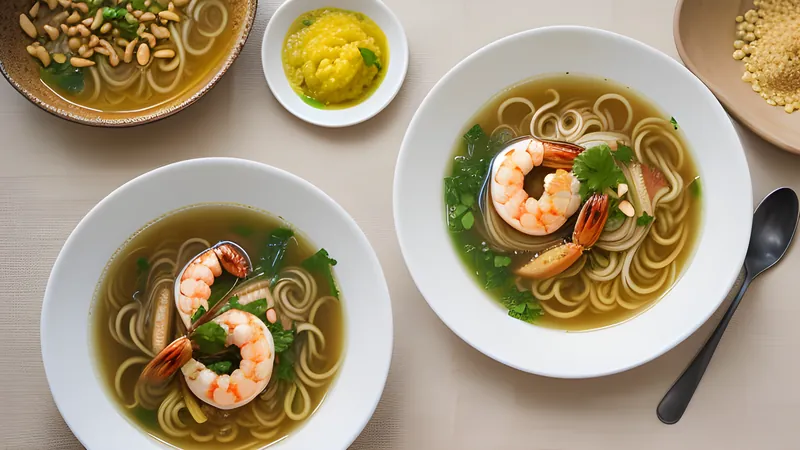
Da Nang's dry-ish noodle bowl, gold with turmeric and scattered with rice crackers
Contents
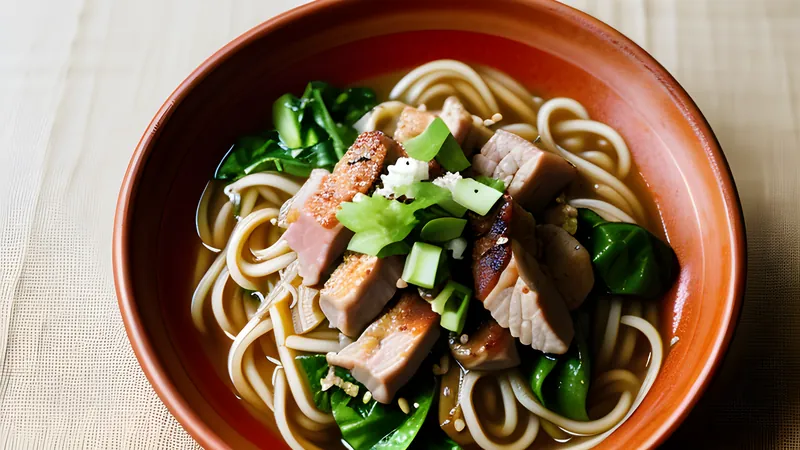
↓ Jump to recipeOrder noodle soup anywhere else in Vietnam and you get drowned. Order mi quang in Da Nang or the surrounding villages of Quang Nam province and you get the opposite: a shallow puddle of intensely reduced broth, barely covering the base of the noodles, so concentrated it tastes like it’s been simmering since before you sat down. That’s not a mistake or a shortage. It’s the entire point of the dish, and it’s why calling mi quang a “soup” annoys the people who cook it properly.
Mi Quang: Turmeric Noodles Under a Thin Broth
Ingredients
- 300g flat rice noodles (banh pho or fresh mi quang noodles if you can find them)
- 300g pork shoulder, cut into 3cm chunks
- 300g raw prawns, peeled, tails left on, deveined
- 3 tbsp annatto oil or 2 tbsp vegetable oil mixed with 1 tsp ground turmeric
- 2 tsp ground turmeric
- 4 garlic cloves, minced, divided
- 2 shallots, finely sliced
- 500ml pork or chicken stock
- 2 tbsp fish sauce, plus more to taste
- 1 tsp sugar
- 1/2 tsp black pepper
- 150g raw peanuts, dry-roasted and roughly crushed
- 4 sheets banh trang nuong (sesame rice crackers) or plain rice crackers
- 1 small bunch Vietnamese mint (rau ram) or ordinary mint
- 1 small bunch perilla leaves, if available
- 100g banana blossom, thinly sliced, or shredded white cabbage
- Bean sprouts, a large handful
- 2 spring onions, sliced
- 2 tbsp fried shallots
- 1 lime, cut into wedges
- 2 bird's eye chillies, sliced (optional)
Method
- Marinate the pork with 1 tsp turmeric, half the garlic, 1 tsp fish sauce and a pinch of pepper. Leave 20 minutes.
- Marinate the prawns separately with the remaining turmeric and a pinch of salt.
- Heat the annatto oil in a heavy pot. Fry the shallots and remaining garlic until fragrant, about 1 minute.
- Add the pork and cook until browned on the edges, 5-6 minutes.
- Pour in the stock, fish sauce and sugar. Simmer uncovered for 25 minutes until reduced by roughly a third and tasting concentrated.
- Add the prawns and cook for 2-3 minutes until just opaque. Turn off the heat.
- Cook the rice noodles in a separate pot of boiling water for 2-3 minutes until just tender, then drain.
- Divide the noodles between four shallow bowls. Top with banana blossom or cabbage and a handful of bean sprouts.
- Ladle over the pork, prawns and just enough broth to come a third of the way up the noodles, not more.
- Scatter with crushed peanuts, fried shallots, spring onion and herbs. Break a rice cracker over each bowl or serve it propped against the rim.
- Serve with lime wedges and sliced chillies on the side.
A noodle for the dry season
Quang Nam sits on Vietnam’s central coast, a strip of land squeezed between mountains and the South China Sea, hit by monsoons that flood the rice paddies for months and then vanish into a baking dry season. Mi quang noodles are made from the same rice that grows in those paddies, milled fresh, rolled thick and cut wide, then dyed yellow with turmeric before they’re even cooked — a colour that reads as prosperity and is genuinely, separately, delicious with the fish sauce and peanuts that follow it.
The turmeric does two jobs. It colours the noodles a deep marigold that stays vivid even after boiling, and it carries into the broth from the pork and prawn marinade, so the whole bowl reads as one warm register of colour and flavour rather than a soup with garnishes dropped on top. Older cooks in Hoi An and Da Nang insist the noodles should be made with rice that’s been soaked and ground at home, not bought dry — the fresh version has a slight give to it, closer to a fat udon than the snap of dried rice vermicelli.
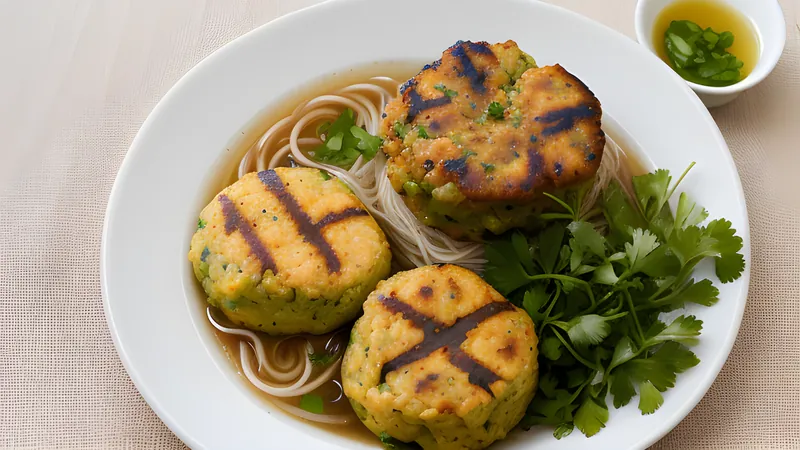
What makes mi quang genuinely distinct from its noodle-soup cousins is the broth ratio. Pho and bun bo hue both fill the bowl; mi quang is dressed, not submerged. The stock reduces hard, sometimes for an hour, until it’s closer to a sauce that clings than a liquid that floats. You eat it by tossing everything together at the table so every strand gets coated, not by spooning broth separately. If you’ve made chicken pho at home you already know how much patience a good stock takes — mi quang asks for the same patience and then deliberately throws most of the liquid away by evaporation rather than serving it.
Why the toppings aren’t optional
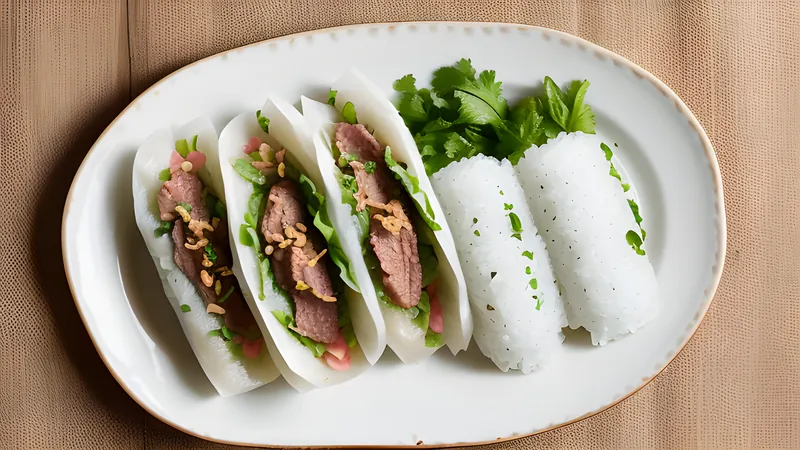
Every component sitting on top of the noodles is there to solve a specific textural problem, not to look pretty. The peanuts add crunch and fat against noodles that are otherwise soft and a broth that’s otherwise thin. The rice cracker, propped against the bowl’s rim or crumbled straight in, is there so you get a shattering, structural bite between mouthfuls of noodle — it’s the same logic as a crouton in a good soup, scaled up until it’s unmissable. Banana blossom, shredded fine, brings a faint bitterness and a slight astringency that cuts the sweetness of the reduced stock; if you can’t get banana blossom, a sharp white cabbage shredded thin does a similar job, though it’s a genuine substitution rather than a perfect match.
Herbs matter more here than in most Vietnamese noodle dishes because there’s so little broth to season everything uniformly — each mouthful gets built fresh from whatever you pile on, so a bowl with no mint tastes flat in a way a bowl of pho doesn’t. Rau ram (Vietnamese mint) has a peppery, almost citrus edge that ordinary spearmint doesn’t replicate, but spearmint is the workable substitute if your greengrocer doesn’t stock it. Perilla, if you can find it, adds an aniseed note that plenty of regional cooks consider essential and plenty of others skip.
The pork and prawn combination
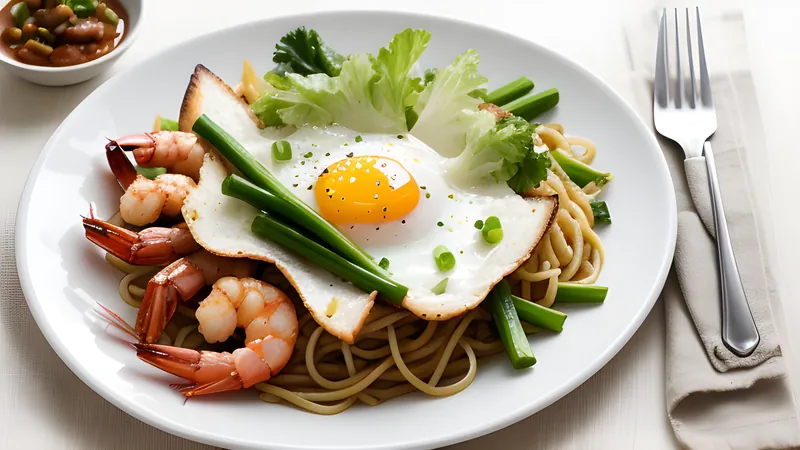
Traditional mi quang runs on whatever protein the household has, but pork shoulder and prawns together is the most common pairing in restaurants from Da Nang south. The pork gets a short braise in the turmeric-stained stock so it picks up colour and a little collagen richness; the prawns go in at the very end so they don’t overcook, since prawn flesh turns to rubber within about ninety seconds past done. Some households use chicken instead of pork, some use quail eggs boiled and halved, and in the highlands around Quang Nam’s foothills you occasionally find versions with frog, which sounds unusual until you remember frog legs taste close to chicken and the paddies are full of them.
The annatto oil is worth making rather than skipping. Whole annatto seeds steeped in warm oil until they bleed a deep orange-red give a rounder colour and a faint earthy sweetness that ground turmeric alone doesn’t fully replicate — turmeric is sharper and slightly bitter raw, annatto is mellow. If you can’t find annatto seeds, the turmeric-oil substitute in the ingredient list gets you close enough for a home kitchen.
Building the bowl correctly
Get the ratios wrong and mi quang either becomes a bland noodle salad or a watery, forgettable soup — the exact fault line the dish sits on. The broth should just wet the bottom third of the noodles when you ladle it, no more. If you’re used to filling a pho bowl to the brim, this will feel stingy the first time you do it. Trust the recipe: everything you add on top — peanuts, herbs, cracker, lime — depends on the broth being concentrated enough to season a whole mouthful in a small amount of liquid.
Squeeze the lime over just before eating, not while it’s still cooking, since acid added early flattens the turmeric’s warmth rather than brightening it. Chilli goes on individually rather than into the pot, because mi quang, like most central Vietnamese dishes, is built so each diner controls their own heat rather than having it cooked in for everyone.
Storage and make-ahead
The broth improves after a day in the fridge — reduced stocks concentrate further as they cool and the flavours marry, so it’s worth making it the day before if you’re feeding a crowd. Keep the noodles, broth, and toppings in separate containers; noodles left sitting in broth overnight turn to mush, since rice noodles have almost no structural gluten to hold their bite once waterlogged. Reheat the broth gently in a small pan, cook noodles fresh, and assemble at the last minute. Peanuts and rice crackers should be added just before serving or they lose their crunch within minutes of hitting any moisture.
Leftover pork and prawns freeze reasonably well in their broth for up to a month, though the texture of the prawns suffers slightly on thawing — better to fry a fresh batch if you’re planning ahead by more than a few days.
Making the noodles from scratch
Fresh mi quang noodles are cut from a rice batter steamed in thin sheets on a cloth over boiling water, much like the technique behind Vietnamese banh cuon, then dyed with turmeric before steaming rather than after. Home cooks outside Vietnam rarely bother, and there’s no shame in that — dried flat rice noodles, cooked briefly and tossed with a spoonful of the turmeric oil before serving, get close enough for a weeknight version. The difference is chew: fresh noodles have a slight springiness that dried noodles, however carefully cooked, don’t fully match. If you want to try making them, a simple rice flour and tapioca starch batter steamed in a wide pan and cut into ribbons once cooled is the closest home approximation, though it takes practice to get the sheets thin and even.
Salt the noodle water properly and don’t overcook past the two-to-three minute mark — flat rice noodles turn gluey fast, and a gluey noodle undermines the whole point of a dish that’s meant to taste clean and distinct in every layer. Rinse briefly under cool water after draining to stop the cooking and wash off surface starch, then toss with a small spoonful of oil so they don’t clump while you build the rest of the bowl.
What goes wrong and why
The most common failure is treating mi quang like pho and filling the bowl with stock. It looks generous but it drowns the noodles, dilutes the turmeric, and turns a dish built on concentration into a watery imitation of something else entirely. If you’ve reduced the broth properly, a small ladleful should coat the noodles thickly enough to leave a stain on a white bowl.
The second failure is undercooked peanuts. Raw or barely toasted peanuts taste chalky and don’t offer the crunch the dish depends on — dry-roast them in a dry pan over medium heat, shaking often, until they’re a shade darker than you think necessary and smell distinctly nutty, then crush them roughly rather than into a powder. A food processor pulsed twice is enough; a mortar and pestle gives more control.
The third failure is adding the herbs and cracker too early. Rau ram wilts within minutes against warm noodles and loses its peppery edge, and a rice cracker left sitting on a damp bowl for more than a couple of minutes goes soft and chewy instead of shattering. Assemble the bowl, then add crackers and herbs at the absolute last moment, ideally at the table.
Regional variations worth knowing
Around Hoi An, some cooks add a whole soft-boiled quail egg to each bowl, halved so the yolk bleeds slightly into the broth — a small enrichment that plays well against the peanuts. Further inland toward the Truong Son foothills, chicken replaces pork and prawn entirely, simmered on the bone for a deeper, fattier stock that needs less added oil. Coastal versions sometimes swap prawns for small river fish, poached whole in the reducing stock and flaked over the noodles at the end, bones removed before serving.
Vegetarian versions exist too, usually built on a mushroom and tofu base with the same turmeric-annatto colouring, though the reduction technique matters even more without meat fat to carry flavour — the stock needs a longer simmer with dried shiitake and kombu to develop enough backbone to stand up to the peanuts and herbs. None of these variations change the fundamental rule: the broth stays shallow, the noodles stay yellow, and the toppings do the seasoning work that a fuller broth would otherwise do for you.
If you enjoy bun bo hue’s lemongrass heat or the caramelised depth of ca kho to, mi quang belongs in the same rotation — it’s proof that Vietnam’s noodle bowls don’t all follow the same broth-to-noodle formula, and that restraint with liquid can make a dish taste richer rather than thinner.
Related Content