Methi Thepla: Fenugreek Flatbread for the Road
The flatbread that survives a week in a suitcase
Contents
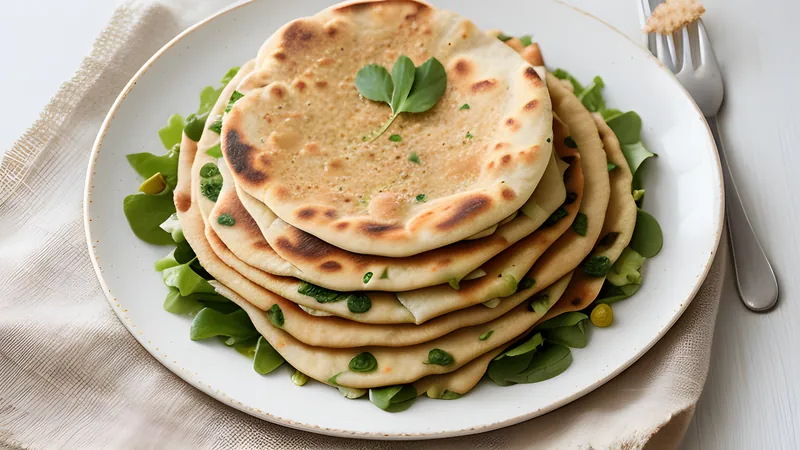
↓ Jump to recipeMethi thepla is thinner and more pliable than an ordinary chapati, worked through with fresh fenugreek leaves, a spoonful of yoghurt and a pinch of sugar to balance the leaves’ natural bitterness. What sets it apart from most other Indian flatbreads is durability: properly made and cooled fully before stacking, thepla keeps at room temperature for several days without turning stale or growing mould, which is exactly why it’s the standard food Gujarati travellers pack for long train journeys, road trips and flights.
That keeping quality isn’t an accident. Oil worked into the dough, turmeric’s mild antimicrobial properties and the low moisture of a well-cooked thepla all contribute to a bread that survives being wrapped in foil or cloth and left in a bag for days, in a way a softer, wetter roti simply doesn’t.
Methi Thepla: Fenugreek Flatbread for the Road
Ingredients
- 300g whole wheat flour (atta), plus extra for dusting
- 50g besan (gram flour)
- 100g fresh fenugreek leaves, finely chopped
- 3 tbsp natural yoghurt
- 2 tbsp vegetable oil, plus extra for cooking
- 1 tsp ginger-green chilli paste
- 0.5 tsp ground turmeric
- 0.5 tsp chilli powder
- 0.5 tsp ajwain (carom seeds)
- 1 tsp sugar
- 80-100ml water, as needed
- Salt, to taste
Method
- Mix the whole wheat flour, besan, chopped fenugreek leaves, yoghurt, oil, ginger-chilli paste, turmeric, chilli powder, ajwain, sugar and a good pinch of salt in a large bowl.
- Add water gradually, kneading, until you have a smooth, firm dough that's slightly softer than a standard chapati dough.
- Cover and rest the dough for 15-20 minutes.
- Divide into 12 equal portions and roll each into a smooth ball.
- Roll each ball out thinly on a lightly floured surface into a circle about 18cm across.
- Heat a tawa or heavy flat pan over a medium heat.
- Cook each thepla for about 1 minute on the first side, until small bubbles appear, then flip.
- Drizzle a few drops of oil on the cooked side, flip again, and press gently with a folded cloth or spatula so it cooks evenly and puffs slightly.
- Repeat on the other side with a little more oil, cooking until both sides have golden-brown spots.
- Stack the cooked theplas and keep covered with a clean cloth until ready to serve.
The story: the bread built for a suitcase
Thepla’s reputation as travel food runs deep enough that it’s genuinely a marker of Gujarati identity carried around the world, packed into hand luggage by generations of Gujarati families moving between India, East Africa and beyond, long before the food itself became widely known outside those communities. Airport security and customs regulations have made carrying a stack of theplas across borders more complicated in recent decades than it once was, but the habit persists regardless, precisely because nothing shop-bought quite replicates a homemade batch, and the format survives inspection far better than a wetter, crumblier snack would. It survives a journey in a way rice or a wetter curry never could, needs no reheating, and tastes good at room temperature days after it’s made, which matters enormously when you’re travelling without access to a stove or fridge.
The bitterness of fresh fenugreek leaves is the dish’s defining character, and also the reason a small amount of sugar goes into a savoury flatbread, which might look like an odd inclusion to anyone unfamiliar with the dish. Sugar doesn’t sweeten the bread noticeably; it rounds off the sharp, slightly medicinal edge fenugreek carries raw, the same way a pinch of sugar tempers acidity in a tomato sauce. Yoghurt does similar work, adding a mild tang and, just as importantly, keeping the dough soft and pliable through the resting and rolling stages, which matters for a bread that needs to roll out thin without tearing.
Besan mixed into the whole wheat flour is a genuine textural choice rather than a filler. It gives the dough a slightly different structure than pure wheat flour would, helping the rolled-out circles hold together at a thinner gauge than a plain atta dough tends to manage without tearing at the edges, and it adds a faint nuttiness that plays well against the fenugreek.
Ajwain, the small, intensely aromatic carom seeds worked through the dough, does a second job beyond flavour. It has a long history in Gujarati and wider Indian home cooking as a digestive aid, traditionally added to dishes built around gram flour or heavier legumes for exactly that reason, and its sharp, thyme-like bitterness is assertive enough that a little goes a long way. Crush the seeds lightly between your fingers before adding them to the dough, rather than leaving them whole, so the oils release into the flour rather than staying locked inside the husk.
Technique: rolling thin, and getting the puff
Thepla is meant to be rolled noticeably thinner than a standard chapati, closer to the thickness of a tortilla, and that thinness is part of what makes it travel so well: a thick flatbread stays doughy at the centre and dries out unevenly over a few days, while a thin one cooks through fully on the tawa and dries to an even, stable texture that keeps consistently. Rolling from the centre outward in short, even strokes, turning the dough a quarter turn between each roll rather than pushing hard in one direction, keeps the circle roughly round and the thickness consistent from edge to edge, which matters more here than in a thicker bread where small unevenness cooks out during a longer time on the heat.
Getting a light puff as it cooks is a sign of a properly rolled, evenly thin round with no thick patches; pockets of trapped steam push the bread up in the thinner areas first. Pressing gently with a folded cloth or the back of a spatula while it cooks on the second side encourages the same effect and helps it cook through evenly without needing a longer time on the heat, which would otherwise dry it out before the base has coloured properly. A tawa that’s properly preheated before the first thepla goes on makes a real difference to how evenly that puff develops; a pan that’s still warming up cooks the first one or two rounds unevenly, with pale patches where the heat hadn’t reached full strength yet, so it’s worth letting the tawa sit over the heat for a couple of minutes before starting, and testing with a small piece of dough that should sizzle gently on contact.
Cooling the theplas fully, uncovered on a rack rather than stacked while hot, before you pack them for a journey is worth the extra ten minutes it takes, even though it’s tempting to stack a warm pile straight off the tawa. Stacking warm bread traps steam between the layers, which is exactly the moisture that shortens how long thepla actually keeps; once fully cool, stack and wrap them in foil or a clean cloth, and they’ll hold at room temperature for several days rather than turning soft and patchy with damp within one.
The dough itself benefits from a properly firm consistency at the kneading stage, even though it’s softer than a chapati dough overall. Too wet, and the fenugreek leaves release their own moisture into the mix as the dough rests, leaving it sticky and difficult to roll thin without extra flour, which then toughens the cooked bread. Add the water gradually and stop as soon as the dough comes together smoothly; you can always work in a splash more, but a dough that starts too wet is hard to correct without adding so much extra flour that it changes the final texture.
What to serve it with
Thepla is eaten plain, rolled around pickle, or alongside yoghurt and a wedge of raw mango pickle as a simple meal on its own, which is exactly the appeal for travel. At home, it works as an alternative to rotli alongside heavier Gujarati dishes like undhiyu, and pairs naturally with lighter snacks such as khaman dhokla or khandvi for a fuller spread.
Storage, make-ahead and variations
Properly cooled and stacked, thepla keeps at room temperature for two to three days and in the fridge for up to a week, longer than almost any other Indian flatbread, which is the entire reason it’s the travel staple it is. It also freezes well for up to a month, layered between sheets of baking paper; thaw at room temperature or warm briefly on a dry tawa before eating.
If fresh fenugreek leaves aren’t available, a tablespoon of dried kasuri methi, soaked briefly in warm water, is a reasonable substitute, though the flavour is more concentrated and slightly less bitter than fresh leaves, so start with less and adjust.
Washing and picking through fresh fenugreek is worth doing properly before you start, since the leaves grow low and close to the soil and carry more grit than most greens. Submerge the leaves in a bowl of cold water rather than rinsing them under a running tap, swirl them around so any sand sinks to the bottom, then lift the leaves out into a colander rather than pouring the whole bowl through, which just tips the grit back over them. Grated bottle gourd or carrot, worked into the dough in place of some of the fenugreek, is a common variation for children or anyone who finds the bitterness too much, producing a milder, sweeter bread that still keeps well. Spinach or grated beetroot, used the same way, are less traditional but reasonable substitutes if fenugreek genuinely isn’t available at all, though neither carries fenugreek’s specific bitterness, so the yoghurt and sugar can both be reduced slightly to avoid an oddly sweet result. Whatever version you make, keep the oil in the dough itself rather than leaving it out to save calories; it’s doing real structural work in keeping the bread pliable over several days, alongside the richness it adds.
Related Content