Maultaschen: Swabia's Pockets for Hiding Meat From God
A Lenten workaround that outlived the rule it was breaking
Contents
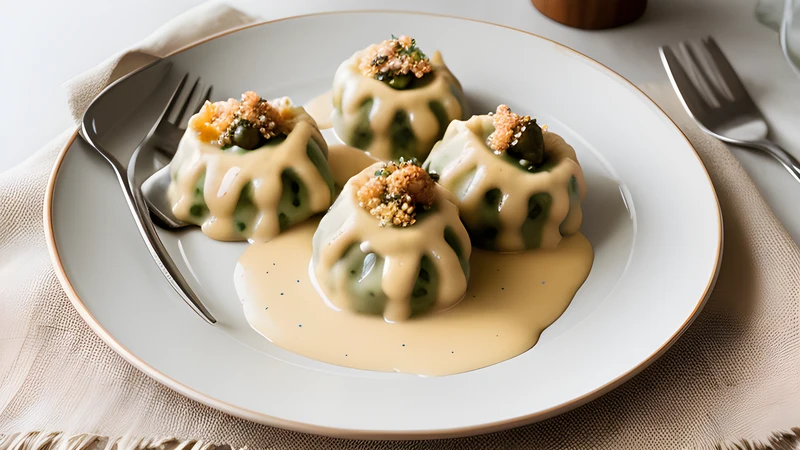
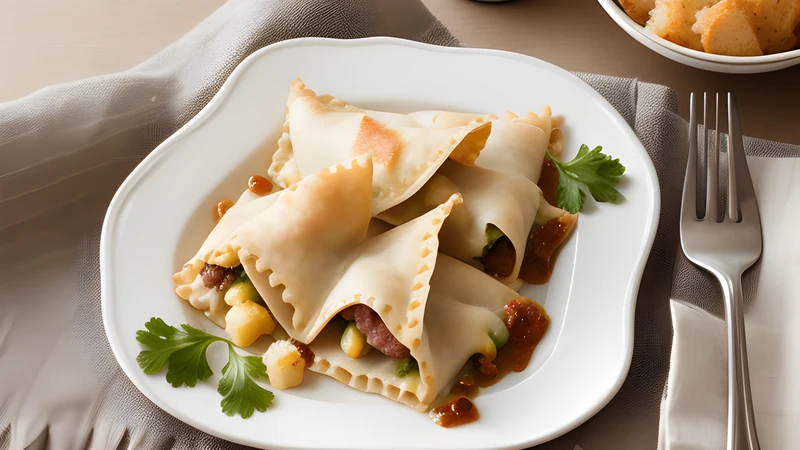
↓ Jump to recipeThe story is that the monks of Maulbronn Abbey got hold of a piece of meat during Lent, and rather than give it up they minced it, mixed it with spinach until it went green, folded it inside pasta so nobody could see it, and ate it in front of God with a straight face. Swabians call the things Herrgottsbscheißerle — roughly, “little God-cheaters” — and they say it with real affection.
The story is almost certainly untrue, and it is repeated in every Swabian household anyway, which tells you something about what the dish is for. It is the folk memory of a rule being bent, preserved in a food, and Swabia has never let go of it.
Maultaschen: Swabia's Pockets for Hiding Meat From God
Ingredients
- 300 g strong white bread flour
- 3 large eggs
- 1 tbsp olive oil
- 1/2 tsp fine salt, for the dough
- 300 g spinach, washed
- 2 stale white bread rolls (about 120 g), crusts on
- 150 ml whole milk, warm
- 1 tbsp butter
- 1 onion (about 150 g), finely chopped
- 250 g minced pork (about 20% fat)
- 150 g bratwurst meat, skins removed
- 1 egg, for the filling
- 2 tbsp chopped flat-leaf parsley
- 1/2 tsp freshly grated nutmeg
- 1 1/2 tsp fine salt, for the filling
- 1/2 tsp ground white pepper
- 1 egg beaten with 1 tbsp water, to seal
- 1.5 litres good beef or chicken broth, to serve
- 2 tbsp chopped chives, to finish
Method
- Make the dough: mound the flour on a work surface, make a well and add the 3 eggs, olive oil and 1/2 tsp salt. Work together with a fork, then knead 8-10 minutes until smooth and springy. Wrap and rest 1 hour at room temperature.
- Wilt the spinach in a dry pan over high heat for 2 minutes until collapsed. Tip into a sieve, cool under cold water, then squeeze out every drop of water with your hands. Squeeze again. Chop finely.
- Tear the rolls into a bowl, pour over the warm milk and leave 10 minutes. Squeeze out the excess milk and keep the soaked bread.
- Melt the butter in a frying pan over medium heat and cook the onion 8 minutes until soft and pale gold. Cool completely.
- Combine the spinach, soaked bread, cooled onion, minced pork, bratwurst meat, 1 egg, parsley, nutmeg, 1 1/2 tsp salt and the white pepper in a large bowl. Mix hard with your hand for 2 minutes until it comes together and feels slightly sticky.
- Fry a teaspoon of the filling and taste it. Adjust salt and nutmeg now.
- Roll the dough through a pasta machine to the second-thinnest setting, or by hand to 1 mm, in two long sheets about 12 cm wide.
- Lay one sheet down. Pipe or spoon walnut-sized mounds of filling along it at 6 cm intervals, about 2 cm from the near edge. Brush the exposed dough with egg wash.
- Fold the far half of the sheet over the filling and press down firmly around each mound, working the air out from the fold outwards. Press hard along the seams.
- Cut between the mounds with a knife or a fluted wheel into squares roughly 6 x 6 cm. Press the cut edges once more.
- Bring the broth to a bare simmer — small bubbles only. Poach the maultaschen in batches for 8-10 minutes, until they float and the pasta at the seam is tender.
- Serve in deep bowls with a ladle of the broth and a scattering of chives.
The Friday that made them
The Lenten rule the legend turns on was real, and it was heavier than most people now imagine. Medieval and early-modern fasting periods covered something like a third of the year — the forty days of Lent, Advent, Ember days, and every Friday — and during them meat, and often eggs and dairy too, were forbidden across Catholic Europe. That is a lot of days to feed a household on cabbage.
Every Catholic food culture produced a workaround, and the workarounds are now the good bits of the cuisine. Fish on Friday built the entire salt-cod trade. Beaver was ruled a fish by convenient theological argument, as was capybara in South America. Southern Germany’s answer was to get very serious about eggs, cheese and noodles, which is a large part of why Swabia is a noodle region at all.
The Maultasche legend sits inside that tradition as a joke about it. The self-deprecation in Herrgottsbscheißerle is the point: nobody actually believed the meat was hidden from an omniscient God, and the name admits it. It is a story about a household deciding that a rule which cannot be kept honestly can at least be broken with style. Swabians, who have a national reputation for thrift and for doing things properly, enjoy having one dish that is officially about cheating.
Good Friday itself remains the day. Maultaschen in broth is what goes on the Swabian table on Good Friday, and the fact that the filling now contains 400 g of pig is a detail everyone has agreed to let go.
The claim, and what is actually known
Maulbronn Abbey is a real Cistercian monastery in Baden-Württemberg, a UNESCO World Heritage Site, and it did exist during the periods in question. The Maultasche is real and Swabian and old. The connection between them rests entirely on the resemblance between “Maulbronn” and “Maultasche”, which is the weakest possible kind of evidence — Maul means mouth and Tasche means pocket, so “mouth pocket” is an entirely adequate description of the object without any abbey involved.
What is documented is that Maultaschen appear in Swabian sources from the seventeenth century onwards, and that the earliest versions were meat-free — a bread, spinach and egg filling, extended with whatever was around. Meat came in later, as it did everywhere, when it got cheaper. So the smuggling story runs backwards: the vegetarian version is the original, and the pork is the modern addition that the legend exists to excuse.
There is a second, duller explanation that historians prefer. Waldensian refugees — a persecuted Protestant group expelled from the Alpine valleys of Piedmont in the 1680s — were resettled in large numbers in Württemberg, and they brought Italian filled-pasta technique with them. A ravioli that grew to four times the size and got a German filling is a much likelier lineage than a monk with a guilty conscience.
Since 2009 Schwäbische Maultaschen has held EU protected geographical indication status, which means the name is legally reserved for the thing made in Baden-Württemberg. The Swabians took the paperwork seriously.
The size is the point
A ravioli is a mouthful. A Maultasche is a fist. That difference changes the food itself.
At 6 cm square with a heaped tablespoon inside, the ratio flips: pasta becomes a wrapper around a substantial quantity of filling, and the filling has to be seasoned as if it were a meatball rather than a pasta stuffing, because you are eating a lot of it in one go. This is why the salt in the filling looks high. It is.
The size also dictates the cooking. A large pocket poached at a rolling boil will burst at the seam every time, because the filling expands and the steam has nowhere to go. Poach at a bare simmer — bubbles rising lazily, surface trembling — for a full 8-10 minutes, and they hold.
The dough
Strong bread flour, three eggs, a spoonful of oil. The oil is a Swabian habit that Italians would sniff at and it makes the dough more forgiving to roll and slightly more elastic at the seams, which is what you want when you are sealing a large parcel around a wet filling.
Knead a full eight minutes. The dough should end up smooth, tight and springing back when pressed. Under-kneaded dough tears at the second-thinnest pasta setting, and there is no fixing it once it is thin.
Rest for an hour, wrapped, at room temperature. This is not optional and it is not a matter of taste: gluten that has just been kneaded is under tension and will contract the instant you release it, so a sheet rolled from unrested dough shrinks back as fast as you roll it and cannot be got thin.
Roll to about 1 mm. Thinner than that and a pocket this large tears under the weight of its own filling. The same egg-and-flour logic drives käsespätzle, incidentally, and the two dishes are the two things Swabian soft wheat is genuinely good at.
The filling, and the two things that ruin it
Water. Spinach holds an astonishing amount of it, and every millilitre that survives into the filling turns to steam in the poaching water and blows the seam apart. Wilt it, cool it, and then squeeze it in a clean tea towel until you are certain, and then squeeze again — you should be able to get 300 g of raw spinach down to about 90 g. It looks like nothing. That is correct.
Air. A pocket sealed with an air bubble in it becomes a balloon in hot water. Press the fold down from the crease outwards, driving the air ahead of the pressure, and seal the last edge with the air already gone. This is the same motion as sealing a bag of rice.
The soaked bread — Brät logic, the same binder that holds a Semmelknödel together — is doing structural work. It absorbs the fat and juices that render out of the pork and holds them inside the pocket, so the filling stays moist rather than shrinking into a dry ball with a puddle around it. Squeeze the milk out; do not wring it dry.
The bratwurst meat is my shortcut and it is a genuinely good one. Commercial bratwurst is already seasoned, already emulsified, and carries marjoram, nutmeg and white pepper in proportions somebody spent a long time getting right. Mixed half-and-half with plain minced pork it binds the filling and seasons it in one step. Straight minced pork alone works and needs more nutmeg and a bolder hand with the salt.
Nutmeg is the flavour here, the way marjoram is the flavour of verivorst. Grate it fresh; the ground stuff in a jar has lost the volatile oils that make it worth using.
What goes wrong
They burst. Three possible causes, in order of likelihood: the water was boiling rather than simmering, an air bubble was sealed inside, or the spinach was wet. All three are fixed before the pot, never in it.
The seams open along the cut edge. The egg wash did not reach that far, or the dough had dried out before folding. Work fast, keep the second sheet under a tea towel, and press the cut edges again after cutting.
The filling is dry and crumbly. Not enough fat in the pork, or the bread was wrung out instead of squeezed. Minced pork at 20% fat is the floor; 10% supermarket lean mince makes a sad Maultasche.
The pasta is thick and doughy at the seam. Where the two sheets meet you have double thickness, and if the sheet started at 2 mm that seam is 4 mm and will still be chalky when the filling is hot. Roll thinner than feels sensible.
The broth goes cloudy and tastes of flour. Some starch loss is normal. A lot of it means the seams are weeping. Poach in water and serve in separately heated broth if you want a crystal-clear bowl — this is what restaurants do, and it is not a compromise worth making at home unless you are feeding people you want to impress.
The three ways to eat them
Swabia serves Maultaschen three ways and each is a different dish.
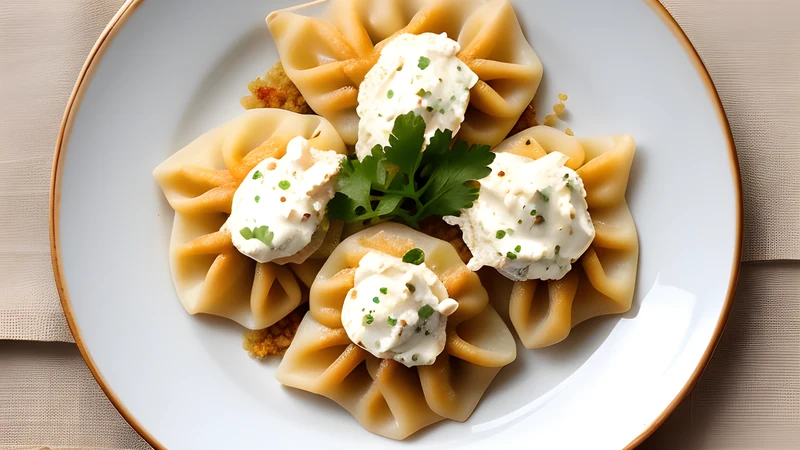
In der Brühe — in broth, as above. The purest version, and the one that demands the broth actually be good, since there is nowhere for a stock cube to hide. This is the Good Friday version, eaten with a spoon.
Geschmälzt — poached, then sliced and fried in butter with a heap of browned onions poured over. This is the everyday version and possibly the best one, and it is what happens to yesterday’s leftovers.
Mit Ei — poached, sliced into ribbons, fried, and scrambled eggs run through the pan at the end. This is breakfast, and it is what Swabian children are raised on.
A potato salad on the side, the Swabian one dressed with warm stock and vinegar rather than mayonnaise, is standard with the fried versions.
Make-ahead, storage, and what to do with the offcuts
Uncooked Maultaschen freeze perfectly. Lay them on a floured tray, freeze solid, then bag them. Poach from frozen, adding 3 minutes. This is the reason to make sixteen when you only need eight.
Poached ones keep 3 days in the fridge and are better fried than reheated in broth.
The dough offcuts should be re-rolled once and no more; a second re-roll toughens them past the point of pleasure. Anything left after that gets cut into rough squares and dropped into soup.
For the original vegetarian version, drop the pork and bratwurst, double the spinach to 600 g raw, add 150 g of ricotta and 40 g of grated Bergkäse, and be generous with the nutmeg. It is lighter, it is the older recipe, and it removes the entire justification for the name — which the monks, if they existed, would presumably have found funny.
Related Content