Massaman Beef Curry with Peanuts and Potato
Mild, rich and aromatic
Contents
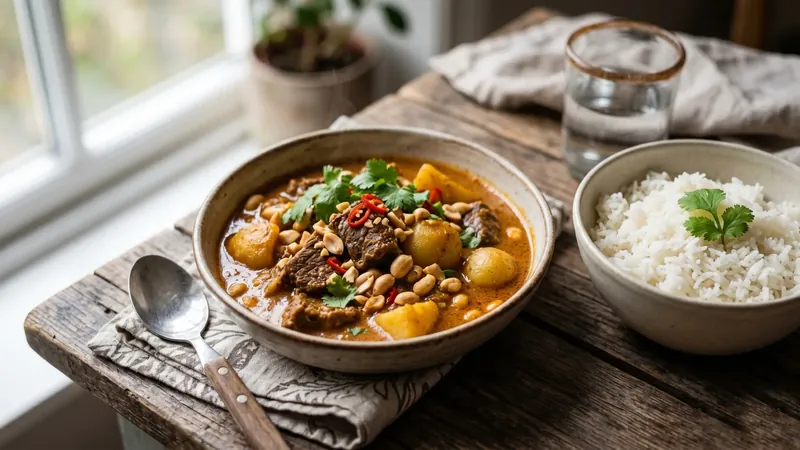
↓ Jump to recipeMassaman is the gentle giant of the Thai curry world: mild, deeply spiced and richly comforting, owing as much to warm whole spices as to chilli heat. The twist here is to toast those whole spices before they go in, deepening the curry’s aroma, then finish with tamarind and peanuts for a sweet-sour, nutty edge. Beef shin braised low and slow turns silky, and waxy potatoes soak up the fragrant sauce. Serve with plenty of jasmine rice.
Massaman Beef Curry with Peanuts and Potato
Ingredients
- 800g beef shin or chuck, cut into large chunks
- 1 tbsp neutral oil
- 4 tbsp massaman curry paste
- 400ml tin coconut milk
- 300ml beef stock
- 2 star anise
- 1 cinnamon stick
- 4 cardamom pods, bruised
- 3 cloves
- 1 tsp coriander seeds
- 2 tbsp fish sauce
- 2 tbsp palm or light brown sugar
- 2 tbsp tamarind paste
- 400g waxy potatoes, cut into chunks
- 1 onion, cut into wedges
- 80g roasted unsalted peanuts
- Steamed jasmine rice, to serve
- Coriander leaves, to garnish
Method
- Heat the oil in a large heavy pot and brown the beef chunks well in batches, then set aside.
- Toast the star anise, cinnamon, cardamom, cloves and coriander seeds in the dry pot for 1 minute until fragrant.
- Spoon the thick cream from the top of the coconut milk into the pot and fry the massaman paste in it for 3-4 minutes until aromatic and split.
- Return the beef, then add the rest of the coconut milk, the stock, fish sauce, sugar and tamarind paste. Stir to combine.
- Bring to a gentle simmer, cover and cook for 1½ hours, stirring occasionally, until the beef is becoming tender.
- Add the potatoes, onion wedges and half the peanuts, then simmer uncovered for 30-40 minutes until the beef is meltingly soft and the sauce has thickened.
- Taste and balance with more fish sauce, sugar or tamarind as needed.
- Scatter with the remaining peanuts and coriander and serve with steamed jasmine rice.
The Story
Massaman curry stands a little apart from the other curries of Thailand, and its character tells the story of why. Where green and red curries lean on fresh chillies, lemongrass and galangal for a bright, fiery punch, massaman is built around warm, dry spices: cinnamon, cardamom, cloves, star anise and cumin. That spice profile points to its roots in the culinary exchange between Thailand and the Muslim trading communities and Persian and Indian merchants who brought these aromatics along the spice routes. The name itself is generally understood to relate to this Muslim heritage, and massaman remains especially associated with the south of Thailand.
This blending of influences gives massaman its distinctive gentleness. It is one of the mildest Thai curries, rich and rounded rather than hot, which makes it a fine introduction for anyone wary of fierce chilli heat. The base is coconut milk, which carries the spices and softens any sharpness, while potatoes and onion give it a hearty, almost stew-like quality unusual among Thai curries. Beef is a classic choice, and a well-marbled cut such as shin rewards the long, slow braise that the dish demands, turning tender enough to fall apart under a fork.
Toasting the whole spices is the refinement that makes the most of massaman’s aromatic backbone. A brief turn in the dry pan releases the fragrant oils locked in cinnamon, cardamom and star anise, lending the finished curry a deeper, more resonant warmth. Frying the curry paste in the thick coconut cream until it splits and turns glossy is another key step, blooming the paste and drawing out its flavour before the liquid goes in.
The finish is what gives massaman its signature balance. Tamarind brings a fruity sourness that lifts the richness, palm sugar adds a gentle caramel sweetness, and fish sauce supplies the savoury salt that ties everything together. Roasted peanuts, stirred through and scattered on top, contribute texture and a nutty depth that is part of the dish’s identity. The art lies in adjusting these three poles, sour, sweet and salty, until the curry sings. Served over fragrant jasmine rice, it is the kind of slow-cooked dish that tastes even better the next day.
Massaman is often described as the crossover point between a Thai curry and something closer to a Persian or Indian braise, and the spice list is the tell. Cinnamon, cardamom, cloves and cumin are not native to the Thai kitchen in the way that lemongrass, galangal and kaffir lime are; they arrived by sea with traders from the west and were absorbed into the cooking of the southern Thai courts. A dish attributed to this exchange, “massaman gai”, even turns up in an eighteenth-century Thai poem praising royal cookery, which places the curry firmly within the aristocratic and Muslim-influenced tradition rather than the fiery street-food canon. That heritage is why it feels so unlike a Thai green curry: where the green is all fresh herbs and searing heat, massaman is dried spice, long cooking and rounded sweetness.
Getting the technique right
Two steps do the heavy lifting, and both are easy to rush. The first is browning the beef properly. Do it in batches over a genuinely hot pan so the meat sears rather than steams, and leave each piece alone until it releases cleanly and has taken a deep brown crust. That crust is pure flavour, the Maillard reaction building savoury compounds that the long braise will draw out into the sauce. Crowd the pan and the beef sits in its own released juices, boils grey and gives you nothing. It is worth the ten extra minutes.
The second is cracking the coconut milk. Buy a full-fat tin and do not shake it; the thick cream settles at the top, and you want to spoon that solid layer into the hot pan on its own. Fried over a moderate heat, the cream separates, the fat pooling out and the milk solids toasting, and this is the point at which you add the massaman paste. Frying, or “blooming”, the paste in that hot fat for three to four minutes is what unlocks it. Raw curry paste tastes flat and slightly harsh; bloomed paste turns fragrant, its oils carrying the flavour of the chillies, galangal and spices through the whole dish. You will see the mixture split, with rusty oil rising to the surface, and smell the shift from raw to cooked. Only then does the rest of the liquid go in.
What can go wrong
The most common problem is tough beef, and it is almost always impatience. Shin and chuck are full of connective tissue that only melts into gelatine after a long, gentle simmer, so if the meat feels firm at the ninety-minute mark it needs more time, not more heat. Keep the braise at a lazy blip, barely moving, and check the sauce is not reducing too far; add a splash of stock or water if it looks like catching.
The other pitfall is a curry that is out of balance, most often too sweet or too rich. Massaman should taste rounded but not cloying, so trust the tamarind. Season it in the last five minutes, off the boil, and taste against a grain of rice rather than a hot spoonful, because heat mutes your palate. If it is flat, it usually wants salt (more fish sauce) and acid (more tamarind), not more sugar.
Substitutions and variations
Lamb shoulder or neck works beautifully in place of beef and suits the warm spices, though it braises a shade faster. For a meat-free version, swap the beef for large chunks of butternut squash and a tin of drained chickpeas, use a vegetarian curry paste and light soy in place of the fish sauce, and skip the long braise, simmering for around forty minutes until the squash is tender. If you cannot find tamarind paste, the juice of half a lime plus a teaspoon of brown sugar approximates its sweet-sour lift, though it lacks the fruity depth. Toasted cashews stand in well for peanuts if you prefer, and a handful of small pearl onions cooked whole with the potatoes is a traditional and very good addition.
Make ahead and storage
This is a curry that rewards being made in advance. The flavours marry and deepen overnight, the spice mellowing into the sauce, so cook it a day ahead if you can. It keeps in the fridge for up to three days and reheats gently on the hob with a splash of water to loosen the sauce, which thickens as it sits. It also freezes well for up to three months; freeze it without the potatoes if you can, as they can go slightly grainy, and add fresh ones on reheating. Hold back the garnish of peanuts and coriander until serving so they stay crisp and fresh.
If you like this style of slow, spice-led cooking, the same patience pays off in a red lentil and coconut dal, where coconut milk again softens and carries a load of warm spice, or in the nutty, mellow West African sweet potato and peanut stew, which shares massaman’s love of groundnuts in a savoury braise.
Related Content