Manti (Central Asian) With Cumin and Lamb
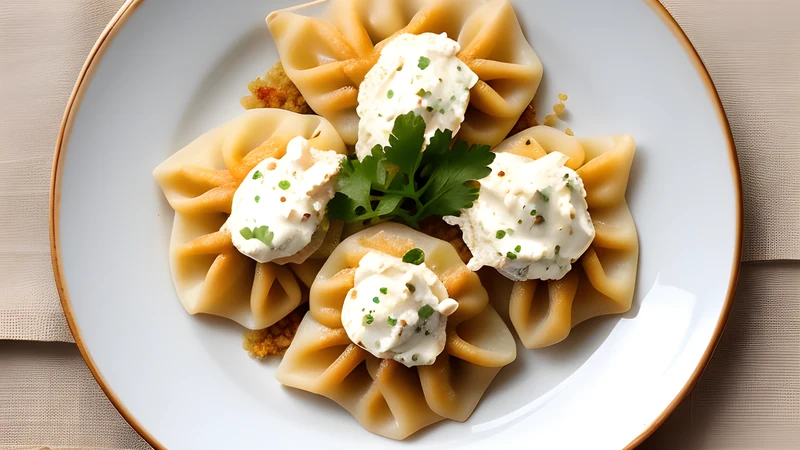
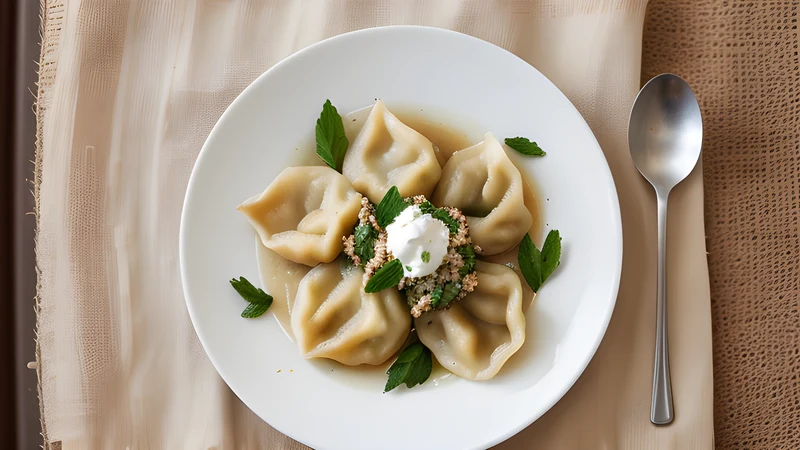
Steamed lamb-and-cumin dumplings under soured cream and dried mint
Contents
↓ Jump to recipeManti are the dumpling that made me stop being frightened of dumplings. Chinese and Japanese versions want small, delicate pleats and a fast boil or fry; get them wrong and they gape and leak. Central Asian manti are big, generous, four-cornered parcels that you steam slowly, and the whole approach forgives a clumsy hand. You are not folding twenty tiny gyoza. You are wrapping a tablespoon of spiced lamb in a thin square of dough and sealing it like a little envelope. If your first few look lopsided, they will still steam up plump and juicy and nobody at the table will care.
Manti (Central Asian) With Cumin and Lamb
Ingredients
- 400g plain flour, plus extra for dusting
- 200ml warm water
- 1 egg
- 1 tsp fine salt (for the dough)
- 500g lamb shoulder, hand-chopped or coarsely minced
- 150g lamb fat or fatty lamb belly, finely diced
- 2 onions, very finely diced
- 2 tsp ground cumin
- 1 tsp freshly ground black pepper
- 1 tsp fine salt (for the filling)
- 1/2 tsp chilli flakes (optional)
- Neutral oil, for brushing the steamer
- 300g soured cream or thick natural yoghurt
- 2 garlic cloves, crushed to a paste with a pinch of salt
- 2 tsp dried mint
- 1 tsp melted butter, to finish (optional)
Method
- Make the dough: mix flour and 1 tsp salt, beat the egg into the warm water, then combine and knead 8-10 minutes to a firm, smooth dough. Wrap and rest 45 minutes at room temperature.
- Make the filling: combine the chopped lamb, diced lamb fat, onions, cumin, black pepper, salt and chilli flakes. Mix thoroughly with your hands for 2 minutes until sticky and cohesive. The fat and onion are what keep the filling juicy, do not reduce them.
- Roll the dough very thin, about 1-1.5mm, on a well-floured surface. Cut into 9-10cm squares (you should get around 30).
- Place a heaped tablespoon of filling in the centre of each square. Bring the four corners up to meet in the middle and pinch shut, then pinch together the four seams to seal, leaving small openings at the sides. Press firmly so they cannot burst.
- Brush the steamer tiers with oil so the dumplings do not stick. Arrange the manti with space between them, they swell as they cook.
- Steam over vigorously boiling water for 25 minutes, until the dough is translucent and the filling is cooked through and juicy.
- Meanwhile make the sauce: stir the garlic paste through the soured cream and season lightly.
- Serve the manti hot, topped with the garlicky soured cream, a scatter of dried mint rubbed between your fingers, and a little melted butter if you like. Eat straight away.
A dumpling that travelled the Silk Road
The word manti and its relatives, mantı in Turkey, mantu in Afghanistan, manty across the Russian-speaking world, trace back through the Turkic and Mongol expansions to the same ancestor as the Chinese mantou. As the idea moved west it grew. The tiny Turkish mantı of Kayseri, no bigger than a fingernail, sit at one end of the family; the fist-sized Central Asian manti sit at the other. What holds the family together is a thin unleavened wheat dough wrapped around minced or chopped meat and cooked with steam.
In Uzbekistan, Kazakhstan and Kyrgyzstan manti are cooked in a mantyshnitsa or kaskan, a tiered aluminium steamer that stacks several perforated trays over one pot of boiling water, so a whole family’s worth cooks at once. The filling is emphatically lamb, cut through with a serious quantity of onion and, crucially, lamb-tail fat, which melts during steaming and bastes the meat from within. Some regions fold pumpkin into the mix in autumn, and a pure pumpkin manti is a real and lovely thing. But the cumin-scented lamb version is the one I make most, and it is the one that will convert people.
If you have worked with the noodle dough in my lagman, the manti dough will feel familiar, though it is firmer and rolled far thinner. And if you want the same lamb-and-cumin flavour in a baked shell rather than a steamed one, the tandoor-baked samsa is the obvious next project.
The filling: chop, do not blitz
The single biggest improvement you can make to any manti is to hand-chop the lamb rather than using fine supermarket mince, or at least to ask the butcher for a coarse grind. Fine mince packs into a dense, uniform paste; hand-chopped meat stays open and textured and holds its juices. Take lamb shoulder, slice it thin, then run your knife through it in both directions until you have a rough, chunky mince with visible pieces.
Then the fat. Central Asian cooks use the fat from the fat-tailed sheep of the steppe, and it is what makes proper manti so succulent. Most of us cannot buy it, so use finely diced lamb belly or ask your butcher for lamb fat. Do not leave it out and do not skimp, because this is where the juice comes from. Equally important is the onion: a serious amount, diced small so it almost disappears, releasing moisture and sweetness as it steams. Mix everything hard with your hands for a couple of minutes until it turns tacky and holds together, then it will not fall apart in the wrapper.
Rolling and folding
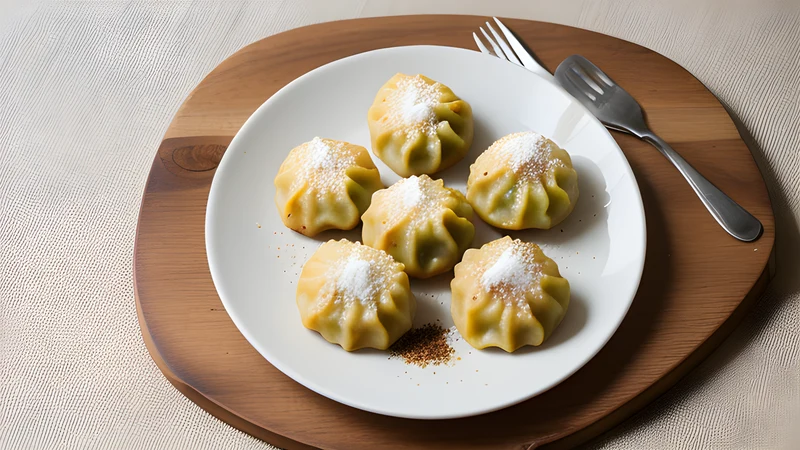
Rest the dough a full forty-five minutes so it rolls without fighting you, then roll it genuinely thin, a millimetre or so, thinner than you think. Cut it into squares of about nine or ten centimetres. Put a heaped tablespoon of filling in the middle of each, then bring the four corners up to a point over the top and pinch them together, then pinch the four open seams closed. You are aiming for a plump little four-pointed parcel with two small windows at the sides, which is the classic shape. Press each seam firmly, a leaking dumpling is a sad dumpling.
Do not fill too many before you steam. Assembled manti can sit for twenty minutes but if they wait too long the dough goes soft where the filling touches it. Roll, fill and steam in waves.
Steaming without a special steamer
You do not need the tiered aluminium tower. A bamboo steamer, a metal steamer basket, or even a colander set over a pan of boiling water with a lid all work. The two rules are: brush the surface with oil so the dumplings do not weld themselves to it, and leave space between them because they swell. Steam over water at a hard boil for twenty-five minutes; the dough turns translucent and the filling firms up. Cut one open to check the meat is cooked through and running with juice.
What goes on top
The classic finish is soured cream or thick yoghurt sharpened with raw garlic, a heavy scatter of dried mint rubbed between the fingers to wake it up, and sometimes a trickle of melted butter or a chilli-oil drizzle. Some cooks serve a thin tomato-and-onion sauce alongside instead. I like both on the table so people can build their own. The cool garlicky cream against the hot juicy lamb is the whole point, and the dried mint pulls it together the way it does in so much of the region’s cooking.
One dumpling, a dozen tables
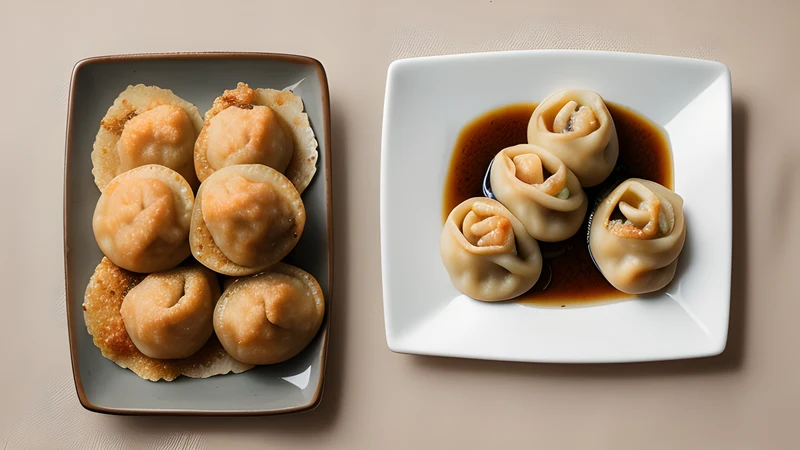
Follow manti across the map and you watch a single idea grow accents. In Turkey, the Kayseri mantı shrink to the size of a fingernail, forty to a spoon, and arrive drowned in garlicky yoghurt under a slick of chilli-and-mint butter, the meat almost an afterthought to the sauce. In Afghanistan, mantu swell again and come dressed with a split-pea-and-tomato qorma and a garlicky yoghurt of their own, the toppings turning a plate of dumplings into a full composed dish. Korean mandu, Georgian khinkali, Russian pelmeni and Chinese baozi all belong to the same sprawling family tree, each shaped by what its region farms and how its cooks like to eat. The Central Asian version I make here sits toward the large, meaty, steamed end of that spectrum, and its identity comes from three things: the fat-tailed-sheep richness of the filling, the heavy hand with onion, and the cumin that scents every bite.
Knowing the cousins is useful because it tells you how to vary your own. Want the Turkish register? Make the parcels smaller and lean harder on the yoghurt-and-mint finish. Fancy the Afghan style? Keep them this size and spoon over a lentil-tomato sauce alongside the soured cream. The dumpling is a canvas, and the topping decides which country you are eating in tonight. Keep a jar of chilli oil and a tub of thick yoghurt in the fridge and you can swing between all of them without touching the recipe for the parcels themselves.
Rolling thin, and the discipline of the seal
The two skills that separate a good manti from a great one are rolling and sealing, and both reward slowing down. The dough wants to be rolled genuinely thin, a millimetre to a millimetre and a half, thin enough that you can almost see the board through it, because it puffs and thickens as it steams and a dumpling rolled too thick turns stodgy and gluey where the dough meets the meat. Rest the dough its full forty-five minutes first so the gluten relaxes and stops springing back, keep the board and the pin well floured, and roll from the centre out in every direction to keep the sheet even. If it fights you, it has not rested enough; cover it and give it ten more minutes rather than forcing it.
The seal is where dumplings live or die. A leaking manti spills its precious juice into the steamer and comes out dry, so pinch every seam with real intent. Bring the four corners of the square up to a point, pinch them shut, then pinch the four open side seams closed, and go back over each join pressing firmly between finger and thumb. If the dough has dried at the edges and will not stick, dab a fingertip of water along the seam before you pinch. Do not overfill in your enthusiasm — a heaped tablespoon is the ceiling, and a parcel stuffed to bursting is exactly the one that bursts. Work in waves, rolling and filling only as many as your steamer holds at once, so no assembled dumpling sits long enough for its base to go soft and tacky against the filling.
Make-ahead and storage
Manti freeze superbly, which is the real reason to make a big batch. Freeze them raw in a single layer on a floured tray until solid, then bag them; steam from frozen, adding about five minutes to the time. This is the payoff for an afternoon of folding: a freezer drawer of homemade dumplings you can steam in under half an hour on a weeknight.
Cooked manti keep a day in the fridge and re-steam well, though they are best fresh. Leftover filling makes excellent little meatballs or a lamb kofta, so nothing is wasted.
A few things that can go wrong
If the dough tears while rolling, it needed more resting or you rolled too fast; let it relax and try again. If the dumplings burst in the steamer, the seams were not pinched hard enough or they were crowded and stuck together. If the filling comes out dry, the culprit is almost always too little fat or too little onion, or fine mince packed too tight. And if they stick to the steamer, you skipped the oil, everyone does once.
None of these are disasters. Manti are peasant food in the best sense, forgiving, generous, made to feed a crowd from cheap cuts and cheap flour. Make a big batch with someone else folding alongside you, freeze half, and you will understand why they are a fixture from Anatolia to the Tian Shan. For a soupier partner to these dumplings on the same table, ladle out bowls of lagman alongside.
Related Content