Mangú: The Dominican Mashed Plantain Breakfast
Green plantain mashed smooth, topped with pickled onion and three fried things
Contents
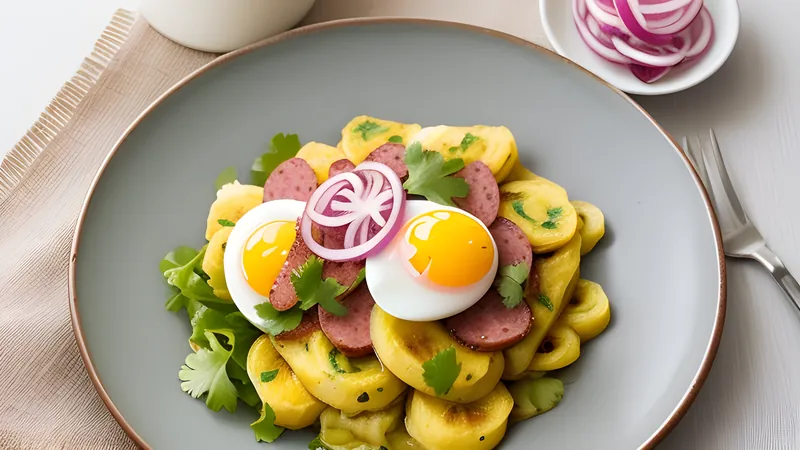
↓ Jump to recipeDominican breakfast has a fixed centre of gravity, and it is mangú: boiled green plantain mashed smooth, crowned with quick-pickled red onion, served alongside fried cheese, fried salami and a fried egg, a combination so standard it has its own name, los tres golpes, the three hits. Skip any one of the three and you’ve made a perfectly good plate of mashed plantain; include all three and you’ve made the specific, complete breakfast most Dominicans grew up eating before school.
Mangú: The Dominican Mashed Plantain Breakfast
Ingredients
- 6 green plantains, peeled and cut into 4 cm chunks
- 2 tsp fine salt, plus more to taste
- 8 garlic cloves, peeled and left whole
- 125 ml olive oil
- 40 g butter
- 1 large red onion, very thinly sliced
- 125 ml white vinegar
- 1 tsp sugar
- 1/2 tsp dried oregano
- 200 g queso de freír or halloumi, sliced 1 cm thick
- 150 g Dominican salami, sliced
- 4 eggs
- Neutral oil, for frying
Method
- Combine the sliced red onion, vinegar, sugar, oregano and a pinch of salt in a bowl. Toss well and leave to macerate at room temperature for at least 30 minutes.
- Put the garlic cloves and olive oil in a small pan over the lowest heat. Cook gently for 12 to 15 minutes, turning occasionally, until the garlic is deep golden and soft all the way through. Remove the garlic and set aside; reserve the golden oil.
- Put the plantain chunks in a pot, cover with salted water by 5 cm, and boil for 20 to 25 minutes until completely tender and a knife meets no resistance.
- Reserve 250 ml of the hot cooking water, then drain the plantains. Mash them with the butter, 3 tablespoons of the garlic-infused oil, and enough hot cooking water, added a little at a time, to reach a smooth, fluffy consistency. Season with salt.
- While the plantains boil, fry the cheese slices in a little neutral oil over medium heat for 2 minutes a side until golden. Fry the salami slices for 1 to 2 minutes a side until crisp at the edges. Fry the eggs in the same pan to your liking.
- Mound the mashed plantain onto plates. Top with the pickled red onion and the reserved confit garlic cloves, and serve immediately with the fried cheese, salami and eggs alongside.
Green, not ripe, and why that matters
Mangú uses plantain at its least sweet stage, fully green, unripened, starchy rather than sugary, the opposite end of the ripeness spectrum from the black-skinned fruit used in a dish like pastelón. Boiled and mashed, green plantain behaves closer to a potato than to a banana, giving mangú a savoury, faintly earthy base with none of the caramelised sweetness that a riper plantain would bring. This is the detail that trips up cooks encountering Dominican and wider Caribbean plantain cookery for the first time: the same fruit produces genuinely different dishes depending entirely on how ripe it is when it goes into the pot, and using a yellow or black plantain here instead of a green one will give you something closer to a sweet mash than the savoury, morning-appropriate dish mangú is meant to be.
Peeling green plantain takes more effort than peeling a ripe one, since the skin clings tightly and doesn’t pull away in long strips the way a black-skinned plantain’s does. Score the skin lengthwise in two or three places with a sharp knife before you start, then work your fingers or the knife tip under the cut edges; a few minutes soaking the whole plantain in hot water first also loosens the skin and makes the job considerably easier.
The confit garlic oil
Most mangú recipes mash the boiled plantain with butter or a simple oil, sometimes with a raw or briefly sautéed garlic clove crushed in for flavour. Slow-cooking whole garlic cloves in olive oil over the lowest possible heat until they turn deep gold and completely soft, then mashing both the oil and the cloves themselves through the plantain, is the addition I’ve made here, and it gives a rounder, sweeter garlic flavour throughout the mash than a quick sauté would, since low, slow cooking converts garlic’s sharper compounds into something mellower without any risk of the scorched bitterness that garlic cooked too hot and fast can pick up. The whole confit cloves reserved and scattered over the top double as a garnish, soft enough to mash into individual bites at the table.
Don’t rush the garlic here; the process needs a genuinely low flame and 12 to 15 minutes, and garlic that colours in half that time has been cooked too hot and will taste harsher for it, working against the very mellowness the technique is meant to produce.
Getting the mash right
The cooking liquid, not additional butter or milk, is what brings mangú to its final, correct consistency, smooth and fluffy rather than gluey or dense. Add it gradually, a splash at a time, mashing between additions, since it’s much easier to loosen a mash that’s too thick than to fix one that’s gone soupy from too much liquid added at once. A potato masher or the back of a large fork does the job well; a food processor is worth avoiding entirely; it over-works the plantain’s starch in seconds and turns the mash gummy and elastic rather than light, a texture problem that’s difficult to reverse once it’s happened.
Salt generously and taste as you go; plantain, unlike potato, doesn’t carry much inherent flavour of its own, and a bland mangú is almost always a matter of insufficient salt rather than any other missing ingredient.
Pickled onion is not a garnish
The vinegar-macerated red onion piled on top of the mash is doing real work, cutting through the starchy richness of the plantain the same way a sharp pickle cuts through a fatty sandwich. Give it the full 30 minutes to macerate; a shorter soak leaves the onion sharp and raw-tasting rather than softened and pleasantly tangy, and the textural difference between a properly macerated onion and a barely-dressed one is obvious the moment you taste it. Some Dominican cooks add a thin slice of green pepper to the pickle for a little extra bite; it’s a reasonable variation if you want a slightly more complex topping.
Los tres golpes
The fried cheese, fried salami and fried egg that round out the plate are not interchangeable extras; together they’re specifically what turns mashed plantain into a full Dominican breakfast rather than a side dish missing its main components. Queso de freír, a firm, mild frying cheese that holds its shape and browns without fully melting, is traditional; halloumi is the closest widely available substitute outside the Caribbean and behaves almost identically in the pan. Dominican salami is spiced and firmer than an Italian-style salami; a good chorizo or even a firm breakfast sausage sliced thin is a reasonable stand-in if Dominican salami isn’t available locally. Fry all three components in the same pan you’ll use for the eggs, in the order given, so the salami’s rendered fat seasons the pan for the cheese and eggs that follow.
Storage and reheating
Mangú is best made and eaten fresh; the mash firms up considerably once refrigerated, since the plantain starch continues to set as it cools, and reheating never fully restores the fluffy texture of a freshly mashed batch. If you do have leftovers, reheat gently with a splash of water or milk stirred through over low heat, mashing again as it warms, rather than microwaving it dry. The pickled onion keeps well on its own for up to a week refrigerated and is worth making in a larger batch than you need for one breakfast, since it’s useful on sandwiches and alongside other fried or braised dishes well beyond mangú itself.
If you’re exploring breakfast traditions across the wider Caribbean basin, gallo pinto shows how differently a neighbouring cuisine handles the same first-meal-of-the-day slot, rice and beans standing in for plantain as the starchy anchor of the plate.
A name with a disputed origin
The most commonly told story behind mangú’s name credits US Marines during the American occupation of the Dominican Republic in the 1910s and 1920s, who supposedly tried the mashed plantain and responded with “man, good,” which Dominican ears rendered into mangú. Dominican food historians treat this story with real scepticism, since the word has plausible roots in African languages carried across the Atlantic during the slave trade, closer kin to similar-sounding words for mashed starch dishes found elsewhere in West and Central African-influenced Caribbean cooking, such as Puerto Rico’s mofongo and various fufu-style dishes across the wider Black Atlantic. Both explanations get repeated constantly on the island, and neither is fully resolved, which makes mangú a useful reminder that food etymology is often genuinely unsettled even for a dish eaten daily by millions of people.
Mofongo’s quieter cousin
Mangú is frequently compared to Puerto Rico’s mofongo, and the family resemblance is real: both are built on mashed green plantain, both lean on garlic for depth, and both come from neighbouring islands with closely related colonial and African culinary histories. The distinction that matters is texture and occasion. Mofongo is typically mashed with fried pork cracklings worked directly into the mash and packed into a dense, textured mound, served as a lunch or dinner side with the crackling’s chew built into every bite. Mangú is smoother, its garlic delivered through infused oil rather than through a coarse mash-in ingredient, and its role is specifically morning food, built to sit alongside eggs rather than a main protein. Cooking both back to back is a genuinely good way to understand how two neighbouring cuisines can start from nearly the same base ingredient and arrive at meaningfully different final dishes.
Choosing plantains that will actually mash well
Look for plantains with skin that is fully green, taut, and shows no yellowing at all; even a plantain just beginning to turn will have started converting starch to sugar and will mash slightly softer and sweeter than the fully green fruit mangú calls for. They should feel firm and heavy for their size with no give when pressed, unlike the ripe fruit used elsewhere in Caribbean cooking. If your plantains have a little yellow showing, the dish will still work, just with a faint sweetness creeping into what should be a purely savoury base; for genuinely traditional mangú, seek out the greenest ones available and don’t let them sit at room temperature for more than a day or two before cooking, since they ripen faster than people expect once they’ve left cold storage.
Scaling up and feeding a table
This recipe serves four generously with the full tres golpes alongside, but mangú scales easily for a bigger breakfast table; boil the plantains in batches rather than overcrowding one pot, since too many chunks in too little water cook unevenly and take longer overall than two smaller batches would. The confit garlic oil is worth making in a larger quantity than any single batch of mangú needs, since it keeps well refrigerated for up to two weeks and is genuinely useful stirred through rice, drizzled over roasted vegetables, or brushed onto bread well beyond this one dish. If you’re cooking for a crowd and frying all three components of the tres golpes for everyone, fry the salami first, then the cheese in the same fat, and do the eggs last, keeping everything warm in a low oven while the final batch finishes, so the whole plate arrives at the table together rather than in a slow, staggered trickle.
What to drink alongside it
Dominican breakfast tables almost always pair mangú with strong, sweetened coffee, brewed dark and served in a small cup rather than a large mug, cutting through the plate’s richness the same way the pickled onion does from the other direction. Fresh juice, often orange or a local citrus, is common too, particularly in households feeding children who find the coffee too strong. Neither is essential to the dish itself, but either rounds out the meal into something closer to how it’s actually eaten across the island rather than as an isolated recipe cooked in an unfamiliar kitchen.
Related Content