Mango and Toasted Coconut Overnight Oats
Tropical make-ahead breakfast
Contents
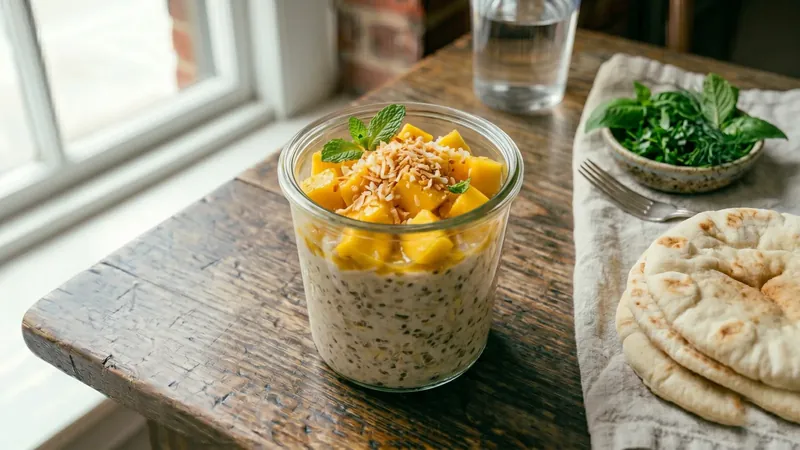
↓ Jump to recipeThe best make-ahead breakfast is one you actually look forward to opening, and these overnight oats deliver tropical brightness with almost no effort. Oats and chia seeds soak overnight in coconut milk until thick and creamy, then get crowned with fresh mango, a lick of lime and a shower of toasted coconut. The twist is that toasted coconut, golden and nutty, which lifts the whole bowl above the usual soggy jar. It is very nearly no-cook, vegan and ready to grab from the fridge.
Mango and Toasted Coconut Overnight Oats
Ingredients
- 100g rolled oats
- 1 tbsp chia seeds
- 250ml coconut milk drink (or tinned coconut milk loosened with water)
- 1 tbsp maple syrup
- Pinch of fine salt
- 1 ripe mango
- 30g coconut flakes
- 1 tbsp lime juice
- Extra coconut milk, to loosen
Method
- In a bowl or jar, stir together the oats, chia seeds, coconut milk, maple syrup and salt.
- Cover and chill in the fridge overnight, or for at least 4 hours, until thick and creamy.
- Toast the coconut flakes in a dry frying pan over a medium heat, tossing often, for 2 to 3 minutes until golden. Tip out and leave to cool.
- Peel the mango and cut the flesh from the stone, then dice half and blend or mash the other half into a rough purée.
- Stir the lime juice through the mango purée.
- Loosen the soaked oats with a splash more coconut milk if they are too thick.
- Spoon half the oats into each serving glass or bowl.
- Swirl through the mango purée and top with the diced mango.
- Finish with a generous scattering of toasted coconut flakes and serve cold.
From a Swiss clinic to your fridge
Overnight oats are a clever piece of kitchen physics dressed up as a breakfast trend. Rather than cooking oats in hot liquid, you let them sit in cold liquid for several hours so they slowly hydrate and soften. The starches in the oats swell and the texture turns creamy without any heat at all. It is a cold descendant of Bircher muesli, devised around 1900 by the Swiss physician Maximilian Bircher-Benner at his Zurich sanatorium; he served his patients a mixture of oats soaked overnight, grated apple, nuts and condensed milk, part of a wider conviction that raw food was more healthful. The modern jar of overnight oats is essentially his idea with a tighter lid and a longer soak.
The science of the soak
The chia seeds do quiet but important work. Each seed is coated in soluble fibre that swells on contact with liquid, holding up to about ten times its weight in water as a soft gel. Stirred into the oats, they thicken the mixture and give it body, so the finished breakfast holds together in a spoon rather than sloshing about. They also add plant protein, fibre and omega-3 fats, which help the bowl feel like a proper meal rather than a sugary snack. A pinch of salt is not optional: it sharpens the sweetness and stops the soaked oats tasting flat.
Mango is the star, and it rewards a little patience in the choosing. A ripe one yields slightly to a gentle squeeze and smells fragrant at the stem end; a rock-hard mango will ripen in a few days on the counter but never gains much perfume if it was picked far too green. Splitting the fruit into two roles — half blended to a rough purée, half diced — gives both a smooth sauce that ripples through the oats and pieces you can bite into. A tablespoon of lime juice is the small but essential seasoning: its acidity sharpens the mango’s perfume and stops the sweetness turning cloying, the same reason lime so often accompanies tropical fruit. That mango-lime-coconut trio also drives my coconut and lime cake, if you want the dessert version of the same flavours.
The twist: toasting the coconut
Raw coconut flakes are pleasant but mild; a few minutes in a dry pan transforms them. Heat drives off surface moisture and pushes the natural sugars and proteins into the Maillard reaction, the browning chemistry that deepens the flavour into something warm and nutty while adding a welcome crunch against the soft oats. Keep the 30g of flakes moving over a medium heat and pull them off the moment they turn golden, ideally tipping them straight onto a cold plate, because residual pan heat will carry them from toasted to bitter and burnt in seconds. Scattered on just before serving, they keep their crispness and give the bowl the textural contrast that makes it feel finished rather than merely soaked. Toasted coconut earns its keep in savoury cooking too — it is lovely stirred into a bowl of red lentil and coconut dal.
Assembly, storage and variations
Because everything but the toasting happens cold, this suits a busy week. Stir 100g rolled oats, 1 tbsp chia seeds, 250ml coconut milk, 1 tbsp maple syrup and a pinch of salt together in a jar and chill overnight, or at least 4 hours. Build several jars on a Sunday evening and the soaked base holds in the fridge for three to four days. Keep the toasted coconut in a separate small container so it stays crunchy, and add the fresh mango and lime just before eating so the fruit tastes bright rather than tired. If the oats have set too firmly overnight, loosen with a splash more coconut milk before serving.
For richness, use tinned coconut milk loosened with a little water rather than the thinner carton drink. Swap the mango for ripe pineapple, papaya or peaches in high summer, and the maple syrup for honey if you are not keeping it vegan. A spoonful of coconut or plain yoghurt stirred through adds tang and protein. Layered in a glass, the pale oats, golden purée and dark flecks of toasted coconut make a genuinely pretty thing to wake up to.
Choosing your oats
The type of oat you use changes the texture more than any other single choice. Rolled oats — the standard porridge oat, steamed and pressed flat — are the right pick here: they soften to a creamy, slightly toothsome finish that still holds a little bite after a night in the fridge. Jumbo rolled oats give a chewier, more distinct grain if you like that, but need the full overnight soak rather than a short one. Steer clear of instant or quick oats, which are cut and rolled thinner so they can turn to a gluey paste, and avoid steel-cut (pinhole) oats entirely, because they are barely processed and stay stubbornly hard however long they sit in cold liquid. If steel-cut is all you have, they want cooking, not soaking.
Rolled oats are also naturally gluten-free by grain, but are frequently milled alongside wheat, so anyone coeliac should choose oats specifically labelled gluten-free. The ratio matters too: the roughly two-and-a-half parts liquid to one part oats used here gives a thick, spoonable set. Prefer it looser and pourable? Add another 50ml of coconut milk to the soak. Chia is the lever that fine-tunes the rest — more seeds means a firmer, more pudding-like jar; leave them out and you get a softer, wetter bowl closer to traditional Bircher.
Making it a fuller meal
As it stands, a jar carries a decent hit of slow-release carbohydrate and fibre, but it is light on protein for a breakfast meant to see you through to lunch. The easiest fixes are a heaped tablespoon of nut butter stirred into the soak, a scoop of vanilla or unflavoured protein powder whisked in with the liquid, or a layer of coconut or soya yoghurt spooned between the oats and the fruit. Hemp seeds, pumpkin seeds or chopped toasted almonds scattered on with the coconut all add protein and yet more crunch. A little grated fresh ginger or a pinch of ground cardamom in the soak nudges the whole thing towards the warm, spiced end of the tropical spectrum without any extra work. Whatever you add, taste and adjust the salt and lime at the end — those two are what keep the bowl bright rather than merely sweet, and they are worth getting right on the morning you actually eat it.
Choosing your coconut milk
Coconut milk comes in two quite different forms, and knowing which to reach for changes the result. The tinned coconut milk sold for cooking is a rich emulsion of pressed coconut flesh and water, typically 50 to 70 per cent coconut extract, and it makes the most luxurious, custard-like oats when loosened with a little water so it pours. The carton “coconut milk drink” on the chiller shelf is a far more dilute product, often only two or three per cent coconut with added water, stabilisers and sometimes sugar, closer to a plant milk than to cooking coconut milk; it works and is lighter, but the result is thinner and less pronounced in flavour. For the creamiest jar, use the tinned sort and give the tin a good shake or a stir first, because the thick cream separates and rises to the top on standing. Whichever you choose, coconut brings a natural sweetness and a soft, rounded fattiness that suits the tropical fruit far better than dairy would, and it keeps the whole recipe comfortably vegan.
A make-ahead breakfast that earns its place
The real appeal of overnight oats is what they do to a weekday morning. A few minutes of stirring the night before turns into a breakfast that needs no cooking, no washing-up of a hot pan and no decision-making at seven in the morning, which is precisely when good intentions tend to collapse. Batch the soaked base across three or four jars on a Sunday and you have removed the single most common excuse for skipping breakfast. Because the oats and chia are fully hydrated by the time you eat them, they are also gentler on the stomach than a bowl of dry cereal drowned in cold milk, and the fibre and slow carbohydrate release keep hunger at bay longer than a quick sugar hit. The one discipline worth keeping is to store the crunchy toasted coconut and the fresh mango separately and add them only at the last moment; do that, and every jar tastes freshly assembled rather than tired, right to the end of the week.
Related Content