Mămăligă With Brânză and Smântână
the cornmeal that fed a country, dressed for the table
Contents
↓ Jump to recipeMămăligă is the food that fed Romania through centuries of hard winters, and for a long time it carried the faint shame of being poor people’s food. For millions of rural Romanians and Moldovans it was the daily bread itself, far more than a side dish, eaten three times a day when wheat was scarce or unaffordable, cut into slabs and carried to the fields. That history is worth knowing before you cook it, because it explains both the dish’s simplicity and the deep affection Romanians hold for it now. What was once a marker of hardship has become a beloved comfort, and a bowl of good mămăligă with sheep’s cheese and soured cream is one of the most satisfying things you can put on a table for very little money.
The cornmeal itself arrived relatively late. Maize came to the Balkans and the Romanian principalities in the seventeenth and eighteenth centuries, carried west after the Columbian exchange, and it swiftly displaced the older millet porridge that peasants had eaten for generations. Maize grew well, the local nobility often exempted it from certain taxes, and it produced far more calories per field than the grains it replaced. Within a few generations mămăligă had become so central to the Romanian diet that “mămăligar”, literally a mămăligă-eater, became a gently mocking nickname for Romanians, one they have since reclaimed with some pride.
Mămăligă With Brânză and Smântână
Ingredients
- 250g coarse cornmeal (mălai / polenta), plus a little extra
- 1 litre water
- 1.5 tsp fine salt
- 30g unsalted butter, plus more to finish
- 150g brânză de burduf or a salty sheep's cheese (feta works), crumbled
- 200ml smântână or full-fat soured cream
- Optional: 4 eggs, for frying
- Optional: a pinch of black pepper
Method
- Bring the water and salt to a boil in a heavy, deep pan. Whisk in a small handful of the cornmeal first to prevent lumps.
- Rain the rest of the cornmeal in slowly in a thin stream, whisking constantly, until all of it is incorporated and there are no lumps.
- Lower the heat to a gentle simmer. Cook 25-30 minutes, stirring often with a wooden spoon, until the mămăligă is thick, glossy and pulls away from the sides of the pan. It should hold a spoon upright.
- Beat in the butter. Taste and adjust the salt, remembering the cheese to come is salty.
- For firm mămăligă, tip it out onto a wooden board, shape into a mound, and let it set for 5 minutes before cutting with a length of thread or a wet knife.
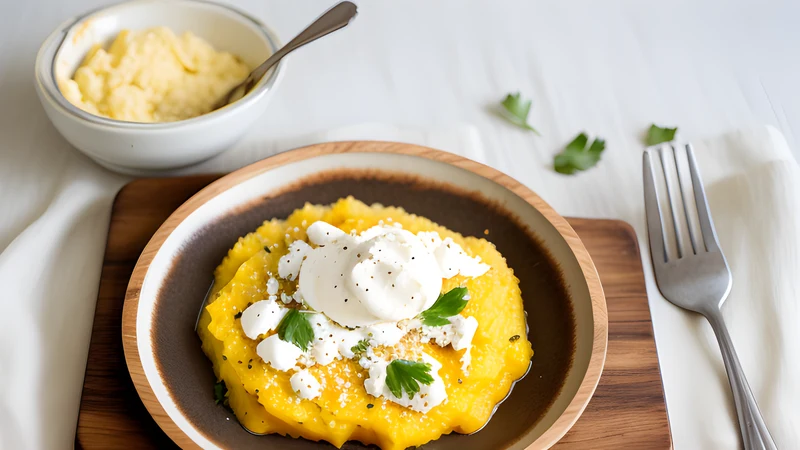
- To serve, layer or top with crumbled brânză and generous spoons of cold smântână. Fry the eggs in butter until the whites are set and the yolks runny, and slide one over each portion. Finish with brown butter and pepper.
How mămăligă differs from Italian polenta
People who know polenta will look at this and shrug that it is the same thing, and technically the porridge is close kin. The difference is cultural and textural. Italian polenta is often served soft and loose, enriched with cheese and butter stirred through until it pours. Traditional mămăligă is cooked firmer and drier, dense enough to turn out of the pot in a solid mound and cut into wedges. The old ritual is telling: firm mămăligă was tipped onto a round wooden board, the fund, and sliced with a length of thread or unwaxed sewing cotton pulled through it rather than a knife, since a blade would drag and tear the dense cake. If you want the full traditional experience, cook it firm and cut it with thread; it genuinely works better than a blade.
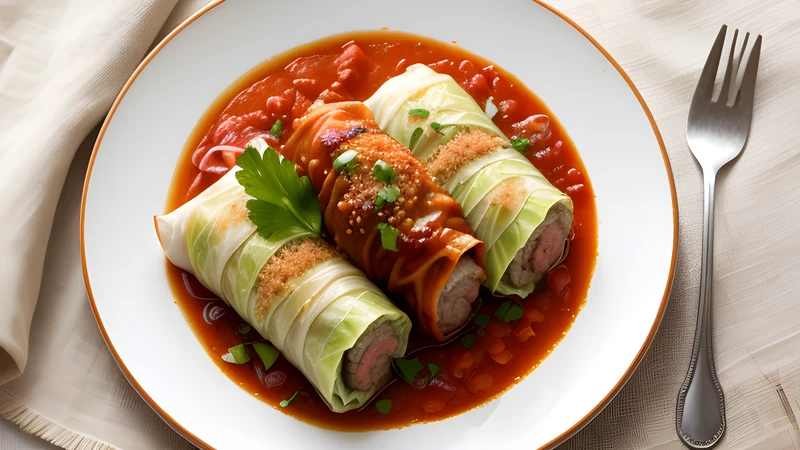
That firmness also lets mămăligă stand in for bread. A slab of it is used to scoop stew, to mop sauce, and to carry cheese, exactly the role bread plays elsewhere. Cooked softer, closer to loose polenta, it becomes a creamy bed for saucier things, and both textures are correct depending on what you are eating it with. For a plate of sarmale, the Romanian cabbage rolls, I want it firm enough to catch the tomato sauce; alongside a soupy stew I cook it softer.
Getting the technique right
The two enemies of good mămăligă are lumps and undercooking. Lumps form when you dump cornmeal into water all at once. The fix is a thin, steady stream whisked in constantly, and a helpful trick is to whisk a small handful into the boiling water first to slightly thicken it, which then suspends the rest of the grains and stops them clumping as they go in. Keep the whisk moving until every grain is wetted, then switch to a sturdy wooden spoon for the long cook.
Undercooking leaves the mămăligă gritty and raw-tasting, with a chalky edge on the tongue. Coarse cornmeal needs a good 25 to 30 minutes of gentle simmering to hydrate fully and lose that rawness, and it needs stirring often so the base does not catch and scorch. You will know it is ready when it thickens to the point that it pulls cleanly away from the sides of the pan as you stir, leaving a brief clean streak, and a spoon stood upright in it stays standing. The porridge should look glossy rather than dull. This is honest, low-tech cooking that rewards attention: stir, watch, taste, adjust.
Salt the water properly from the start, because cornmeal, like pasta, is bland if it is only seasoned at the end. Bear in mind that the brânză you serve with it is very salty, so keep the mămăligă itself moderately seasoned and let the cheese bring the final punch.
Brânză, smântână, and the one small twist
The classic dressing is brânză and smântână. Brânză is a broad Romanian word for cheese, but the one you want here is a salty, tangy sheep’s cheese, ideally brânză de burduf, a soft, sharp, aromatic cheese traditionally matured in a sheepskin or pine bark that gives it a resinous edge. Outside Romania it is hard to find, so a good crumbly feta or a Balkan sheep’s cheese stands in well. Smântână is a thick, slightly soured cream, richer and tangier than crème fraîche though crème fraîche or a good soured cream will do the job.
My small twist, and it is barely a twist because Romanians do it too, is to finish with brown butter and top each portion with a fried egg. Melt a little butter until it turns nutty and pour it over; the toasted flavour lifts the whole plain, starchy base. A fried egg with a runny yolk, called ochiuri, turns mămăligă into a proper meal, the yolk running down into the cornmeal and mingling with the melting cheese and cold cream. Hot cornmeal, cold soured cream, salty cheese, rich yolk, nutty butter: five simple things that together taste like far more than the sum.
Bulz, and the best thing to do with leftovers
If mămăligă has a showpiece dish, it is bulz. You take firm, day-old mămăligă, stuff a nugget of brânză into the middle, roll it into a ball, and either bake or grill it, or in the mountains skewer it and cook it over embers, until the outside crisps and the cheese inside melts to a molten core. Shepherds in the Carpathians make this over open fires, and it is one of those transporting rustic dishes that tastes of woodsmoke and mountain air. Leftover mămăligă firms up in the fridge into a sliceable block, and beyond bulz you can fry slices of it in butter until golden and crisp-edged, a wonderful base for eggs or a stew, or griddle them and serve like polenta chips. Nothing about a pot of mămăligă needs to go to waste.
Storing and reheating
Cooked mămăligă keeps in the fridge for three or four days, setting firm as it cools. It does not reheat well as porridge because it stiffens, so the smart move is to embrace the firmness: slice and fry, make bulz, or crumble it into a pan with a splash of water and butter to loosen it back to a soft mash. It freezes acceptably in slabs, though the texture is best fresh. Made fresh, it takes barely half an hour and costs almost nothing, so I rarely bother saving it for long.
The pot, the spoon and the ceaun
The traditional vessel for mămăligă is the ceaun, a rounded cast-iron cauldron that sits over a fire or hob and heats evenly up the sloping sides, which is exactly what you want for a porridge that scorches easily on a flat, thin base. If you do not own one, use the heaviest, deepest pan you have; a cast-iron casserole is ideal, and a thin aluminium pan is the one to avoid because the cornmeal will catch and burn before the middle is cooked. The stirring implement of choice is a plain wooden spoon or, traditionally, a wooden stick called a făcăleț that was used to beat the porridge smooth. There is a real physical component to cooking firm mămăligă: as it thickens it fights the spoon, and the last few minutes take genuine effort to keep it moving and glossy rather than letting it stick.
There is folklore around the stirring, too. In some regions it was thought unlucky to leave the mămăligă spoon standing in the pot, and a whole vocabulary of household superstition grew up around a dish this central to daily life. None of it changes the cooking, but it tells you how deeply mămăligă was woven into ordinary Romanian existence, eaten daily and surrounded by ritual, proverb and habit.
A note on the cornmeal you buy
Not all cornmeal behaves the same, and it is worth knowing what to look for. You want a coarse or medium grind, sold as mălai in Romanian shops or simply as coarse polenta elsewhere. Fine cornmeal or instant polenta will cook faster but gives a smoother, softer, less characterful result that lacks the pleasant grainy bite of the real thing. Instant, pre-cooked polenta is a compromise for a weeknight and thickens in a few minutes, though it never quite matches the flavour of grain given its full half hour. If you can find stone-ground maize flour, so much the better; it carries more of the sweet, toasty corn flavour that makes plain mămăligă worth eating on its own. Store cornmeal somewhere cool and dry and use it within a few months, as the natural oils in wholegrain maize can turn and go faintly bitter with age.
Variations worth trying
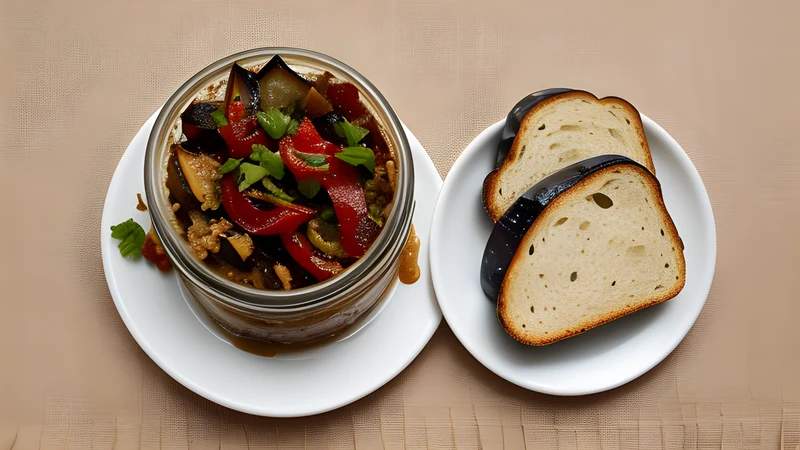
In Moldova and northern Romania you will find mămăligă layered like a bake, cornmeal and brânză and smântână in alternating strata, then warmed through until the cheese softens, sometimes called mămăligă în straturi. A poor-times version was simply mămăligă with a little oil and salt, or with milk poured over as a child’s breakfast. Modern cooks fold grated hard cheese through soft mămăligă for a creamier, polenta-like result, or serve it under a rich mushroom sauce for a vegetarian main. It is also the natural companion to sour, brothy soups; a wedge on the side of the tangy ciorbă de perișoare, the sour meatball soup, or spread with the smoky zacuscă aubergine spread, turns a humble pot into a full Romanian meal.
Cook it once and you will understand why a whole country holds it dear. Mămăligă asks for nothing but cornmeal, water, salt and half an hour of stirring, and it gives back a warm, golden, honest plate that has carried people through far harder winters than ours.
Related Content