Makroud: Semolina and Date Diamonds
The Maghreb's fried, syrup-soaked semolina and date pastry
Contents
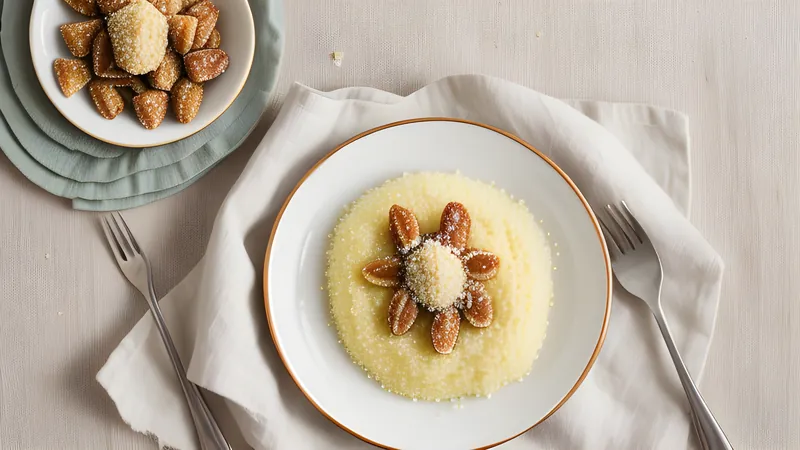
↓ Jump to recipeMakroud is the diamond-shaped semolina and date pastry that appears at nearly every North African celebration table — Eid, weddings, Ramadan iftars — recognisable by its geometric cut and the way syrup pools slightly in the shallow indent left by scoring the dough before frying. Versions exist right across Algeria, Tunisia and Libya, with the deepest association tied to Kairouan in Tunisia, though Algerian households, particularly in the east, treat it as just as much their own.
Makroud: Semolina and Date Diamonds
Ingredients
- 500g medium semolina (not fine)
- 150g unsalted butter, melted, plus more if needed
- 1/2 tsp salt
- 1 tsp baking powder
- 1/4 tsp ground cinnamon
- 150ml lukewarm water, plus more as needed
- 1 tbsp orange blossom water
- 400g pitted dates, soft, roughly chopped
- 1 tsp ground cinnamon (for the filling)
- 1/4 tsp ground cloves
- 2 tbsp neutral oil
- Vegetable oil, for deep-frying
- 300g granulated sugar
- 200ml water (for the syrup)
- 1 tbsp lemon juice
- 2 tbsp honey
- 1 tbsp orange blossom water (for the syrup)
Method
- Mix the semolina, salt, baking powder and cinnamon in a large bowl, then rub in the melted butter until it resembles damp sand.
- Cover and rest the semolina mixture for 20 minutes to let the butter absorb fully.
- Meanwhile make the filling: warm the dates with the oil, cinnamon and cloves in a pan over low heat, mashing with a fork until it forms a smooth, thick paste. Cool slightly.
- Add the lukewarm water and orange blossom water to the rested semolina, mixing gently until a soft, pliable dough forms. Do not overwork.
- Divide the dough into 4 portions. Roll each into a rectangular log about 6cm wide and 1.5cm thick.
- Using your thumb or the handle of a spoon, press a groove lengthways down the centre of each log.
- Roll the date paste into logs matching the groove length and press into the grooves, then fold the dough over to enclose the filling completely, sealing the seam.
- Flatten each filled log gently and score diagonal lines across the top to mark diamond shapes, without cutting all the way through yet.
- Heat the syrup ingredients (sugar, water, lemon juice, honey, orange blossom water) in a saucepan, bring to a simmer, and cook for 8-10 minutes until slightly thickened. Keep warm.
- Heat oil for deep-frying to 170C. Cut the scored logs fully into diamonds and fry in batches for 4-5 minutes, turning occasionally, until deep golden all over.
- Lift the hot makroud straight into the warm syrup and soak for 2-3 minutes, turning to coat.
- Remove with a slotted spoon and cool completely on a wire rack before serving.
The double cook: fried, then syrup-soaked
Two techniques define makroud, and both matter. First, the semolina shell is deep-fried, which gives it a firm, slightly crisp exterior distinct from a baked pastry’s softer crumb — frying also seals the shell enough to hold the soft date filling without leaking. Second, the hot fried pastry goes straight into a warm syrup bath, which the shell absorbs readily while still hot, the same principle behind chebakia’s honey soak: heat plus a porous, freshly fried surface equals maximum syrup absorption.
Some households bake makroud instead of frying it, particularly for a slightly lighter version, but the texture changes meaningfully — baked makroud has a drier, more biscuit-like shell that doesn’t take on syrup with quite the same eagerness, since it lacks the fine surface pores that hot oil creates. Fried is the more traditional and, most agree, the better-tasting version, even though it’s messier to make.
Semolina choice matters here more than in most recipes
Medium semolina, rather than fine, is specified deliberately. Fine semolina, the kind used for harcha, gives a softer, more delicate crumb that doesn’t hold the firm, slightly grainy shell structure makroud needs to stay intact around a soft filling through frying and syrup soaking. Medium semolina has more bite and body, giving the shell enough structural integrity to be handled, cut, fried and dunked without falling apart. If only fine semolina is available, the finished pastry will be noticeably softer and more fragile — still edible, just a different texture than the classic.
The date filling: paste, not chunks
The date filling should end up as a smooth, cohesive paste rather than distinguishable chunks, achieved by gently warming the dates with a little oil and mashing thoroughly. Warming softens the dates enough to mash easily even if they’re on the firmer side, and the small amount of oil worked through prevents the paste from seizing into a sticky, unworkable clump. Cinnamon and cloves in the filling are traditional and give the dates a warm, slightly spiced backbone that plays well against the syrup’s citrus and floral notes.
Using genuinely soft, moist dates (Medjool or a similar variety) makes the mashing step considerably easier than dry dates, which need soaking in warm water for ten minutes first to soften enough to work.
Shaping without losing the filling
The groove-and-fold method — pressing a channel into the dough log, laying in the date paste, then folding the dough over to seal — is the traditional shaping technique and worth doing carefully, since a poorly sealed seam is where filling leaks out during frying, both messing up the oil and leaving you with an underfilled pastry. Press the seam firmly closed with your fingers before scoring the diamond pattern, and don’t rush the sealing step even though it adds a few minutes to an already lengthy process.
Scoring the diamonds before frying, then cutting all the way through only once the pattern is marked, keeps the shapes clean and prevents the dough from distorting under the knife the way it would if you tried to cut fully formed diamonds from an unmarked log.
Frying and syrup temperature both matter
Oil at 170°C fries the makroud through in 4-5 minutes without burning the exterior — check with a thermometer, since guessing tends to run either too cool (greasy pastries) or too hot (burnt shell, raw filling). The syrup should be warm, not boiling, when the fried pastries go in; a rolling boil risks the sugar crystallising on contact with the pastry’s surface rather than soaking in evenly.
Storage and variations
Makroud keeps exceptionally well — stored in an airtight container at room temperature, it holds its texture and flavour for up to two weeks, the syrup coating acting as a natural preservative much like it does for chebakia. It doesn’t need refrigeration and, in fact, keeps better without it, since cold temperatures can cause the syrup to crystallise on the surface.
For a walnut variation common in some Algerian households, mix finely chopped walnuts into the date paste for extra texture and a slightly less purely sweet filling. A lighter version reduces the syrup soak to just a minute, giving a less saturated, crisper finished pastry for anyone who prefers restraint over the fully drenched classic. Makroud sits naturally on the same dessert plate as chebakia and a pot of mint tea, the two together forming the backbone of most North African sweet tables during Ramadan and beyond.
Kairouan’s claim, and how the name travels
Kairouan, one of Tunisia’s oldest cities and a historic centre of Islamic scholarship, is widely credited as makroud’s origin point, and Kairouani makroud is still considered by many Tunisians to be the benchmark version — often made with a particularly rich, generously spiced date filling and a syrup leaning more heavily on honey than plain sugar. The name itself, makroud, is thought to derive from an Arabic root related to a diamond or lozenge shape, a direct reference to the traditional cut rather than to any ingredient.
As the pastry spread across the Maghreb, regional variations multiplied. Algerian versions, particularly in the east near the Tunisian border, stay close to the Kairouani style, while western Algerian and Moroccan versions sometimes swap the date filling for almond paste entirely, producing a related but distinct pastry that keeps the same shape and technique but a completely different flavour profile inside. Both the date and almond versions are legitimate; if you see “makroud aux amandes” on a Moroccan menu, that’s the almond version, and it’s worth trying as a genuinely different pastry rather than assuming it’s a lesser substitute for the date original.
Why orange blossom water appears twice
As with chebakia, orange blossom water shows up in both the dough and the syrup here, and each addition serves a different purpose. In the dough, worked in alongside the water that brings the semolina together, it’s a subtle background note that survives frying only faintly — you likely won’t identify it consciously in the finished shell, but its absence would be noticeable by comparison. In the syrup, it’s far more assertive, since the fried pastry absorbs the syrup directly and the floral note becomes one of the dominant flavours in the final bite alongside date sweetness and semolina’s faint nuttiness. Buy a genuine culinary-grade orange blossom water; the cheaper cosmetic versions sold in some shops can carry a soapy off-note that’s particularly noticeable in a syrup this concentrated.
Common mistakes and how to avoid them
The most frequent problem is filling that leaks out during frying, which traces back almost always to an improperly sealed seam. After folding the dough over the date paste, run a finger firmly along the entire seam, checking for any gaps, and press them closed before scoring the diamond pattern. A second common issue is a shell that’s tough rather than tender, usually the result of overworking the dough once the water is added — mix only until the dough just holds together, resisting the urge to knead it the way you would a bread dough, since semolina dough toughens quickly with extra handling.
If the finished makroud tastes greasy rather than crisp, the frying oil likely wasn’t hot enough, or the pastries sat too long in the oil before the syrup soak, giving the shell time to absorb oil rather than simply cooking through. A reliable thermometer removes most of the guesswork here, and it’s worth the small investment if North African fried sweets are going to be a recurring project in your kitchen.
Scaling and make-ahead options
This recipe makes roughly two dozen diamonds, a manageable batch for a household, but makroud freezes exceptionally well both before and after frying, which makes it a good candidate for doubling if you’re making it for a celebration. Unfried, filled and scored logs can be frozen on a tray until solid, then bagged and fried directly from frozen, adding a minute or two to the frying time to compensate. Already-fried and syrup-soaked makroud also freezes well for up to two months; thaw at room temperature rather than reheating, since the syrup coating means a microwave will turn the exterior unpleasantly soft rather than restoring any crispness.
Serving suggestions
Serve makroud at room temperature, never straight from the fridge, since chilling dulls both the shell’s texture and the syrup’s flavour considerably. A tray of mixed makroud and chebakia alongside dates and a pot of strong mint tea covers most of what a North African dessert spread needs, and the contrast between makroud’s firmer, syrup-soaked bite and chebakia’s thin, honey-drenched crunch keeps a mixed plate interesting rather than repetitive.
Related Content