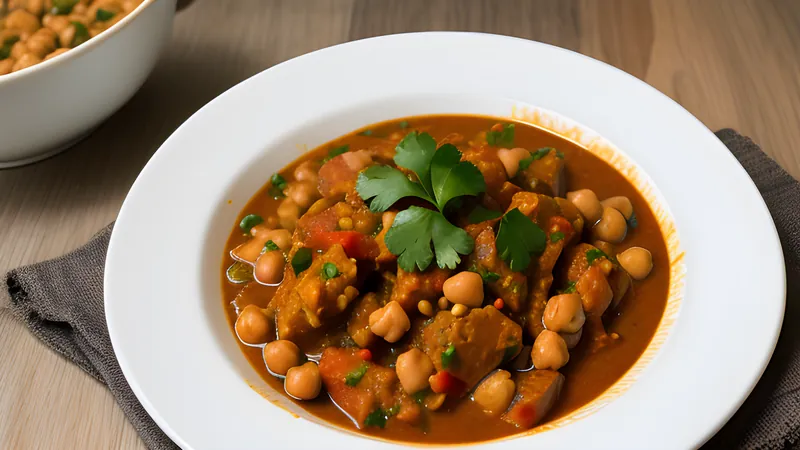
Mafé: The Groundnut Stew
The West African peanut stew that made a cash crop taste like home
Contents
↓ Jump to recipeThe first time I made mafé I did the one thing every recipe warns against, which is walk away from the pot. Twenty minutes later the bottom had scorched and a bitter, roasted note had crept up through the whole sauce. I salvaged it by pouring the good top layer into a clean pot, but I never forgot the lesson: a peanut sauce is basically a suspension of fat and protein, and it will sink and stick the moment you stop paying attention. Stir it like you mean it and mafé rewards you with one of the most satisfying stews in the West African repertoire.
Mafé: The Groundnut Stew
Ingredients
- 1.2 kg beef chuck or shin, cut into 4 cm chunks
- 3 tbsp groundnut (peanut) oil
- 2 large onions, finely chopped
- 6 garlic cloves, crushed
- 1 thumb ginger, grated
- 3 tbsp tomato purée
- 400 g tin chopped tomatoes
- 250 g smooth unsweetened peanut butter (100% peanuts)
- 1.2 litres beef stock or water
- 2 bay leaves
- 1 Scotch bonnet, left whole
- 2 carrots, cut into batons
- 1 sweet potato, in 3 cm cubes
- half a small white cabbage, in wedges
- 1 tbsp fish sauce or 1 stock cube
- 1 tsp salt, plus more to taste
- juice of half a lime, to finish
- a handful of roasted peanuts, chopped, to finish
Method
- Season the beef with 1 tsp salt. Heat the oil in a heavy pot over high heat and brown the beef hard on two sides in batches, about 8 minutes total. Remove and set aside.
- Lower to medium. Cook the onions in the same pot for 10 minutes until soft and golden, scraping the fond. Add garlic and ginger, cook 1 minute.
- Stir in the tomato purée and fry it for 3 minutes until it darkens and smells sweet. Add the tinned tomatoes and cook 5 minutes until jammy.
- In a bowl, loosen the peanut butter with a ladleful of warm stock until pourable. Stir it into the pot along with the rest of the stock, bay leaves and whole Scotch bonnet.
- Return the beef and any juices. Bring to a bare simmer, cover partly, and cook 90 minutes, stirring every 20 minutes so the peanut sauce does not catch.
- Add the carrots, sweet potato and cabbage. Simmer uncovered 30 minutes until the vegetables are tender and the oil beads orange on the surface.
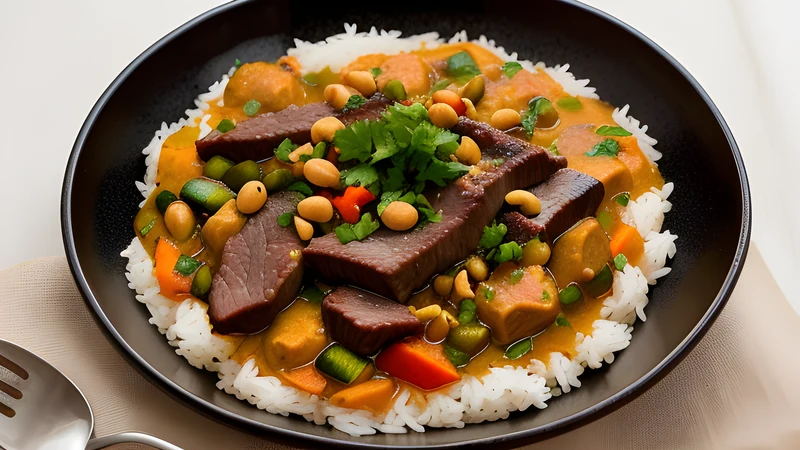
- Fish out the Scotch bonnet and bay. Season with fish sauce and salt. Finish with lime juice and scatter chopped roasted peanuts. Serve over white rice.
Where the groundnut came from
Mafé — also written maafe, and known in Bambara as tigadèguèna, literally “peanut butter sauce” — belongs to the Mandinka and Bambara peoples of Mali, and it travelled outward along the same trade and migration routes that carried Mande culture across the Sahel. Today you will eat versions of it in Senegal, the Gambia, Guinea, Côte d’Ivoire, Mauritania and Burkina Faso, each cook insisting theirs is the correct one.
The strange thing about a dish so deeply West African is that its defining ingredient is an import. Peanuts are native to South America. Portuguese traders carried them across the Atlantic in the sixteenth century, and the plant took to the light, sandy soils of the Sahel so readily that within a few generations it had rewritten the region’s agriculture. By the nineteenth century the groundnut was Senegal’s great colonial cash crop, grown for export as oil, and the surplus fed a home cooking tradition that turned the humble legume into a braising medium. There is a quiet irony in a plantation crop becoming the taste of the family Sunday pot, and mafé sits right at that junction.
What you are making is a braise where ground peanuts do the work that flour or cream does elsewhere: they thicken, they enrich, and they carry the spice and tomato through the whole dish. Get the balance right and it is savoury, faintly sweet, gently fiery from the Scotch bonnet, with beef so soft it gives way under a spoon.
The one twist: toast the tomato purée hard
My small change to the classic is stubbornness about the tomato purée. Most weeknight versions stir it in and move on. I fry it for a full three minutes until it turns from bright red to a deep brick colour and smells almost sweet. This caramelises the sugars and drives off the tinny raw note, and it gives the finished mafé a rounder, deeper base that plain peanut butter cannot supply on its own. Combined with a good hard sear on the beef, it is the difference between a sauce that tastes flat and one that tastes cooked.
The peanut butter itself matters more than people expect. Use one made from 100% peanuts, with no added sugar, palm oil or emulsifiers. Sweetened supermarket spreads throw the whole balance off and can make the stew cloying. If you can find raw or lightly roasted peanuts and grind your own paste, better still, but a good jar of unsweetened smooth peanut butter is honest and works.
Method, and why each step is there
Brown the beef properly. Chuck and shin both have the collagen that melts into silk over two hours, and the browned crust is your first layer of flavour. Do it in batches over real heat; crowd the pan and the meat steams grey.
Sweat the onions slowly. Ten minutes, until they slump and gild. This is the sweetness that balances the acidity of the tomato and the earthiness of the peanut. Rushing it leaves a raw allium bite that never quite leaves the sauce.
Loosen the peanut butter before it goes in. Cold peanut butter dropped straight into hot liquid seizes into lumps. Slacken it in a bowl with a ladle of warm stock until it pours, then stir it through — you get a smooth emulsion that stays smooth.
Simmer low and stir often. This is the whole game. Keep the pot at a lazy blip well under a rolling boil, and stir every twenty minutes, dragging a spoon across the base. A hard boil splits the sauce so the oil separates and the solids catch and burn. The seeping of orange oil to the surface at the end is a good sign — that is the peanut fat rendering out, and in Senegal that glossy slick is proof the cook did it right. You can spoon a little off if it looks excessive, but a thin bead is how mafé should look.
Building the plate
Mafé is almost always served over plain white rice, which soaks up the sauce and calms the chilli. In Senegal the same peanut logic runs through a whole family of dishes — the tomato-and-rice grandeur of thieboudienne and the sharp onion braise of yassa poulet sit on the same table, and a good cook keeps all three in rotation. If you want the peanut theme to carry into a starter or a snack, the crushed-nut crust of Nigerian suya uses the groundnut in a completely different register, dry and spiced rather than saucy.
The vegetables are flexible. Cassava, pumpkin, okra and turnip all appear in regional versions. I lean on sweet potato, carrot and cabbage because they hold their shape and add gentle sweetness, but use what is firm and in season. Add the harder roots first and the leafy or quick ones later so nothing collapses to mush.
Variations worth knowing
The Gambian version tends drier and darker, with more tomato and a heavier hand on the peanut so it clings to the rice. Malian tigadèguèna often skips the tomato altogether, letting the groundnut and onion stand alone for a paler, nuttier sauce; try it once and you will understand how much the tomato is doing in the Senegalese style. Lamb works beautifully in place of beef and cooks a little faster, around seventy minutes. A vegetable-only mafé built on sweet potato, aubergine and chickpeas is common during fasts and is genuinely good in its own right — the peanut carries enough body that you never miss the meat. Whatever route you take, the two non-negotiables are unsweetened peanut butter and patience at the stove.
The nut, the oil and the pantry
The peanut arrives in this dish in two forms, and both are worth thinking about. The braising medium is peanut butter, and the frying fat is ideally groundnut oil, which carries a faint toasted-nut note that ties the whole pot together; a neutral oil works, but if you keep a bottle of groundnut oil for this and for frying plantain it earns its shelf space. The paste itself is where quality tells. West African cooks who grind their own start with raw or lightly roasted peanuts and pound them to a coarse, slightly oily butter that still tastes of the field. If you can find a Ghanaian or Nigerian brand of pure groundnut paste at an African grocer, it has a deeper, rawer flavour than the smooth Western jars and is closer to what a Malian kitchen would use. Whatever you buy, check the label reads peanuts and perhaps salt, with none of the sugar or hydrogenated oil that turns the stew cloying and can make it split.
Roast peanuts do a third job at the end. A handful, chopped and scattered over the finished bowl, brings back the toasted crunch that long braising cooks out of the paste, and it signals to anyone eating that this is a groundnut dish from the first spoonful. Toast them dry in a pan until they colour, let them cool, then chop them coarse so they stay crisp against the soft sauce.
A word on the Gambian cousin, domoda, which leans sharper and more sour, sometimes with a spoon of tamarind or a squeeze of lemon stirred through the sauce itself rather than only at the end. If your household likes a tangier register, borrow that trick: a teaspoon of tamarind paste loosened into the pot in the final ten minutes gives the peanut richness something bright to lean on, and it stops a large pot tasting one-note by the second helping.
Tips, faults and fixes
If the sauce tastes bitter, you almost certainly caught the bottom. Do not scrape it up — decant the good sauce into a clean pot and carry on, and lower the heat.
If it tastes flat, it wants salt and acid. The lime at the end is not decoration; that squeeze of sharpness lifts the whole thing and stops the peanut richness dragging. Fish sauce or a stock cube adds the savoury depth that makes people ask what is in it.
If it is too thick, loosen with hot stock or water a splash at a time. Mafé thickens as it sits and thickens more overnight. If it is too thin, simmer uncovered for another ten minutes; the peanut solids will tighten as water leaves.
For heat, leaving the Scotch bonnet whole gives you its floral perfume and a mild warmth. Pierce it or break it open only if you want the full assault. Fish it out before it disintegrates.
Make ahead and storage
Mafé is better on day two. The peanut and spice marry, the beef relaxes, and the flavour rounds out. Cool it quickly, keep it covered in the fridge for up to three days, and reheat gently with a splash of water, stirring so it does not catch. It freezes well for up to three months; the texture can look slightly grainy on thawing but comes back together with a good stir over low heat.
A large pot of this feeds a table generously and costs very little — cheap braising beef, an onion, a jar of peanut butter and a tin of tomatoes. That was always the point. The groundnut arrived as an export crop and stayed as the taste of a shared meal, and two hours of unhurried stirring is a small price for a bowl this generous.
Related Content