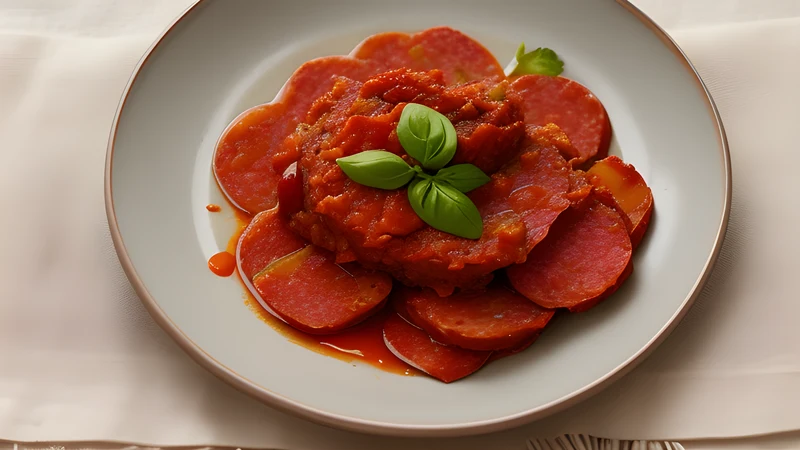
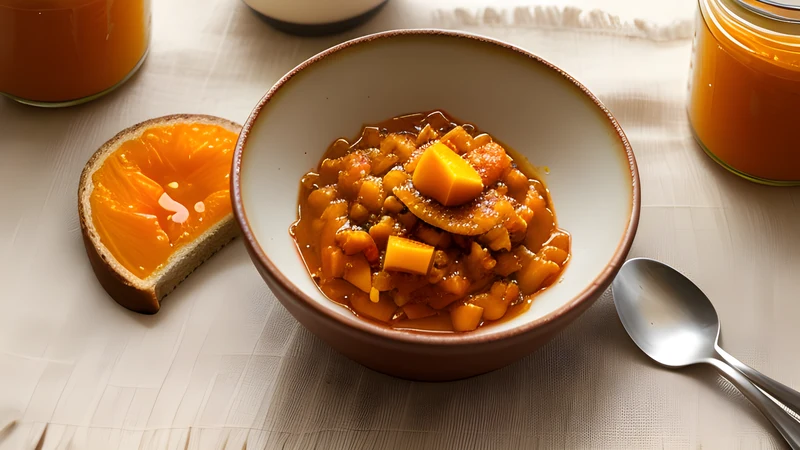
Lyutenitsa: The Bulgarian Pepper and Aubergine Relish
An autumn afternoon, a lot of peppers, and a pot that cannot be hurried
Contents
↓ Jump to recipeThere is a smell that arrives in Bulgarian towns in late September and stays for about three weeks. It is peppers burning. Families buy them by the sack — twenty, thirty kilos — and roast them in the yard on a chushkopek, a specialised electric pepper roaster that exists for this one purpose and sits in the cellar for the other eleven months of the year. The whole street smells of it. Then everyone spends a Saturday peeling, mincing and stirring, and the result goes into jars that will be opened all winter.
This is lyutenitsa, and it is the closest thing Bulgaria has to a household religion. Every family’s is different, everyone’s mother’s is best, and the arguments are ferocious and specific.
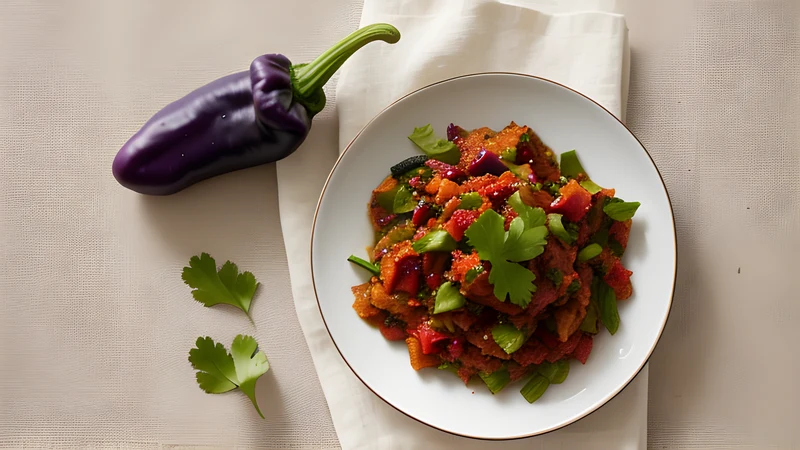
Lyutenitsa: The Bulgarian Pepper and Aubergine Relish
Ingredients
- 2 kg red kapia peppers, or long sweet red peppers
- 800 g aubergines (2 large)
- 1 kg ripe plum tomatoes
- 2 medium onions (about 300 g), finely chopped
- 6 garlic cloves, crushed
- 120 ml cold-pressed sunflower oil
- 2 tbsp red wine vinegar
- 1 tbsp caster sugar
- 1 tbsp fine salt, plus more to taste
- 1 tsp hot paprika, or 2 fresh red chillies, finely chopped (optional)
- 1 tsp ground black pepper
- 1 tsp dried summer savory (chubritsa), optional
Method
- Heat the oven to 240C fan / 260C conventional, or light a barbecue. Roast the peppers on a tray for 25–30 minutes, turning once, until the skins are blackened and collapsed.
- Roast the aubergines whole alongside them for 35–40 minutes, until the skins are charred and they have completely deflated.
- Put the peppers in a large bowl, cover tightly, and leave 20 minutes. Leave the aubergines to cool on a rack, cut side down once split, to drain.
- Score a cross in the base of each tomato, cover with boiling water for 60 seconds, drain, and slip off the skins. Halve, scoop out and discard the seeds, and chop the flesh.
- Peel the peppers, discarding skins, stems and seeds. Do not rinse them. Chop roughly.
- Split the aubergines, scoop out the flesh, discard the skins, and chop. Discard any liquid that has drained out.
- Pass the peppers and aubergine through a mincer on the coarse plate, or pulse in a food processor to a coarse, uneven texture. Never purée smooth.
- Heat the oil in a large, heavy, wide pan over a medium heat. Cook the onions with 1 tsp of the salt for 12 minutes until soft and golden.
- Add the garlic and cook 1 minute. Add the tomatoes and cook 20 minutes, stirring, until most of the liquid has gone.
- Add the minced pepper and aubergine, the remaining salt, the sugar and the black pepper. Bring to a bare simmer.
- Cook uncovered for 90–120 minutes over a low heat, stirring every 5–10 minutes and scraping the base, until a spoon dragged through leaves a channel that holds for three seconds.
- Stir in the vinegar, the paprika or chilli and the savory. Cook 10 minutes more. Taste and adjust salt.
- Ladle into sterilised jars, seal, and process in a boiling water bath for 20 minutes, or refrigerate and eat within 3 weeks.
What makes it Bulgarian
The name comes from lyut — hot, spicy — which is a lie, or at least a historical relic. Most lyutenitsa is barely spicy at all. The heat presumably mattered more when the relish was closer to its ancestors, and the name stuck the way names do.
It belongs to a Balkan family of autumn pepper preserves that includes Serbian and North Macedonian ajvar and Romanian zacuscă, and the differences between them are real and worth knowing. Ajvar is peppers and aubergine, minced coarse, with no tomato — it is a pepper spread. Zacuscă leans hard on aubergine and often includes mushrooms. Lyutenitsa is the one with tomato in it, which makes it looser, sweeter, more brick-red than the deep vermilion of ajvar, and gives it a jammy quality the others lack.
All three exist for the same reason: a preserving culture in a place with a short, violent glut. Peppers ripen across a few weeks in September, they cannot be stored fresh, and until very recently a household needed a plan for winter. Cooking them down concentrates them, the sugar and salt and acid do preservation work, and a properly processed jar sits in the cellar until March.
The vessel of that tradition was the kazan, a wide copper cauldron over a wood fire in the yard, stirred with a long wooden paddle by whoever was losing the argument about whose turn it was. Batches of ten or fifteen litres were normal. The wide, shallow shape matters enormously, and I will come back to that.
The pepper is the recipe
Kapia peppers are the correct pepper, and if you can source them, everything else about this becomes easier. They are long, tapered, thin-walled and dark red — a Balkan cultivar grown across Bulgaria, Serbia and Turkey, harvested fully ripe. Compared with a bell pepper they are noticeably sweeter, less watery, and much thinner in the wall, which means they char faster and give up less liquid.
A red bell pepper will work. It will take longer to reduce, because it carries more water, and the result will be a shade less sweet. Do not use green peppers under any circumstances; unripe peppers bring bitter pyrazines that concentrate along with everything else over two hours and the result is genuinely unpleasant.
Roast them until they look destroyed. This is the instruction people ignore. Blackened, collapsed, weeping — that is done. A pale, softened pepper has none of the smoke and none of the browning that makes lyutenitsa taste like anything more than sweet tomato. The Maillard reaction on the pepper skin and the sugars caramelising underneath it are doing most of the flavour work here, and both need real heat.
And do not rinse the peeled peppers, ever. Every Bulgarian grandmother has watched someone do this at a sink and had to leave the room. The water washes away the smoke compounds sitting on the flesh, and it adds water you will then spend forty minutes boiling off. Peel them dry, with your thumbs, and accept that your hands will be filthy.
Why it takes two hours and why you cannot rush it
Lyutenitsa is a reduction. You start with roughly 3.8 kg of wet vegetable matter and you finish with about 1.2 litres of paste. Almost all of the loss is water leaving as steam.
Evaporation rate is governed by surface area, not by heat input. This is the whole game. A tall, narrow saucepan with a small opening will take four hours and probably catch on the base; a wide, shallow, heavy pan — 30 cm or more — will do it in ninety minutes. If you have a preserving pan or a big sauté pan, use it. The traditional copper kazan was wide and shallow for exactly this reason, and Bulgarian families were not doing thermodynamics on purpose. They just knew it worked.
Keep the heat low. The temptation is to crank it and get it over with, and it fails, because as the mixture thickens its convection slows and the layer against the base stops moving. Sugars from the peppers and tomatoes will scorch there, and scorched lyutenitsa tastes bitter throughout — you cannot stir the burn away, and you cannot separate it out. A bare simmer, occasional lazy bubbles breaking the surface, and a wooden spoon scraping the base and the corners every five to ten minutes.
It spits. As it thickens, bubbles trap steam under the paste and release it violently, and it will burn you. Wear long sleeves. Bulgarian cooks use a splatter guard or simply stand back.
The test is mechanical. Drag a spoon across the base of the pan; a channel should open and hold its shape for about three seconds before the paste creeps back. If it closes instantly, keep going. If nothing moves at all, you have gone too far — add 50 ml of water and stir it back.
The finishing order matters
Salt and sugar go in early, with the pepper and aubergine. They need the full reduction to distribute and to do their osmotic work.
Vinegar, chilli and savory go in at the end, for ten minutes only. Acetic acid is volatile; boil vinegar for ninety minutes and most of it leaves, taking the brightness with it and leaving only a dull sourness. Late addition keeps the top note. The same applies to the paprika or chilli — capsaicin is stable enough but the aromatics around it are not.
The sugar is worth defending. One tablespoon in 1.2 litres balances the acidity of the tomato and pushes the pepper’s own sweetness forward. Leave it out and the relish tastes thin and sour. Add three times as much, as some commercial jars do, and you have made pepper jam.
The order of operations
Set aside an afternoon. The active work is maybe forty-five minutes, spread across three hours, and it does not reward doing something else in another room.
Oven to 240C fan, as hot as it goes. Two kilos of peppers across two trays in a single layer, and the aubergines whole on a third — prick them once each with a knife so they do not explode. Peppers take 25 to 30 minutes, turned once at the halfway point. Aubergines take 35 to 40 and are done when they have visibly collapsed in on themselves like a punctured ball.
Peppers straight into a big bowl, covered tight with a plate or a tea towel, twenty minutes. Aubergines onto a rack, split lengthways, cut side down, and left to drain — a surprising amount of dark liquid comes out and it is bitter, so let it go.
While that happens, the tomatoes. Cross scored in the base, sixty seconds under boiling water, drained, skins slipped off. Halve, scoop the seeds and the watery gel around them into the bin, chop the flesh. Seeding is worth the five minutes: it is the wettest and most acidic part of the tomato and removing it saves you twenty minutes of boiling later.
Peel the peppers with your thumbs — dry, no tap — pulling out stems and shaking out seeds. Scoop the aubergine flesh from the skins. Both go through a mincer on the coarse plate into a bowl, or into a food processor for six sharp pulses.
Now the pan. The widest, heaviest thing you own. Oil in, onions and a teaspoon of salt over a medium heat for twelve minutes until soft and going gold at the edges. Garlic, one minute. Tomatoes in, twenty minutes of steady cooking until the pan looks like thick sauce rather than soup.
Then the pepper and aubergine, the rest of the salt, the sugar, the black pepper. Bring it to a bare simmer and settle in. Ninety minutes minimum, stirring every five to ten, scraping the base and getting into the corners where it wants to catch. It will darken from bright red to brick, and the surface will go from liquid to matte.
Vinegar, chilli and savory for the last ten minutes. Taste, salt again — it will need more than you think, because 1.2 litres of concentrated vegetable takes a lot.
Jars, sterilised, filled to within a centimetre of the top, sealed, twenty minutes in a boiling water bath if you want them to keep.
Failure modes
Bitter. Green or underripe peppers, or a scorched base. Both irreversible.
Watery, will not thicken. Wrong pan shape, or you rinsed the peppers, or you used bell peppers and did not allow extra time.
Smooth and gluey. You used a blender. Lyutenitsa needs visible texture — flecks, threads, a coarse grind. A mincer on the coarse plate is the traditional tool and the right one; a food processor pulsed six or seven times is acceptable; a blender is a disaster.
Tastes of nothing much. Under-roasted peppers, undersalted, or you skipped the aubergine. The aubergine contributes very little flavour and an enormous amount of body — it is the thickener, and its flesh brings smoke from the char. Roast the aubergines whole until they collapse completely, and let the flesh drain, because that bitter dark liquid does you no favours. The same technique underpins baingan bharta.
Mould on a jar in January. Under-processed. Twenty minutes in a boiling water bath, jars properly sterilised, lids new. If you are not confident, skip preserving entirely and keep it in the fridge for three weeks.
Eating it
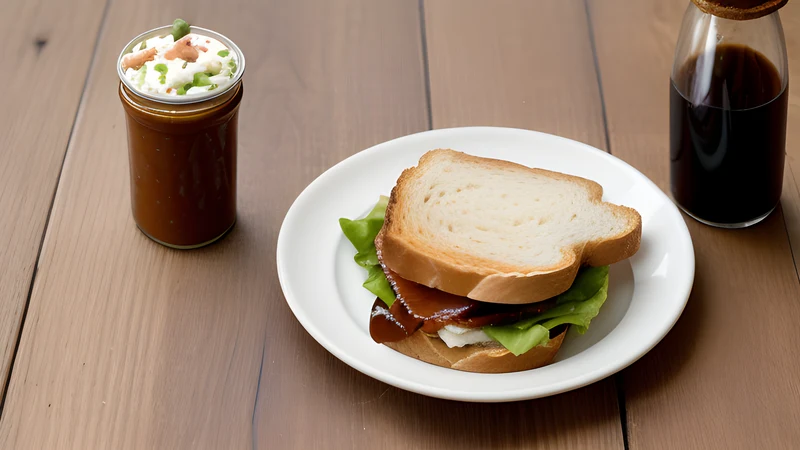
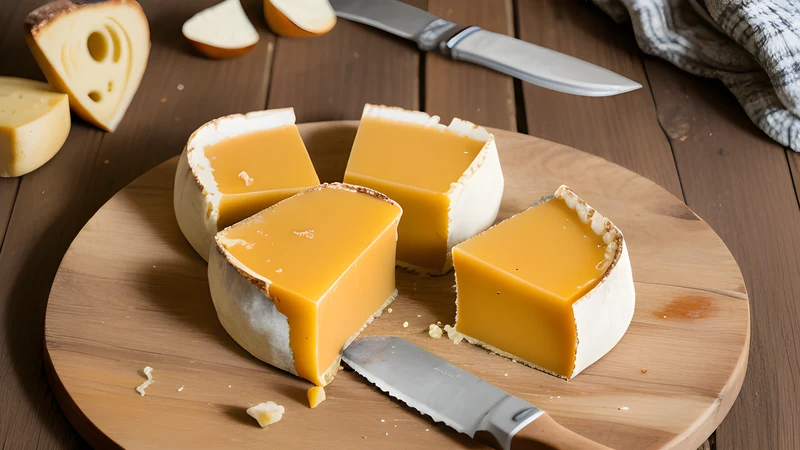
On bread, thickly, with a slab of sirene on top. That is the canonical Bulgarian breakfast and it is very hard to improve. It goes into sandwiches, alongside grilled meat, stirred into a kavarma at the end, spread under a fried egg, or spooned next to a wedge of banitsa.
Make the full batch. It is two hours of work whether you make one jar or four, the peppers are cheap in season, and you will get through it faster than you expect.
Related Content