Lomo Saltado: The Chifa Stir-Fry
Peru's beef stir-fry cooked in a wok, served with chips and rice
Contents
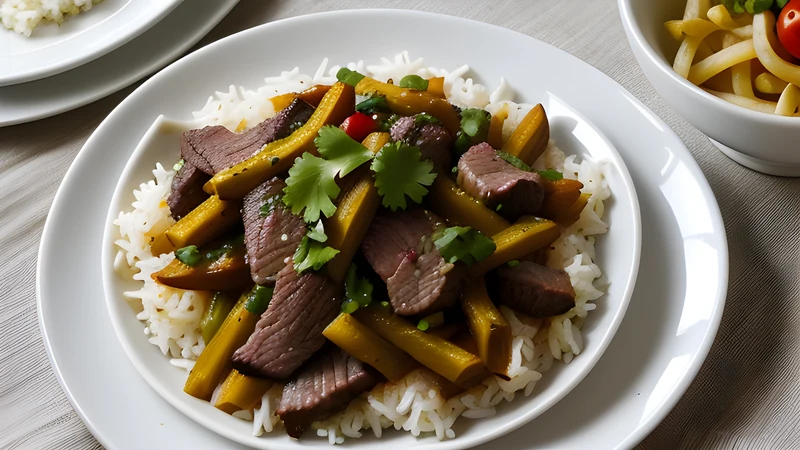
↓ Jump to recipeThe first time I ate lomo saltado I could not work out why there were chips and rice on the same plate. It felt like a mistake, or a hedge. Then I understood: the chips go into the wok with the beef, so they soak up the soy-and-vinegar sauce and go half-crisp, half-soft. The rice is there to catch what falls off. Once you have eaten it that way, the double starch stops looking like indecision and starts looking like the whole point.
This is Peru’s most-cooked dish, and it is a stir-fry, which surprises people who expect ceviche and quinoa. The word saltado means tossed or jumped in the pan, and it comes straight out of a Cantonese wok. My twist here is small and structural: I sear the beef in two hard batches rather than one crowded one, and I make a proper sauce in the pan with the fond instead of just sloshing soy over the top. It is the difference between grey stewed beef and beef with a lacquered edge.
Lomo Saltado: The Chifa Stir-Fry
Ingredients
- 600g beef sirloin or rump, cut into 1cm-thick strips
- 2 large red onions, cut into thick wedges
- 2 firm tomatoes, deseeded and cut into wedges
- 1 yellow chilli (ají amarillo), deseeded and sliced, or 1 tbsp ají amarillo paste
- 3 garlic cloves, finely chopped
- 3 tbsp light soy sauce
- 3 tbsp red wine vinegar
- 1 tbsp aji amarillo paste (extra, optional, for the sauce)
- Small bunch coriander, roughly chopped
- 4 tbsp neutral oil (sunflower or rapeseed)
- 500g floury potatoes (Maris Piper), cut into chips
- Steamed white rice, to serve
- Salt and black pepper
Method
- Cut the potatoes into 1cm chips and roast at 220C fan with a little oil for 30 to 35 minutes (or air-fry 20 minutes at 200C) until crisp. Have them hot and ready. Steam the rice.
- Season the beef strips with salt and plenty of black pepper and dry them again on kitchen paper.
- Set a wok or large heavy frying pan over the highest heat with 2 tbsp oil. When it just begins to smoke, sear half the beef in a single layer for 45 seconds, toss 30 seconds until browned outside and pink within, and remove. Repeat with the second batch.
- Add the last of the oil, throw in the onion wedges and cook hard for 1 minute until singed but still crunchy. Add the garlic and aji amarillo and stir 30 seconds, then the tomato wedges for 1 minute until softened but holding shape.
- Return the beef and its juices. Pour the soy sauce and vinegar around the edge of the pan and toss hard for 30 to 45 seconds. Kill the heat.
- Fold through the coriander and the hot chips at the last second so the chips catch the sauce without going soggy. Serve at once with the steamed rice alongside.
Chifa: when Canton met Lima
Lomo saltado is the flagship dish of chifa, the Chinese-Peruvian cooking that grew out of one of the largest Chinese migrations in the Americas. From the 1850s, tens of thousands of Cantonese labourers arrived in Peru, many under brutal indenture contracts to work the coastal cotton and sugar estates and mine guano on the islands. When those contracts ended, a large community settled in Lima, and by the late nineteenth century the streets around the Central Market had become the Barrio Chino.
The cooks among them did what migrant cooks always do: they used the technique they knew on the ingredients they could get. The wok and the hot-fast stir-fry stayed. Soy sauce — sillao in Peruvian Spanish, from the Cantonese — became a pantry staple in kitchens across the whole country, well beyond Chinese ones. Ginger became kion. But the beef was local, the potatoes were Andean, the tomatoes and onions were Mediterranean transplants long since naturalised, and the yellow ají amarillo was pure Peru. The result is genuinely a hybrid: a Cantonese method carrying an Andean flavour.
The word chifa itself is thought to come from the Cantonese for “eat rice” or “cook food”, and it now means both the cuisine and the restaurant you eat it in. There are thousands of chifa restaurants in Peru, from grand old rooms in central Lima to tiny neighbourhood places. Lomo saltado escaped the chifa and became a national dish, the thing Peruvian home cooks make on a weeknight, the benchmark by which a criollo kitchen is judged. If you want the wider Peruvian repertoire it sits alongside, look at the creamy chicken of ají de gallina and the cold layered potato terrine of causa — the same larder, three different tempers.
What makes the dish quietly radical is how completely it naturalised. To Peruvians, lomo saltado is simply Peruvian food that happens to be cooked in a wok. The soy sauce in a Lima pantry is as ordinary as the salt beside it. That is the mark of a migration that stopped being a guest and became a host — the borrowed technique so thoroughly absorbed that the border it crossed is invisible on the plate.
Choosing the beef
You need the right cut, and it need not be expensive. Sirloin, rump or the tail end of a fillet all work because they are tender enough to cook in seconds and take a hard sear well. Slice across the grain into strips about a centimetre thick — with the grain, and even good beef turns stringy. If your budget stretches to it, a well-marbled sirloin gives the juiciest result, but a trimmed rump is what most home cooks in Lima actually use.
Bring the beef to room temperature before cooking. Fridge-cold meat drops the pan temperature the instant it lands and steams instead of searing. Twenty minutes on the counter while you cut the vegetables and heat the oven for the chips is enough. Season it only at the last moment; salt sitting on raw strips draws out moisture, which is precisely the water you have been trying to keep off the surface.
Why the wok has to be furious
A stir-fry lives or dies on heat. Beef strips dropped into a merely warm pan will release their juices, sit in that liquid, and poach to a grey chew. You want the opposite: a pan hot enough that the meat sears before it can weep, developing the browned, savoury fond that becomes your sauce.
Domestic hobs do not deliver restaurant BTUs, so you cheat with three habits. Dry the beef thoroughly on kitchen paper — surface water is the enemy of a sear. Cook in batches so the pan never crowds and drops temperature. And get the oil genuinely shimmering, right up to the edge of smoking, before the first strip goes in. If you have a gas burner, use it at full tilt; if you cook on induction or electric, preheat the pan longer than feels sensible and accept slightly smaller batches.
The vinegar and soy go in at the very end, off the direct fierce heat, so they hit the hot pan and steam up into the food rather than boiling down to a salty sludge. That sizzle-and-hiss when the liquid meets the metal is where the flavour of lomo saltado actually lives.
The recipe
Serves 4. Prep 25 minutes, cook 20 minutes.
First, the chips. Cut the potatoes into proper chips, about 1cm thick. You can deep-fry them, but I usually oven-roast at 220°C fan with a little oil for 30–35 minutes until crisp, or use a hot air-fryer for 20 minutes at 200°C. Have them ready and hot when the beef is done — they do not sit well.
Get the rice on to steam if you have not already.
Season the beef strips with salt and plenty of black pepper. Dry them again on kitchen paper just before cooking. Set the wok or your largest heavy frying pan over the highest heat and add 2 tbsp oil. When it shimmers and just begins to smoke, add half the beef in a single layer. Leave it undisturbed for 45 seconds to sear, then toss for another 30 seconds until browned outside and still pink within. Tip onto a plate. Wipe nothing away. Add the second batch and repeat, then remove.
Add the last of the oil to the same pan. Throw in the onion wedges and cook hard for 1 minute — you want them singed at the edges but still with crunch. Add the garlic and sliced ají amarillo (or the paste) and stir for 30 seconds until fragrant. Add the tomato wedges and toss for 1 minute more; they should soften but hold their shape.
Return the beef and any resting juices to the pan. Pour in the soy sauce and vinegar around the edge so they hit the hot metal, and toss everything hard for 30–45 seconds. Kill the heat. Fold through the coriander and the hot chips at the last second, so the chips catch the sauce without going soggy. Taste — it should be sharp, salty and savoury, with a slow chilli warmth behind. Serve straight away, with the steamed rice alongside.
The things that go wrong
Grey, stewed beef. Almost always because the pan was not hot enough or was overcrowded. Fix both and the problem vanishes. A cheaper cut like rump works fine if it is sliced thin and across the grain.
A watery, pale sauce. You boiled the soy and vinegar for too long, or added them while the pan was flooded with juices. Add them at the end, briefly, around the edge of the pan.
Soggy chips. They went in too early or were not crisp to start with. The chips join the party in the final ten seconds and never a moment before. If you are nervous, serve them on the side and let people fold their own in.
Flat flavour. Under-seasoned, or no ají. The yellow chilli gives lomo saltado its particular fruity heat; the paste keeps for months in the fridge and is worth hunting down in a Latin grocer or online.
Swaps, storage and variations
No ají amarillo? A mild yellow chilli plus a pinch of turmeric for colour gets you close in a pinch, though the flavour is different. Some cooks add a splash of pisco off the heat and flame it for aroma; it is showy and does add a grape-y lift, but it is optional. A little beef stock loosened with the soy makes a saucier version if you like more to spoon over the rice.
For a lomo saltado de pollo, swap the beef for chicken thigh cut into strips — cook it a touch longer, until just done. There is also a well-loved tallarín saltado, the same treatment tossed through noodles instead of served with chips, which is chifa showing its Cantonese hand even more plainly.
This is a dish to eat immediately. Leftovers reheat into something perfectly nice but quite different — softer, more homogenous, the chips gone to comfort rather than crunch. If you know you will have leftovers, hold back some chips and add fresh ones on reheating.
On the rice: keep it plain and steamed, slightly on the firm side. Its job is to be a neutral bed for the sauce that drips off the beef, so a fragrant basmati or a plain long-grain both work. Resist the urge to season it beyond a pinch of salt — the plate already carries soy, vinegar and chilli, and the rice is the calm in the middle of all that.
Once you have the rhythm — sear, sear, vegetables, sauce, toss, serve — lomo saltado becomes a genuine twenty-minute weeknight dinner, which is a lot of what has made it Peru’s most-cooked plate. Pour yourself something cold, get the pan properly angry, and do not apologise for the two starches. If you want to keep exploring the same coastal-Andean table, the beef-heart skewers of anticuchos share the char and the vinegar, and make a fine plate to cook next.
Related Content