Lok Lak: Cambodian Shaking Beef With Lime and Pepper
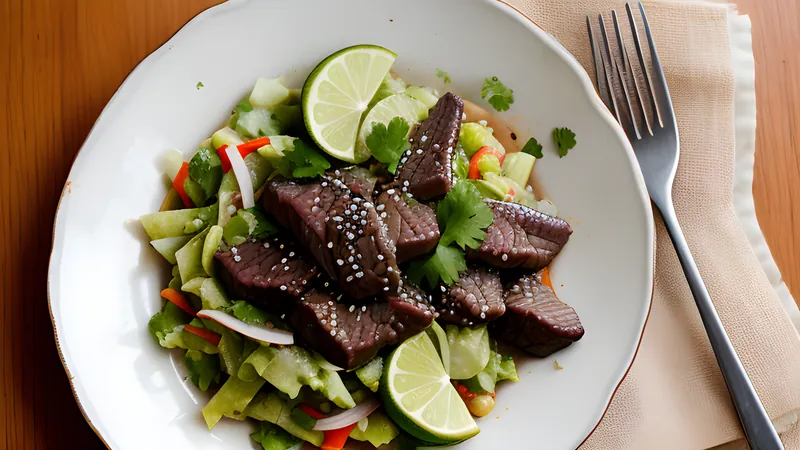
Cubed beef seared hard and fast, tossed in a screaming-hot wok, dipped in lime and cracked Kampot pepper
Contents
↓ Jump to recipeLok Lak: Cambodian Shaking Beef With Lime and Pepper
Ingredients
- 700g beef rump or sirloin, cut into 2cm cubes
- 4 garlic cloves, finely chopped
- 2 tbsp oyster sauce
- 1 tbsp light soy sauce
- 1 tbsp fish sauce
- 1 tbsp dark soy sauce
- 2 tsp sugar
- 1 tsp cornflour
- 1/2 tsp black pepper, freshly ground
- 2 tbsp vegetable oil, plus more for searing
- 1 small red onion, sliced into rings
- 2 tomatoes, cut into wedges
- 1 cucumber, sliced
- 1 romaine or cos lettuce, leaves separated
- 2 limes, juiced, plus wedges to serve
- 1 1/2 tsp Kampot pepper (or best black peppercorns), crushed
- 1 tsp sea salt
- steamed jasmine rice, to serve
- 2 fried eggs, optional
Method
- Toss the beef cubes with garlic, oyster sauce, light soy, fish sauce, dark soy, sugar, cornflour and black pepper. Cover and marinate at room temperature for 20 minutes.
- Make the dipping sauce: stir the crushed Kampot pepper and sea salt into the lime juice. Set aside — it should taste sharp and peppery, not salty.
- Arrange lettuce, cucumber, tomato and red onion over a wide plate or two dinner plates.
- Heat a wok or heavy frying pan until it is smoking hot. Add a tablespoon of oil.
- Sear the beef in two batches so each cube touches the metal directly — crowding the pan steams it instead of browning it. Cook each batch 60-90 seconds, tossing hard, until the outside is deeply caramelised and the centre is still pink.
- Tip the seared beef and its pan juices onto the bed of salad.
- Top with fried eggs if using, and serve immediately with steamed rice and the lime-pepper dip alongside.
A dish built by a wok and a stopwatch
Lok lak arrived on Phnom Penh’s restaurant tables sometime in the mid-twentieth century, when French colonial dining habits and Khmer market cooking sat down at the same plate. The name translates roughly to “shake shake” in Khmer, describing the cook’s wrist snapping the wok back and forth so the beef sears rather than stews. Order it today from a shophouse near the riverside or a stall at Phsar Thmei, Phnom Penh’s central market, and the method hasn’t changed: cubed beef, screaming-hot metal, ninety seconds, done.
The French influence isn’t disguised. Lok lak arrives dressed the way a steak-frites would in Saigon or Vientiane — seared beef, a fried egg cracked on top, sometimes a scatter of chips beside the rice. What makes it unmistakably Khmer is the dip: fresh lime juice cut with crushed peppercorns and salt, nothing else, used for dunking each cube before it goes in your mouth. It respects two culinary traditions at once, French technique riding on Khmer seasoning, without folding either one away.
By the 1960s lok lak had settled into its current form as a fixture of Phnom Penh’s café culture, ordered by office workers on a lunch break and families out for a Sunday dinner alike. It survived the upheavals of the following two decades and re-emerged as one of the dishes that most reliably signals a Cambodian kitchen to visitors — alongside amok and kuy teav, it’s usually the first thing recommended to anyone eating in Phnom Penh for the first time.
Why it reads as “shaking beef” on English menus
Cambodian restaurants outside Cambodia almost always translate lok lak as “shaking beef,” and the English name is more literal than most menu translations manage. It isn’t a metaphor for tenderness or a marketing flourish — it names the exact motion the cook performs, wrist snapping the wok in short, sharp arcs so the beef airborne for a fraction of a second lands on a fresh patch of hot metal each time rather than stewing in its own juices. Vietnamese kitchens developed a close cousin called bò lúc lắc, borrowed during the same period of French colonial overlap across Indochina, and the two dishes share enough DNA — cubed beef, high heat, a citrus dip — that food historians still argue over which came first. The honest answer is probably that they developed in parallel, in French-influenced kitchens on both sides of the Cambodian-Vietnamese border, rather than travelling neatly from one country to the other.
What’s clear is that the Khmer version kept its own character. The Vietnamese dip usually leans on a mustard-and-lime sauce; the Cambodian one stays austere, built purely from lime, salt and pepper, trusting the quality of the peppercorns to do the work that other cuisines ask a compound sauce to do. It’s a minimalist’s dish disguised as a rich one, and that’s easy to miss the first time you eat it, because the caramelised beef and runny egg yolk read as indulgent even though the seasoning behind them is almost spartan.
Kampot pepper, and why the pepper matters more than the beef
Cambodia’s Kampot province, on the coast near the Vietnamese border, grows peppercorns considered among the best in the world — protected by a geographical indication since 2016, the same legal status that protects Champagne or Parmigiano-Reggiano. Kampot pepper is more floral and citrusy than the flat heat of a supermarket shaker, with a resinous, almost eucalyptus note that survives grinding intact. If you can find it — specialist spice merchants and some Asian supermarkets stock small bags — use it here. It’s the difference between a memorable lok lak and a forgettable one, because the dipping sauce has nowhere to hide: lime juice, salt, pepper, full stop, no other seasoning to cover for a dull one.
If Kampot pepper isn’t available, buy the best whole black peppercorns you can find and crush them coarse rather than fine. A mortar and pestle gives you shards rather than dust, and shards are what carry the aromatic oils onto your tongue in the first bite instead of dissolving away before you taste them. Pre-ground pepper from a jar has usually lost most of its volatile oils to oxidation weeks before it reaches your kitchen, which is exactly why it tastes flat next to anything freshly cracked.
The sear is the whole recipe
Marinate the beef briefly — twenty minutes is enough, since the point isn’t tenderising the meat but seasoning its surface before it hits the pan. Oyster sauce and a little cornflour give the cubes a light coating that caramelises fast and helps the sauce cling to the meat once it’s plated, rather than pooling uselessly at the bottom of the bowl.
The searing itself has one governing rule: heat the wok until it’s genuinely smoking, then work in batches small enough that every cube touches metal directly. Tip the whole 700g in at once and the beef releases liquid faster than the pan can evaporate it away, and you end up with grey, simmered meat instead of the dark, faintly charred crust that makes lok lak taste like it’s been cooked over something more serious than a domestic hob. Ninety seconds a batch, tossing hard and constantly — that’s the “shaking” the dish is named for, and it isn’t optional if you want the result to taste like the original.
Rump or sirloin both work; look for a cut with enough fat marbling to survive fierce heat without drying out completely. Some Phnom Penh cooks use beef bought that same morning, on the theory that a shorter gap between slaughter and sear keeps the fibres tender even under such aggressive cooking. Most of us are working from a supermarket cabinet rather than a market stall, but it explains why the dish tastes noticeably better from the source than from a home kitchen using beef that’s sat in a fridge for a week.
Building the plate properly
Lok lak is a salad wearing a main course’s clothes. The bed of lettuce, sliced cucumber, tomato wedges and raw red onion isn’t garnish — it exists to catch the meat juices and to give you something crisp and cold to set against the hot, dark beef. Pile the seared cubes and their pan juices straight onto the vegetables so everything wilts slightly and absorbs flavour as it sits for the few seconds between wok and table.
A fried egg on top, yolk left runny, is standard rather than optional in most Phnom Penh kitchens. Break it as you eat so the yolk runs down into the salad and thickens the lime dip wherever it lands — a small trick that turns a simple dressing into something closer to a sauce by the second forkful.
Steamed jasmine rice sits alongside rather than underneath the salad — this isn’t a rice bowl dish, and burying the vegetables under a mound of rice loses the contrast between hot meat and cold, crisp leaves that the whole plate is built around.
Variations worth knowing
Some versions swap beef for chicken thigh or firm white fish, cut the same way and seared just as hard, though beef remains what most diners mean when they order lok lak without qualification. A rice-plate version serves the meat over jasmine rice rather than salad, closer to a quick lunch than the sit-down dinner version described here. Street vendors occasionally add a splash of savoury seasoning sauce to the marinade, a habit that spread across Southeast Asia through French and later American trading networks and turns up in dishes as far afield as the Philippines.
Pushed further from tradition, a little grated ginger in the marinade adds brightness without fighting the pepper dip — not authentic, but a reasonable adjustment on a weeknight when that’s what’s already open in the fridge.
What goes wrong
The most common failure is timid heat. A wok that isn’t properly smoking before the beef goes in will never deliver the caramelised crust the dish depends on — you get pale, boiled-looking cubes that taste fine but miss the point entirely. Get the pan properly hot, have every other component prepped and ready to go, and don’t walk away once the beef is in, because ninety seconds passes faster than it sounds.
The second common failure is a lazy dipping sauce. Bottled lime juice, pre-ground pepper from a supermarket shaker, and a pinch of table salt will get you a passable condiment but never the sharp, resinous hit that a proper lok lak dip delivers. Squeeze the limes yourself, crush whole peppercorns just before serving so the oils haven’t had time to fade, and taste the mixture before plating — it should make your mouth water on contact, not simply read as salty.
A third mistake is over-marinating. Twenty minutes is plenty; leave the beef sitting in soy and fish sauce for hours and the salt starts drawing moisture out of the meat before it ever reaches the pan, so it braises in its own liquid the moment it hits the heat rather than searing. If you need to prep ahead, cut the beef and refrigerate it plain, then mix the marinade and combine the two no more than half an hour before cooking.
Storage and leftovers
Lok lak doesn’t keep well as a composed dish — the salad wilts and the beef toughens on reheating — but the components hold up separately. Marinated raw beef keeps, covered, in the fridge for a day before cooking. Leftover seared beef reheats best in a hot, dry pan for thirty seconds rather than a microwave, which will grey it out further and finish the job the fridge started. Make the dipping sauce fresh each time; lime juice loses its edge within a few hours, and there’s no reason to serve a flat version of the one ingredient doing the most work on the plate.
For more Southeast Asian cooking built around the same balance of char, citrus and heat, Cambodian larb, tossed with toasted rice powder and lime, runs on very similar instincts. And for the custard-soft cousin from the same country’s coast, fish amok, steamed in a banana leaf parcel, shows how differently Khmer cooking treats protein when it isn’t going anywhere near a hot wok.
Related Content