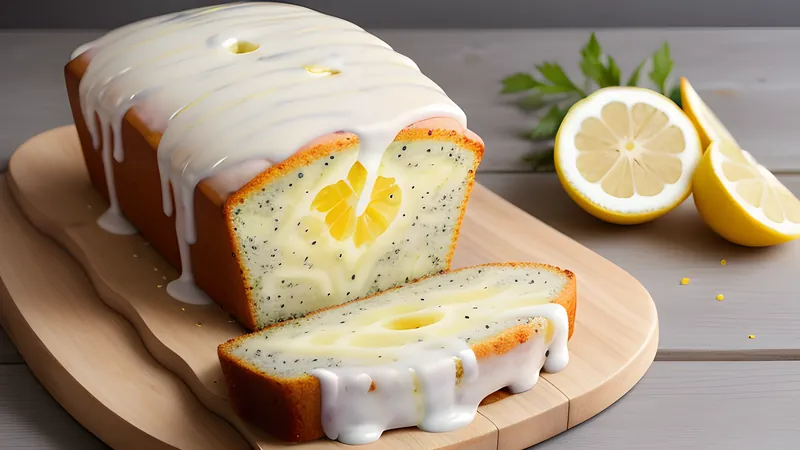
Lemon and Poppy Seed Drizzle Loaf with Yoghurt Glaze
A bright, crunchy-topped loaf with a tangy yoghurt finish
Contents
↓ Jump to recipeThe lemon drizzle is the cake I judge a tearoom by. It’s simple to the point of being unforgiving — there’s nowhere to hide a dry crumb or a mean hand with the lemon — and when it’s good, it’s one of the great teatime cakes of the world. This is my version, with two small additions: poppy seeds for a faint nutty crunch, and a yoghurt glaze on top that takes the whole thing somewhere a little more interesting than the standard lemon-and-icing-sugar finish.
Lemon and Poppy Seed Drizzle Loaf with Yoghurt Glaze
Ingredients
- 175g (¾ cup) unsalted butter, softened
- 175g (¾ cup plus 2 tbsp) caster sugar
- 3 large eggs
- 175g (1⅓ cups) self-raising flour
- ½ tsp baking powder
- ½ tsp fine sea salt
- Zest of 3 lemons
- 2 tbsp poppy seeds
- 3 tbsp Greek yoghurt
- For the drizzle: juice of 1 lemon plus 50g (¼ cup) caster sugar
- For the glaze: 80g (⅔ cup) icing sugar, sifted
- 2 tbsp Greek yoghurt
- 1-2 tsp lemon juice
Method
- Heat the oven to 180C/160C fan/350F. Grease and line a 900g (2lb) loaf tin.
- Cream the butter and caster sugar until pale and fluffy.
- Beat in the eggs one at a time, adding a spoonful of flour if it threatens to curdle.
- Fold in the flour, baking powder, salt, lemon zest, poppy seeds and yoghurt.
- Spoon into the tin and bake 50-55 minutes until risen and a skewer comes out clean.
- Mix the drizzle sugar and lemon juice. Prick the warm loaf all over and spoon it on so it crackles.
- Once cold, whisk the glaze ingredients to a thick pourable cream and spoon over the top.
A very British obsession
The lemon drizzle as we know it is surprisingly modern. The technique that defines it — pouring a sugar-and-lemon-juice syrup over a still-warm sponge so it soaks in and sets to a crackly crust — took hold in British home baking from the 1970s onwards. It was cemented in the national memory by writers such as Delia Smith, whose lemon syrup cake became a template that generations of home bakers learned by heart, and by decades of Women’s Institute competitions where a drizzle was, and still is, a proving ground. It belongs to that family of “tin loaf” cakes that need no special equipment, no frosting skills, nothing but a bowl, a wooden spoon and a loaf tin. That accessibility is exactly why it became a fixture.
The poppy seeds are more Central European and American than British in origin — the lemon-poppy seed muffin is a coffee-shop staple in the United States, and poppy seed fillings have a long history in Austrian and Hungarian baking — but they marry beautifully with the British drizzle. They contribute almost no flavour of their own, just a faint, dark, nutty bitterness and, crucially, a delicate crunch speckled through the soft crumb. It’s a textural thing more than a taste thing, and the loaf is the better for it.
Zest is everything
Here’s the single most important thing about any lemon cake: the flavour lives in the zest, not the juice. The juice is acidic and watery and goes into the drizzle and glaze; the zest is where all those fragrant lemon oils are, and that’s what perfumes the actual sponge. Those oils are held in tiny glands in the coloured part of the peel, which is why you take only the yellow and stop at the bitter white pith beneath. Three lemons’ worth of zest in one modest loaf sounds like a lot. It isn’t. Rub the zest into the sugar with your fingertips before you start creaming — you’ll rupture those oil glands, the sugar will turn pale yellow and damp and smell incredible, and that aroma carries all the way through to the finished cake.
A spoonful of Greek yoghurt in the batter is my standard move for any loaf cake. It adds moisture, a gentle tang that supports the lemon, and its acidity reacts with the raising agents to give a slightly tighter, more tender crumb that keeps for days. This is not a fluffy, airy sponge — it’s meant to be close-textured and a little dense, the better to soak up the drizzle. If you like this style of dense, citrus-soaked loaf, my olive oil and lemon drizzle cake is the same idea built on oil rather than butter, with a moister, longer-keeping result.
The twist: a yoghurt glaze, not a sugar one
Most drizzle loaves stop at the syrup soak, or get a thin watery lemon-icing dribble on top. I do both the soak and a glaze, but I make the glaze with Greek yoghurt instead of just water or lemon juice. The result is thicker, creamier and pleasingly tart — almost like a thin cheesecake topping — and that sourness is the thing that lifts the loaf out of the merely sweet. It sets to a soft, matte sheen rather than a hard sugary shell, and it makes each slice taste brighter without adding more sugar. It’s a five-second change that genuinely improves the cake.
Keep the two stages distinct. The lemon-sugar drizzle — the juice of one lemon mixed with 50g caster sugar so it stays grainy — goes on while the loaf is hot, so it penetrates and sets to a crackle as the water evaporates and the sugar recrystallises on the surface. The yoghurt glaze goes on only once the loaf is completely cold, or it’ll just slide off and melt into a mess. Patience between the two is the whole game.
Tips, and what can go wrong
Don’t skip pricking the warm cake before you pour on the drizzle — those little holes are what let the syrup sink in evenly rather than sitting in a puddle on top. Use a fine skewer and go most of the way down without hitting the base. The most common failure is a sunken middle, which almost always means the oven was too hot or the loaf came out before the centre had set; bake at a true 160C fan and test with a skewer that comes out clean before you trust it. If the top is browning before the middle is done, lay a loose sheet of foil over it for the last ten minutes.
And resist cutting it too soon; this loaf is genuinely better an hour or two after glazing, once everything has settled. It keeps well, wrapped, for up to four days, and arguably improves on day two as the lemon deepens. Leftover slices, slightly stale, are wonderful very lightly toasted with a scrape of cold butter — the heat brings the lemon oils roaring back.
Variations
Swap the poppy seeds for a tablespoon of lightly crushed fennel or caraway seeds for a more aniseedy loaf, or fold 100g of blueberries (tossed in a little flour so they don’t sink) through the batter. Lime works in place of lemon, zest and juice alike, for a sharper, more perfumed cake. For a warmer, spiced take on the same close, buttery crumb, my cardamom and cinnamon rolls share the same love of a fragrant, tender bake. But honestly, the plain lemon-and-poppy version, with that tangy yoghurt glaze, is the one I make on repeat all summer.
The creaming method, and why it matters
This loaf is built by the creaming method, the workhorse technique behind most butter cakes, and getting it right is what gives you an even, tender crumb rather than a dense, greasy one. Start with butter that is genuinely soft — cool room temperature, so it gives easily to a finger but is not oily or melting — and beat it with the caster sugar for a good three to four minutes until it turns visibly paler and increases in volume. That is not idle whisking: the sharp edges of the sugar crystals cut tiny air pockets into the fat, and those pockets are the seeds of every bubble that expands in the oven. Skimp on this stage and no amount of baking powder rescues the rise.
Beat the eggs in one at a time, letting each fully combine before the next. If the mixture starts to look curdled and grainy — which happens when the eggs are colder than the butter and the emulsion breaks — add a spoonful of the measured flour with each egg to bring it back together. Once the eggs are in, switch from beating to gentle folding for the flour, salt, baking powder, zest, poppy seeds and yoghurt. Over-mixing at this point develops gluten and toughens the crumb, so fold just until no dry streaks remain and stop. The batter should be soft enough to drop reluctantly from the spoon; if it seems stiff, an extra spoonful of yoghurt loosens it.
Storing and serving
Wrapped well in greaseproof and foil, or kept in an airtight tin, the loaf holds for up to four days at room temperature and, thanks to the yoghurt and the soaked-in drizzle, actually eats better on the second day once the lemon has had time to permeate the crumb. Don’t refrigerate it — the fridge dries cakes out and firms the butter — but do freeze it if you want to keep it longer: it freezes beautifully for up to two months, either whole or in slices, and thaws in a couple of hours on the counter. Slice it thick, serve it plain with tea, or push it towards pudding with a spoonful of crème fraîche and a few raspberries alongside. The tang of the yoghurt glaze means it never feels sickly, however sweet the drizzle underneath.
Getting the crackle right
The drizzle crust is the detail people notice, and it lives or dies on timing and ratio. Keep the drizzle grainy rather than dissolved: stir the juice of one lemon into 50g caster sugar just enough to make a loose, sandy slush, and do not heat it or the sugar dissolves into a plain syrup that soaks in without leaving a crust. Pour it over while the loaf is still hot from the oven and sitting in its tin, so the heat drives off the water and leaves the sugar to recrystallise on the surface into that fine, shattering crackle. The tin matters here too — it holds the drizzle against the sides so nothing runs off — which is why you soak the loaf before turning it out, not after. Give it ten minutes to drink the syrup in, then lift it out to cool completely on a rack before the yoghurt glaze goes anywhere near it.
Why yoghurt in both places
Greek yoghurt earns its double appearance in this recipe for the same underlying reason: acidity. In the batter, its lactic acid tenderises the crumb and reacts with the baking powder for a little extra lift, while the fat keeps the cake moist for days. In the glaze, that same tartness is what stops the topping tasting like sweetened wallpaper paste. Use full-fat Greek yoghurt rather than the runny natural sort — you want the thickness so the glaze sits proud on the loaf rather than sliding off — and add the lemon juice a teaspoon at a time until it is just pourable but still clings to a spoon. If it goes too thin, a little more sifted icing sugar brings it back; too thick, and another half-teaspoon of juice loosens it. Spooned over the cold loaf and left to set for twenty minutes, it firms to that soft matte sheen that makes each slice look, and taste, brighter than a plain sugar dribble ever could.
Related Content