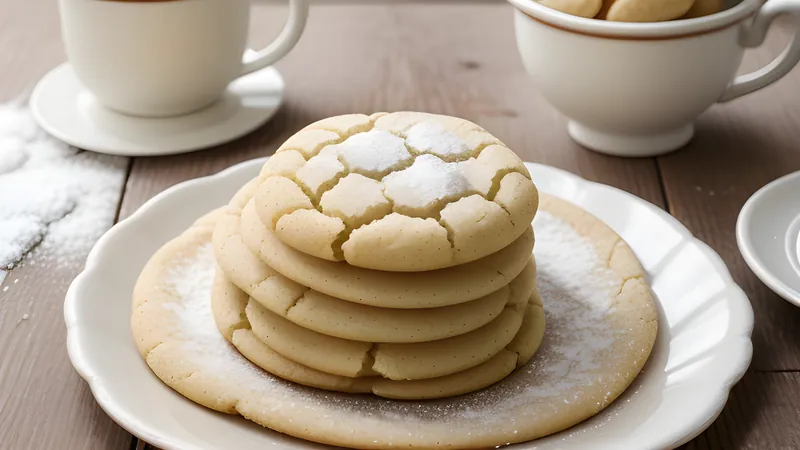
Lemon Curd Thumbprint Cookies
Buttery shortbread with a sharp, glossy pool of lemon
Contents
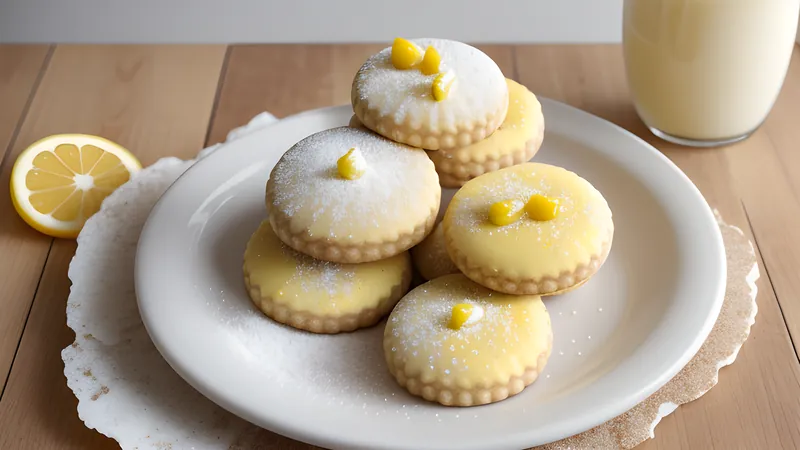
↓ Jump to recipeThumbprint cookies are one of those bakes that look like a child made them and taste like a patissier did. The premise could not be simpler: a buttery little ball of dough, a well pressed into the middle with your thumb, and that hollow filled with something bright. Most versions stop at a dab of jam, which is perfectly lovely. But the version that gets requested by name in my house swaps the jam for a homemade lemon curd, and that one swap turns a sweet, comforting biscuit into something with a proper sharp, sherbet-bright kick.
Lemon Curd Thumbprint Cookies
Ingredients
- 200g unsalted butter, softened
- 100g caster sugar
- 1 tsp vanilla extract
- Finely grated zest of 1 lemon
- 0.25 tsp fine salt
- 280g plain flour
- 2 large egg yolks
- For the lemon curd: 2 large eggs plus 2 yolks
- 100g caster sugar
- Zest and juice of 2 lemons (about 90ml juice)
- 75g cold unsalted butter, cubed
Method
- Make the curd first: whisk the eggs, yolks, sugar, lemon zest and juice in a heatproof bowl over a pan of simmering water until thick enough to coat the back of a spoon, about 8 minutes.
- Off the heat, whisk in the cold butter a cube at a time until glossy, then strain and chill until set.
- For the cookies, beat the softened butter with the sugar until pale, then beat in the vanilla, lemon zest, salt and egg yolks.
- Fold in the flour until a soft dough forms, then chill for 30 minutes.
- Heat the oven to 170C fan and line two trays with baking paper.
- Roll the dough into 24 balls and space them on the trays, then press a deep well into each with your thumb or the end of a wooden spoon.
- Bake for 7 minutes, re-press the wells if they have puffed, then bake a further 6 to 7 minutes until pale gold at the edges.
- Cool for ten minutes, then spoon a little lemon curd into each well.
A cookie with humble roots
Thumbprints have been turning up at coffee mornings and Christmas tables for the better part of a century, and they appear in the baking traditions of several countries under different names. In Sweden they are hallongrottor, raspberry caves, made with a vanilla-scented butter dough and filled with raspberry jam. Across the United States they became a fixture of holiday cookie tins, often rolled in chopped nuts before baking. The common thread is a tender, shortbread-style biscuit and a thumb-pressed dimple, a shape that is as much about play as it is about function.
That playfulness is part of the appeal. There is no special equipment, no piping, no rolling and cutting. You simply roll, press and fill, which makes thumbprints one of the best bakes to do with children or to knock out quickly when someone is coming round. The dough itself is essentially shortbread: lots of butter, a modest amount of sugar, and just enough egg yolk to bind without making it cakey. Keep it short and crumbly and you have the ideal foil for a tart filling.
Why lemon curd changes everything
Jam is sweet on top of a sweet biscuit, and pleasant though that is, it can be a one-note experience. Lemon curd brings the thing these cookies are missing: acidity. A proper curd is sharp, fragrant and silky, and spooned into a buttery shortbread well it cuts straight through the richness, so each bite finishes clean rather than cloying. The contrast of crumbly biscuit and that glossy, almost custardy pool of lemon is the whole reason to make these.
Making your own curd is genuinely worth the twenty minutes. Shop-bought is fine in a pinch, but homemade is brighter, less sweet and sets to exactly the right wobbling consistency. The method is forgiving as long as you keep the heat gentle. Cook the eggs, sugar, zest and juice over barely simmering water, whisking until it thickens enough to coat a spoon, then beat in cold butter off the heat for shine and richness. Straining it afterwards catches any zest and stray cooked egg, leaving you with a flawless, glossy curd. It will keep in the fridge for a week, so a double batch is never wasted.
The dough is shortbread, and shortbread has rules
The biscuit here is a shortbread dough, and shortbread lives or dies on its ratio of fat to flour. Butter is what makes it “short”, meaning tender and crumbly rather than chewy: the fat coats the flour and physically limits how much gluten can form, so the baked biscuit breaks cleanly instead of bending. That is why the recipe uses a lot of butter, only a modest amount of sugar, and egg yolks rather than whole eggs. Yolks bind and enrich without adding the water in the whites, and water would encourage gluten and toughen the crumb.
Creaming the softened butter with the sugar until pale beats a little air into the dough and helps the sugar start to dissolve, which gives a finer texture. Do not overdo it, though; too much air makes the cookies spread and crack. Once the flour goes in, work it just until the dough comes together, because at that stage you genuinely are trying to avoid developing any gluten at all. Then chill it. Cold dough holds its shape far better in the oven, so the balls stay round and the wells stay put rather than slumping into flat discs.
Softened, not melted, butter is the detail people get wrong. If the butter is too warm the dough turns greasy and the cookies spread; take it out of the fridge an hour ahead so it yields to a gentle press but is not oily. Weigh the ingredients rather than measuring by cup: shortbread is a ratio, and a heavy hand with the flour is the quickest route to a dry, dusty biscuit.
Getting the wells right
The one technical wrinkle with thumbprints is the well. Press it too shallow and your filling slides off; press as the dough bakes and the well puffs closed again. The fix is a two-stage bake. Press deep dimples before baking, then bake for around seven minutes until the cookies have set their shape but are not yet coloured, and at that point press the wells again with the rounded end of a wooden spoon. This re-establishes a deep, clean hollow that survives the rest of the bake and gives you a generous reservoir for the curd.
Fill the cookies only once they have cooled for ten minutes or so. The wells should be warm but not hot, so the curd settles into a glossy pool without melting or weeping. Adding the curd after baking, rather than before, keeps it vivid and fresh rather than dulling it in the oven, although you can also bake a little curd in if you prefer a more set, jammy finish.
Tips and variations
For the tidiest cookies, chill the dough before rolling so it firms up and the balls hold their shape. If the dough cracks at the edges when you press, it is too cold or too dry; a few seconds of warmth in your hands usually sorts it. A light dusting of icing sugar over the finished cookies looks lovely against the yellow curd, but add it just before serving so it does not dissolve into the filling.
Once you have the format, the fillings are endless. Passion fruit curd brings tropical perfume and even sharper acidity; a good seedless raspberry jam gives you the classic; salted caramel turns them into something more indulgent. You can also roll the dough balls in flaked almonds or fine sugar before baking for extra texture. But start with lemon. That bright, buttery, sharp-sweet combination is the one people remember.
Getting the curd right
The curd is worth understanding on its own, because it is the making of this cookie. It is essentially a fruit custard: eggs and sugar cooked gently with lemon juice and zest until the proteins in the egg thicken the mixture, then enriched with butter for gloss and body. The danger is heat. Push it too hard and the eggs scramble into sweet lemon omelette instead of setting into a smooth cream, which is why you cook it over barely simmering water rather than directly over the flame, and why you whisk constantly. It is ready when it coats the back of a spoon and holds a line when you draw a finger through it, around eight minutes.
Two habits make it foolproof. First, take it off the heat the moment it thickens, because residual heat keeps cooking it. Second, strain it through a sieve afterwards; this catches the zest and any stray threads of set egg, leaving a flawless finish. Beating in cold, cubed butter off the heat, a piece at a time, drops the temperature and emulsifies the fat into a silky, spoonable curd. It thickens further as it chills, so do not worry if it seems a touch loose while warm.
Storage and make-ahead
Both elements can be made in advance, which makes these ideal for entertaining. The curd keeps in a sealed jar in the fridge for up to a week, so a double batch means leftovers for toast or folded through whipped cream. The dough can be made a day ahead and kept chilled, or the shaped, baked and unfilled cookies stored in an airtight tin for three to four days. Fill them within a few hours of serving, though, because the curd will gradually soften the biscuit if it sits too long. Baked, filled cookies are best eaten the day they are assembled, when the biscuit is still crisp and the curd sits in a bright, glossy pool. Unbaked dough freezes well too: roll it into balls, open-freeze them on a tray, then bake from frozen with an extra minute or two on the time, which means a tray of warm, fresh cookies is never more than twenty minutes away whenever someone drops round unannounced.
If you enjoy the sharp lift homemade lemon curd gives a bake, it does the same clever work at the heart of this lemon meringue pie with Italian meringue. And for another shortbread-adjacent biscuit with a grown-up twist, the smoked salt in these rye chocolate chip cookies plays the same balancing game against sweetness that the lemon does here.
Related Content