Lemon and Dill Chicken Noodle Soup
Brothy comfort with a bright lift
Contents
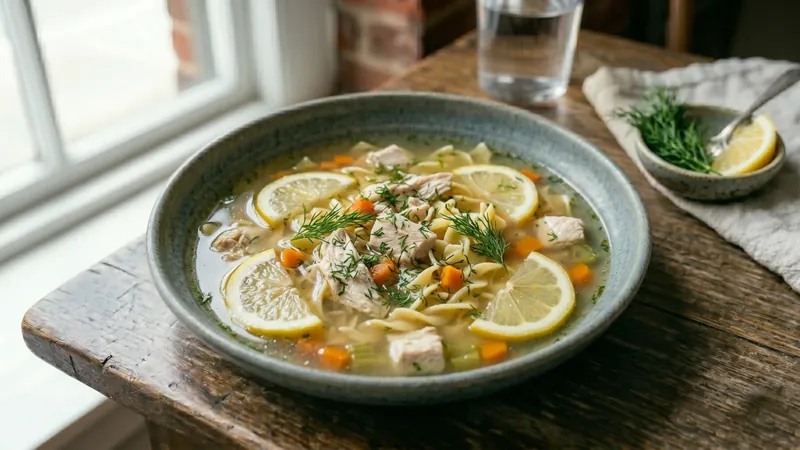
↓ Jump to recipeThis is the soup you want when you need looking after, but with a finish that keeps it from feeling heavy or dull. The twist is in the last minute: a generous squeeze of lemon and a shower of fresh dill stirred through off the heat, so the broth tastes clean and lively rather than flat. Tender shredded chicken, soft noodles and sweet root vegetables make up the comforting middle; the citrus and herb give it the lift.
Lemon and Dill Chicken Noodle Soup
Ingredients
- 1 tbsp olive oil
- 1 onion, finely chopped
- 2 carrots, diced
- 2 celery sticks, diced
- 2 garlic cloves, finely chopped
- 1.2 litres chicken stock
- 2 skinless chicken breasts (about 350 g)
- 150 g egg noodles or short pasta
- Juice of 1 lemon, plus extra to taste
- 1 tsp finely grated lemon zest
- 4 tbsp fresh dill, chopped
- Sea salt and freshly ground black pepper
Method
- Heat the oil in a large pan over a medium heat. Soften the onion, carrots and celery with a pinch of salt for 8-10 minutes.
- Stir in the garlic and cook for a further minute until fragrant.
- Pour in the stock and bring to a gentle simmer.
- Lower in the whole chicken breasts and poach gently for 15 minutes, until cooked through.
- Lift the chicken onto a board, shred it with two forks, then return it to the pan.
- Add the noodles and simmer until tender, following the packet timing.
- Take the pan off the heat and stir in the lemon juice, zest and most of the dill.
- Taste and adjust with salt, pepper and a little more lemon. Serve scattered with the remaining dill.
The Story
Chicken noodle soup earns its reputation as the thing you make for someone feeling under the weather, and there is sound sense behind the folklore. A warm, well-seasoned broth is easy to eat when you have no appetite, it is hydrating, and it delivers protein and salt gently. Researchers have even taken it seriously: a 2000 study by Dr Stephen Rennard at the University of Nebraska Medical Center found that chicken soup had a mild anti-inflammatory effect in the laboratory, slowing the movement of the white blood cells that drive cold symptoms. It is hardly a cure, but it is more than pure sentiment.
The foundation of a good version is the trio of onion, carrot and celery, softened slowly to build a sweet, savoury base. French cooks call this mirepoix; Italians call a similar mix soffritto. The principle is the same: aromatic vegetables coaxed gently in fat before any liquid is added lay down a depth of flavour a quick assembly cannot match. Poaching the chicken directly in the broth, rather than cooking it separately, keeps the meat moist and lets its flavour enrich the liquid.
The lemon and dill finish nudges the soup towards the eastern Mediterranean. Greek cooking has a long love affair with the pairing of chicken, lemon and egg in the soup called avgolemono, in which beaten eggs and lemon juice are whisked into hot broth to thicken it into something silky and tart. Eastern European and Scandinavian kitchens reach habitually for dill to lift soups and stews. Borrowing the citrus and herb without the egg gives this recipe a similar freshness while keeping it light and quick.
Why the timing works
Timing is what makes the trick land. Lemon juice loses its brightness if it boils for any length of time; heat drives off the volatile aromatic compounds and dulls the lively acidity into something flat and faintly bitter, so the juice goes in only once the pan is off the heat. Dill is just as delicate. Its grassy, faintly aniseed flavour comes from fragile essential oils that evaporate fast when cooked, which is why the bulk of it is stirred through at the very end rather than simmered in. Treated this way, both ingredients keep their character and lift a familiar bowl into something that tastes fresh and considered.
The other detail worth respecting is how you poach the chicken. Keep the broth at a bare simmer, never a rolling boil, or the breast meat tightens and turns dry and stringy. Fifteen minutes at a gentle tremble leaves it just cooked and easy to shred; if you are unsure, cut into the thickest part and check that it is no longer pink. Shredding rather than dicing gives softer, more forgiving pieces that soak up the broth.
The stock is the soul of it
Because so few ingredients carry this soup, the stock is what decides whether it tastes thin or deeply savoury. A carton of shop-bought chicken stock will do on a busy day, but a proper stock made from a roast carcass transforms it. To make one, cover a stripped chicken carcass with cold water, add a halved onion, a carrot, a couple of celery sticks, a bay leaf and a few peppercorns, bring it to a bare simmer and leave it, uncovered, for two to three hours, skimming off any froth that rises. Never let it boil hard, or the fat and proteins emulsify into the liquid and turn it cloudy and greasy rather than clear. Strain it, cool it, and lift off the set fat from the top before using. A litre and a bit of that, and your soup needs almost nothing else.
If you are short of time, you can cheat the depth of a long stock by simmering a shop-bought carton with the bones from a supermarket rotisserie chicken for half an hour, along with the vegetable trimmings you would otherwise throw away. Even that short infusion picks up enough body and roasted flavour to lift the bought stock well beyond its usual flatness.
What can go wrong
The most common mistakes are overcooked noodles and an under-seasoned broth. Noodles keep softening in hot liquid, so if you are not serving the whole pot at once, cook them separately and add them to each bowl; otherwise they swell and turn to mush by the second helping. As for seasoning, a bland soup almost always needs more salt before it needs more of anything else, and a good stock does most of the heavy lifting, so use the best you have. Taste right at the end, after the lemon has gone in, because the acidity changes how salty the broth reads.
Substitutions, make-ahead and variations
The recipe is forgiving and easily adapted. Leftover roast chicken can stand in for the poached breasts, shredded and stirred through in the final two minutes simply to warm through. Egg noodles give a soft, slippery result, but small pasta shapes such as orzo or ditalini work just as well; add roughly 150g and adjust the liquid if it thickens too much. Two large handfuls (about 60g) of spinach or 100g of frozen peas, wilted in during the last minute, add colour and a little sweetness. A grating of Parmesan or a swirl of good olive oil at the table rounds it out. For a heartier version, stir in a drained tin of cannellini beans with the noodles, or swap the dill for flat-leaf parsley and a pinch of chilli flakes for a warmer, more southern-Italian character.
It is worth saying that the lemon-and-dill trick is not really about this soup at all; it is a principle. Almost any long-simmered, comforting dish that starts to taste heavy or one-note can be woken up at the last moment with a little acid and a fresh herb stirred in off the heat. A stew, a lentil soup, a pot of braised greens: the same finishing move rescues them, because acidity sharpens flavours the way salt does, and raw herbs add a top note that cooking flattens. Learn it here, on a forgiving bowl of chicken soup, and you will reach for it everywhere. The smallest additions, made at the right moment, are the ones that matter most, and this bowl is the clearest lesson in that idea I know: humble, cheap, quick, yet transformed at the last by two simple things stirred in during the final thirty seconds off the heat.
The broth, chicken and vegetables can be made a day ahead and kept in the fridge; reheat gently, then add the noodles, lemon and dill fresh when you serve so they keep their bite and brightness. If you have made a batch of stock or roasted a chicken and want to use every part of it, this soup pairs naturally with other ways of stretching a bird, such as spiced chicken thighs with preserved lemon and olives. For another bright, restorative bowl built on the same slow-softened vegetable base, try this spiced carrot and ginger soup. Made with a good stock and finished with a confident hand on the lemon, this is the rare comfort dish that tastes light enough to eat again the next day.
Related Content