Lemon Blueberry Muffins with Streusel
Tender, zesty and crowned with crumble
Contents
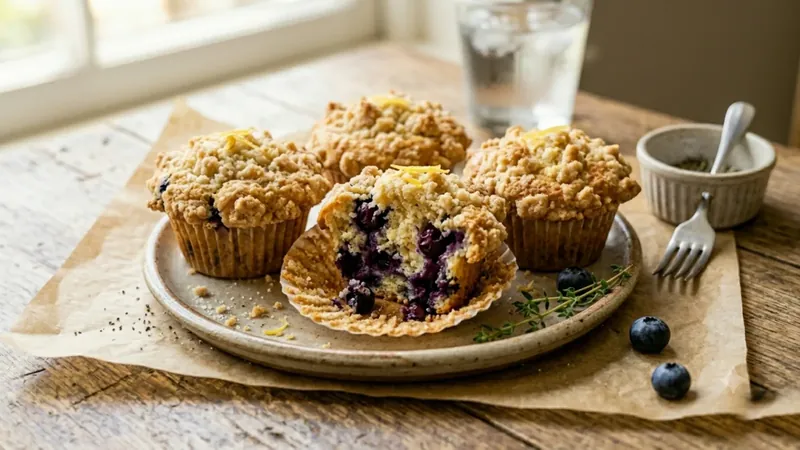
↓ Jump to recipeA good blueberry muffin should be tender and moist, with bursts of jammy fruit in every bite. This version is lifted by two touches: lemon zest rubbed into the sugar, which perfumes the whole crumb with bright citrus, and a buttery cinnamon streusel that bakes into a craggy, crunchy crown. Yoghurt keeps the texture soft and slightly tangy. They are at their very best eaten just warm, when the crumble still crackles and the blueberries are molten.
Lemon Blueberry Muffins with Streusel
Ingredients
- 280g plain flour
- 2 tsp baking powder
- 0.5 tsp bicarbonate of soda
- 0.25 tsp salt
- 200g caster sugar
- Zest of 2 lemons
- 2 large eggs
- 120ml vegetable oil
- 200g natural yoghurt
- 2 tbsp lemon juice
- 1 tsp vanilla extract
- 200g blueberries
- 60g plain flour, for the streusel
- 50g soft brown sugar
- 40g cold butter, cubed
- 0.25 tsp ground cinnamon
Method
- Heat the oven to 190C and line a 12-hole muffin tin with paper cases.
- Make the streusel by rubbing the 60g flour, brown sugar, cold butter and cinnamon together with your fingertips until crumbly. Chill until needed.
- In a large bowl, rub the lemon zest into the caster sugar until fragrant and damp.
- Whisk the 280g flour, baking powder, bicarbonate of soda and salt in a separate bowl.
- Beat the eggs, oil, yoghurt, lemon juice and vanilla into the lemony sugar until smooth.
- Fold the dry ingredients into the wet with a spatula until only just combined; a few streaks of flour are fine. Do not overmix.
- Toss the blueberries in a little flour, then fold them gently through the batter.
- Divide between the cases, scatter the streusel over the tops and bake for 22 to 25 minutes, until risen and golden and a skewer comes out clean.
- Cool in the tin for 10 minutes, then transfer to a wire rack. Serve just warm or at room temperature.
The Story
The American-style muffin, tall-domed and cakey, is a world apart from the flat English muffin sold for toasting. It belongs to the family of quick breads, baked goods leavened with baking powder and bicarbonate of soda rather than yeast, which means no proving and a batter that comes together in minutes. This convenience made muffins a staple of home baking and the coffee-shop counter alike, and the blueberry muffin in particular became an enduring favourite.
Blueberries are the natural hero here. Native to North America, they have been gathered and eaten there for a very long time and are now cultivated widely. Their thin skins and juicy flesh collapse in the oven into pockets of warm, slightly tart fruit, which is why they suit a sweet batter so well. Tossing them in flour before folding them in is a simple trick that helps suspend them through the mixture rather than letting them all sink to the bottom.
The lemon is what gives these muffins their lift. Rubbing the zest into the sugar with your fingertips bruises the tiny oil glands in the peel, releasing aromatic citrus oils directly into the sugar so the flavour carries through the entire crumb rather than sitting in streaks. A little lemon juice and tangy yoghurt reinforce that freshness while keeping the texture moist and tender. Lemon and blueberry are a classic pairing precisely because the bright acidity of the citrus balances the gentle sweetness of the fruit.
Streusel, a crumble topping of flour, sugar and butter, comes from German and central European baking traditions, where the word simply means “something scattered” and it crowns cakes and pastries with a sandy, crisp layer. German immigrants carried it to the United States, where it settled into the coffee cakes and breakfast bakes of the Midwest, and from there onto the muffin. Borrowed this way, it turns an ordinary muffin into something more indulgent, adding contrast in both texture and flavour, especially with a whisper of cinnamon worked through it. The trick to a good streusel is cold butter and a light hand: rub it into the flour and sugar just until it clumps, stopping before it turns to paste, so it bakes into distinct, craggy nuggets rather than a solid crust.
There is a reason lemon and blueberry keep company so often. Blueberries are gently sweet and can taste a little flat on their own once baked, while lemon is all brightness and acidity. Put them together and each fixes what the other lacks: the citrus sharpens and defines the fruit, and the fruit softens the sharpness of the lemon. It is the same balancing act that makes a good lemon drizzle cake or a blueberry pie with a squeeze of citrus in the filling work so well.
Why the technique works
The golden rule for tender muffins is restraint when mixing. Flour contains proteins that link up into gluten as soon as they meet liquid and get agitated; a little gluten gives structure, but too much makes the crumb tough and riddles it with long, hollow tunnels. Stirring vigorously or for too long is what develops it, so you fold the dry ingredients into the wet only until the flour disappears, leaving the batter deliberately lumpy. Those lumps bake out; the tough texture from overmixing does not.
The chemistry of the rise matters too. This batter uses both baking powder and bicarbonate of soda. Baking powder is a self-contained raising agent that works largely once it hits liquid and again in the oven’s heat; bicarbonate of soda needs an acid to react, and here the lemon juice and yoghurt supply it, producing carbon dioxide that lifts the crumb and also helping the muffins brown. That is why you should get the batter into the tin and the oven reasonably promptly rather than letting it sit, as much of the lift begins the moment everything is combined.
What can go wrong
Sinking blueberries are the classic complaint. Frozen berries are the worst offenders because they shed liquid, but any berry will drop through a loose batter as it bakes. Tossing them in a spoonful of flour first gives the batter something to grip, helping to suspend them; a fairly thick batter helps too. If you use frozen blueberries, fold them in straight from the freezer without defrosting, or they will bleed grey-blue streaks through the crumb.
Flat, pale muffins usually mean the oven was too cool or the raising agents were past their best; both baking powder and bicarbonate lose potency once opened, so replace them every few months. A dense, heavy result almost always comes back to overmixing. And if the streusel slides off, it was likely too warm and soft going on, which is why chilling it while you make the batter helps it stay put and bake into distinct, craggy clumps.
Substitutions, storage and variations
Buttermilk or soured cream can replace the yoghurt in the same quantity; all three bring the acidity and moisture the recipe relies on. Melted butter can stand in for the oil for a richer flavour, though oil keeps the muffins moist for longer. Raspberries or blackberries work in place of blueberries, and a handful of chopped white chocolate folded through the batter turns them into more of a treat. For the streusel, a scattering of flaked almonds or a little demerara sugar adds extra crunch.
The muffins are best on the day they are baked, while the streusel still crackles, but they keep in an airtight tin for two to three days; a few seconds in the microwave revives them. They also freeze well for up to three months, wrapped individually, and defrost at room temperature in an hour or so.
One more detail worth the effort: fill the paper cases fully, almost to the brim, rather than the cautious two-thirds you might expect. A generously filled case is what gives these muffins their high, mushrooming dome, the bakery-style top that overhangs the paper. It works because a full case forces the batter upward as the raising agents kick in, and a hot oven sets that shape before it can spread. If you want to push the effect further, start the muffins at 200C for the first five minutes to spike the rise, then drop to 190C for the rest of the bake. Finish, if you like, with a thin drizzle of lemon icing once they are completely cool, made from icing sugar loosened with just enough lemon juice to fall from a spoon in a slow, glossy ribbon that sets to a thin, crisp shell.
If you like the tang that yoghurt and citrus bring to a bake, you will find the same idea at work in these sourdough discard banana muffins with walnut streusel. And for a sharper, more grown-up lemon hit, the homemade curd in these lemon meringue pie uses exactly the zest-and-juice technique that makes these muffins sing.
Related Content